On the Origin of the Germanic Language, and why its not from Sweden, Finland or the Baltics.
A Thorough examination of McColl et al. 2026 and the Archaeogenetic record regarding haplogroup I1: https://t.co/mHHzcDJd3Z
@Iwobrand Bei dem Begriff "Frühe Christen" denke ich persönlich auch eher an einen Origenes und nicht an Frauen aus dem 8. Jahrhundert die beim Weben zu 'Minerva' beten.
@Tencterer Almost all of the posts about this paper have also been complete coal for some reason.
People seem to think that a DNA paper can somehow tell you when and where Odin began to be worshipped.
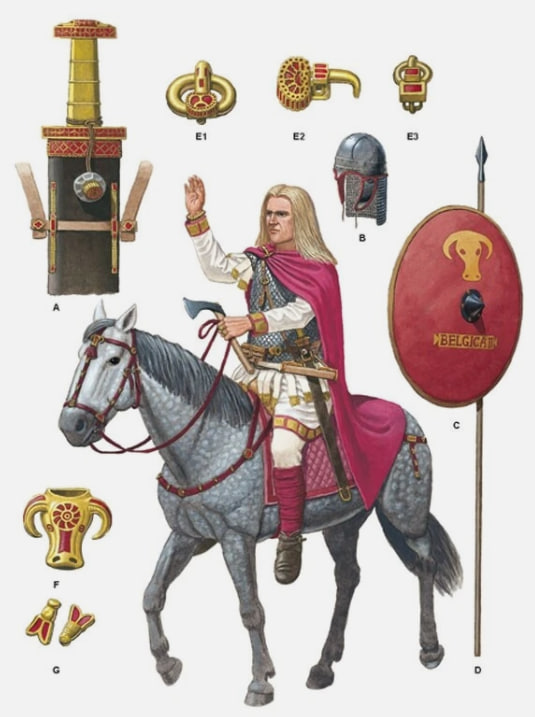
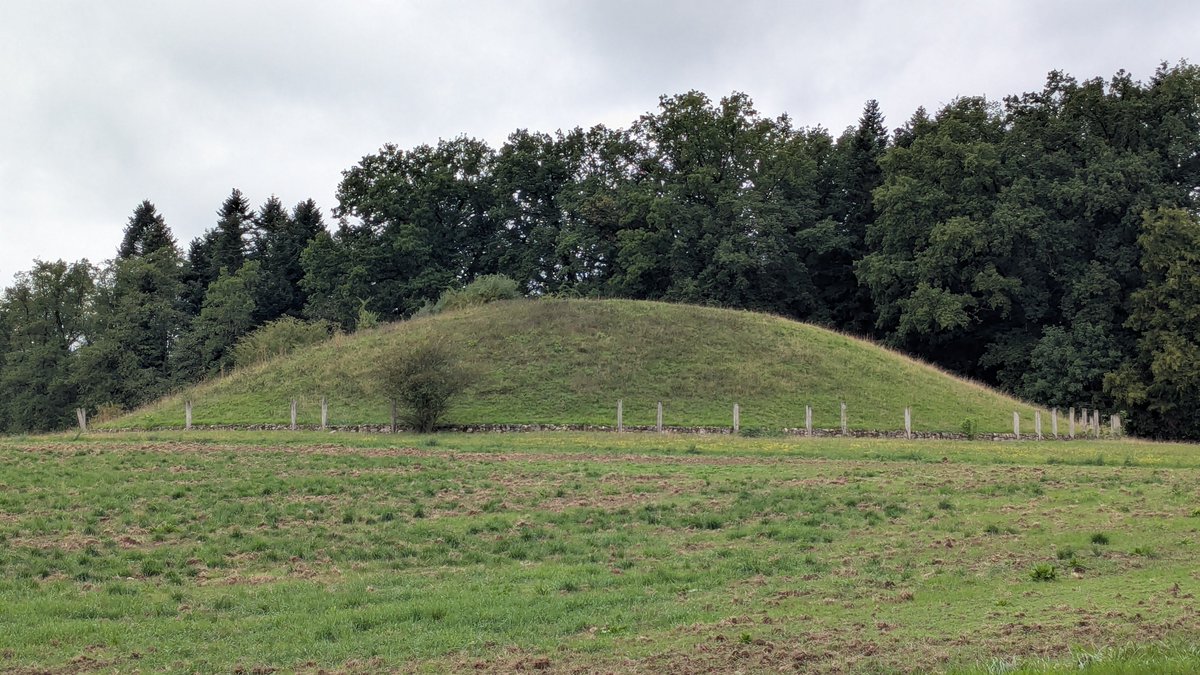
Im Jahr 481/482 wurde der salfränkische Merowingerkönig Childerich in Tournai (heute Belgien) in einem Grabhügel mit über 20 Pferdeopfern bestattet. Der Siegelring besagt "Childerici Regis" und erlaubt eine eindeutige Zuweisung der reichen Grabausstattung aus Gold und Almandin.
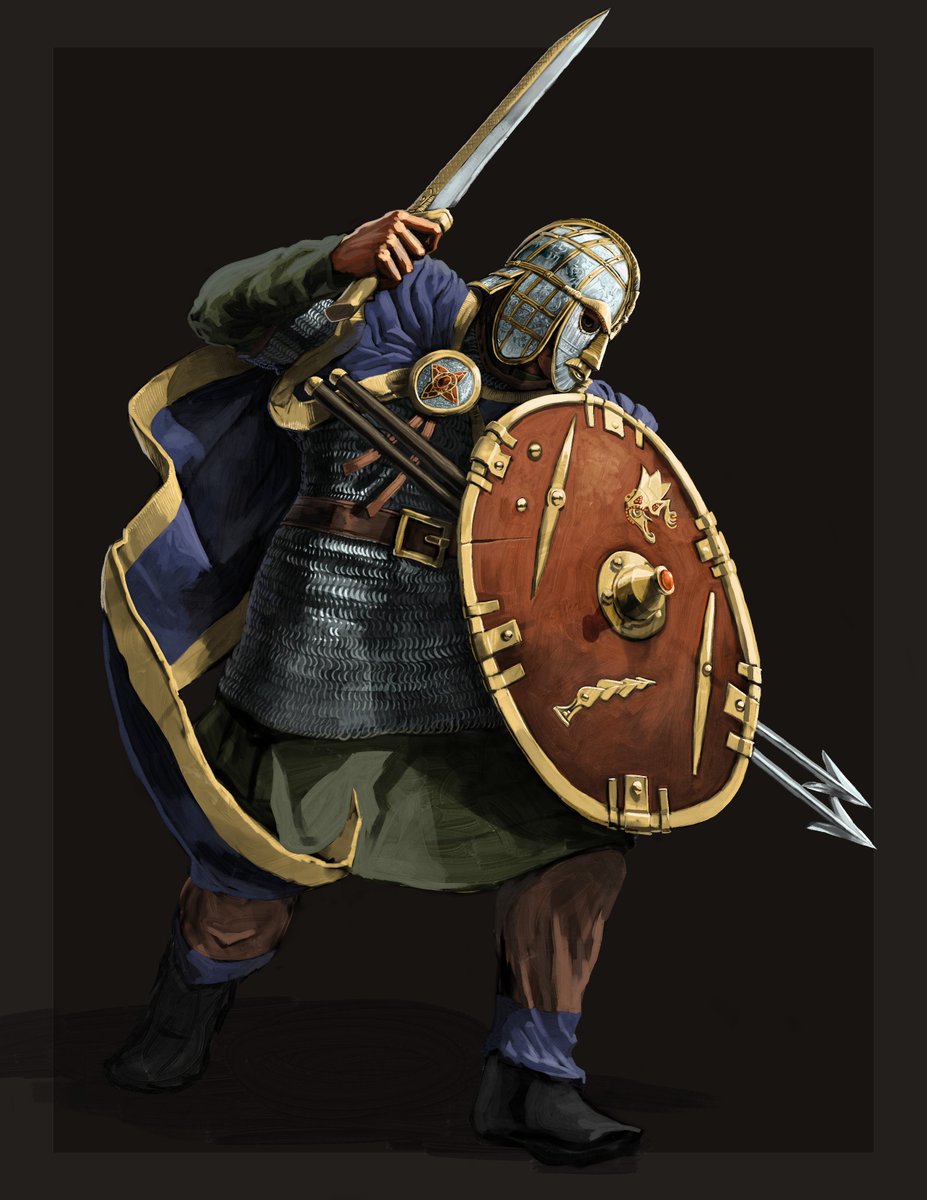
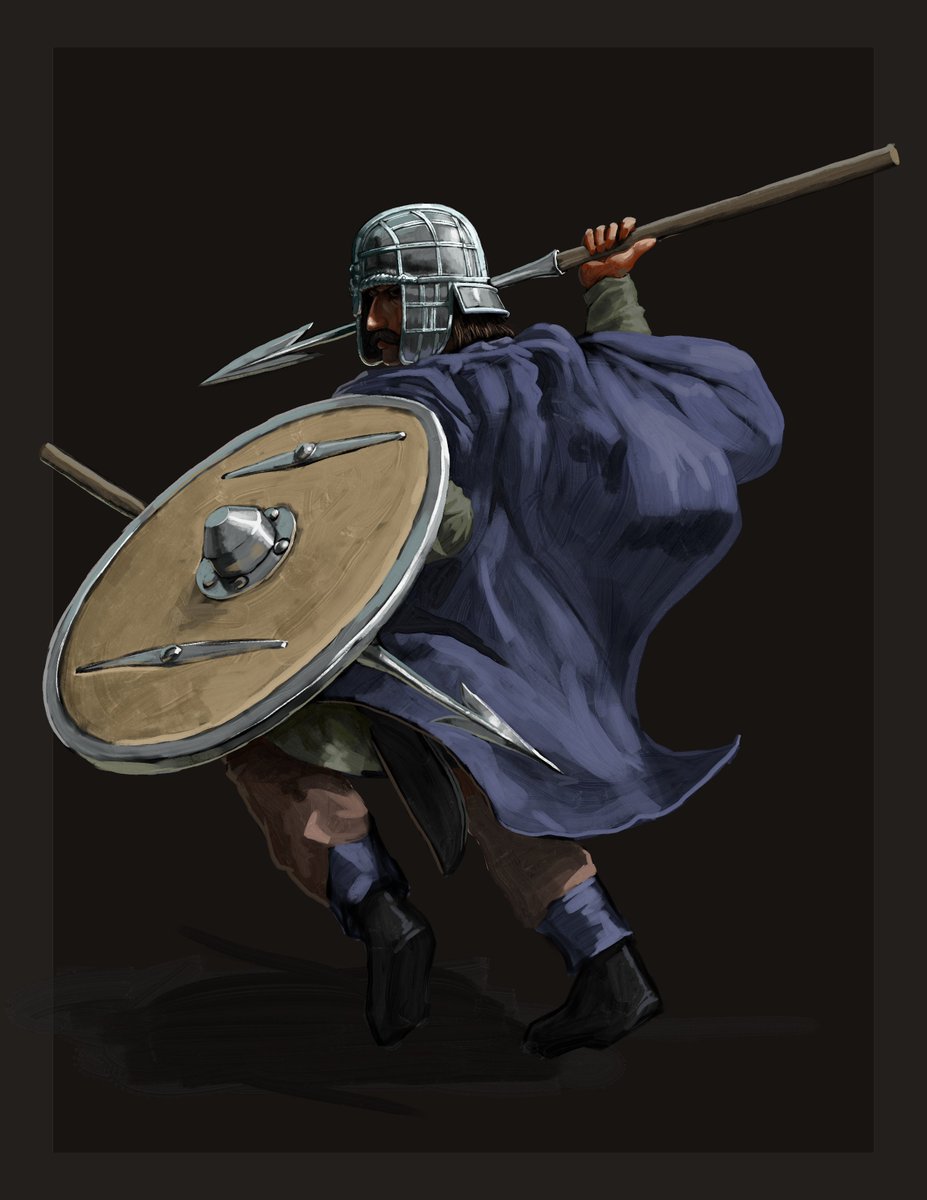
Hearth troops with angons and a seax. I'm suprised they cost wood instead of food, that alone makes them pretty unique among heavy infantry unique units.
I think its fairly apparent the Sutton Hoo hoard's helmet and shield were the primary inspiration for these guys' equipment
If you look closely, there are two hands in the typical thumbs-up posture. Atleast one leg aswell.
Yes, the head may be next to a snake, but that would mean the rest of the body wasn't swallowed but dismembered.
The snake could also be talking to the head, not eating it.
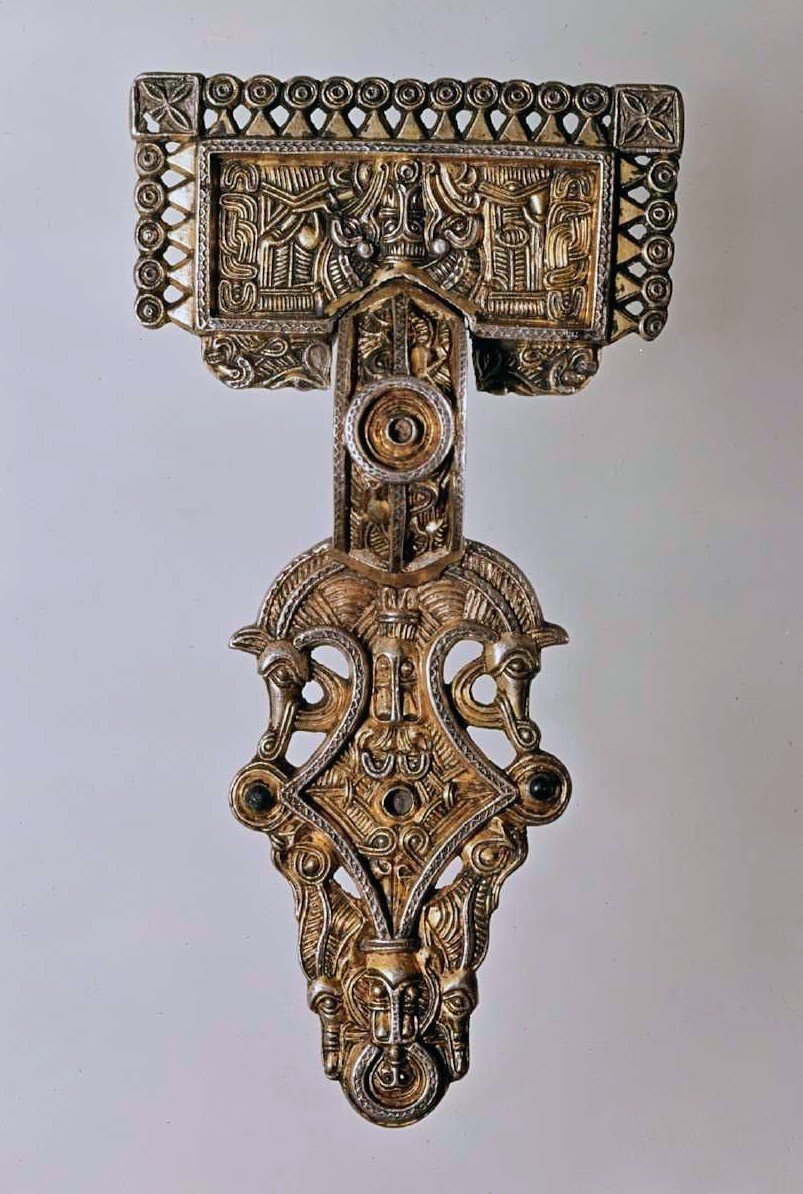
Hove Mølle Square-headed Brooch 🇩🇰, 6th century CE.
This ornate, gilded silver fibula is richly decorated with Salin Style I animal and human motifs.
Collection Nationalmuseet Copenhagen
https://t.co/aQnkNC3YYT
@Sagnamadr That seems like it would work.
Thistle to harm the spirit, mistletoe to reverse the damage it inflicted, then it's bound to a container and disposed of.
@Sagnamadr Without knowing which properties the plants were thought to possess it's difficult to say, but I could imagine it being used for some kind of exorcism.
Chanting 'kistill' could be intended to lock away a curse or an evil spirit inside a ritual container.
If the Subian Isis is Freyja, switching the original cult image of a ship to a chariot would have made a lot of sense for landlocked tribes.
Her brother Freyr still owns the "Best of all ships", so the original association could still be there indirectly.
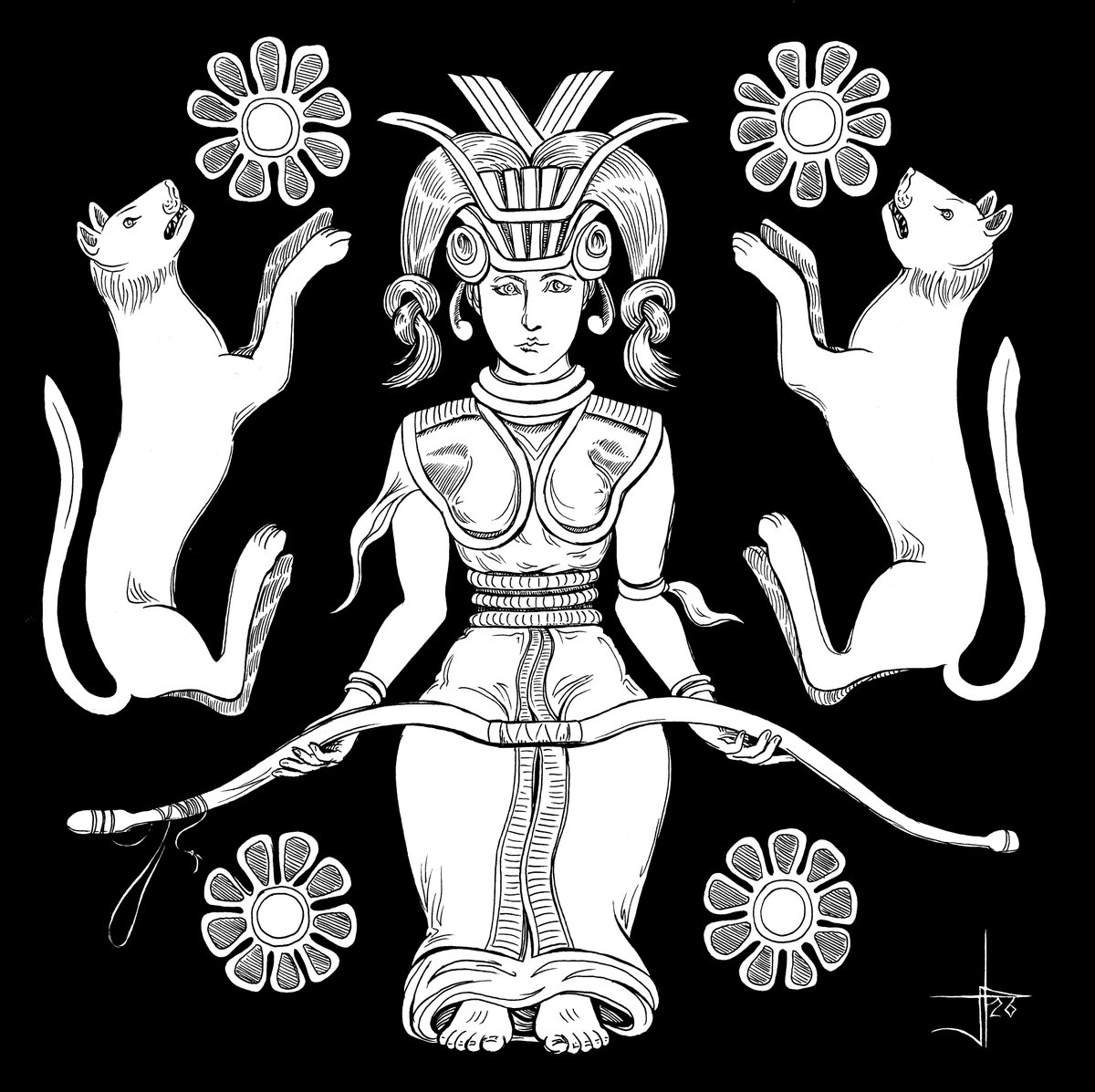
It is pretty clear to me that the woman on the Eschwege phalera is based on depictions of Cybele from late antiquity and has basically no resemblance to Daniel in the lions den.
Even the hairstyle appears to be shaped after Cybeles headdress.
There's a temple dedicated to Cybele and Isis in Mainz, right on the Germanic frontier.
Robert Caudill has also argued for evidence of Isis-Cybele syncretism elsewhere in the Empire.
This might be important for interpreting the Suebian Isis cult mentioned by Tacitus.
Animal-shaped brooch from Bjärge, Gotland 🇸🇪; 5th - 6th century CE.
"Animal-shaped bronze brooch. Depicting a four-legged animal drawn in profile with horns and fruit in its mouth."
The animal in question is most likely a horse. The 'horns' motif bears a strong resemblance to the horses depicted on contemporary C-bracteates.
Collection Statens Historiska Museer - Stockholm
https://t.co/UEfeg1jMb7
It is pretty clear to me that the woman on the Eschwege phalera is based on depictions of Cybele from late antiquity and has basically no resemblance to Daniel in the lions den.
Even the hairstyle appears to be shaped after Cybeles headdress.
@Sagnamadr If you identify Cernunnos with Kurunta, then Volkert Haas' interpretation of the Song of LAMMA offers a decent explanation for a connection between the Thunderer and the Stag.