CEREMONY
Canadian Spectrum Competition | Canadian Premiere
D: Banchi Hanuse | Canada | 84 min
Thursday, April 30 | 5:30 PM TLB 1
Friday, May 1 | 11:30 AM TLB 2
Sponsored by DGC National and DGC Ontario.
Dandelions are everywhere at the moment
Not weeds but one of the best and earliest sources of food for our precious bees 🐝
#NurtureDandelions#ProtectOurWorld
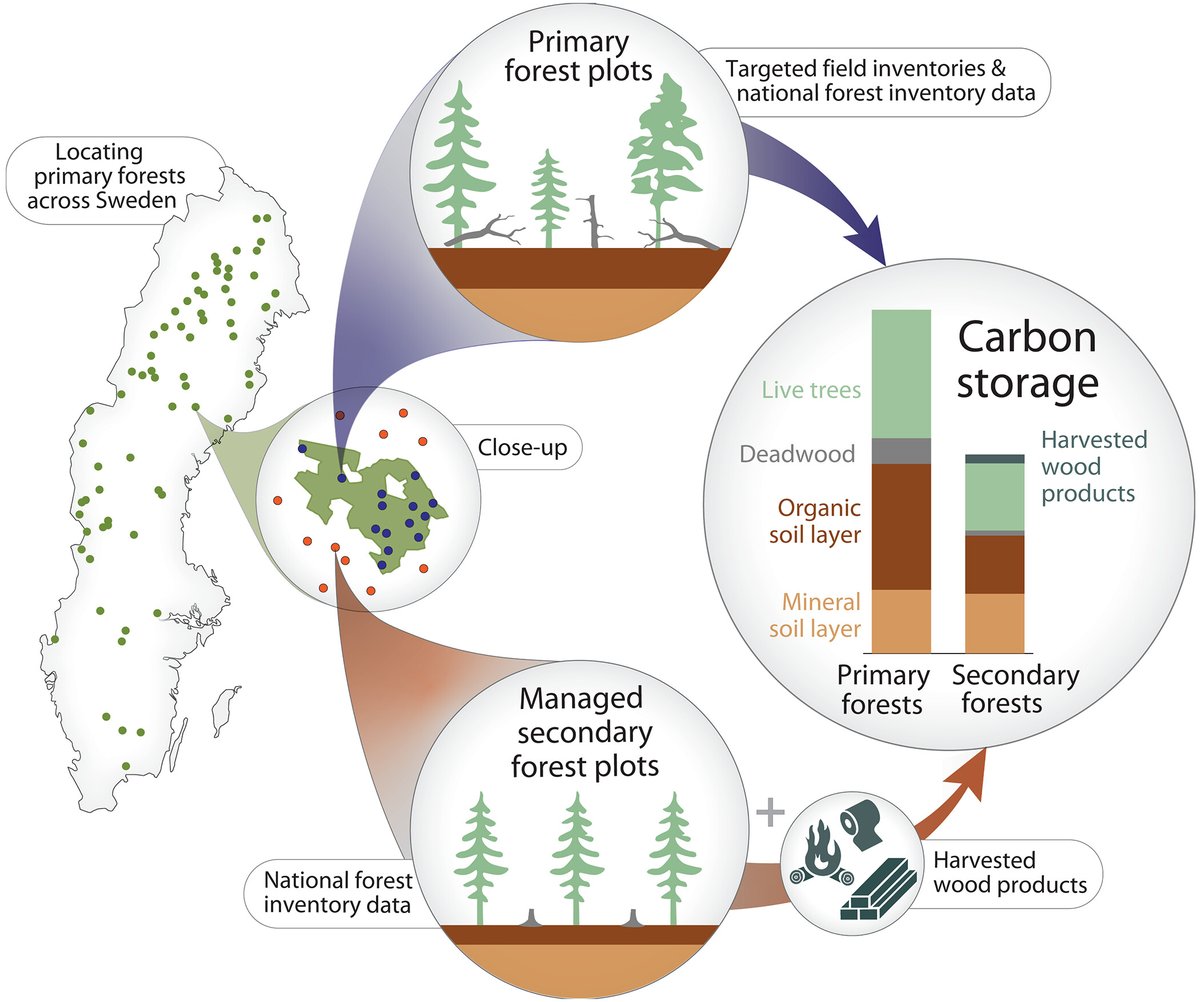
The planet’s undisturbed old-growth boreal forests may be far more important in the fight against climate change than previously realized, according to a new Science study, which finds that primary forests in Sweden store over 70% more carbon than managed secondary forests.
Learn more: https://t.co/jKr1Dgqb2D
For decades, First Nations people in British Columbia knew their ancestral homes—villages forcibly emptied in the late 1800s—were great places to forage for traditional foods like hazelnuts, crabapples, cranberries, and hawthorn.
A 2021 study revealed that isolated patches of fruit trees and berry bushes in the region's hemlock and cedar forests were deliberately planted by Indigenous peoples in and around their settlements more than 150 years ago. It's one of the first times such "forest gardens" have been identified outside the tropics, and it shows that people were capable of changing forests in long-lasting, productive ways.
Learn more on #InternationalDayOfForests: https://t.co/OURY3O9Jt7
When I set out to do this story I had no idea that lithium mining was so bad. It has a huge carbon footprint, yet it’s marketed to save the world-it was fascinatingly disturbing to learn the truth. Meanwhile, Indigenous Peoples are paying the consequences of extraction companies ripping up their land…as per usual. Go have a watch!
https://t.co/vJ6HwxEsC8
Mining can’t be a solution. A change of mindset and how we as consumers contribute to solutions- not saying electric cars aren’t good- it’s the process of getting the minerals- & it will be at the expense of #Indigenousppls Homelands
12 Reasons Why Cities Need More Trees:
1. Temperature Control
One large tree is equivalent to 10 air conditioning units, and the shade they provide can reduce street temperature by more than 30%.
2. Noise Reduction
Trees can reduce loudness by up to 50%. In urban areas filled with the sound of cars, construction, sirens, aeroplanes, and music, trees are essentially the best way to block noise and keep cities — along with the homes and workplaces in them — quieter.
3. Air Purity
Trees remove an astonishing amount of harmful pollutants and toxins from the air. In urban areas air quality is often disastrously bad — with severe consequences for our health. Trees make the air we breathe much cleaner.
4. Oxygen
And, while absorbing all those pollutants, trees also put more oxygen back into the urban environment. Oxygen levels are significantly lower in cities compared to the countryside; trees help to solve that problem.
5. Water Management
Trees do more than just shelter us and our buildings from rain — which is, in fact, extremely important. They also absorb huge quantities of water, reduce run-off, neutralise the severity of flooding, and make flooding more unlikely altogether. Not to forget that their roots absorb pollutants and prevent them from feeding back into a city's water supply.
6. Psychological Health
Studies have proven what we instinctively know to be true: that human beings are significantly happier when surrounded by nature rather than sterile urban environments. Our emotions, behaviour, and thoughts are shaped by the places we spend time — and trees have a profoundly positive effect on our psychology. The consequential benefits of being happier and more peaceful — as individuals and as a society — are immense.
7. Physical Health
Beyond all the other ways in which trees improve air quality and the urban environment, much to the benefit of our health, they also encourage people to go outside. Cycling, running, and walking are all more common in urban areas with plenty of trees. A knock-on effect of people spending more time outdoors is also social integration and stronger communities.
8. Privacy
A simple point, but not inconsequential, is that trees provide privacy.
9. Economics
The total economic benefit of urban trees is hard to calculate. There are costs, of course, including the repair of infrastructure damaged by roots and maintaining the trees themselves. But the total economic benefit — a consequence of everything else in this list and more — far outweighs the expenditure. Trees make cities wealthier.
10. Wildlife
Trees are miniature cities all of their own, serving as a habitat for hundreds of different species, including birds and mammals and insects.
11. Light Pollution
Trees don't only block the light shining down, therefore keeping us and our cities cooler — they also disrupt light shining up, from street lighting, cars, houses, and billboards. Skies are clearer in cities with more trees.
12. Aesthetics
And, finally, trees are beautiful. They break up the potential monotony of urban environments — the sharp geometry, the greyscale roads and buildings, the endless rows of cars — with their trunks, boughs, canopies, and flowers.
Just think: the gold and red of falling leaves in autumn, the white and pink blossom of spring, the vast green canopies of summer, and the branches lined with hoar-frost in winter. Every single tree is a myriad of intricacy and texture, of colour and scent, of dappled light on the pavement, mottled bark, knotted roots, of clustered leaves and delicate petals and stern boughs.
Few streets would not be improved by the kaleidoscopic aesthetic delights of a tree, not to mention the many different species of tree, all over the world, whether willow, oak, lime, cherry, aspen, maple, birch, horse chestnut, dogwood, hornbeam, ash, sycamore... the list goes on.
There are some drawbacks to urban trees, most of them context-specific, and they are not — of course — universally appropriate. But it seems fair to say that many cities would benefit from at least a few more trees here and there.
Indigenous lands are NOT sacrifice zones. Extractive industries encroach on Indigenous communities, forcing them to bear the brunt of extractive development. Our communities have long been disproportionately impacted by climate change and the forces responsible for creating it.
“200K years of modern human occupation on Earth are coming to a pivotal moment. We either recognise the sovereignty of the #biocivilization we destroyed and begin making reparations, or witness the spectacular fall of the brutal regime that has oppressed all life forms” #ecology
“Despite our opposition BC has continued to issue new permits to explore and drill in our mountains...mining at all costs, starting with free entry must end," said Nuskmata (Jacinda Mack), Mining Spokesperson, Nuxalk Nation ahead of today's hearings.
Here's what is certain:
#Oldgrowth logging will come to an end soon. This will either be because we logged all of it and none remains, or because we've protected what's left. The end of old growth logging is coming. What's undecided is if we will save some before it's all gone.
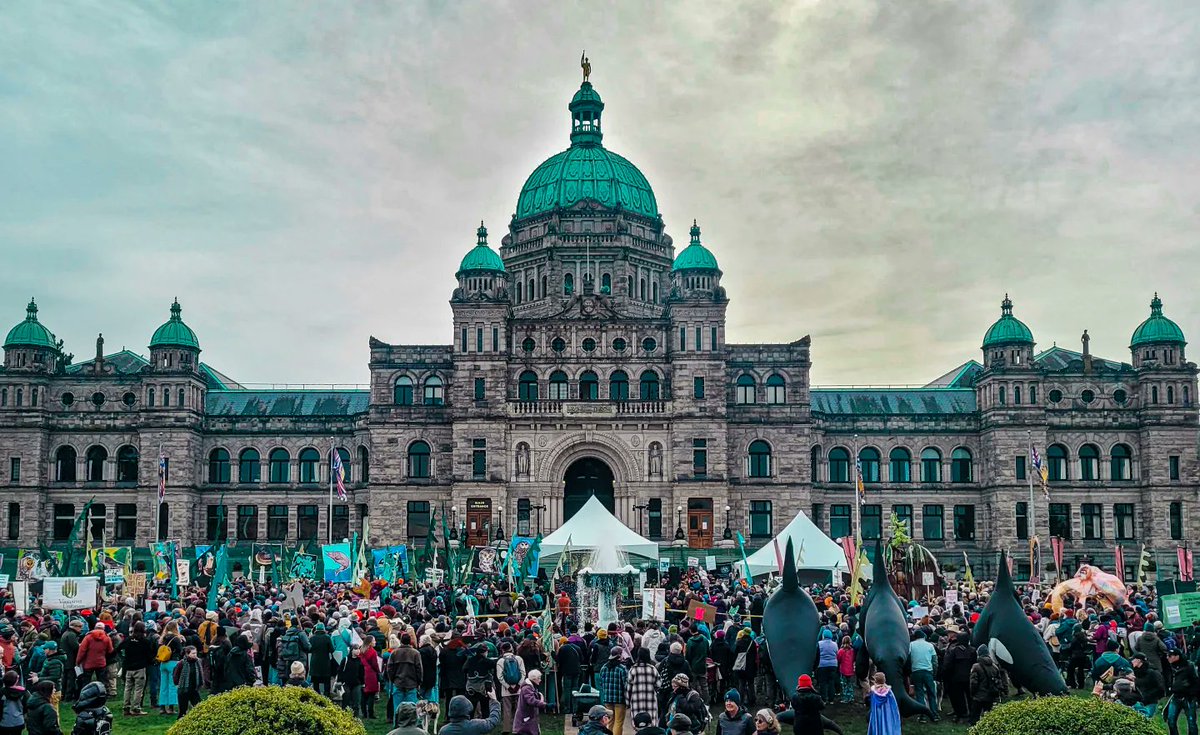
Mark your calendars - come rally to protect old-growth 🌲❗
Premier Eby has promised to protect old-growth within 100 days. Let's hold him to his words - join us to show your support for old-growth! #ProtectOldGrowth
📅 Sat., Feb 25. 12 - 3:30 PM
📍 Contennial Square & BC leg.
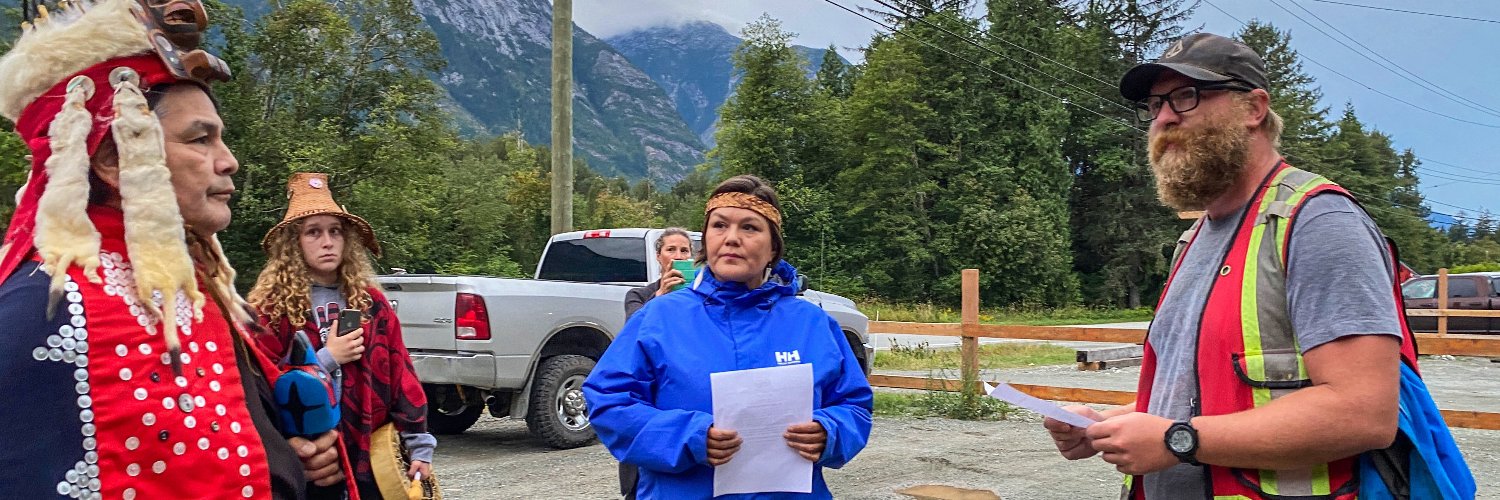
Nuxalk land defender Nuskmata on core samples being removed by Juggernaut Exploration.
Reawakening the Mountains – Watch the latest APTN Investigates episode here: https://t.co/OGTAK21EBi
Friday on Investigates @ChrisRead1970 visits the Nuxalk Nation, in B.C. who are trying to stop mining exploration on their land with a unique tactic - placing totem poles.
Nuxalk conservationist Jacinda Mack heads to a site where an exploration company has taken core samples.
Logging corporations out here on the coast violating #UNDRIP everyday logging #OldGrowth and the #BCgov just turns a blind eye and collects revenue from it. #BCpoli#FPIC
“We don’t need to ask permission from the Crown or anybody to build [off reserve] in our home villages. Our bloodlines connect directly back to these places.” https://t.co/DV50F8iKMP