Svante Pääbo and colleagues used AlphaGenome as a time machine to reconstruct the evolution of human gene regulation. An impressive new bioRxiv preprint! 🧬⏩
Fifty years ago, scientists proposed that the differences between humans and chimpanzees might be driven less by changes in genes themselves and more by changes in how those genes are regulated.
The authors revisited this hypothesis using deep learning and identified more than 71,000 genomic regions predicted to have gained regulatory activity along the human lineage. But the most interesting finding is how these changes happened!
In 71% of cases, evolution repurposed existing regulatory elements rather than creating new ones. A single mutation could introduce a tissue-specific transcription factor binding site, activating an existing element in another tissue.
To investigate this, the researchers used AlphaGenome to predict the regulatory effects of 17 million nucleotide substitutions, linking them to gene expression differences between humans and other great apes.
Interestingly, the vast majority of these regions fell outside known Human Accelerated Regions, genomic regions that evolved unusually rapidly along the human lineage. This suggests that the rate of sequence evolution does not necessarily reflect its functional impact.
Comparisons with Neanderthal and Denisovan genomes revealed that 99.6% of the regulatory gains fixed in modern humans and successfully dated arose before our evolutionary split from these archaic lineages.
There are also fascinating examples involving individual genes. One is SLC47A1, which encodes a transporter involved in eliminating drugs and toxins. The researchers identified five regulatory gains associated with increased expression in the human liver. Reverting these changes to their ancestral states in silico reduced predicted gene expression by 60%.
Of course, many of these predictions still require experimental validation. But the broader idea is remarkable: ancient DNA has allowed us to discover which mutations occurred in the past. Now, deep learning is beginning to reveal how those mutations may have changed the way genes worked.
https://t.co/LIUmvkZr3J
#aDNA #evolution #regulation #AlphaGenome
@AngelicaOung@saxvalhalla Ottoman, Persian, German, British, Roman, Greek, Egyptian and other empires balkanized. Why shouldn't Russian, Chinese, American empires balkanize? Rule of history - it rhymes.
🦔Quest Diagnostics said yesterday that hackers got into patient records through the system its clients use to look up lab results. Quest hasn’t said how they got in. It’s the latest hit in what security people now call Black October. AI helped expose holes in software that runs most of the web this month, and one hacker used AI agents to break into more than 100 companies for about $50 each.
My Take
The AI industry promised a productivity boom, and so far the clearest one I can find is in hacking. A break-in that used to take a skilled team weeks now costs pocket change and runs all night, and defense didn’t get that discount, since every patch still needs a person to test and ship it. Worse, attackers now go after AI keys. The Railway and OpenCode breaches this month both reached the API keys people store for OpenAI and Anthropic, and some OpenCode users found charges as high as $1,700 on their bills. Attackers seem to want free compute for the next round, billed to someone else.
AI companies sell enough agent time to run a full hacking campaign to pretty much anyone with a credit card, while a bank has to know who you are before it moves a dollar. They collect from attackers and defenders alike. I’d make the labs check who runs agents at that scale (open models make that harder, since anyone can run them on their own hardware), and a big enough breach will force it within a year. Until then, companies pay almost nothing when they lose your data as shown by Quest which raised its outlook the same day it disclosed this breach.
Hedgie🤗
@Teoyaomiquu that's why the ballots are on paper and in paper envelopes in Europe. Physical counting by hand the sorted scraps of paper, like hundreds of years ago. It relies on international post working for certain overseas ballots. But it's paper-only based.
@emse1975@Nayberryk@kamilkazani Out of all CEE, Hungary, Bulgaria, and Romania now tends toward the bottom of this list. For sure, Moldova, Ukraine, Belarus, and RF are lower.
My friend Amyr Aitashev is currently in the ICE detention. He is a journalist and an anti-war voice from the Republic of Altai, Russia. In Russia, he is facing a criminal investigation under Part 1 Article 280.3 of the Criminal Code for his criticism of the war and its conduct
1. Italy and Spain are global industrial heavyweights, *especially* when it comes to higher complexity stuff (= producing the means of production)
2. Almost all of Italian machine tool production is concentrated in the North. Almost all of the Spanish one, in the Basque country
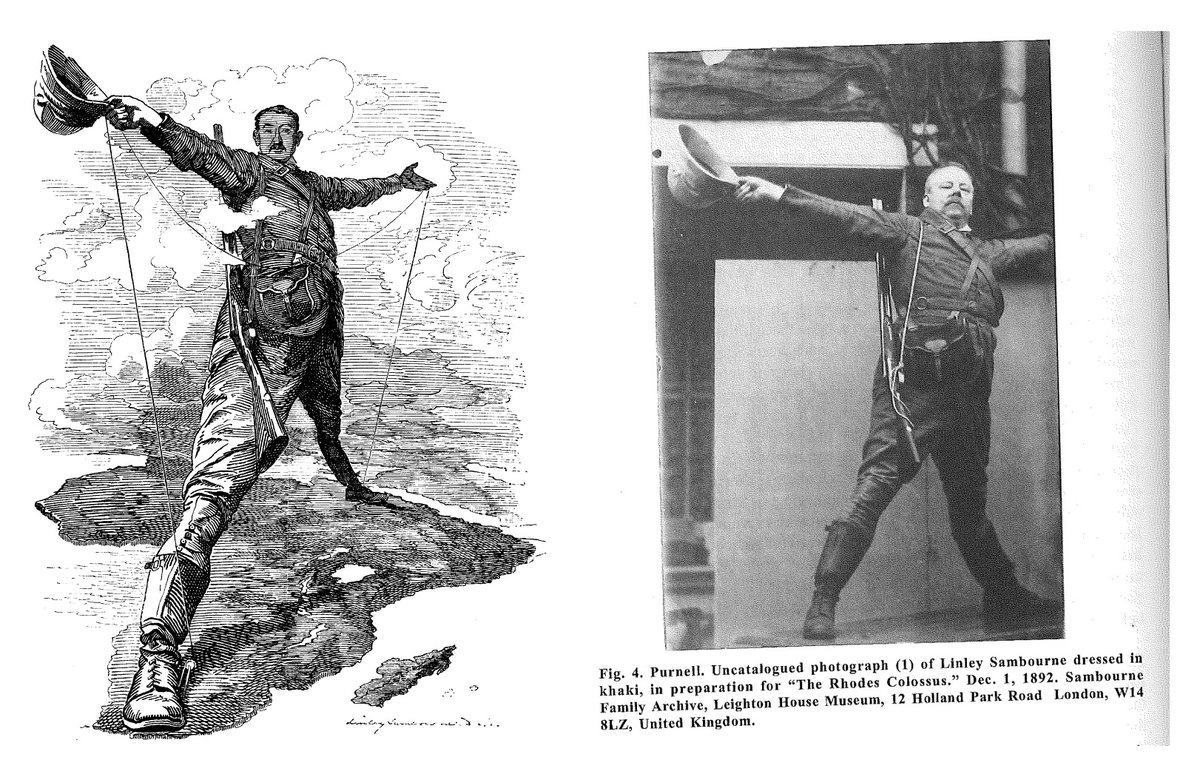
You've certainly seen the caricature on the left, the Rhodes Colossus (1892), where the personification of British imperialism is stepping from Cairo to Cape Town
And that is how it was produced: based on a photo. The chief caricaturist of the Punch, Sambourne, served as a model
I see it more like:
1. Fundamentally, the loss of Russian land & population to a separatist entity (Ukraine) is unfair
2.BUT, under certain conditions (close integration, and a certain vassalage) we may tolerate it
3. If Ukraine is trying to walk away, we will press our claims
My understanding is that Putin (and the Russian political leadership) became very conscious that any further increase in living standards would produce a destabilising effect
Grand nobles of St Petersburg speak such a refined French, that in the beginning you may think they're all super smart and intellectual. It is only later that you realise: no, they are just speaking very refined French
(Madame de Stael's observations, 1812)
I've been prototyping an automated peer review project. With current models you get human level peer review for about $0.10 of tokens. For $5 you can rederive every result, check every statistical inference, and audit every paper cited in both directions.
There are about 100m papers in the scientific corpus. Most are not important. Many are sloppy. For structural reasons it's essentially impossible to change published work, even to correct a typo.
For $500m today you can thoroughly audit every paper ever written. Every p-hacked result, every plagiarist, every fabrication, every citation club, everything.
I don't have $500m so instead I build a tree, focusing on the 1% of papers that carry 99% of the signal, doing a cheap first pass looking for obvious problems. I can find 90% of the nonsense for a few hundred dollars of tokens.
Any guesses where the biggest surprises will be found?
BREAKING: OpenAI’s solution to Navier–Stokes does not match its Lean verification.
The most important article to read today is not one of OpenAI’s 700 AI-generated math papers.
It is this other paper, making a deep and worrying point:
A Lean-verified proof does not automatically validate the proof written in natural language, nor does it mean that the formal statement captures the intended theorem.
During translation, an AI can change an assumption, weaken a statement, or replace the argument entirely.
It can hallucinate another theorem.
Lean correctly verifies the result.
But the proved result may no longer be what the paper claims.
This is a general problem. Things get spicy when the authors examine OpenAI’s proposed Navier–Stokes solution.
They identify at least two mismatches between the written intermediate results and their Lean counterparts:
One estimate claims that four additional input derivatives suffice. The Lean version requires five: a weaker result.
A pressure-flux estimate is obtained through a different bound, and proved through a different argument.
It is not clear whether these mismatches invalidate the entire proof.
But they raise an important issue.
OpenAI is flooding us with claimed revolutionary breakthroughs. Yet nobody knows whether the proofs are correct or whether they prove what they claim to be proving.
Epistemia at scale.
*
Paper in the first reply
Talked to someone recently who knows a lot about defense tech, and he made an interesting point: the test of most military hardware right now is whether the Ukrainians want it. They have a hot war going against a determined opponent, and they know what works.
Hydrocracking Diesel
There’s a diesel supply crisis on the cards…
What can be done about it?
Refineries can raise diesel output, but only within some hard physical limits. In the current crunch (big loss of GCC + Russian refining capacity) the unconstrained systems are already near those limits.
Refineries operate seasonally. They build up massive stockpiles of feedstock over the year, and do refinery runs over the summer months and sell down their product until the following year. This gives the refinery time to plan and reconfigure for refining its feedstock blend into its product fractions.
Well summer just finished, S&P Global Energy has said August 2026 global runs were more than 6 million b/d below the prior year.
That means about 8% less fuel for the haulage industry for the next 8-10 months. That’s going to mean an inflation bout and this is why the bond market is insulted.
When you crack a barrel of oil it does not become only diesel. Typical yields are roughly 45% gasoline-range material and about 30% middle distillates, boosting one cuts the other.
The main response has been to run much harder and defer maintenance. Refineries have extended their runs to try and keep up, US is at 98% utilisation and Europe is at 100%.
Adding capacity is a 5-8 year undertaking, because of a lack of forging capacity (the root cause of many issues).
Globally US Gulf Coast PADD 3 is where the oil industry swings refinery fractions for this sort of crisis. You need big hydrocrackers. We have Motiva Port Arthur (large hydrocracker on a 600,000+ b/d plant), Marathon Garyville, Exxon Baton Rouge and Baytown, and Valero’s Port Arthur and St. Charles hydrocrackers.
But they are all already at their ceiling.
India, South Korea and Singapore all have facilities that can respond and will make a huge windfall here, but the crisis is probably going to bite, and it’s going to hit products with high last mile transport costs the hardest.
This means low ticket things such as food.
This is generally a difficult thing for incumbent governments to deal with, often because they don’t understand their economies/ supply chains, don’t do any planning or resilience management until Journalists start asking them about it. Journalists are retroactive by definition.
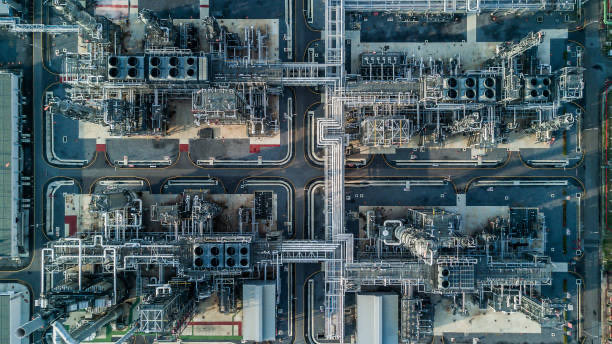
I always think refineries make for the best aerial photos? Am I wrong?