I am excited to announce my appointment as Chair Professor at the University of Hong Kong (HKU), effective this summer. I will also hold a part-time, two-month appointment at a major university in Japan, with terms to be finalized.
At HKU, I will join a vibrant team of scientists who have established the university as a leader in geology, geotechnics, geochemistry, geophysics, climate science, and planetary exploration. I will lead a new initiative focused on advancing planetary science and the study of terrestrial and extraterrestrial materials, with four core research directions:
1. Stable and radiogenic isotopic variations by LA-MC-ICPMS
2. Noble gas and nitrogen isotopic geochemistry and cosmochemistry
3.First-principles approaches to Earth and planetary processes
4.Experimental cosmochemistry and geochemistry
I look forward to working across institutional and national boundaries to foster scientific exchange and collaboration. This new role will allow me to build on existing partnerships and develop new ones across East Asia and beyond. I warmly invite students and researchers interested in joining this effort to get in touch.
Finally, I extend my sincere thanks to my colleagues at the University of Chicago for their enduring support and many enriching discussions over the years.
@HKUniversity@hku_science@OriginsLab
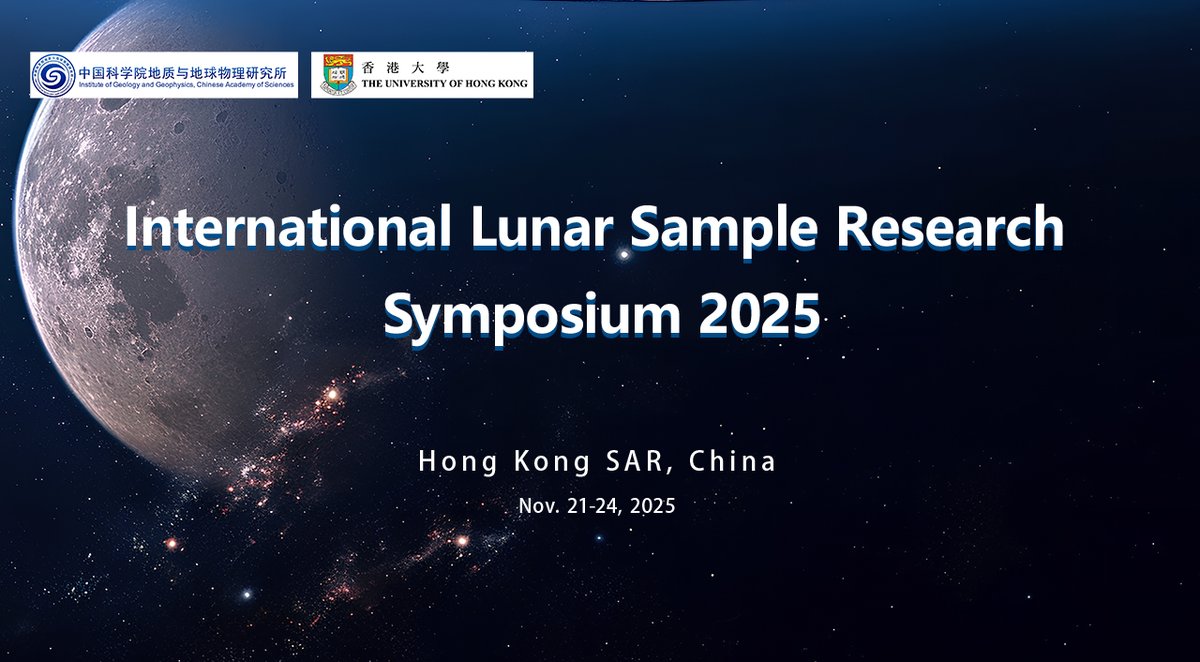
Lunar colleagues, I want to bring the upcoming International Lunar Sample Research Symposium 2025 (https://t.co/96adOQv3cn) to your attention, jointly hosted by the Institute of Geology and Geophysics @CAS__Science and the Department of Earth and Planetary Sciences @HKUniversity . This symposium will happen during Nov. 21-24, 2025 (presentation during Nov. 22-23, 2025) at the University of Hong Kong. We are looking forward to hearing your exciting findings based on lunar samples no matter collected by Apollo, Luna, Chang'e missions, or recovered as lunar meteorites, and use this conference as a platform to establish more cooperations and collaborations in lunar sample studies internationally.
https://t.co/WEfaS7vwYK
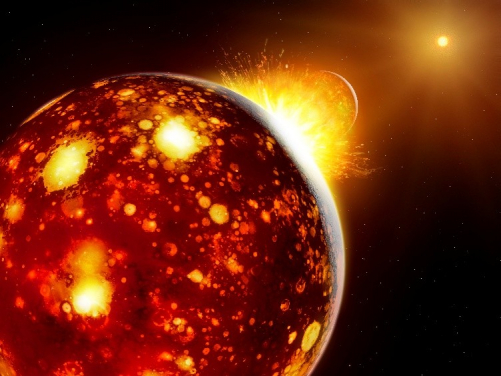
Thrilled to share our work in @ScienceMagazine, featured in @nytimes! We used iron isotopes to show that Theia, the planetary body that slammed into Earth to form the Moon, originated in the inner Solar System.
https://t.co/sA7zqK05iH
https://t.co/J88LvMU3Tc
Post-doctoral Fellow in the Origins Collective in the Department of Earth and Planetary Sciences
Applications are invited for appointments as a Post-doctoral Fellow in the ORIGINS COLLECTIVE in the Department of Earth and Planetary Sciences, The University of Hong Kong (Ref.: 534416), to commence as soon as possible for 1 year, with the possibility of renewal subject to satisfactory performance and availability of funding.
About the ORIGINS COLLECTIVE
The ORIGINS COLLECTIVE at The University of Hong Kong is a newly established research initiative focused on understanding how the Solar System formed, how it evolved, how habitable environments were established on terrestrial planets, and which processes shaped planets into their current states.
We seek a highly motivated Postdoctoral Researcher with expertise in mass spectrometry to support and advance research in cosmochemistry, early Earth evolution, geochronology, and low-temperature geochemistry. This is a unique opportunity to help establish and manage cutting-edge analytical facilities in a dynamic research environment.
Key Responsibilities
1. Work closely with Professor Nicolas Dauphas to establish new analytical facilities at HKU
2. Maintain, operate, and support users of the newly installed Neoma MC-ICP-MS
3. Conduct independent and collaborative research within the lab’s focus areas
4. Assist with laboratory management, training, and method development
Requirements
1. PhD in Earth Sciences, Chemistry, or a related field
2. Hands-on experience with MC-ICP-MS, TIMS, and nitrogen and noble gas analysis
3. Experience with wet chemistry, laser ablation, and clean lab procedures
4. Demonstrated ability to conduct high-quality research and work effectively in a team
Inquiries
For further information, please contact Prof. Nicolas Dauphas at [email protected].
Remuneration and Benefits
A highly competitive salary commensurate with qualifications and experience will be offered, in addition to annual leave and medical benefits.
How to Apply
The University only accepts online application for the above post. Applicants should apply online and upload (1) an up-to-date C.V.; (2) a brief cover letter (< 300 words) outlining research interests and relevant experience and (3) name and contact information of at least three professional referees. Review of applications and interview of candidates will commence immediately and will continue until March 16, 2026, or until the position is filled, whichever is earlier.
The University is an equal opportunities employer and is committed to equality, ethics, inclusivity, diversity and transparency
https://t.co/rBpWz3C9HV
Its like the savant hyper focused & ADHD inclined now have a new universe of tools to explore through the internet where the idea-to-build timeframe is lightspeed so now there is space delving into layers, complexities, analogy & visual synthesis to form educated conclusions.