⚠️ Malicious Sicoob NuGet steals Brazilian bank credentials while npm packages target AWS and CI/CD secrets.
The fake "Sicoob.Sdk" versions 2.0.0–2.0.4 exfiltrate client IDs, PFX certificates, and passwords. It was downloaded nearly 500 times.
Multiple npm packages from one actor also steal cloud and pipeline secrets.
Full report: https://t.co/NnLMiVp32X
AIs are just another step up the semantic expression ladder. We initially expressed our semantics in binary, then assembler, then Fortran, then C, then Java, then Python, etc. AI is just the next step up that same old ladder.
And when you take that step, nothing else changes. You are still expressing behavioral semantics. You still need to express structural semantics. All the old principles still apply. You still have to be concerned about design and architecture.
And even though the syntax allows informal statement, you cannot abandon formalism. When you express behavior you need a formal way to enforce the behavior you want. I use Gherkin for this. It seems to work pretty well.
Consider that Gherkin is written in triplets of Given/When/Then. Each of those GWT triplets is a transition of a state machine. A full suite of Gherkin triplets is a formal description of the finite state machine that represents the behavior of the application.
Other formalisms that matter are things like module dependency graphs, testing constraints, complexity constraints, and many others.
This step up the semantic expression ladder provides you with an enormous amount of options. But you'd better choose those options wisely!
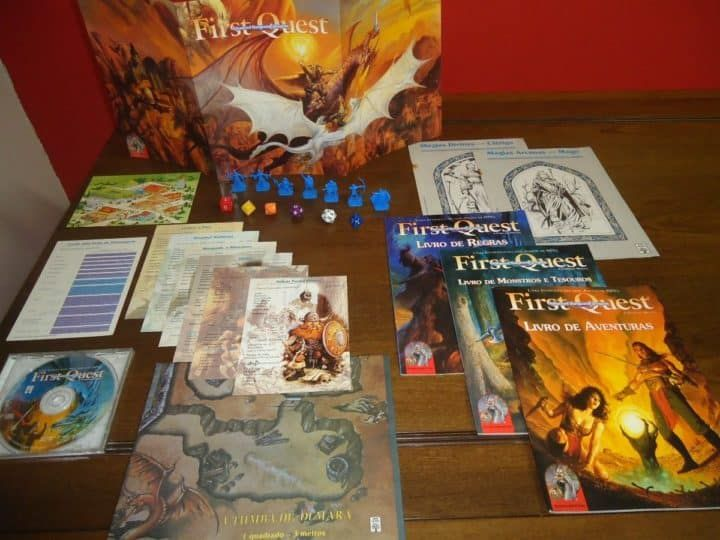
@RockenbachFabio Comecei com First Quest, publicado pela editora Abril Jovem em 1995. Ele tem trilhas que interpretam a ação dos personagens num CD para vc executar conforme a decisão do jogador. Tem a venda na internet.
It's the 1950s. COBOL promises an English-like syntax that will allow non-specialists to program software systems, 10x productivity and not needing to understand the underlying system.
It's the 1970s. SQL promises natural language queries that managers can write themselves, "just tell the database what you want, not how to get it," and "no more dependency on programmers for data access."
It's the 1990s. Visual Programming tools promise "program without coding," "drag and drop your way to enterprise applications," and "development at the speed of thought."
It's the 2000s. MDA promises "design once, deploy anywhere," "business users can modify the models," and "automatically generate perfect code from UML diagrams."
It's the 2010s. No-Code platforms promise "anyone can build an app," "eliminate the middleman between business and technology," and "goodbye IT department!"
It's the 2020s. Vibe Coding promises "just describe what you want in natural language," "no programming knowledge required," and "focus on what your software should do, not how it works."
1/ Can Large Language Models (LLMs) truly reason? Or are they just sophisticated pattern matchers? In our latest preprint, we explore this key question through a large-scale study of both open-source like Llama, Phi, Gemma, and Mistral and leading closed models, including the recent OpenAI GPT-4o and o1-series.
https://t.co/2tv8Pp9MSz
Work done with @i_mirzadeh, @KeivanAlizadeh2, Hooman Shahrokhi, Samy Bengio, @OncelTuzel.
#LLM #Reasoning #Mathematics #AGI #Research #Apple
You've seen this before. It's the "treasury" of the ancient, rock-cut city of Petra.
But do you know what it actually is — or more interesting, what's inside?
It isn't what you might expect... (thread) 🧵
@Culture_Crit Hi, your posts are fascinating. They always got me in a reflexive state of mind. I didn't know how many means exist in cultural things and other things that we think are not cultural. Thank you, please keep posting.
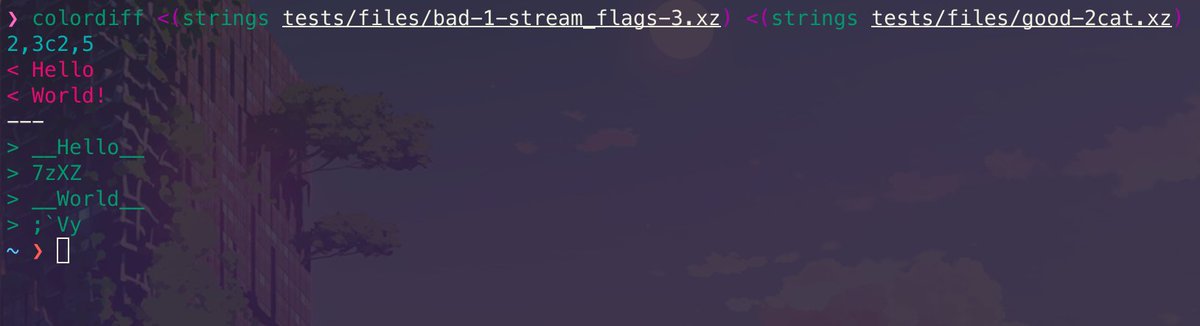
The setup behind the CVE-2024-3094 supply-chain attack is fascinating. I originally wanted to finish and share a tool to audit other OSS projects for anomalous contributor behavior, but I feel what I found trying to MVP it is way more interesting. 🧵 1/25 https://t.co/Mc7GTfAnca