If I have a “yes/no” dependent variable with many “nos” (zeros) and few “yeses” (ones) over time, and I also have a treatment, treated group, and comparison group, which model is best to estimate the rate of yeses? #econtwitter
Need a way to remember which statistical error is type 1 and which is type 2? Here’s the trick that finally helped me:
In “the boy who cried wolf” the townspeople make type 1 and type 2 errors, in that order.
First they think there’s a wolf when there isn’t one (false positive).
Then they think there’s no wolf when there is one (false negative).
I’m excited to announce that I’m on the 2023-24 econ job market working on public, labor, and environmental topics! Here is an overview of my JMP “Natural Disasters and Neighborhood Choice: Evidence from Hurricane Harvey.” 1/8
Super excited for the official news!
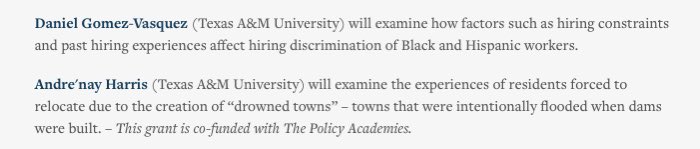
My student Daniel @DGomezV_Econ@TAMUArtSci was awarded a @RussellSageFdn Dissertation Grant for his ongoing work on discrimination against Black & Hispanic workers.
Lovely to see @AndrenayHarris just below him🎉🎉
https://t.co/D0gxMqRAW8