📣 Deadline Reminder -Call for papers! for a Special issue on “Challenges and New Perspectives for Monetary Policy in Africa.”
Deadline: 30-April-2024
Guest Editors: Andrew Maredza & Nicola Viegi
For more details visit:👇🏾
https://t.co/tl9J6SQlJg
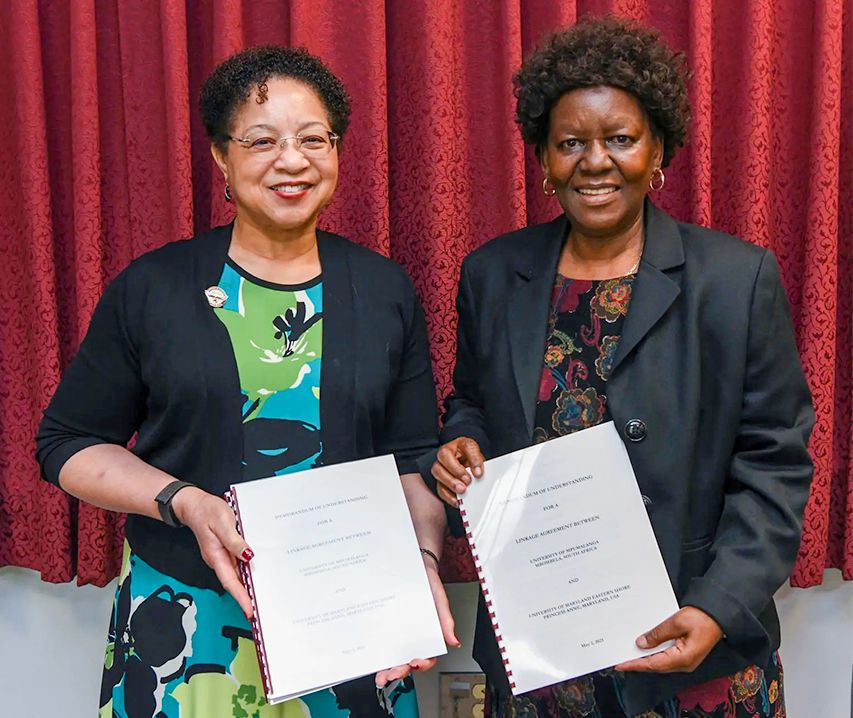
UMP Forges Collaboration With UMES
The University of Mpumalanga (UMP) and the University of Maryland Eastern Shore (UMES) have signed a Memorandum of Understanding (MoU) to stimulate scientific cooperation and strengthen teaching, research and outreach activities to promote
The economy is not a self-regulating system. It is made-up of human decisions. If powerful people want it to be exploitative and unsustainable; that is what it will be. If people want it to be just and regenerative; they need to put up a fight.
US’s problem is capitalism (inequality, instability, injustices). Yet big parties focus on immigrants, walls, investigations, etc.
Likewise for UK whose major parties focus on being in/out of Europe.
Problems big parties distract from are more important than those they engage.
In the 1001 ways that capitalism worsens inequality, here is another: as big US banks close branches they do so first and most in poorer areas. So people there have harder time getting loans, other bank services.
The system is the problem.
https://t.co/hPWJfKiHF9
@JaminSpeer Scarcity: hence the need to optimize in the face of scarcity (constrained constrained) to maximize human welfare (but not dominance by one group as in capitalism...) sustainably (in a manner that allows the earth to replenish itself).
We need a carriculum that acknowledges our IKS and consistent with our African realities. Many times we regurgitate theories, methodologies and solutions that are not calibrated to our African contexts.
@AfDB_Group Africa needs to trade more with itself. In 2018 intra-Africa trade accounted for only 17% compared to infra-Asian and intra-Europe with 59% and 79% respectively. Yet almost everything the world needs today originate in Africa. The only hurdle is technology and infrastructure.