It's time - our membership is now open!
Become a member of Rethinking Economics International to help build a better economics for our futures, our communities and our planet.
Join us: https://t.co/3Z7i3gkr4u
As the cost of living soars, Bangladesh’s Readymade Garment workers took to the streets demanding better wages. On the admin side, the govt was due, by law, to institute a Minimum Wage Board. History gives very little to the workers by way of trust, so they initially started protesting when they saw no signs of the MWB.
Since August, protests over worker pay have been escalating across the country. Amid a cost-of-living crisis that has forced families to cut back on food, heating, healthcare and children’s education, workers have had enough. They want a fairer share of the profits that giant brands like, H&M, Zara, Gap, Primark and Walmart, make off the backs of their labour.
They’ve already forced a major win: a newly formed wage board was announced within the first week of the strike. But the workers aren’t backing down. The strike continues to this day.
Major news platforms in Bangladesh and around the world are touting these strikes as an “existential threat to the RMG industry” and neoclassical economists urge Bangladesh to maintain its “competitive advantage” - all of these are code for keeping wages low regardless of whether these wages offer dignified life. We shouldn’t treat labour as an abstract or disembodied cost, while the one powerful party (aka the western buyer brands) has maintained extractive relationship and holds vast share of the profits that these very workers produce.
As Rethinkers, we ask you to reframe the question - Why do western buyer brands continue to extract such high profits from the value chain while not ensuring a living wage for the workers? Why not question the business model that forces unrealistic margins on the Garment Industry owners in Bangladesh, who then push it on to the workers.
Want to understand the dynamics of the RMG garment industries in the Global South? Revisit the brilliant Alessandra Mezzadri’s book The Sweatshop Regime: Labouring Bodies, Exploitation, and Garments Made in India to understand the exploitative conditions under which workers toil. This will help understand the moment in the RMG sector in Bangladesh.
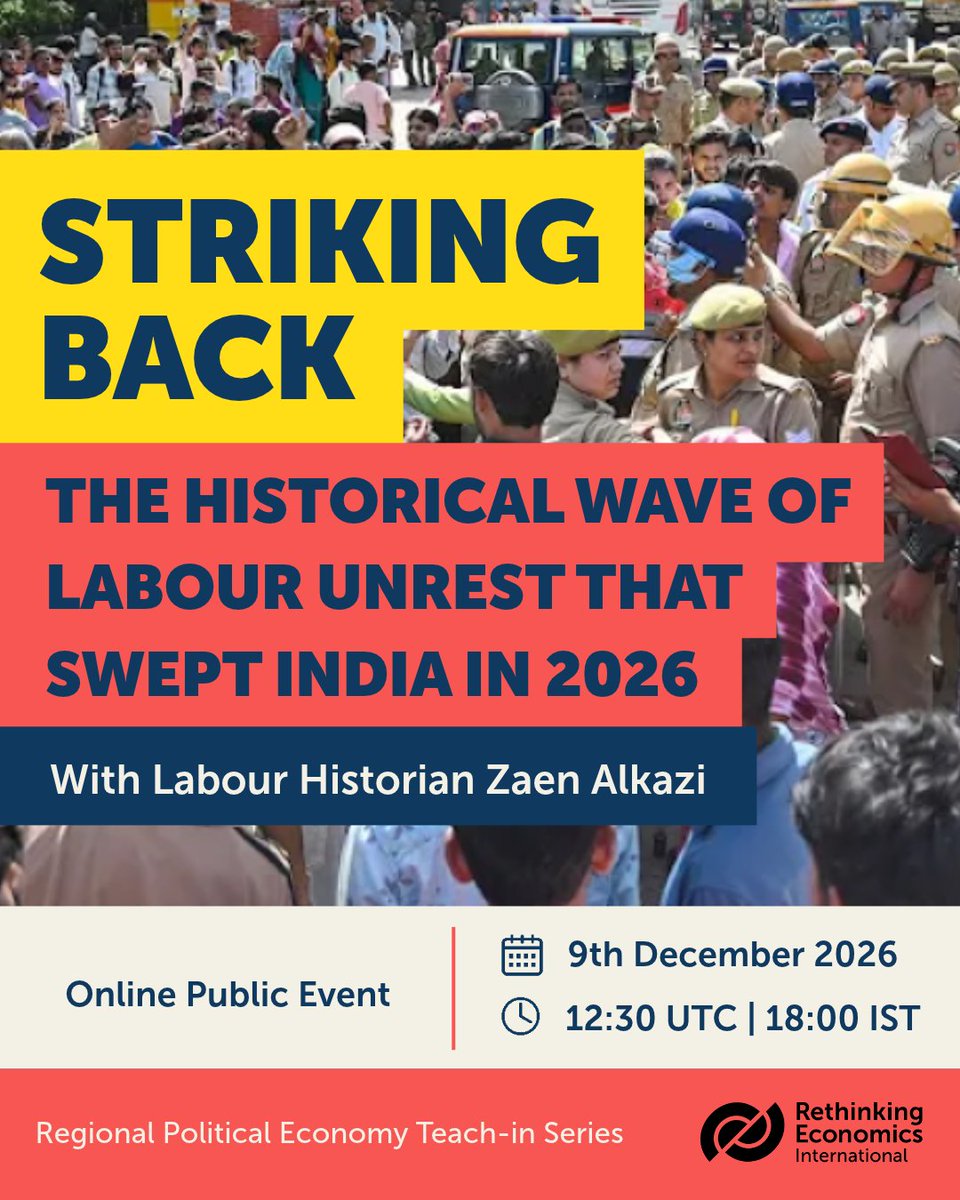
You could also join us on 9th December at the teach-in on the historic labour strikes in India from earlier this year, alongside Labour Historian and Investigative Journalist Zaen Alkazi. https://t.co/34OLPvdxY7
A historic wave of labour unrest swept northern and central India between February and June 2026, with 275 strikes across ten states involving nearly 200,000 workers.
The strikes secured minimum-wage increases in three states, faced brutal repression, and received little mainstream media attention.
As Labour Historian and Investigative Journalist Zaen Alkazi said:
“This wave represents the first large-scale revolt of contract workers, whodemonstrated a remarkable ability to spread and sustain strikes, throughsocial media, marching from factory to factory and using networks builtover years of migration between villages and cities or through working jobsin different factories. The increasing similarity in working conditions of contract workers across industries—being paid minimum wages for long hours—allowed common demands to spread across sectors rather than being confined to a particular industry.”
Join us on 9th December to explore the causes and significance of the strike alongside Labour Historian and Investigative Journalist Zaen Alkazi.
9th December 2026 | | 12:30 –13:45 UTC | 14:30 - 15:45 SAST | 18:00 - 19:45 ITC | Online event
Book your tickets today:https://t.co/34OLPvdxY7
What’s the point of being hyped as the future when you aren’t given a stake in the present?
Around the world, young people are frustrated at being locked out of the future they were promised.
A social contract has been broken: apply yourself in your studies, work towards a qualification and a measure of security and purpose will follow.
This no longer applies.
It is not that jobs do not exist. We want work that is decent, meaningful and dignified. Addressing the future of work is no longer an option. This is a crisis that is unfolding here and now.
That’s why Rethinking Economics International is working to unite young economists, social scientists and youth movements to advocate for more than the status quo. We are calling for a focused industrial strategy that delivers good, green jobs for young people.
We need 100 new people to join us in November so that we have the resources we need to make this happen. Our members help keep us independent and sustainable.
Can you help us reach our target and become a member from $5 a month today?
In solidarity ✊
While the concept of economic nationalism is frequently deployed it is often poorly defined, posited as the cause of protectionism in some cases while providing a rationale for liberalisation in others.
In Constructing Economic Nationalisms in Brazil and India, Jason Jackson provides a more rigorous articulation by analysing variation in foreign investment regulation in postwar Brazil and India.
Author Jason Jackson, will be joined by Amr Adly and Surajit Muzumdar for a lively discussion of this important text.
Date: 2nd December 2026
Time: 14:30–16:00 UTC
Format: Online event
Book your tickets today -> https://t.co/XZ9jnh3R1u
This event is organised by REI as part of the Economic Histories of the Global South seminar series in collaboration with partners at AUC and WITS.
Schumpeter spoke of a pre-analytical “vision”: every theory rests on ontological choices about what exists and what matters. Some gained scientific and institutional authority. The trick is to mistake that dominance for neutrality and dismiss alternatives as “ideology.”
To actually investigate the politics behind free-market economics is far more rigorous than what mainstream economics does, which is mostly to assume that free markets are the natural state of affairs and just need some correcting when they produce so-called externalities.
Does economics have a language problem that locks citizens out of democratic debate?
Ekonsepto (a Rethinking Economics network group and brilliant youth-led non-profit in the Philippines) just launched their new working paper tackling exactly this: Can Filipinos Follow the Economy?
The paper explores how far 'econocracy', the inaccessible, technical language used to describe economics that shields government policy from civic oversight, has affected the Filipino population.
They investigate its impact by asking:
To what extent do Filipinos consume and understand economic news, and how do patterns of exposure and comprehension vary across income class, generation, region, and voter status?
It is great to see Ekonsepto build upon the work of others in the network. They've cited Econocracy's 2016 survey data on the UK public's understanding of economic messages put forward by politicians and the media to help make their argument and explore how this phenomena is manifesting in the Phillippines.
Good luck to Ekonsepto for the conference launch today!
Read the full working paper here: https://t.co/YU7NPWNOjx
The full Voices in Transition Series is officially live!
This series brings critical insights from the Global South into European policy debates, bringing you critical, grounded insights from authors who are actively working in the field.
It was put together by Rethinking Economics International and Economists for Future DE.
👉 Swipe through to explore the topics and find what sparks your interest!
🔗 Follow the link to read the full series https://t.co/ANYPDG0lDB
📖 What if the biggest threat to democracy is an economy that no longer works for ordinary people?
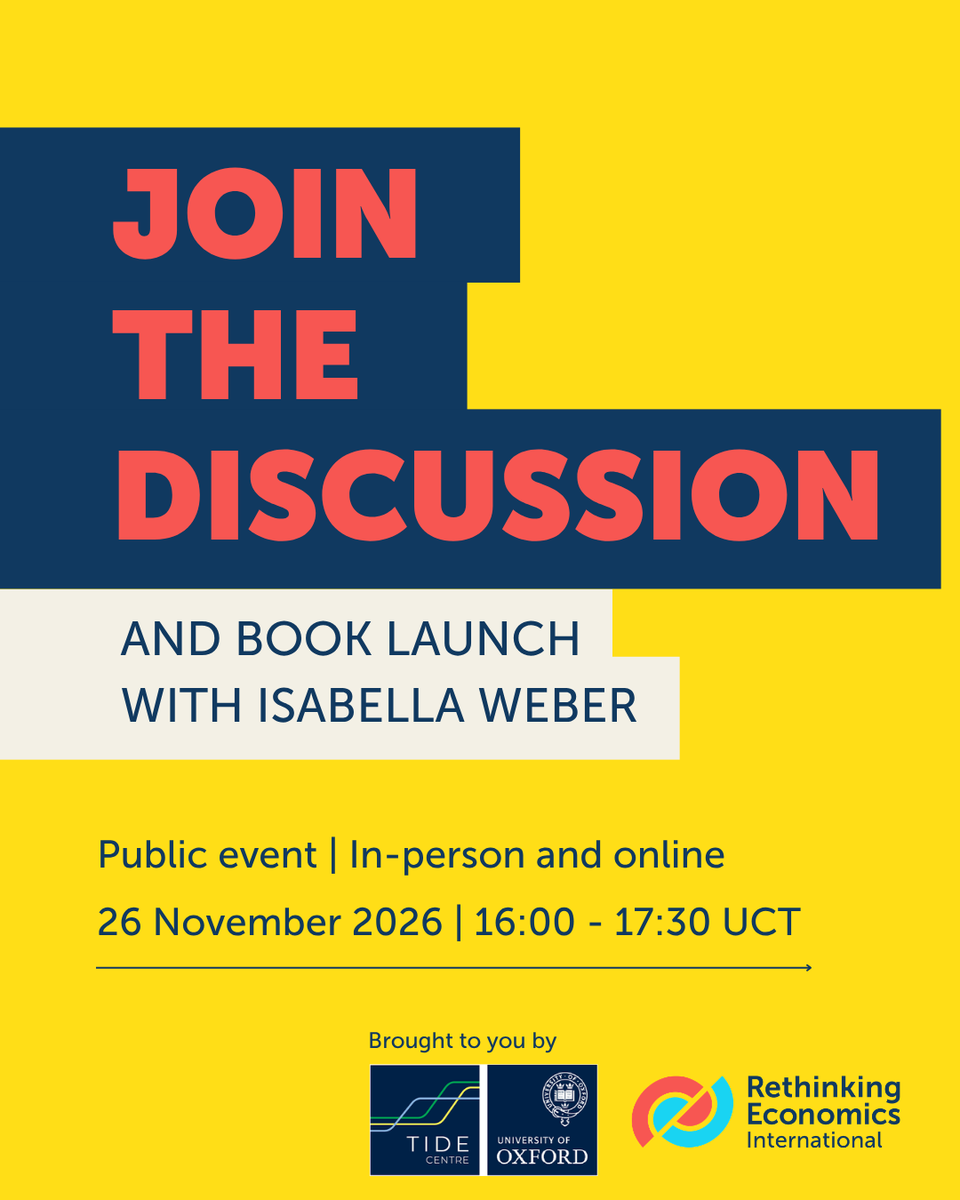
Join us for the launch of Anti-Fascist Economics: In Defence of Affordability, Dignity and Democracy, the new book by Isabella Weber.
Together with @rethinkecon, we’ll explore how economic insecurity fuels authoritarian politics and whether economic policy can help defend democracy.
📅 Thursday, 26 November | 4 PM GMT
📍 Nuffield College, University of Oxford
🎟️ Free event! Online and in-person spaces available.
Register at: https://t.co/B6oNJp4wm0
What might an economy look like if it put people's livelihoods, collective wellbeing and the future of our planet first?
In Anti-Fascist Economics, Professor Isabella Weber envisions an economics that centres the essentials of livelihood and production, strives to make life on our planet livable for all, confronts rather than conceals corporate power, and charts a path towards international cooperation beyond the familiar dichotomy of free trade and trade wars.
Join us on 26 November to hear directly from Professor Weber at a special book launch and discussion.
Explore the ideas behind the book, consider what an alternative approach to economics might look like, and take part in the conversation.
Date: 26 November 2026
Time: 4–6pm UCT
Location: Join us in-person or online
Book your space at https://t.co/4f3Y1GdBHK
Brought to you by Tide Oxford, Rethinking Economics Oxford and Rethinking Economics International
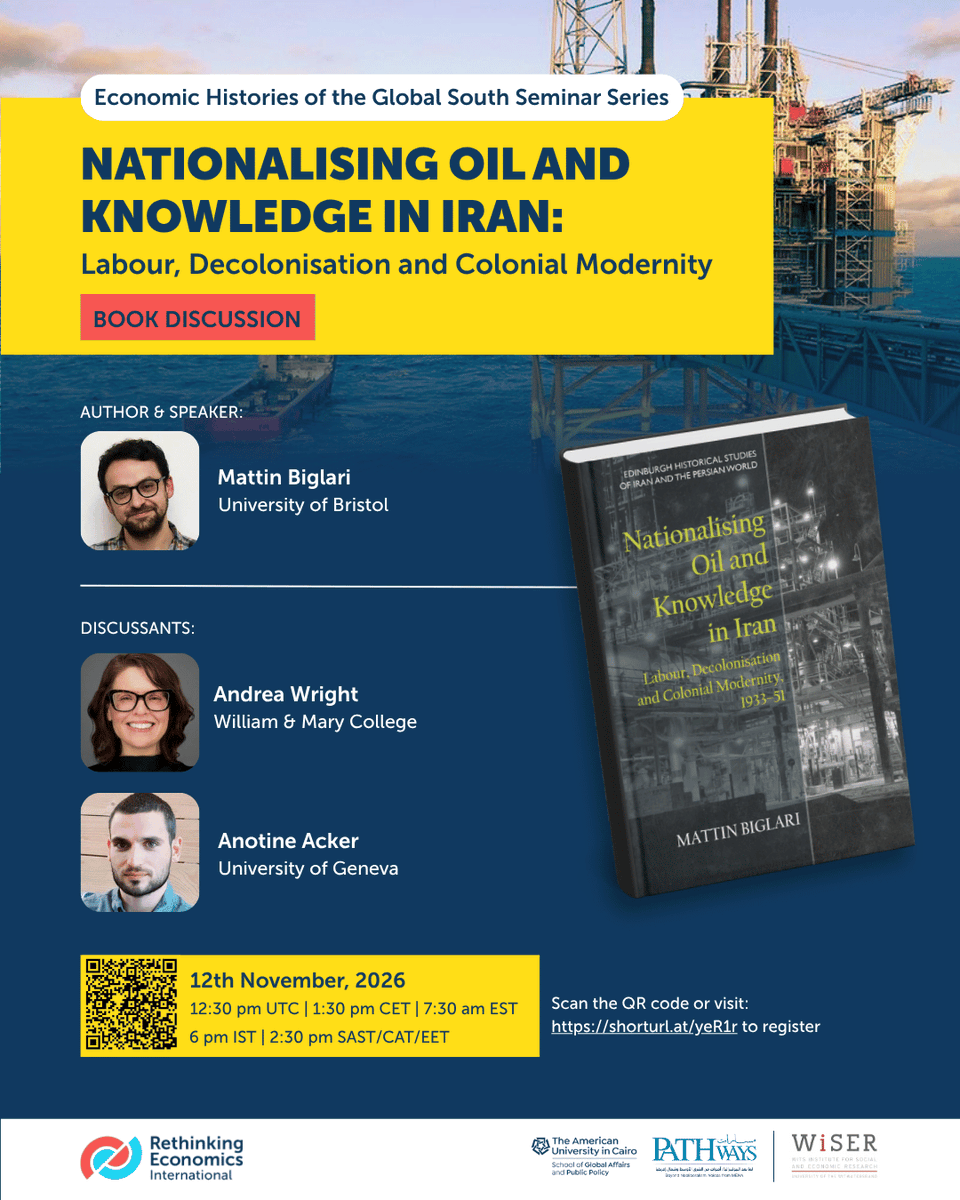
Join us on 12 November to hear Mattin Biglari discuss his book 'Nationalising Oil and Knowledge in Iran'.
Delve into the books central ideas, explore the origins resource nationalisation, and discuss the book with rethinkers and the writer.
12 November 2026 | 12:30–2pm UCT | Online event
Reserve your space on our website: https://t.co/UG8p7D4lhr
Can Zambia move beyond GDP?
Reporting from this summer’s Beyond GDP conference in Lusaka, Thomas captures the lively debates, strong views and high energy behind the growing conversation about how Zambia can measure progress beyond economic growth.
Read the full article on our blog
https://t.co/Lcs26kAHTD
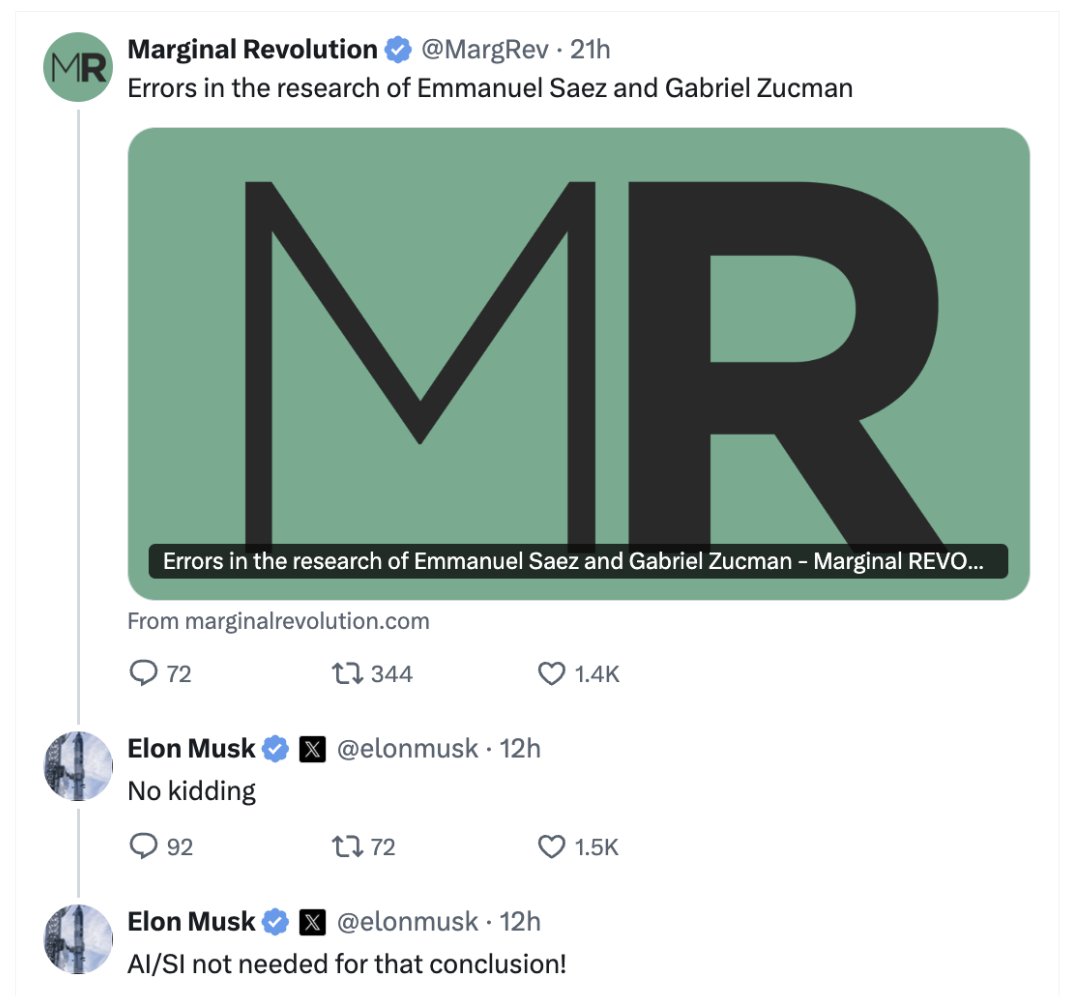
@roadscholarz Sorry the avoidance of doubt, was pointing fun at the fact it’s a totally bad faith use of ai. Ask ai to find errors and it will find them! Big fan of Zucman’s work.
Hello @elonmusk and @tylercowen ,
You have just decided to publicly attack our research, six days before the vote on the California billionaire wealth tax.
Your attempt to discredit our work and that of our numerous academic colleagues is pathetic.
Let’s take a look. 🧵
Ecological economics belongs on the curriculum
This year, Rethinking Economics is fighting hard to make sure that the planet's limits are acknowledged in the curriculum. This is something that you’d think was obviously necessary — but apparently, mainstream economics didn’t get the memo.
We already have 12 groups taking on the challenge globally.
We’re going to be sharing stories and updates directly from the frontlines of these student-led campaigns.
First up: Meet the activists at Kwame Nkrumah University, Zambia who’ve just launched their campaign. Swipe through the carousel to see how they are shaking up economics education. 👉
Follow this page to keep up with the movement.
Congratulations to all those that made Lula's re-election a reality. From the members of @DesajusteEcon@deamericasoy to the millions of Brazilians that mobilised against the threat to democracy and the constitution, the world owes a great deal of thanks (and has a lot to learn from you!)
As this open letter we shared last week makes clear, there is hard work ahead.
'O desafio agora é fazer um governo que não apenas estanque a sangria do passado, mas um que possa nos ajudar a construir as condições concretas para que nossa geração possa imaginar e realizar o futuro'
(The challenge now is to create a government that does not merely staunch the bleeding of the past, but also helps us build the material conditions necessary for our generation to envision and realise its future)
Today though we celebrate a result that moves us closer to that goal. Truly a victory for people and planet.
https://t.co/GaY7fxLm3O
What kind of future can young Brazilians hope for?
Ahead of Brazil’s election on Sunday 25 October, Young Economists with Lula have addressed an open letter to the President, addressing the challenges facing young people in Brazil today and calling for a structural response to the crisis.
Read the full letter on our website: https://t.co/GaY7fxLm3O
Photo credit: UN Photos
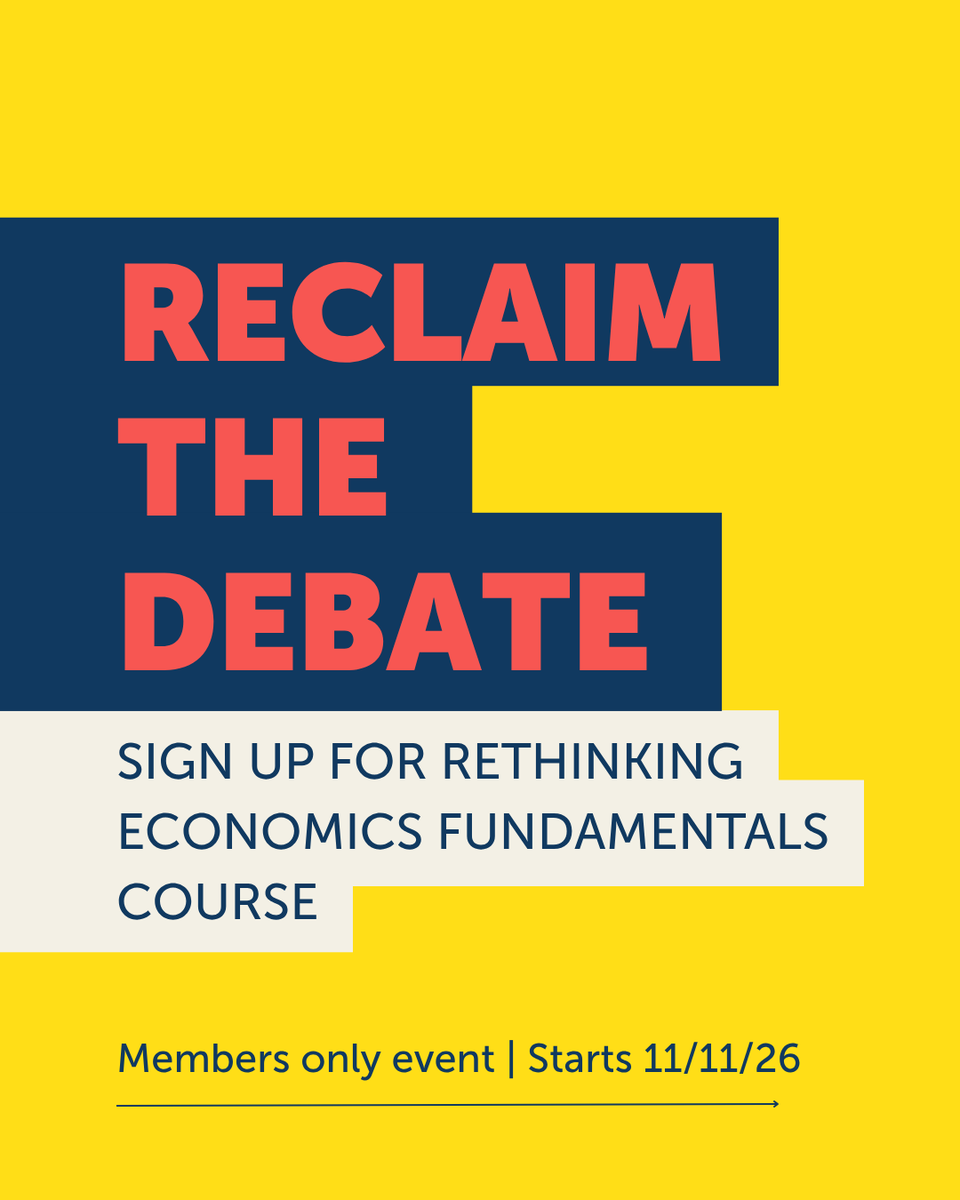
Do you find yourself wondering…
‘What is economics?’, ‘How did economics become language of power and its practitioners, the gatekeepers?’, ‘How do you do economics?’, ‘Can economics help serve people and planet?’
Join the Rethinking Economics Fundamentals to explore and find some answers.
It’s a four-week course designed to introduce to some of the big questions that preoccupy Rethinkers.
Only open to members. Starts on 11/11/26.
To sign up visit the members' hub.
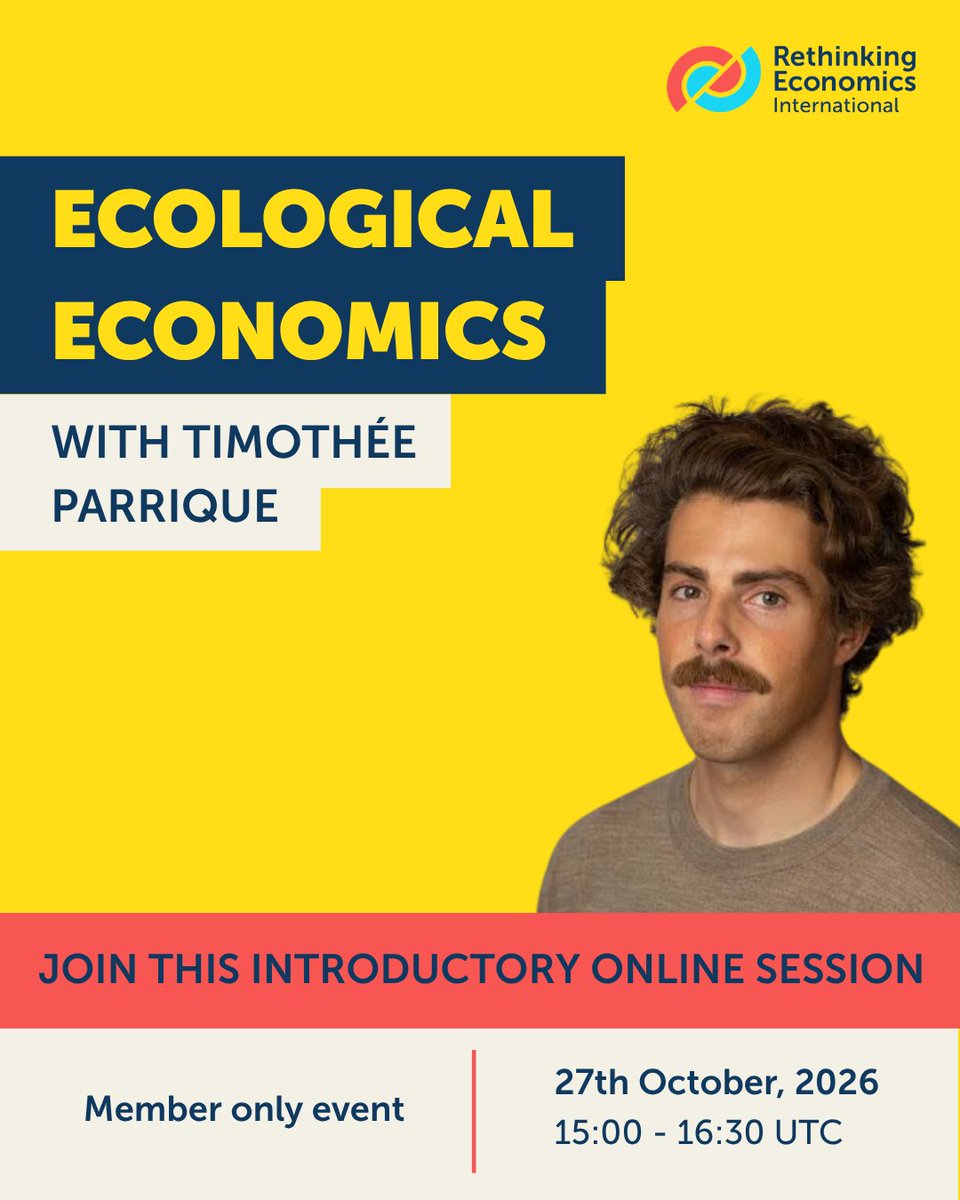
Join Rethinking Economics International for a session introducing Ecological Economics with ecological economist Timothée Parrique.
We’ll cover the core tenets of ecological economics, how it differs from mainstream economics, and why it matters for a 21st-century economics education, followed by open Q&A.
This session is part of the Ecological Economics Campaign Programme. Whether you’re already campaigning to change your curriculum or just curious about ecological economics, this session is open to all members of REI.
👉 RSVP on our website: https://t.co/ZwICpryhp5
Want to become a member? Sign up on our website: https://t.co/TxPZRMWusY
To hear more about the campaign email [email protected]