Cosmic smoke & telescope mirrors?
Webb found complex organic molecules similar to smoke or smog in a galaxy more than 12 billion light-years from Earth. This sets a new record for the most distant detection of these big, complicated molecules: https://t.co/WzzZZixG5K
Webb threw its hat in the ring(s), looking for an expected supernova after the gamma-ray burst. While we didn't spot the supernova, this was the first use of Webb's infrared sight for studying such an event and a great display of telescope teamwork! More observations are to come.
It's #WorldMentalHealthDay. Taking care of your mental health is a mission imperative at DIA. We have an Employee Assistance Program dedicated to offering resources that help employees handle personal & work-related concerns. Taking care of our workforce helps us #DoWhatMatters.
Hey Neptune. Did you ring? 👋
Webb’s latest image is the clearest look at Neptune's rings in 30+ years, and our first time seeing them in infrared light. Take in Webb's ghostly, ethereal views of the planet and its dust bands, rings and moons: https://t.co/Jd09henF1F #IAC2022
Before they were stars✨
This new @NASAWebb image reveals secrets of the Tarantula Nebula: thousands of never before seen baby stars and forming protostars. The nebula, 161,000 light-years away, is home to the hottest, most massive stars known. https://t.co/pocufvxa0R
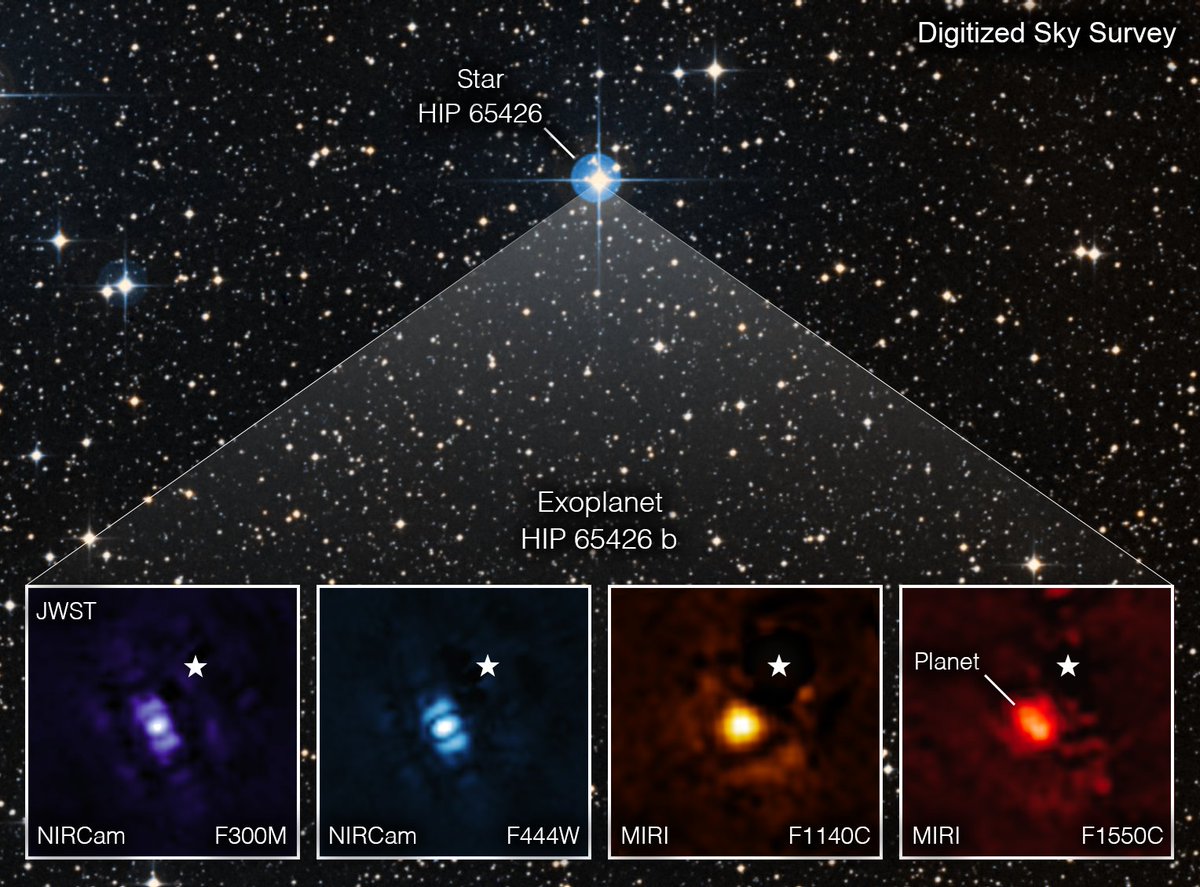
Talk about out of this world! This is Webb’s first direct image of a planet outside of our solar system, and it hints at Webb’s future possibilities for studying distant worlds: https://t.co/ITcl6RItLa
Not what you expected? Let’s walk through the details👇
Three views of a Phantom
Looking at objects in different light tells us more. The Phantom Galaxy seen in visible, infrared and ultraviolet light by @NASAHubble and @NASAWebb reveals star formation, dust details (both key to exoplanet science!) and more.
The misconception that there is no sound in space originates because most space is a ~vacuum, providing no way for sound waves to travel. A galaxy cluster has so much gas that we've picked up actual sound. Here it's amplified, and mixed with other data, to hear a black hole!
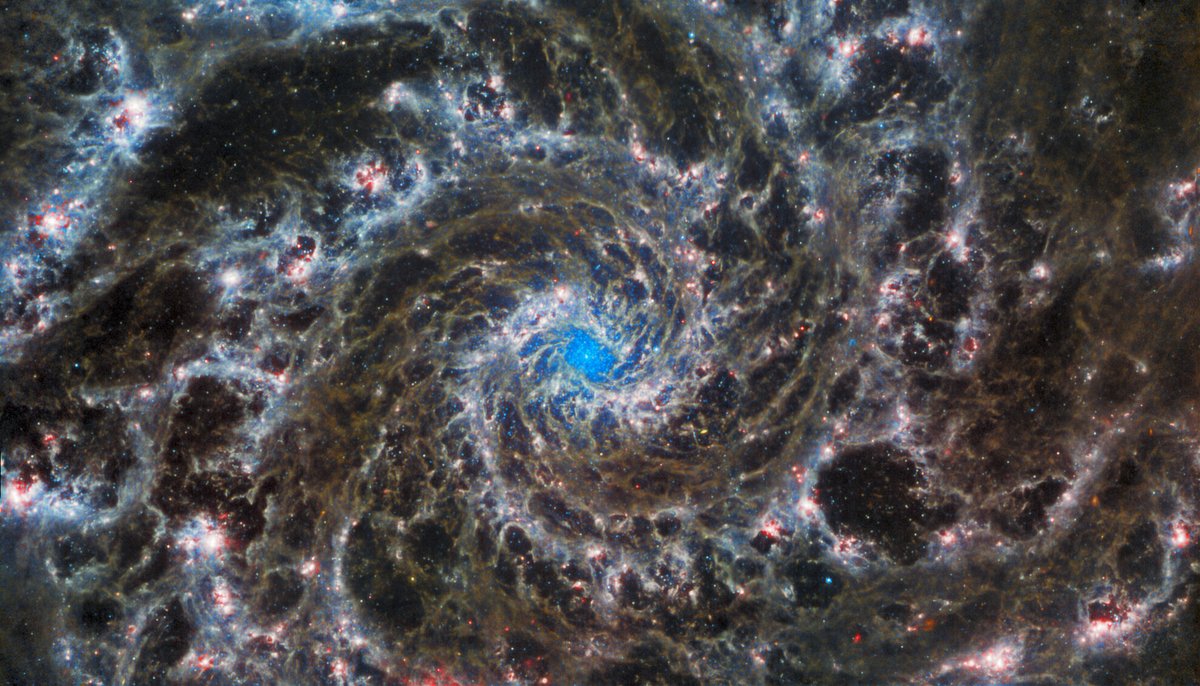
Feast your eyes on the beautiful spiral structure of the Phantom Galaxy, M74, as seen by Webb in the mid-infrared. Delicate filaments of dust and gas wind outwards from the center of the galaxy, which has a ring of star formation around its nucleus. https://t.co/pPVvxsC6KA