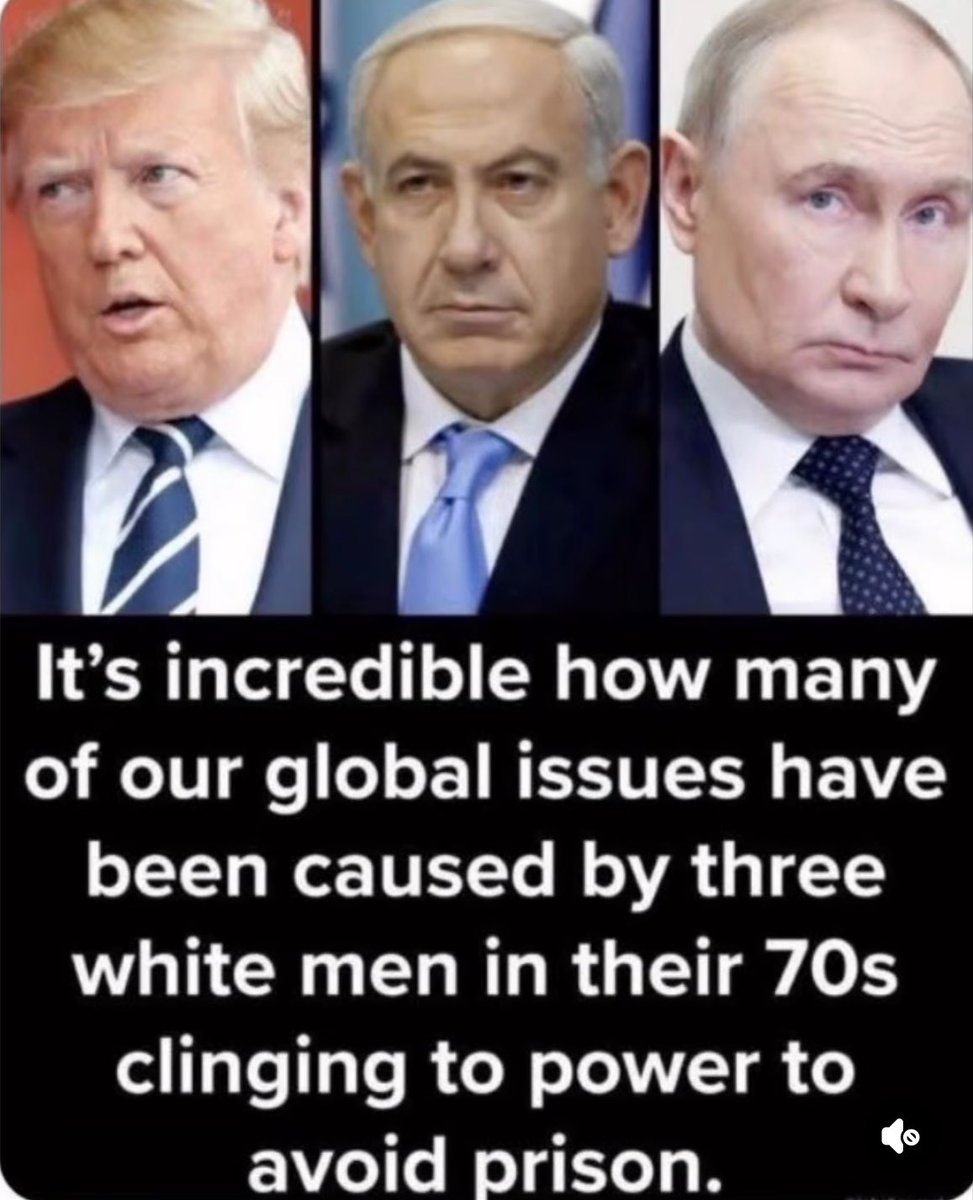
This is easily the saddest time in American history. The absolute worst people are systematically destroying the country, and our system is completely failing to stop them.
🇪🇸 "The American administration had that proposal in its hands, and rejected it. Without explanation."
Sánchez reveals the diplomatic timeline that led to the bombing of Iran.
According to accredited international media, US and Iranian delegations negotiated for several weeks, first in Oman, then in Geneva.
Iran ultimately agreed to sign a new nuclear deal, better than Obama's 2015 agreement, including the destruction of enriched uranium and restoration of IAEA oversight.
Two days later, on February 28, the US began bombing Tehran alongside Netanyahu without warning its allies, without legal basis, and without a defined objective.
Why are so many editors of British papers happy to support Trump's attacks on this country? "President tells UK..." reports Mail, as if he was a sane and normal human being.
On the Brink of Escalation: A Strategic Misreading of Iran
We are approaching a dangerous escalation — driven not only by actions on the ground, but by a fundamental misunderstanding of Iran’s strategic behavior.
A. At the strategic level: Iran’s current leadership behaves less like a risk-averse actor and more like a high-stakes poker player, one that not only calls the bet, but raises it. From Tehran’s perspective, escalation is not recklessness; it is a tool. It is seen as the only way to restore and preserve deterrence. The implicit message is clear: if you strike our critical assets, we will respond in kind — including against your energy and civilian infrastructure.
B. At the operational level: recent events underscore that Iran’s command-and-control systems remain functional despite sustained Israeli strikes. Missile attacks targeting energy infrastructure in Haifa and near Dimona, in response to Israeli actions against South Pars and Natanz, demonstrate coordination, intent, and the ability to execute retaliatory operations in real time.
Taken together, these dynamics point to a troubling conclusion: if Iran decides to act, it will act — particularly when it believes escalation is necessary to maintain deterrence credibility.
We are not just facing isolated exchanges; we are approaching a broader escalation cycle.
And here lies the deeper strategic flaw. The assumption that intensified military pressure could weaken the regime or trigger internal change in Iran is likely misplaced. On the contrary, external attacks — especially those targeting national infrastructure, tend to consolidate regime control, strengthen hardline elements, and legitimize escalation in the eyes of the Iranian leadership.
What emerges is not a pathway to strategic success, but a march of folly: a cycle in which each side’s actions reinforce the other’s worst instincts, narrowing the space for de-escalation while increasing the risk of a wider conflict.
#iran
Watching Trump teeter on the edge of blowing up the world economy because of a combination of hubris, strategic incoherence, mendacity and outright stupidity, might be the most extraordinarily depressing thing I have observed in my entire life, or read about in any other period.
Everyone needs to know the extent of what the U.S did.
An unarmed Iranian ship invited to a joint Indian naval exercise paraded its sailors before the president alongside other participants, including the U.S.
At the last minute, the U.S. withdrew from the exercise and torpedoed the Iranian vessel, then reportedly refused to rescue the survivors, leaving the Sri Lankan Navy to recover bodies from the water.
Rubio: There was absolutely an imminent threat and it was that we knew that if Iran was attacked and we believe that they would be attacked, that they would immediately come after us and we were not going to sit there and absorb a blow
I’m stunned by way we seem to be sleepwalking to a potentially massive attack that could spark a regional war, including real concern of terror attacks here at home. Where is Congress, media, former security and defense officials, chattering classes asking right questions.
@realVickyPryce Pryce on our new book 'Mismanaged Decline: what politicians won't tell you about the economy' (Biteback). A lively discussion about very serious issues of we should all be aware
https://t.co/hz4X72XJB9
Observations From The Munich Security Conference -
It took a World War and eight decades to build the strongest alliance that this world had ever seen. It took less than a year to practically destroy it. When Secretary Rubio said the “old world order was dead” during his speech in Munich he was right. It’s dead because Donald Trump blew it up.
It wasn’t perfect, and there were opportunities missed to improve it, but Donald Trump only knows how to break things, not fix them.
He thinks this somehow benefits us. He is wrong. Our allies no longer trust us. It was obvious in the more than a dozen meetings I had with Presidents, Prime Ministers and Defense and Foreign Ministers. And if you’re Denmark and Greenland, a “loss of trust” is a generous characterization of our new relationship. China is now more popular in Denmark than the United States. In Poland, the U.S. is 21 percent less popular than it used to be.
This means these countries are looking elsewhere for trade and security — that makes you poorer and less safe.
It will be incredibly hard to build what comes next, but we have to figure out a better path forward. Make no mistake, China is rising. Our ability to keep up with them and prevent a conflict depends on trusted, reliable alliances. So does ending the war in Ukraine in a way that keeps Putin from moving on to his next target. And so does growing our economy and protecting American workers in the age of AI.
I know there was celebration at the end of the Munich Security Conference. Unfortunately the champagne corks were popping in Beijing and Moscow.