Este viernes estuvo en un evento del CNE el Centro Carter, la ONU, la Union Europea y cientos de observadores electorales del mundo.
El sistema electoral está blindado y tiene el aval del mundo democrático.
El próximo presidente de Colombia es Abelardo de la Espriella.
La frase china “人心惟危,道心惟微,惟精惟一,允执厥中” es una de las más famosas y profundas de la enseñaza china para emperadores.
Se conoce como las “dieciséis palabras del corazón” (十六字心传) y proviene del libro 《尚书·大禹谟》 (Shang Shu – El Gran Plan de Yu), donde supuestamente el emperador Shun le transmite esta enseñanza a Yu el Grande al pasarle el trono.
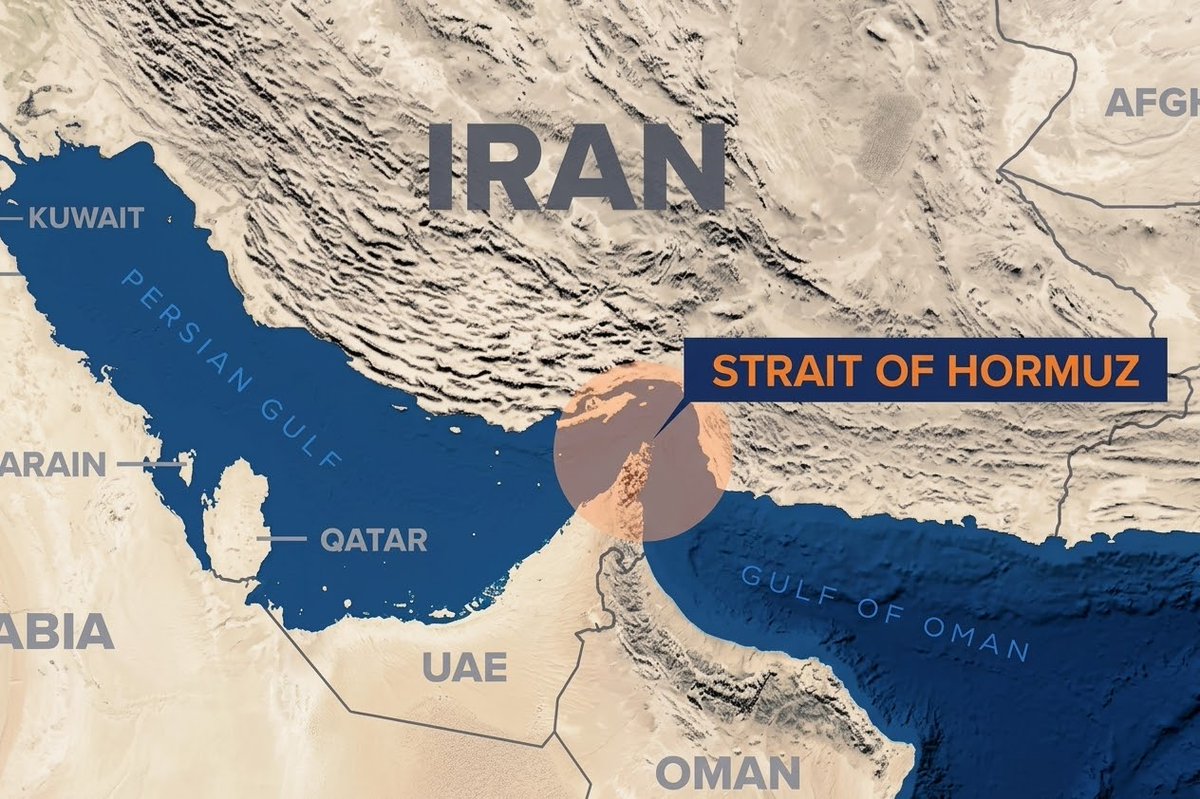
The Strait of Hormuz was not closed by mines, missiles, or warships.
It was closed by seven insurance letters.
On March 5, seven P&I clubs covering 90% of global ocean-going tonnage cancelled war-risk coverage for the Persian Gulf. Gard. NorthStandard. Skuld. Steamship Mutual. The American Club. The Swedish Club. The London P&I Club. They withdrew because their London reinsurers, bound by Solvency II capital rules, could not hold unlimited tail exposure in an active combat zone. The reinsurers pulled capacity. The mutuals had no mathematical choice.
Traffic through Hormuz collapsed from 138 vessel crossings per day to zero tankers by March 7. Three hundred oil tankers anchored idle. A thousand ships trapped. VLCC rates hit a record $481,170 per day. Brent surged from $67 to $108 in nine days, the largest weekly gain in futures history since 1983.
Three US carrier strike groups are in theatre. Air superiority is achieved. 80% of Iran's air defences are destroyed. Missile launches are down 86%.
The Strait is still commercially shut.
The US Navy has escorted zero tankers. Trump's $20 billion DFC reinsurance facility covers 5.7% of JPMorgan's estimated $352 billion Gulf exposure. Confirmed VLCC transits under the programme: zero.
Markets price a 2-to-4-week resolution. The mechanism says 6 to 18 months. Here is why.
Reopening requires not military victory but sequential reinsurance recapitalisation, actuarial reassessment, and individual vessel re-underwriting across the entire London treaty chain. After 26 months of Houthi attacks, Red Sea premiums never returned to baseline. This is a state-on-state war with leadership decapitation and total insurance withdrawal.
It gets worse. The strikes that killed Khamenei triggered Iran's Mosaic Defence doctrine: 31 autonomous IRGC provincial commands with independent firing authority. Insurance markets need a single counterparty to guarantee safe passage. The campaign destroyed the only entity that could provide one.
The interceptor arithmetic is merciless. US THAAD production: 8 per month. Iran's missile production: 100+ per month. Shahed drone cost: $20,000. THAAD interceptor: $12.7 million. The campaign burns years of production in weeks.
And the nuclear fatwa that restrained Iran for two decades was a personal ruling from a living cleric. The cleric is dead. His son lacks the theological authority to reimpose it. 441 kg of near-weapons-grade uranium survived the strikes. The IAEA is blind.
This is 'Actuarial Warfare'. Private reinsurance desks under Solvency II now exercise more effective denial power over the world's most critical energy chokepoint than the most powerful navy in history.
And unlike kinetic denial, actuarial denial operates on institutional timescales that no executive order, no $20 billion facility, and no carrier strike group can compress.
The market is pricing a legacy framework. The mechanism says the framework is dead.
Full analysis for in my Substack! Paywall removed! https://t.co/DN9D73VLRn
Everyone talks about Iranian oil in barrels. Nobody talks about what is inside them. That difference is why Western refineries have been running shadow networks through Dubai for twenty years to get it despite the sanctions.
Crude oil is not a uniform commodity. It is a spectrum of hydrocarbons with different molecular weights, and the composition of a given crude determines how easily it converts into the products refineries actually want to sell: gasoline, diesel, jet fuel, heating oil. The measurement that captures this is API gravity. Higher API gravity means lighter crude with shorter carbon chains, which means lower energy cost to crack, lower processing cost to refine, and higher yield of the light distillates that carry premium pricing. Lower API gravity means heavier crude requiring more energy, more processing steps, more capital equipment, and producing a higher share of lower-value residuals.
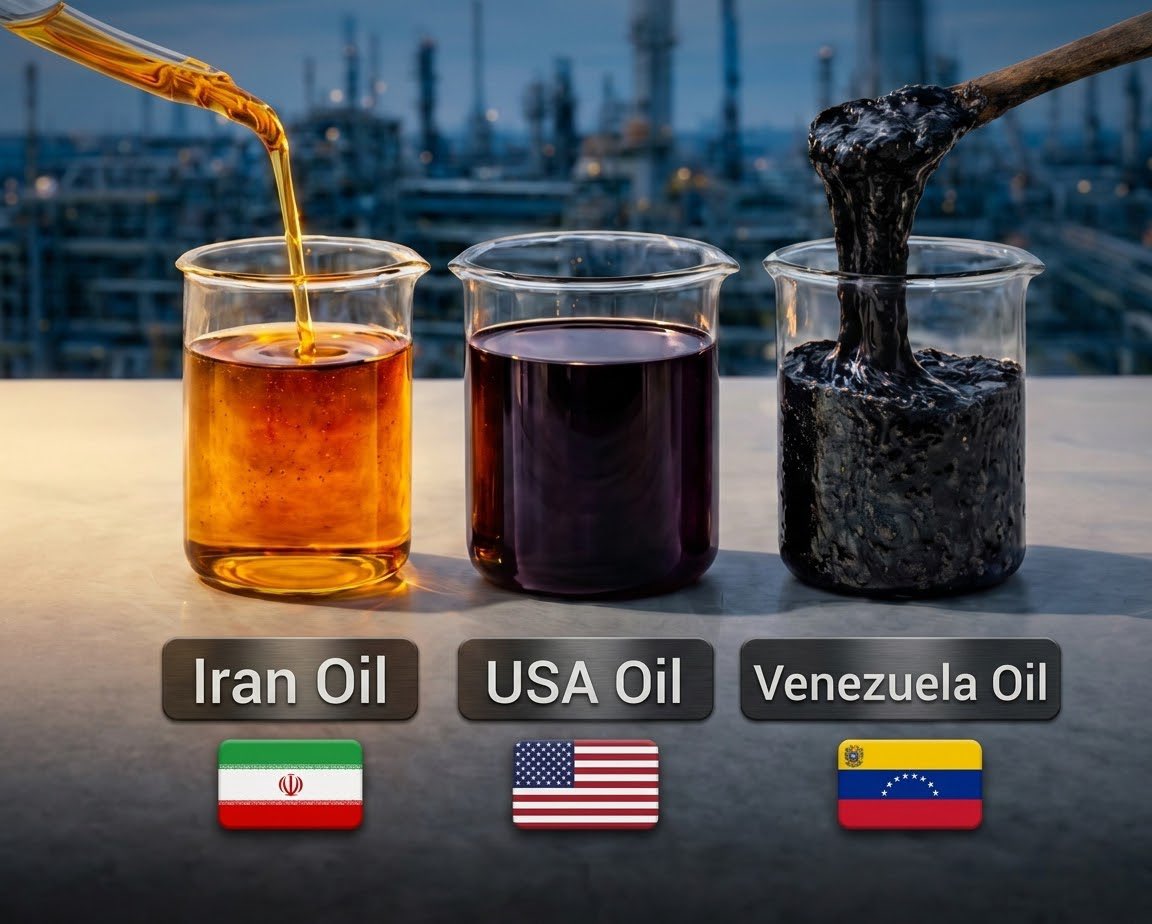
Iranian Light crude runs at 33 to 36 degrees API gravity with sulfur content between 1.36 and 1.5 percent. That is the refinery sweet spot. It is light enough to yield high fractions of gasoline and middle distillates without excessive processing costs, but heavy enough to produce the full range of products that complex refineries are designed to process. It is what petroleum engineers call an optimal blend crude.
Now compare the alternatives.
Venezuelan Merey heavy crude runs at approximately 16 degrees API gravity with sulfur between 3 and 5 percent. Refining it profitably requires a coking unit, a hydrocracker, and an extensive desulfurization train. The equipment exists. The economics work for refineries purpose-built around Venezuelan feedstock. It is not a substitute for Iranian crude. It is a different product requiring different industrial infrastructure.
US West Texas Intermediate runs at 39 to 40 degrees API with sulfur below 0.25 percent. In theory, the cleanest and easiest crude to process. In practice, it is so light that it does not yield the heavier middle distillates a complex refinery needs to run at full capacity. European and Asian refineries built around medium crudes cannot switch to WTI without blending it with heavier crudes to achieve the molecular weight distribution their process units require. WTI is not a drop-in replacement for Iranian medium.
Iranian oil fits where both US shale and Venezuelan heavy do not. It is the liquid that flows through the middle of the global refining system without requiring either the coking infrastructure for heavy crudes or the blending operations for ultra-light shale. That molecular fit is why it commands a persistent premium above comparable grades. It is why Indian refineries maintained Iranian crude purchases through every round of sanctions and negotiated the logistics to keep that flow moving. It is why the Dubai shadow banking and trading network that the UAE is now considering dismantling existed in the first place.
The Strait of Hormuz does not just carry oil. It carries the specific category of oil that the global refining system was built to process most efficiently. Closing it does not just reduce supply. It removes the grade of crude that the system runs best on and forces every refinery in the world to run less efficiently on whatever it can find as a substitute.
That is the premium embedded in the $82 oil price. Not just volume. Molecular weight.
https://t.co/ULBgEzZ3A8
A NUCLEAR-ARMED US ALLY JUST KILLED ITS OWN CITIZENS DEFENDING AMERICAN SOIL FROM ITS OWN POPULATION
Twenty-two dead in Karachi. Fifteen dead in Islamabad. Over 170 wounded across both cities. Pakistani police and paramilitary Rangers opened fire on Pakistani civilians storming the U.S. Consulate in Karachi and U.N. offices in the capital, according to the Washington Post and Reuters citing Karachi police chief Zeeshan Siddiqi and the Pakistani Interior Ministry.
Sit with the geometry of that sentence.
Pakistan, a Major Non-NATO Ally of the United States since 2004, receiving billions in military aid, deployed its own security forces to kill 37 of its own citizens defending American sovereign territory from a population enraged by the American assassination of Iran’s Supreme Leader. Pakistani Interior Minister Mohsin Naqvi condemned the violence while simultaneously expressing “shared grief” for Ayatollah Khamenei. The same Khamenei whose killing by Pakistan’s own ally triggered the riots that Pakistan’s own security forces suppressed with live ammunition.
That is not a policy contradiction. That is a state fracturing along the exact fault line this war was always going to expose.
Pakistan shares a 959-kilometer border with Iran. Balochistan straddles both countries. Shiite communities across Sindh and Punjab maintain deep religious solidarity with Tehran. The same Pakistan hosts U.S. logistics corridors and Coalition Support Funds. Islamabad welcomed U.S.-Iran diplomatic talks as recently as February 13, 2026, according to the Pakistani Foreign Office.
That diplomatic tightrope snapped on a Saturday in Karachi.
Dawn newspaper estimated 2,000 protesters in Karachi, 500 in Islamabad. Protesters breached the outer wall of the U.S. Consulate. Under the Vienna Convention, that compound is inviolable sovereign territory. Siddiqi confirmed officers escalated from water cannons to tear gas to batons to live rounds after the perimeter was breached. The U.S. Embassy reported no American staff injuries but issued immediate safety advisories for all U.S. citizens in Pakistan.
Some reports from India Today and Pakistani Senator Allama Raja Nasir claim U.S. Marine Security Guards also fired after the breach reached the inner compound. Washington has not confirmed or denied Marine engagement. A judicial inquiry ordered by the Sindh chief minister is underway. The attribution question will define whether this was a sovereign security response or an act of American force on Pakistani soil.
But here is what no analyst is stating.
Pakistan possesses approximately 170 nuclear warheads. Command and control of those warheads depends on institutional stability within the Pakistani military and civilian government. Islamabad is now simultaneously absorbing the economic shock of Brent crude surging toward $90, the political shock of a war splitting its population along sectarian lines, and the diplomatic impossibility of defending American interests while mourning an American target.
Iran’s nuclear program was latent. Years from a weapon. Pakistan’s nuclear arsenal is operational, deployed, and sitting inside a country where security forces just fired live rounds into crowds mourning a man Washington killed.
The proliferation risk the world should be watching is not in Isfahan.
It is in Islamabad.
https://t.co/BrzGRrU3VW
They did not bomb Iran. They waited for Iran’s entire leadership to sit down in the same room and then they bombed Iran.
Months of intelligence. Thousands of hours of surveillance and signal intercepts. One variable: the moment the Supreme Leader, the President, and senior military command gathered in a single location at the same time.
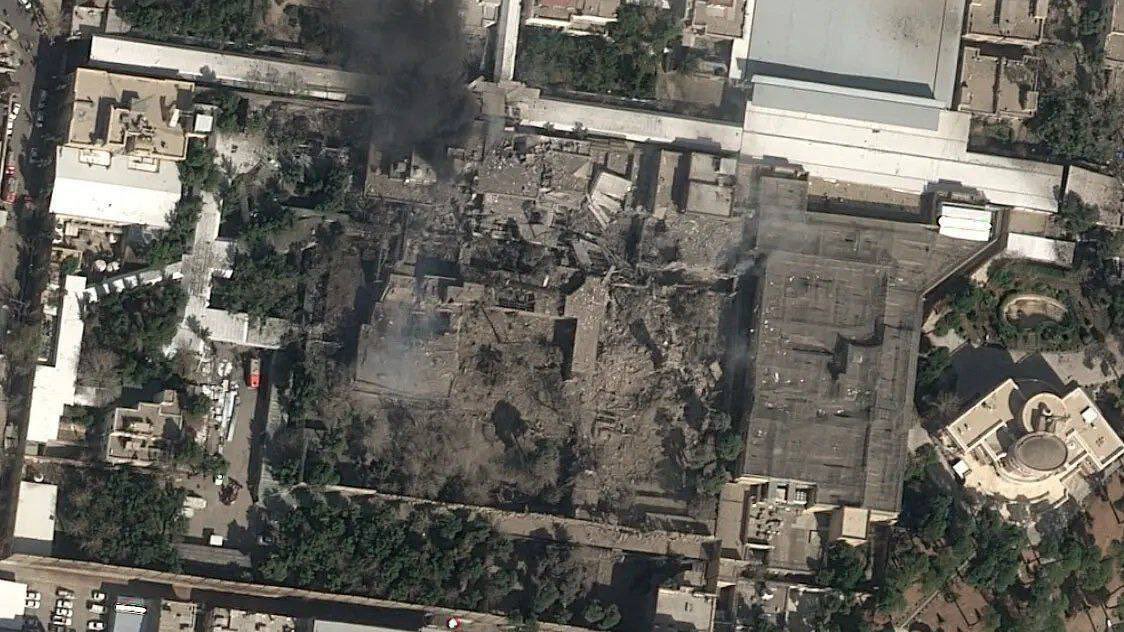
That moment was 8:15 this morning. Daylight. Every previous Israeli strike on Iran came at night. June 2025 launched in darkness. October 2024 after midnight. Iran’s entire air defense doctrine is built around the assumption that Israel attacks in the dark. Israel attacked in broad daylight because the target was not infrastructure. The target was a meeting.
Reuters confirms strikes targeted Khamenei and Pezeshkian. CNN confirms months of joint US-Israeli planning. Israeli officials confirmed the strike hit the location where Iran’s top officials were gathered. Whether Khamenei was moved before the strike or extracted after is the most consequential unknown on the planet right now. If before, someone inside Tehran’s inner circle told Jerusalem when and where the meeting would happen. If after, the strikes hit the room and he survived. Both scenarios are catastrophic for the regime.
Because Iran’s leadership now knows three things. Israel knew where they were meeting. Israel knew when they were meeting. Israel knew who would be in the room. And everything we watched over the past month, the F-22s at Ovda, the tankers at Ben Gurion, Al Udeid emptied to zero, 270 transport flights, all of it was the delivery architecture for one precision strike on one gathering.
Every future meeting of Iran’s senior leadership now carries one question: does Israel know about this one too.
This is not a military operation. This is the destruction of institutional trust inside a regime. Every general who sits with Khamenei tomorrow will wonder who told Jerusalem about today. Every IRGC commander who receives a meeting summons will calculate whether attendance is duty or a death sentence. Every secure facility in Tehran has been proven insecure.
In June 2025 Israel killed 30 generals in the opening minutes. That was brute force across dispersed targets. This was a scalpel. One meeting. One moment. Months of patience.
Iran fired missiles at six countries in retaliation. Most intercepted. One civilian dead from debris in Abu Dhabi. Saudi Arabia responded by pledging all its capabilities against Iran. The Gulf coalition that did not exist yesterday exists today because Tehran built it by attacking everyone simultaneously.
Israel traded one morning of precision strikes for the permanent destruction of Iran’s command cohesion.
That is not a battle. That is checkmate disguised as a first move. https://t.co/BrzGRrU3VW
US-ISRAELI STRIKES ON IRAN
- Dozens of targets have already been struck, second wave underway.
- Presidential building and Minister of Intelligence among targets.
- Blasts in Qom and Isfahan.
- Israel and Iran both shut their airspace.
- Israel declares state of emergency.
- Reports Iran's Supreme Leader is not in Tehran and has been transferred to a secure location.