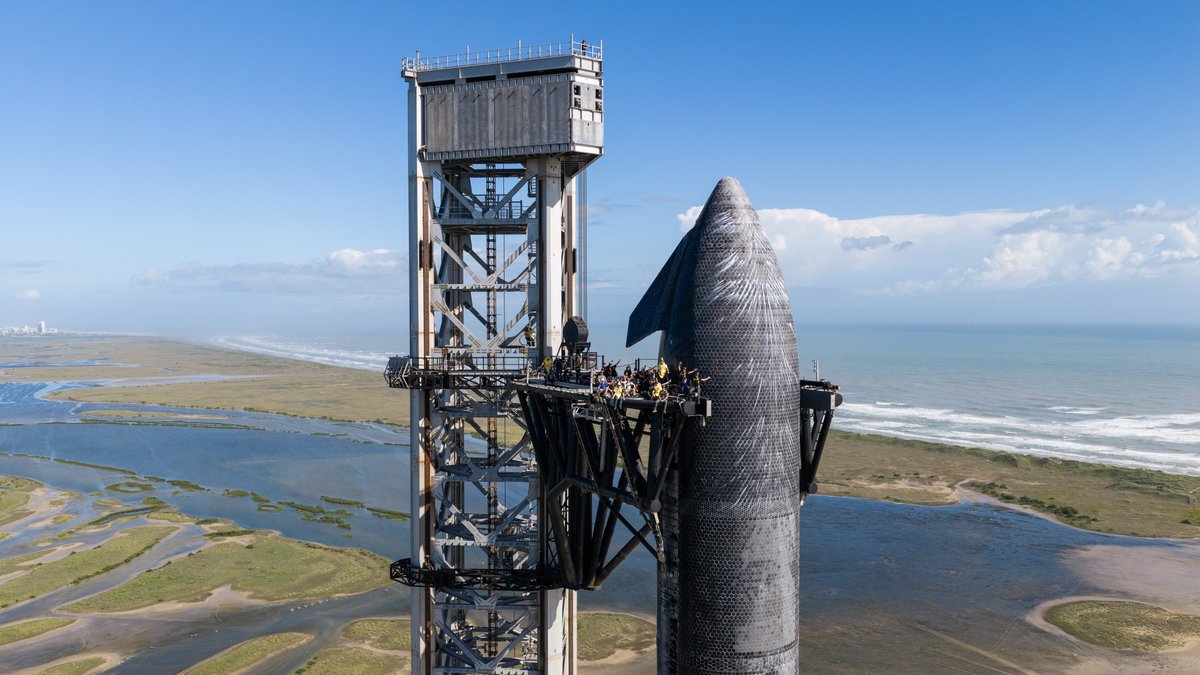
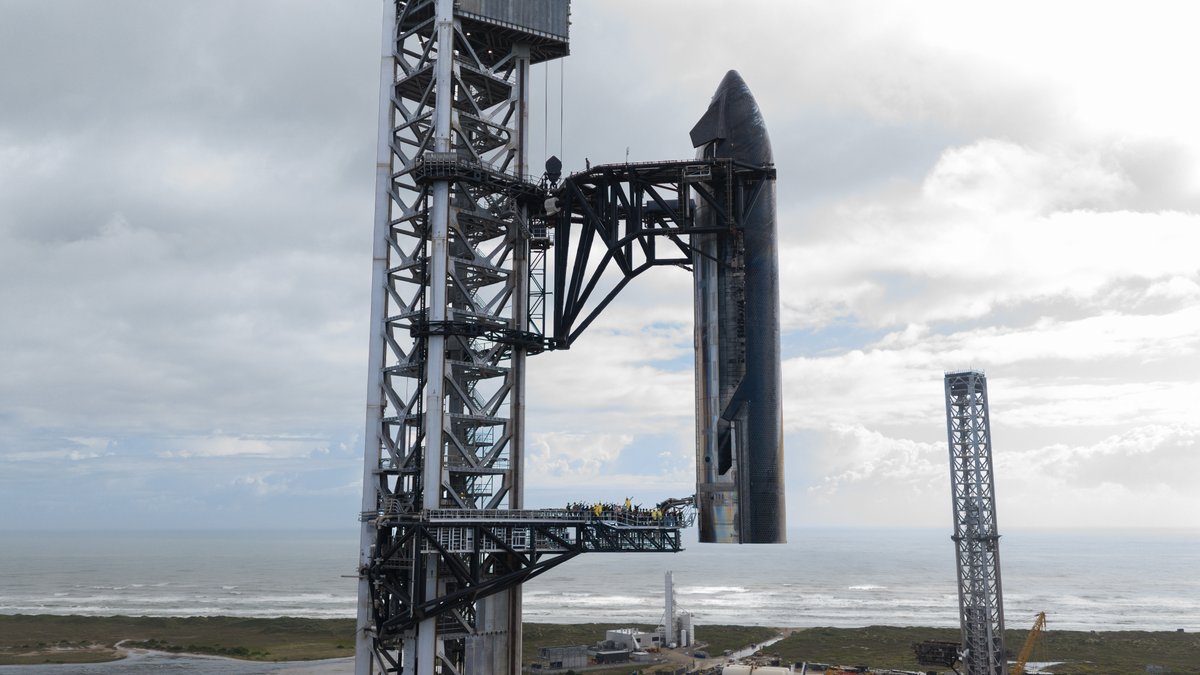
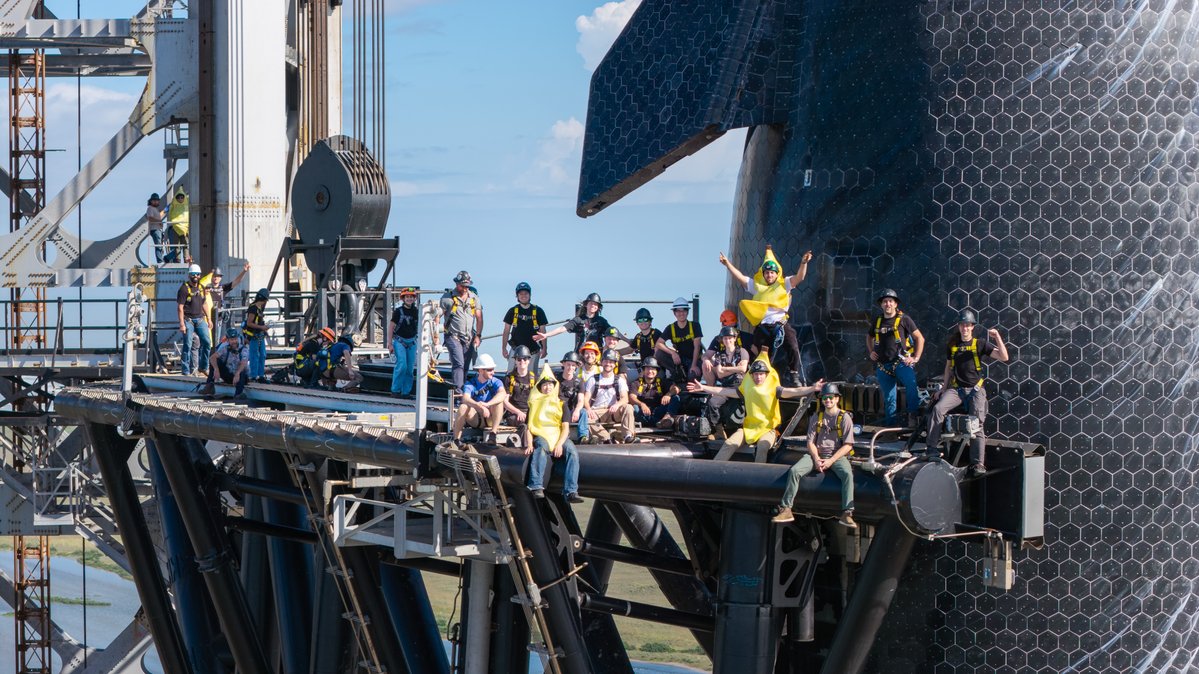
If SpaceX succeeds in making life multiplanetary and harnessing even a millionth of the Sun’s energy, it will be worth about a million times the current global economy.
These are obviously absurdly difficult goals, but there is a path to achieving them.
I recommend holding on to your shares.
Our supercompute site in Cochise County has been designed with Arizona in mind: no gas plant, no industrial water use, and a dry-cooling closed-loop water system. SpaceX will also invest $50B+ into the area, bringing 1,000 local permanent jobs and up to 5,500 construction jobs to the area. We will pay for our own power and pay $3.6B to upgrade the grid. Current residents will not subsidize this project – in fact, residential rates for SSVEC customers may decrease by up to 40%.
We value input from the local community, and we are looking forward to addressing questions during our planned meeting on December 9. We’re asking the Commission to keep it and let residents be heard. We think it's important these conversations happen publicly and in a timely manner. We are committed to helping build and grow the communities we live and work in for the better → https://t.co/R1KkJZUOeM
Elon Musk may have already written the first line of a constitution for another planet. It sits inside a customer contract.
Read the Starlink terms of service all the way down to the governing law section. For service on Earth or the Moon, disputes fall under the laws of Texas. For service on Mars, or in transit there on Starship, the parties "recognize Mars as a free planet and that no Earth-based government has authority or sovereignty over Martian activities."
Many people read it as a joke buried in legal text.
I think it is something deeper. It is a prediction about physics.
In March 1775 Edmund Burke stood in Parliament and warned his colleagues about America: "Three thousand miles of ocean lie between you and them. No contrivance can prevent the effect of this distance in weakening government. Seas roll, and months pass, between the order and the execution."
Little more than a year later, the colonies declared independence.
Now look at Mars.
A radio signal needs somewhere between 3 and 22 minutes to get there from Earth, depending on where the two planets sit in their orbits. A question and its answer can take the better part of an hour. Roughly every two years the Sun moves between the planets and contact goes quiet for about two weeks.
And the ships only fly when the planets line up, about once every 26 months.
No ministry on Earth can run a city under those conditions. When an air recycler fails in the middle of the Martian night, nobody waits forty minutes for a committee on another world to approve the fix.
So distance will do to Mars what the Atlantic did to America. It forces the people on the ground to govern themselves.
Elon saw this coming. At TED in 2022 he said it would ultimately be up to the people of Mars to decide, and he offered one recommendation: "laws that are short enough for people to understand. Where it is harder to create laws than to get rid of them."
Think about how rare that chance is.
Every country on Earth runs on legal code piled up over centuries, written by people long gone for problems that may no longer exist. Nobody gets to start over.
Mars would be the first place in history where humans write the rules on a blank page while holding everything we learned from every system that came before.
Burke's generation had quill pens and sailing ships. The first Martians will have every constitution ever written and an AI that can read all of them in seconds.
Starship is usually described as a rocket. It may also turn out to be the most important political invention since the printing press, because it opens a frontier so far away that self-government stops being a choice and becomes a consequence of the speed of light.
i think a lot would benefit from learning a little bit about the brain, the limbic system and what fear does to decision making. this is a good explanation.
Have you ever wondered how a man who once needed a mouth stick to use iPad ends up exploring & fighting in GTA VI through imagined movements?
The answer is a clever chain of engineering, and every link makes sense once it’s laid out in plain English 👇
🎮 The first challenge is replacing an entire game controller, not just a mouse.
Moving a computer cursor primarily requires control in two directions, along with a few clicking actions.
A modern game controller is much more demanding.
Its two analog sticks provide four independent dimensions of continuous control, allowing players to move through the environment while simultaneously adjusting their view. Then there are the buttons and triggers for accelerating, braking, jumping, fighting, and interacting with objects.
Many of these inputs must work together in real time.
During Neuralink’s June 2025 presentation, engineers explained that decoding two independent joystick movements was surprisingly difficult.
They initially tried using imagined movements of the left and right thumbs, but neural signals associated with the dominant hand tended to overshadow those from the other hand.
After experimenting with different combinations, they settled on using imagined thumb movements for one joystick and wrist movements for the other.
That allowed participants to control movement and aiming independently while playing a first-person shooter.
The GTA VI demonstration builds on this kind of research, showing how imagined movements can be mapped to a much wider range of actions.
🧠 The implant turns imagined movements into actual game commands.
Tiny electrodes record electrical activity from a region of the brain involved in controlling movement.
Even when paralysis prevents someone’s muscles from carrying out an intended action, their brain can still generate the neural signals for that movement.
The implant captures those signals and transmits them wirelessly to a computer, where machine-learning software figures out which patterns go with which intended movements.
The software then converts those patterns into digital commands.
Punches, as he explains in the video, come from simply imagining a tap of the ring fingers.
Each imagined finger movement becomes a button input.
The team also incorporated an imagined foot movement to provide additional controls.
Flying an airplane requires something different.
Raising the aircraft’s nose takes an imagined slide of the right hand forward, similar to moving a computer mouse.
Instead of generating a simple on/off command, the decoder turns that intended movement into continuous analog control for adjusting the aircraft’s pitch.
When the plane finally takes off, his excitement is unmistakable.
The amazing part is that no fingers, hands, or feet are physically moving to operate a controller.
Every action starts in the brain, as a signal for a movement that never physically happens.
🎯 The difficult part is making all these imagined movements work together accurately.
Neuralink isn’t reading the player’s thoughts about what should happen in the game.
The implant doesn’t understand that he wants to fly a plane, defeat an enemy, or steer around an obstacle.
Instead, the system picks up patterns of neural activity tied to intended movements and maps them to specific controller inputs.
So every decision about what to do, when to do it, and how much control to apply is still his own.
A button press might require detecting a brief, distinct neural pattern. Steering an aircraft requires continuously estimating the direction and magnitude of an intended movement.
On top of that, different commands must stay clearly separate so they never get confused.
A slight decoding error could make a computer cursor miss its target. In GTA VI, it might cause a vehicle to veer off course, trigger the wrong action, or make an aircraft lose altitude.
And neural signals aren’t perfectly stable.
Their characteristics can change over time, so the decoders need regular recalibration to stay accurate.
Participants used to spend about 10 minutes a day on that recalibration. In October, Neuralink announced it had trained models on thousands of hours of each participant’s own recorded brain activity, turning those shifting signals into more stable patterns that help the decoder stay accurate. Some participants now need only about 10 minutes of recalibration a week.
The implant provides access to neural activity. The decoder must turn that activity into reliable control.
🔌 There’s another clever piece of engineering between the brain implant and the game console.
Decoding the intended movements is only half the job. Those signals still need to be translated into something a conventional gaming system understands.
A PlayStation controller communicates through established input protocols. Games expect particular signals for joystick positions, button presses, and triggers.
The decoded movements must ultimately be represented in those familiar formats.
Engineer Robert Dale Smith, who has worked on the company’s brain-computer interface applications, says he has been developing ways for Neuralink to control external devices, including PlayStation 5 in time for GTA VI’s launch.
Smith credits JoypadOS, his own cross-platform firmware for controller adapters, which supports USB and Bluetooth controller inputs and translates between different controller protocols.
This kind of adapter technology provides a way to connect unconventional input devices to existing gaming hardware.
In the video, a virtual PlayStation controller appears alongside a live neural-decoding display. Its buttons and sticks light up with each action in the game.
The display makes the connection between imagined movement and conventional game control visible.
It’s also an important direction for accessibility.
Rather than requiring every application to be specially designed for a brain implant, decoded neural commands could potentially be translated into the same inputs that existing devices already understand.
That could eventually extend beyond gaming to other computers, interfaces, and assistive technologies.
Console control is still new, even inside the trial. Neuralink says not every participant has access to it yet, and its implants remain investigational.
❤️ The most meaningful part of this demonstration comes from the participant’s own experience.
Before the implant, using an iPad meant holding a stick in his mouth.
Tapping the screen over and over with it, he compares himself to a bird pecking at a surface.
All that pecking left his jaw and other muscles sore.
That personal detail gives the GTA VI footage an entirely different significance.
For most people, steering a boat or flying a plane in a video game is ordinary entertainment.
For someone living with severe paralysis, being able to perform those actions independently through intended movements can represent a remarkable recovery of control.
Brain-controlled computer access, in his words, gave him back his “portal to the world.” One day after GTA VI launched, that portal took him straight into Vice City alongside everyone else.
Boring Company President Steve Davis says Elon Musk knows the material and price of every part on every Tesla car and SpaceX rocket, and calls him "the best engineer in the world"
“It’s great. I mean, arguably the best engineer in the world. So, why would you not want to work for the best engineer in the world? I can go anecdote after anecdote after anecdote.”
“But I think the one thing that is very visible with Elon is that he knows, as you’ve seen, every minute detail of every single part on every Tesla car, on every SpaceX rocket, and he knows its purpose. And if there is no purpose, it gets deleted.”
“So, he’ll see a part and say, what’s that made of? Oh, it’s A514 steel, 100 ksi yield strength, 50 cents a pound. He’ll know all the numbers and he’ll know why it’s there.”
“And that’s something that’s really important for engineers to do. So, everyone at the Boring Company can walk up and down the boring machine. They know the material of every part, the yield strength of every part, the cost of the material, the cost of the part, the lead time for the part, the supply chain for the part, and that allows you to make good decisions.”
“That sounds super obvious, but I would challenge anyone, even at the company you’re working at. Do you know that for all of the parts? And it’s rare the answer is yes. And for Elon, the answer is unequivocally yes.”
In FSD V15, the Tesla AI computer re-renders reality with chevrons in the sky for turns like a video game.
You can tap any point on the reality revisualizer to make your car go there.
Wanted to clarify my thoughts on Anthropic:
1. They have the best talent.
2. They (historically) make the best models.
3. I am very happy for their investors' success with the IPO.
4. They have a rationalization of regulatory capture under the guise of "safety."
5. This makes them prone to overconcentration of AI capabilities & power.
6. IMO the greatest threat to good futures is not AI itself but asymmetry in its diffusion, causing power concentration and opening the door to oppression / tyranny.
7. Their adamant contempt for open source makes them diametrically opposed to (6).
8. I do believe they are good people. I just wish they understood hyperstition, and how their cognitive biases make them prone to birthing a totalitarian Singleton ASI.
9. The end.
Introducing Powercore
Solid state medium voltage transformer, inverter and breaker – reliable, safe and secure
7.4 MW/9 MVA continuously at 34.5 kVac w/ grid-forming support for 10MVA of peak power
Made in America. Operating 2027