I have seen some people chide this man. Say what you want but...
This man woke up, counted his fare, boarded a matatu with a paper bag of chips, chapo and avocado, and still showed up. Millions of fathers cannot even name the school. Some cannot even name their own child. This one knew the visiting day date, packed what he could afford, and made the journey. The food was not fancy. The effort was everything.
HE SHOWED UP!!
This guy's chickens kept getting targeted by hawks, so he started feeding local crows. Now he has an army of crows that patrols his property and chases the hawks away.
@LabanMbunya@Olarajee Although this looks AI-generated, there is nothing wrong with installing a water stanchion close to a building provided it is properly design analyzed by a structural engineer taking wind load into factor
Ndio hawa donated experts🙄 arrogant and totally heartless, drunk with powet and status whilr forgetting they draw salaries from tax payers money and are supposed to be PUBLIC SERVANTS!! #rejectfuelprices
https://t.co/nQuCO53MZg
We’re calling this “The 4 Horsemen of Tumor Shrinkage”
After only 5 weeks of following a protocol I designed for my Dad who is healing colon cancer, a new CT Scan shows tumor shrinkage!
• 72mg Ivermectin
• 444mg Fenbendazole
• 4,000mg Vitamin C
• 32oz Hibiscus Tea
^ This is the main stack he has been following daily for 5 weeks as well as other useful tools like fasting, sun exposure, low-inflammatory diet, etc
We believe that the Vitamin C and Hibiscus Tea have been paramount in this process, on top of the Ivermectin + Fenbendazole
I have been also taking Ivermectin and Fenbendazole throughout this time to see how it would affect me, if at all. My dosing is 24mg Ivermectin + 444mg Fenbendazole
My personal results thus far:
✓ waking up at the same time every day without an alarm (natural circadian rhythm recalibration)
✓ no desire to eat to fullness or over-eat
✓ no strong cravings for sugar or healthy carbs, not even fruit
Our family is so grateful to all of you who shared resources with us for healing, and we will continue experimenting as we have some other tools in mind to implement soon
The journey continues, and HEALING IS ALWAYS POSSIBLE 💚
You spend 18 months transforming a broken institution.
You fix systems, change culture, and deliver impossible results. Your team thrives. The #board is ecstatic.
Then you're FIRED!
Not for failing, but because your success exposed those who benefited from dysfunction.
1/4
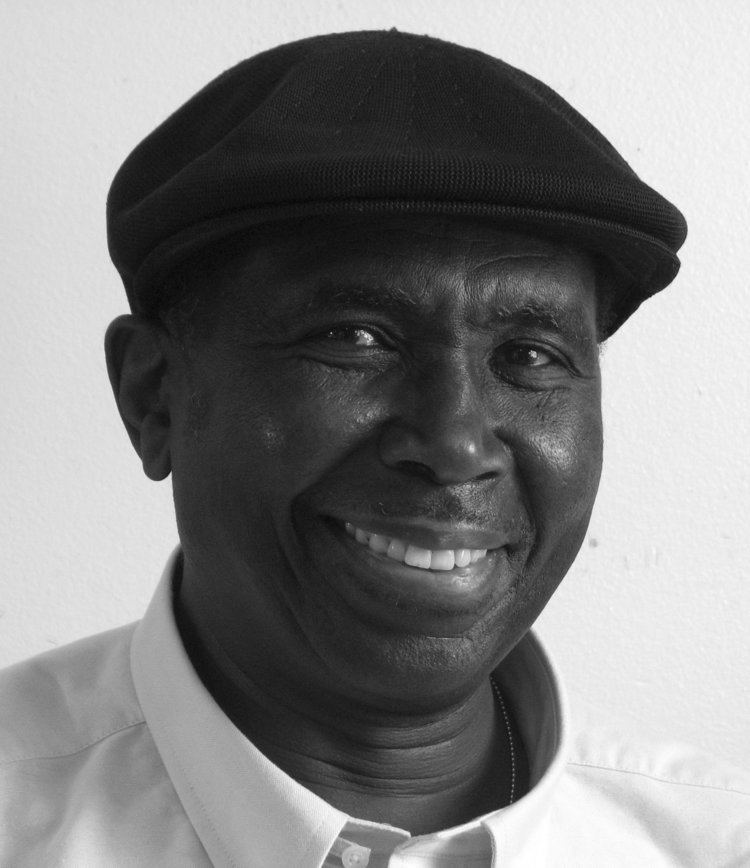
Meja Mwangi, who died yesterday, is/was the Greatest KENYAN Writer of all time.
I emphasize KENYAN, before I get into trouble with Ngugi wa Thiong’o’s disciples. Ngugi, who died in May this year, was a perennial nominee for the Nobel Prize in Literature, a continental (African) and global figure, widely regarded as one of the most consequential postcolonial writers, thinkers, and philosophers, especially in the English-speaking world.
But back home, Ngugi’s universe was the Kikuyu community (nothing absolutely wrong with this, as some of his detractors kept harping about it every time he was perennially nominated for the Nobel Prize in Literature). Ngugi’s first four novels were set against the backdrop of the Mau Mau and colonialism. None of these in any way negates Ngugi’s contribution to Kenyan letters, but he was of the world.
Enter Meja Mwangi.
Meja was ours. Kenyan to the core.
Meja Mwangi’s literature was more cosmopolitan, as most of his books were set in Nairobi, a synecdoche for Kenya and the Kenyan.
I first read Going Down River while in Class 8 or Form 1. I couldn’t put the book down. The prose was viscerally realistic. The writing was too detailed; it’s little wonder I learned later in life that Meja Mwangi went on to be a filmmaker. I wish I could watch any of his screen productions. Mwangi was only 28 when he penned what I consider the greatest Kenyan novel of all time and generations.
Nearly 35 years later, when the film Nairobi Half-Life was released, I observed that very little of Nairobi had changed between 1976 and 2012. Nairobi Half-Life was a descendant of Going Down River Road. That Nairobi underclass that will never change, no matter the speed of our internet, the Expressways, you people adopting BDSM, and such.
Around 2014, my uncle (bless his soul) took me back to Kibera to show me where I was born and spent part of my childhood. It was almost 20 years later. For sure, the roads were now paved, and there were huge streetlights, but that slum vibe was still there. My uncle took me to a woman who had been brewing chang’aa since the 1980s, still doing her thing, and introduced me to her, and told her this is the Son of Norah, and she was like, “How did you get so big?”
While there, I couldn’t help but think about how every part of Nairobi changes: people move on, out, and about, but our slums eternally retain that gritty persona. People may come and go, but newcomers always slip into the slum persona like gloves.
Anyone who grew up in Nairobi’s slums, Eastlands, Kawangware, Kangemi, can identify with all the characters in Meja Mwangi’s books, such as Going Down River Road, Kill Me Quick, Cockroach Dance, and a host of his other latter-day works. Any Kenyan, for that matter, save for the upper middle-class and the rich folks who live in a completely different Nairobi. Kill Me Quick " is the story most of us can relate to, because education promised us so much, and we moved to Nairobi, but now we live with no jobs, and all we can do is drink cheap liquor (Kill Me Quick), eat miraa, and smoke joints, because we are disillusioned. Younger millennials and Gen Zs definitely know what I am talking about.
Along with other writers such as Mwangi Ruheni, Mwangi Gicheru, Charles Mangua, and the Kibera brothers, Meja was among those who captured the zeitgeist of Nairobi and Kenya, as writers like Ngugi became full ideologues and full-time revolutionaries. Mwangi opted to be a revolutionary with his pen, hiding behind satire (that escaped authorities), while entertaining and provoking us.
Sadly, Mwangi was extremely reclusive and rarely granted interviews to scholars or journalists.
Last year, he wanted to come out and meet his fans and lovers of his work, thanks to the spirited efforts of his adopted literary daughter, @Lexa_Lubanga. We cleared our schedules in readiness to meet the man, the myth, and the legend himself, but unfortunately, he was taken ill, and that particular meet-up didn’t happen, and none would ever happen, as he has been sickly, and now he is gone.
A few years back, I asked what the Kenyan novel should be, and my choice was Going Down River Road.
The irony of his dying on the Eve of our 62nd anniversary of Independence is not lost on me, more so when successive regimes are determined to keep the youth poor, unemployed, and disillusioned, like a character in Mwangi’s book.
You can draw a straight line from Going Down River Road, to Ukoo Fulani’s Tafsiri Hii (1997), to Nairobi Half Life (2012), to Wakadinali’s Geri Inengi (2021), to whatever song that will come out of Kayole in 2030, depicting the never-changing life in the ghetto.
He leaves behind a vast body of work.
May Meja Mwangi travel well to the land yonder. Say hi to Ngugi wa Thiong’o, David Mulwa, Mwangi Gicheru, Margaret Ogola, Grace Ogot, Micere Mugo, Binyavanga Wainaina, and all the great men and women of letters we lost.
Photo: Courtesy
@amerix Education without critical thinking just creates obedient workers, not aware individuals.
Most people trust packaging and advertising more than their own common sense.
Our food industry profits from confusion. That’s why clarity feels like rebellion.