Thrilled to share our latest work published in npj Precision Oncology!
We present ASTUTE, a computational framework linking somatic mutations to gene expression, revealing the impact of KEAP1/NFE2L2 mutations across cancers.
🔗 https://t.co/S86eMMDrD0
1/6
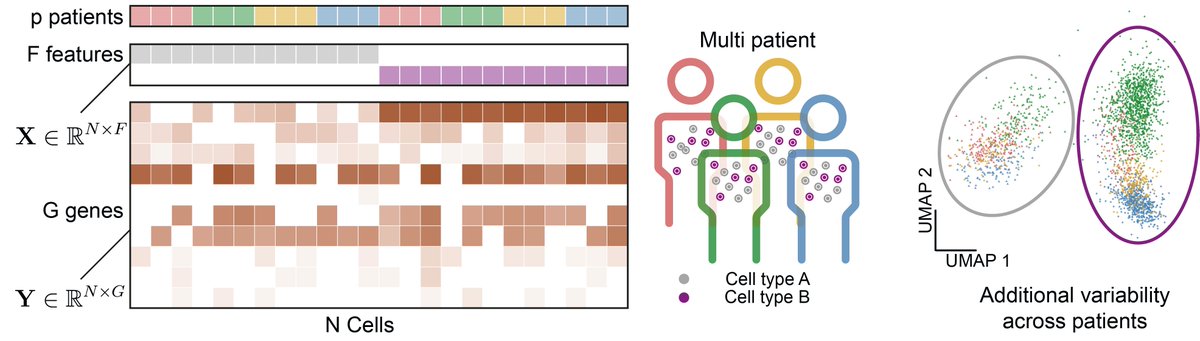
1/ Meet DEVIL, a Bayesian framework for single-cell DE testing that is patient-aware and GPU-powered. It delivers robust results across millions of cells in large cohorts, bridging the gap between statistical rigor and computational scale.
🔗https://t.co/2TlJ9Cxoc3
Our new preprint to scale single/cell differential expression testing with millions of cells from multiple individuals. A beautiful combination of statistics and implementation for advanced GPU architectures. Kudos to @giosantacatt and Niccolò for driving this beautiful work!
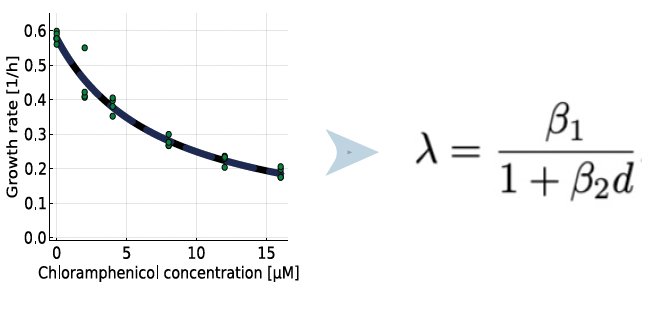
🔬 New open-source tool! #Kinbiont automates the analysis of microbial growth and helps scientists uncover how bacteria respond to their environment.
🧠 Developed by our @fepinheiromycin Group, now published in @NatureComms.
https://t.co/fJQkw9BD2e
Incredibly proud of my former lab member @Anga_F and his work with @fepinheiromycin's team on this great new paper, out now in Nature Communications!
The #compbio community working on #bacteria should give it a read!
From our lab to yours! 🤓✨
Kinbiont combines dynamical models with explainable machine learning to streamline data analysis and support theoretical formulation in microbiology
Out now in @NatureComms: https://t.co/MGNcV51Uve
with @Anga_F, @UltimoPer, Edgar, @humantechnopole
📦 Kinbiont is open-source and freely available via the Julia package manager or GitHub:
👉https://t.co/R8kR3i2cpy
We hope it becomes a useful tool for your microbial kinetics analysis!
6/6
Finally out! 🎉 Our first work at @humantechnopole is published in @NatureComms:
"Translating microbial kinetics into quantitative responses and testable hypotheses using Kinbiont"
📄 https://t.co/ojWhoVr5oH
Less is more?
Our new RESOLVE framework fits cancer mutational profiles with fewer #MutationalSignatures than those included in catalogues (eg @cosmic_sanger), revealing that a few key processes drive most cancers, whereas rare ones play a minor role
Out now in @NAR_Open!
Meet RESOLVE, our new method for mutational signature analysis just published in Nucleic Acids Research! Applied to 20,000 adult and pediatric cancers, it reveals key links to driver mutations and clinical outcomes. 🔗 https://t.co/fO82tcCFGL #CancerGenomics#MutationalSignatures