The team leading Propel a Cure’s newly funded research project at the @MaterResearch Institute (University of Queensland) is expanding its search for gut bacteria that may help protect against intestinal #fibrosis in Crohn’s disease.
Building on its initial screening of 96 bacterial isolates, the team has screened more isolates and identified promising candidates that may influence biological processes involved in fibrosis development.
The researchers are now investigating whether the potential protective effects of one promising bacterial species are unique to the strain initially identified or shared by other strains of the same species. They are also continuing to screen other bacterial isolates for promising candidates. The most promising will be prioritized for further studies to identify the substances they produce that may be responsible for these effects.
This research represents an important early step toward understanding how the gut microbiome might be harnessed to help prevent or reduce intestinal fibrosis in people with Crohn’s disease.
Learn more about this research at https://t.co/Tdgt65wPQj
#ibd #crohnsdisease #microbiome #crohns @UQ_News
What role might environmental exposures play in #IBD? In our latest expert interview, Propel a Cure speaks with Dr. Manasi Agrawal about how microplastics, PFAS (“forever chemicals”), and other environmental toxicants may influence IBD development and disease activity.
She discusses her recent research, the potential for developing environmental risk scores to predict IBD susceptibility, and practical ways people with IBD can minimize environmental exposures through lifestyle changes.
Dr. Agrawal is a physician-scientist and Associate Professor of Medicine at the @IcahnMountSinai. She is a gastroenterologist at Mount Sinai Hospital specializing in IBD and the inaugural Director of Environmental Gastroenterology in the Henry D. Janowitz Division of Gastroenterology at ISMMS, where she oversees research on environmental chemicals that may trigger or worsen intestinal inflammation.
✨ Watch the full interview: https://t.co/BrRudY45BU
#microplastics #pfas #crohnsdisease #ulcerativecolitis #ibdawareness #ibdresearch @DOMSinaiNYC@MSHS_IBDCenter
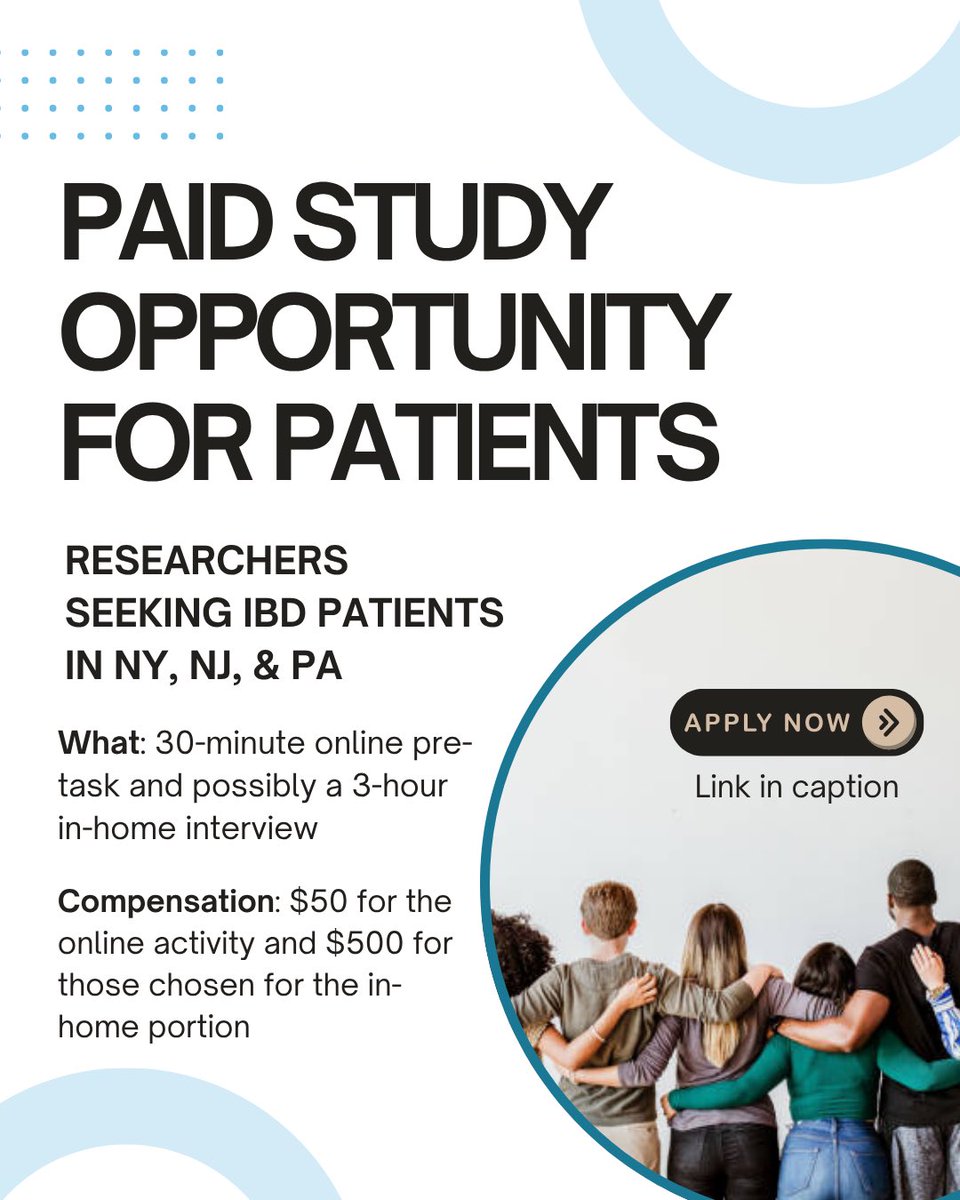
Are you an #IBD patient in NY, NJ, or PA?
P3 Technology is recruiting adults in this region for a healthcare market research study.
Selected participants will complete a 30-minute online pre-task and possibly a 3-hour in-home interview between October 26 and November 9.
Compensation for those selected will be $50 for the online activity and $500 for those chosen for the in-home portion.
To complete the screening application, visit https://t.co/E6nqiU0v5e
#ibdresearch #crohnsdisease #ulcerativecolitis #ibdawareness
Crohn’s patients: Share your experience and help advance IBD research!
Propel a Cure is partnering with Rare Patient Voice to connect people living with Crohn’s disease and IBD with paid research opportunities. Your perspective can help inform research while supporting Propel a Cure’s mission to advance a cure for Crohn’s disease.
Research opportunity details:
🔹 Who: Adults 18+ living in the U.S. with Crohn’s disease
🔹 What: A 60-minute, web-assisted telephone interview
🔹 Compensation: $120 for your time (equivalent to $120/hour)
🔹 Future opportunities: Eligible participants may also be invited to paid advocacy opportunities, including photo and video shoots and speaking events.
Your voice matters. By sharing your experience, you can help researchers better understand life with IBD and support the work of Propel a Cure.
Interested? Sign up at https://t.co/HV8DsZAfHz
#CrohnsDisease #IBD #IBDResearch #PropelACure #PatientAdvocacy
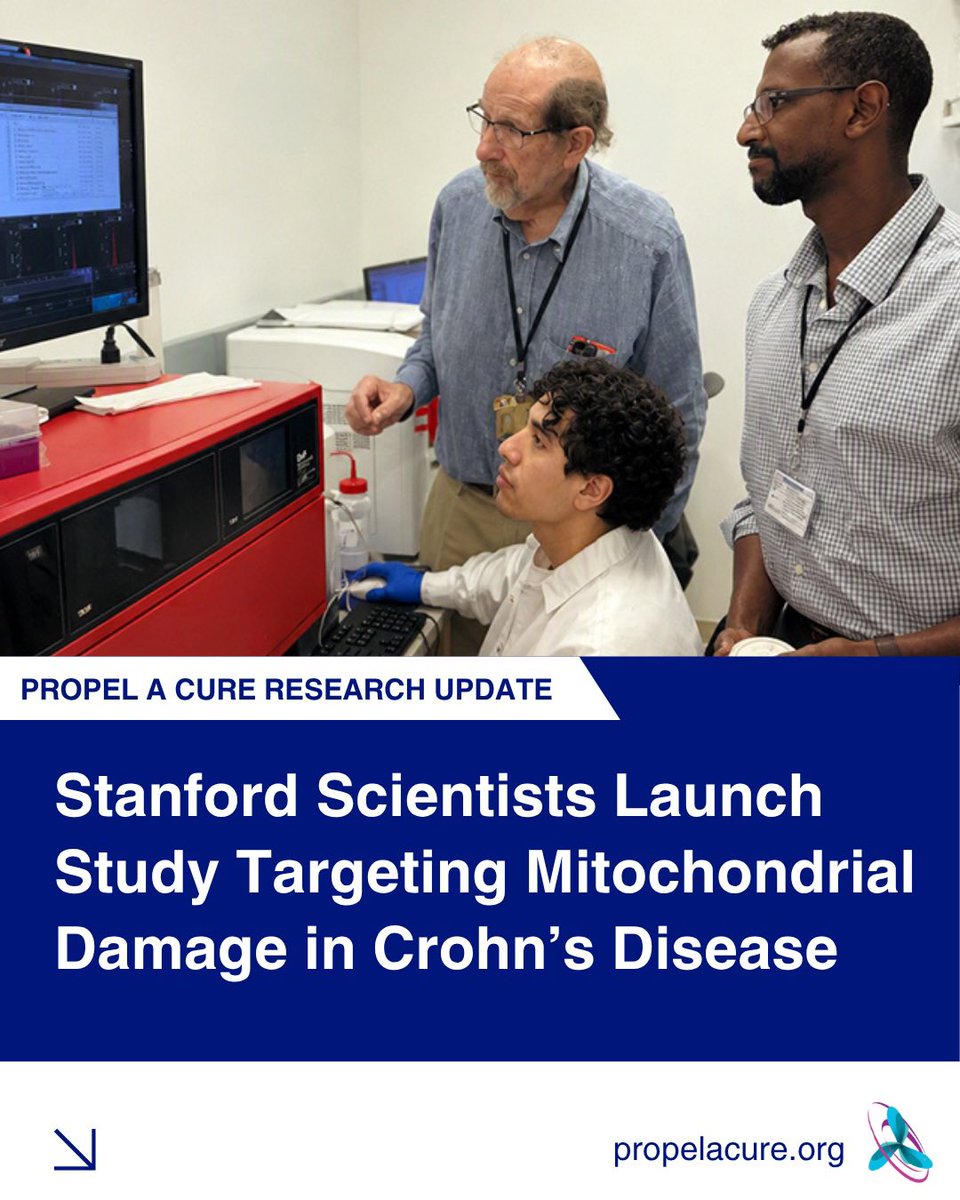
Could targeting mitochondrial damage lead to new treatments for Crohn’s disease?
With support from Propel a Cure, in partnership with the Mendez Family Foundation, researchers at @Stanford University’s Weinberg and Haileselassie Labs have launched a new project investigating how mitochondrial damage in intestinal cells may contribute to Crohn’s disease.
The long-term goal is to develop and test a potential non-immunosuppressive treatment that protects intestinal cells by preventing mitochondrial damage and the release of extracellular mitochondria (ExMito).
To investigate this approach, the team is growing patient-derived intestinal organoids—miniature models of the bowel created from cells collected during endoscopic biopsies. These “disease in a dish” models will allow researchers to study mitochondrial function in people with Crohn’s disease and compare it with that of healthy individuals.
Next, the team will investigate how these cells respond to different types of stress, including exposure to immune cells and substances produced by gut microbes.
This research is in its early stages, but understanding the underlying mechanisms of Crohn’s disease could help pave the way for new treatment strategies.
We’re proud to support the scientists pursuing foundational research that could advance better treatments and, ultimately, a cure.
#PropelACure #CrohnsDisease #IBDResearch #Mitochondria #IBD @StanfordMed
Today is DAF Day! 💙
If you have a Donor-Advised Fund, today is a great day to recommend a grant to Propel a Cure and help fund research into the root causes of Crohn’s disease.
Giving through your DAF is easy:
1. Log in to your DAF account.
2. Search for Propel a Cure for Crohn’s Disease.
3. Choose the amount you’d like to give.
4. Submit your grant recommendation.
Your DAF is more than a charitable account. It’s an opportunity to put your generosity to work advancing research and helping create a future with better answers for people living with Crohn’s.
Ready to make a difference? Recommend Propel a Cure today.
#DAFDay #PropelACure #CrohnsDisease #IBD #CrohnsResearch
Does breastfeeding duration affect a child’s risk of developing IBD?
A study of more than 169,000 children in Denmark, Norway and Sweden found no association between breastfeeding duration and later development of IBD, Crohn’s disease or ulcerative colitis.
The findings remained consistent after accounting for factors including parental IBD, smoking during pregnancy, maternal education, delivery method and premature birth.
For mothers who have wondered whether not breastfeeding, or not breastfeeding for very long, contributed to their child’s IBD, these findings offer an important reassurance: breastfeeding duration was not associated with a child’s risk of developing IBD in these cohorts.
IBD is a complex disease, and its causes are still not fully understood. Research like this helps us separate what we think might influence IBD from what the evidence actually shows.
Read the full study here: https://t.co/bTQrLOD3qt
#ibd #breastfeeding #ibdawareness #crohns #ulcerativecolitis
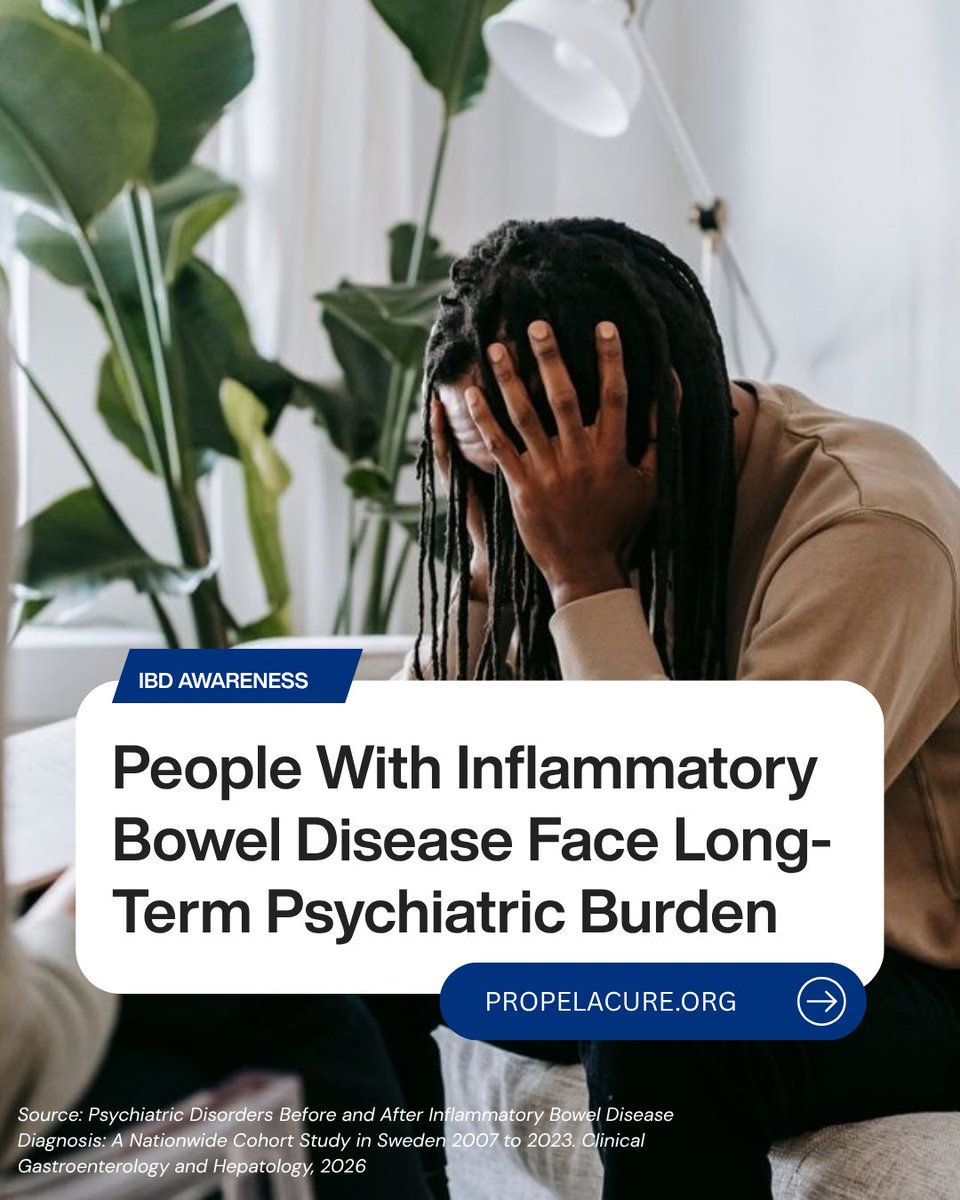
A recent nationwide cohort study found that the risk of psychiatric disorders increased in the years leading up to an #IBD diagnosis, peaked shortly after diagnosis, and remained elevated even 10 years later. The strongest associations were seen with major depressive disorder, anxiety disorders, and substance misuse.
Findings like these underscore why we need to understand IBD as a whole-body disease, not simply a disease of the digestive tract.
At Propel a Cure, our mission is to support research that gets us closer to understanding the underlying causes and mechanisms of Crohn’s disease, so that future patients can have better treatments and, ultimately, better outcomes.
Research moves us forward. 🔬
#crohns #mentalhealth #ulcerativecolitis #ibdawareness
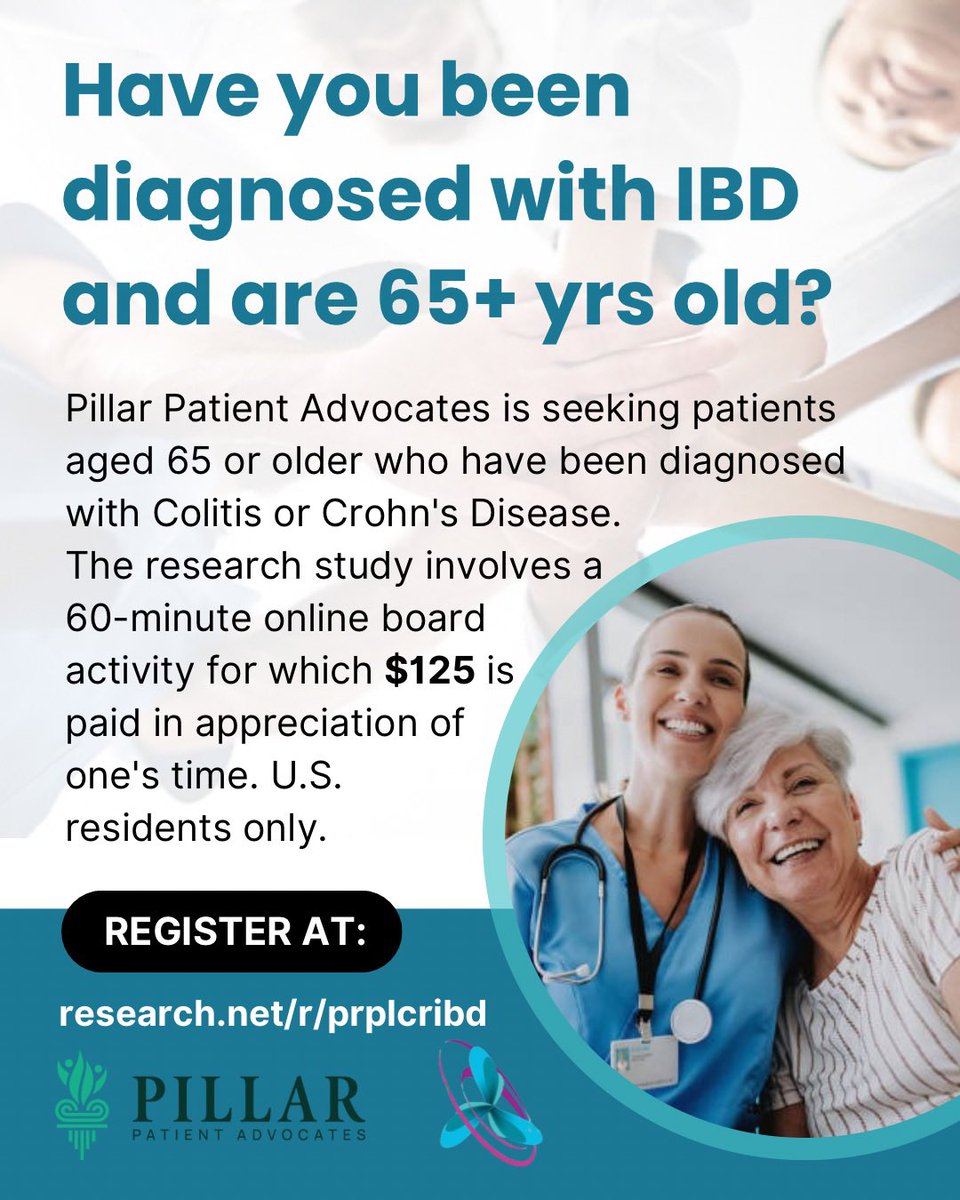
Pillar Patient Advocates is seeking patients aged 65 or older who have been diagnosed with Colitis or Crohn’s Disease. The upcoming market research study involves completing a 60-minute online board activity for which $125 is paid in appreciation of one’s time and input. The purpose is to learn more about patient experiences and opinions while responding to various prompts.
To determine if you qualify, please complete our registration at https://t.co/s2l5TJHDSJ. A Patient Liaison will call you to go through a few screening questions. This study is for US residents only.
#ibd #crohnsdisease #ulcerativecolitis #uc #ibdawareness
What does it take to move Crohn’s disease research closer to a cure?
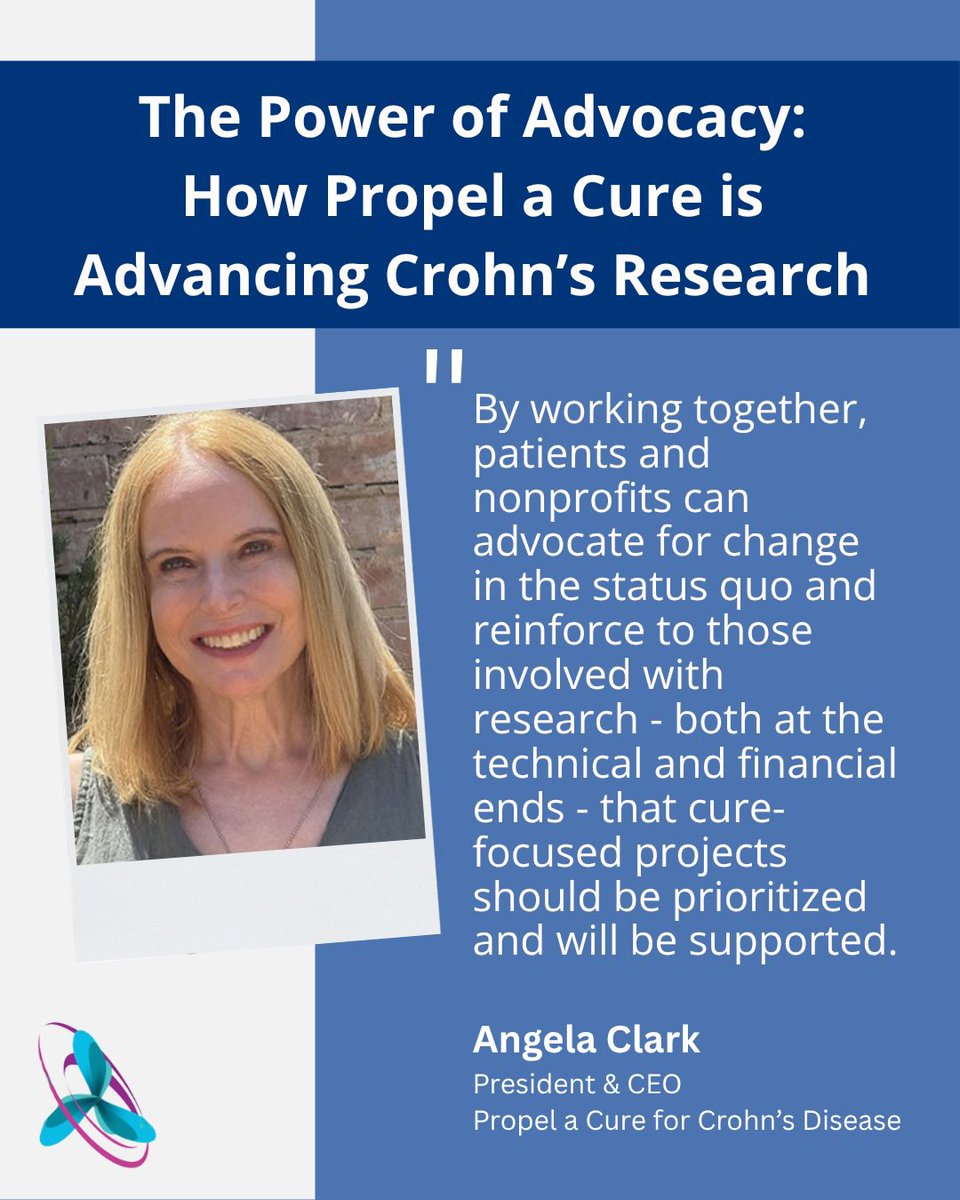
In this @aboutIBD podcast conversation, our President & CEO Angela Clark talks with Amber Tresca about Propel a Cure, why we fund research into the underlying causes of Crohn’s disease, and how supporting innovative early-stage research can help move the field forward.
We believe we need to understand what drives Crohn’s disease if we’re going to develop better treatments and, ultimately, find cures. That’s why we focus on funding promising research that might otherwise struggle to get off the ground, while keeping our community informed about what researchers are learning along the way.
Whether you’ve been following Propel a Cure for years or are just learning about our work, this conversation is a great look at our mission and the research we’re working to advance.
Listen to the full conversation with Angela and Amber.
https://t.co/TB3E9UASq6
#crohnsdisease #ibd #ibdawareness #chronicillness #crohns #ulcerativecolitis
At Propel a Cure, we believe understanding what causes Crohn’s disease is an important step toward better treatments and, ultimately, cures.
Last year, IBD Connect interviewed our President & CEO, Angela Clark, about our mission, how Propel a Cure got started, and why we focus on funding innovative research into the underlying causes of Crohn’s.
Angela also discusses the challenges facing Crohn’s research, some of the progress being made, and the areas that give us hope for the future.
If you’re new to Propel a Cure, this is a great introduction to our work and the research we support.
Read the full interview: https://t.co/q6XV29dtZB
#ibd #crohnsdisease #ibdawareness #ibdresearch
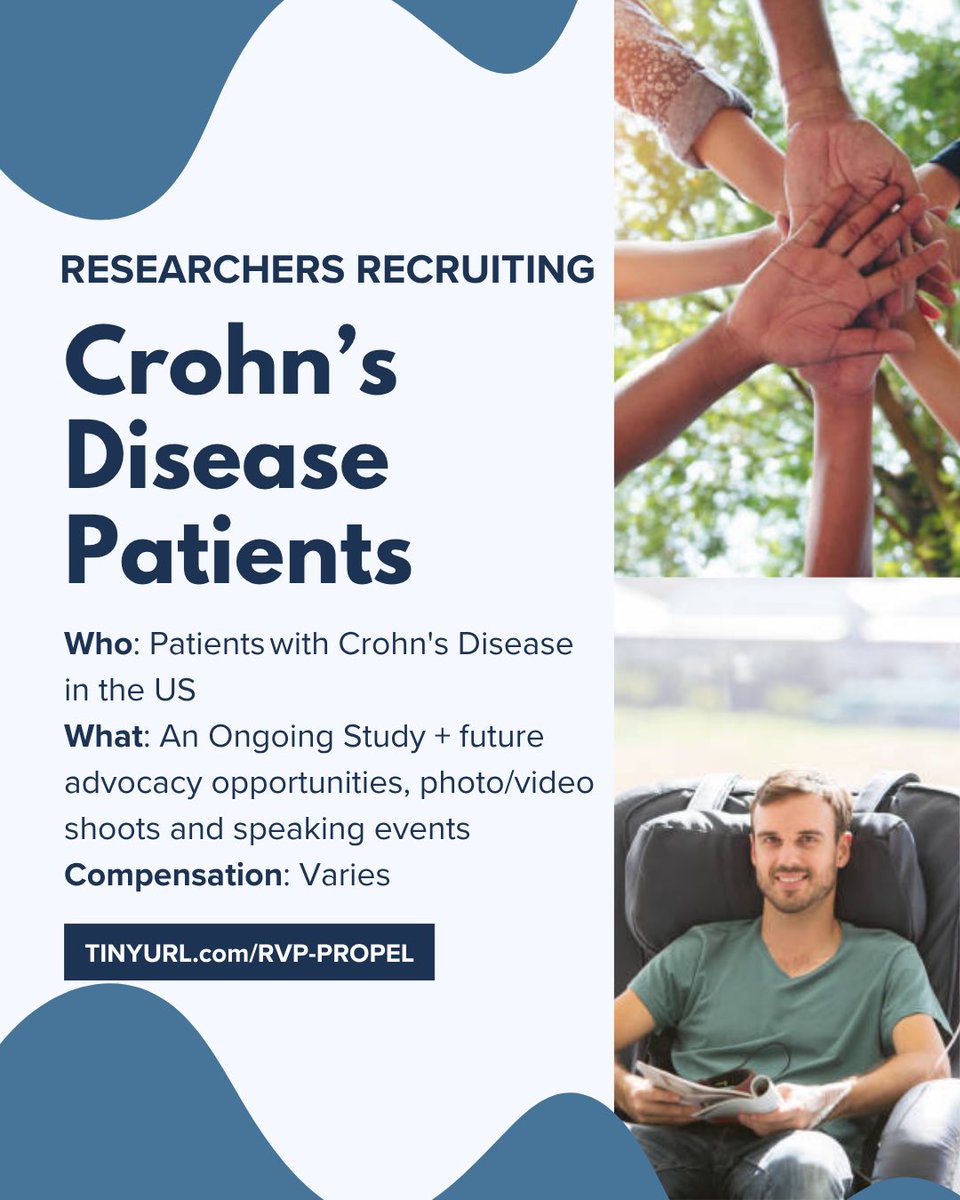
🔬 Do you live with #Crohns disease?
Researchers are looking for people in the U.S. with Crohn’s to participate in an ongoing research study.
Participants may also have opportunities to contribute to future advocacy efforts, photo/video projects and speaking events. Compensation varies depending on the level of participation.
At Propel a Cure, we partner with @rarepatientvoic to help connect patients with paid research opportunities that can help advance #IBD science.
If you’re interested, sign up now at https://t.co/HV8DsZAfHz
#ibdresearch #crohnsdisease #ibdawareness #crohnsresearch
#Enterocolitis is a complication of CAR-T therapy that deserves close attention. As CAR-T is being explored as a potential treatment for #IBD, these findings underscore the need for more research into its effects on the gut and careful evaluation of safety in people with Crohn’s and UC.
@BostonChildrens researchers have discovered a new way immune cells communicate that may help explain how inflammation continues in diseases like #IBD.
For years, scientists believed inflammation was controlled mainly by receptors, proteins that act like “on switches” for immune cells. This study found that immune cells can keep inflammation going through another structure called the myddosome, even after those receptors are no longer involved.
This finding could open the door to new ways of reducing inflammation by targeting the myddosome instead of the receptors themselves.
The research is still early and was studied in mice, but it offers an exciting new clue about how inflammation works and how future treatments might be developed.
#crohnsdisease #autoimminedisease #ibdawareness
https://t.co/QD4f0GHii8
September is Pain Awareness Month.
60% of people with Crohn’s disease experience chronic abdominal pain, even when they’re considered to be in endoscopic remission.
Crohn’s is more than inflammation, and remission doesn’t always mean feeling well. We still have so much to learn about why pain persists and how to address it.
People with Crohn’s deserve better than trial-and-error medications that fail too many. At Propel a Cure, we fund transformative research into the underlying causes of Crohn’s disease, with the goal of better treatments and, ultimately, cures.
Learn more about our work and how you can help at https://t.co/LSBlZfVJCQ.
#crohnsdisease #chronicpain #ibd #ibdawareness #painawarenessmonth
Are you an IBD patient who has taken a GLP-1 receptor agonist?
If so, @UofGlasgow scientists studying the impact of these drugs on this population could use your help.
Participants from any country who qualify are encouraged to take part in their 10-minute survey by visiting the survey site or by scanning the QR code below.
Survey site: https://t.co/tlV3wy5GJA
Thank you for helping advance research in this important area.
#ibd #glp1 #peptides #ibdawareness #crohns #ulcerativecolitis
What if intestinal fibrosis in Crohn’s disease could be prevented before it causes irreversible damage?
We recently awarded a $100,000 Trailblazer Grant to @MaterResearch at The University of Queensland @UQ_News to investigate exactly that.
Intestinal fibrosis affects approximately half of people with Crohn’s and can lead to strictures, bowel obstruction, and surgery. Yet there are currently no therapies specifically designed to prevent or treat fibrosis.
Led by Dr. Rabina Giri and Associate Professor @JakobBegunMD, the team is investigating whether changes in the gut microbiome may occur upstream of fibrosis. Their preliminary findings suggest a pro-fibrotic microbiome may be detectable before fibrosis develops, while certain beneficial bacteria produce metabolites that may help suppress signals driving fibrosis.
Over the next two years, the team will work toward developing a microbiome-targeted approach to preventing and treating intestinal fibrosis.
This is the kind of bold research Propel a Cure exists to support: moving beyond managing inflammation toward preventing irreversible intestinal damage.
🔬 Read the full story from Mater Research: https://t.co/k3IYmzYiMI
#Crohns #Microbiome #IBD #Fibrosis
@UofT research suggests #NOD2 dysfunction may impair T-cell recruitment and infection responses in the gut, alongside increased intestinal permeability—potentially contributing to early #Crohns disease before chronic inflammation develops.
https://t.co/gBr056RSEs
August was Short Bowel Syndrome Awareness Month, a time to recognize a serious complication that some people with Crohn’s disease may face after surgery.
Approximately 15% of patients with Crohn’s disease who undergo surgery eventually develop short bowel syndrome.
For many, this can mean lifelong challenges with nutrition, hydration, digestion and quality of life.
It’s another reminder of why preventing disease progression and reducing the need for repeated surgeries matters. At Propel a Cure, we’re funding research focused on changing the course of Crohn’s disease and finding better options for patients.
#shortbowelsyndrome #crohns #crohnsdisease #ibdawareness
@PillarAdvocates is seeking patients aged 65 or older who have been diagnosed with Colitis or Crohn’s Disease. The upcoming market research study involves completing a 60-minute online board activity for which $125 is paid in appreciation of one’s time and input. The purpose is to learn more about patient experiences and opinions while responding to various prompts.
To determine if you qualify, please complete our registration at https://t.co/s2l5TJHDSJ. A Patient Liaison will call you to go through a few screening questions. This study is for US residents only.
#ibd #crohnsdisease #ulcerativecolitis #uc #crohns