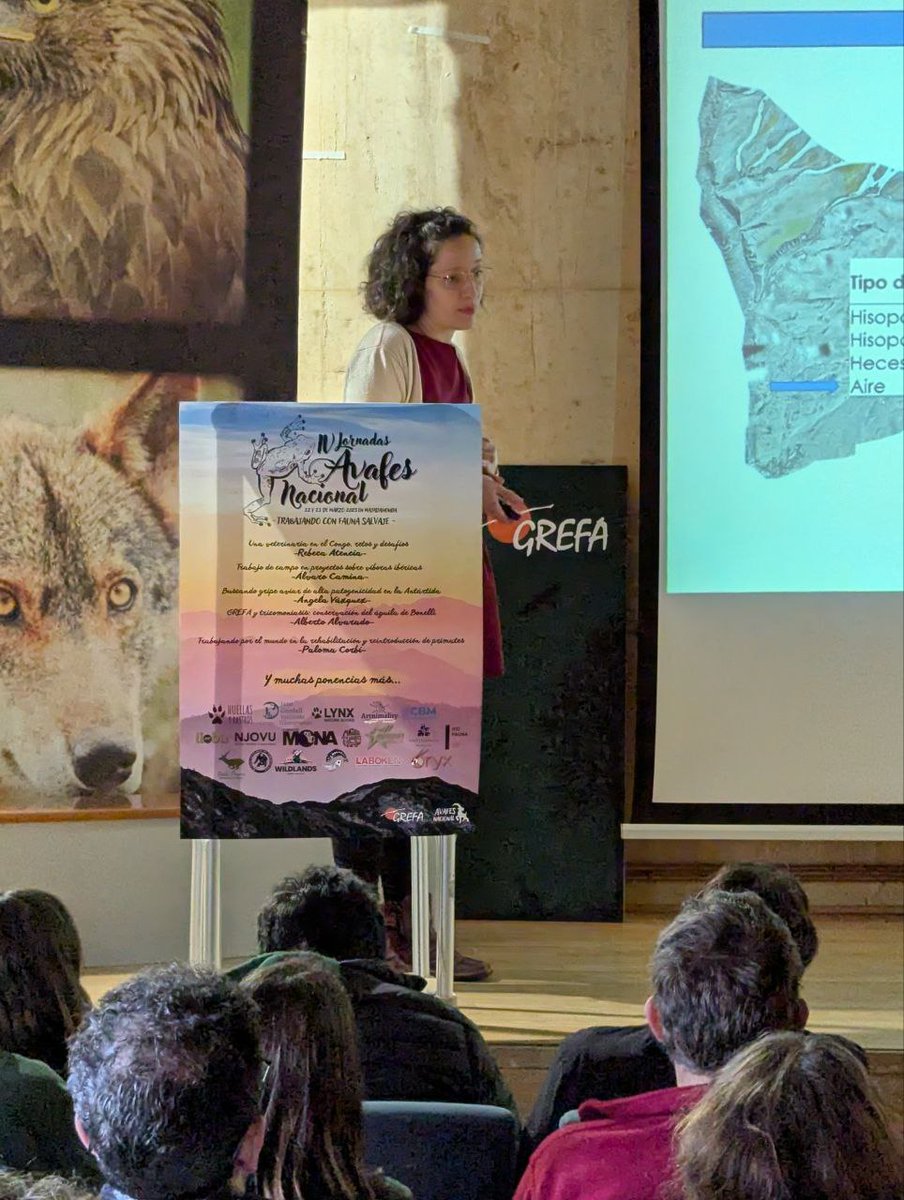
@Angela is currently presenting, at the @SaludglobalCSIC Desafío Gripes Zoonóticas annual meeting, the results of the #CSIC-Unespa expedition to monitor the spread of highly pathogenic avian influenza in Antarctica in 2025
La gripe aviar arrasa la mayor población de elefantes marinos del mundo: la mitad de las hembras ha desaparecido. El Servicio Antártico Británico calcula que faltan más de 50.000 ejemplares en las playas. “Es estremecedor”, alerta @ccgbam
https://t.co/2VzBgVD7JT
It was a pleasure present the results obtained onboard the Australis vessel in the CSIC-UNESPA Antarctic Expedition. Thanks to @iviromics for this opportunity.
Gracias @AvafesN por invitarme a hablar de parte del trabajo realizado en @iviromics en la Antártida buscando gripe aviar. Incluyendo la CSIC-UNESPA Antarctic Expedition.
@CSIC@UNESPA@FGCSIC
Participando en el Congreso de @sev_virologia presentando el trabajo realizado en @iviromics donde se concluye que los muestreos de aire son un buen método no invasivo para detección de gripe en colonias de pingüinos en la Antártida. Si quieres saber más visita el poster PO12.6.
THE ZOONOTIC RISK LADDER
A summary of what has happened with #AvianFlu#H5N1 during the last 4 years.
The virus is getting closer and closer to humans.
Will the final jump occur from cows?
Will we have to add another step with a new species?
To be continued...
LA ESCALERA DEL RIESGO ZOONÓTICO
Un resumen de lo que ha ocurrido con la #GripeAviar#H5N1 en los últimos 4 años.
El virus cada vez más cerca de los humanos.
¿Se producirá el salto definitivo desde las vacas? ¿Habrá que añadir otro escalón con una nueva especie?
Continuará...
Participando en el X Simposio de #estudiospolares. Un placer contar el trabajo realizado por @iviromics monitorizando gripe aviar en muestreos de aire en isla Decepción, Antártida.
Mandy Cohen, the director of the Centers for Disease Control and Prevention, comments on the H5N1 bird flu situation on NPR:
"[What] we've learned through COVID in our experience is: viruses change, and we need to stay ahead of it."
"We are in fairly unprecedented, uncharted territory globally in relation to avian influenza," says Dr. Peter Rabinowitz, director of the UW Center for One Health Research, according to NPR.
For those confused, this situation started around a week ago, when an "unknown disease" affected dairy cattle in Texas, Kansas and New Mexico.
Dairy owners reported that their cows were suffering from flu-like symptoms.
⚠️ BREAKING:
USDA releases new testing recommendations for dairy suspected to be infected with H5N1.
Testing remains voluntary and only symptomatic dairy cows are eligible for testing.