Out now on ApJ & arXiv: The complete Swift X-ray and UV/optical light curve and characteristic variability of the blazar 'OJ 287'. https://t.co/LKXwKXGIoe
Using JWST, Fudamoto et al. have identified more than forty individual stars in a distant galaxy, dating back to when the Universe was only half of its current age. https://t.co/0KiNJBCyQ4
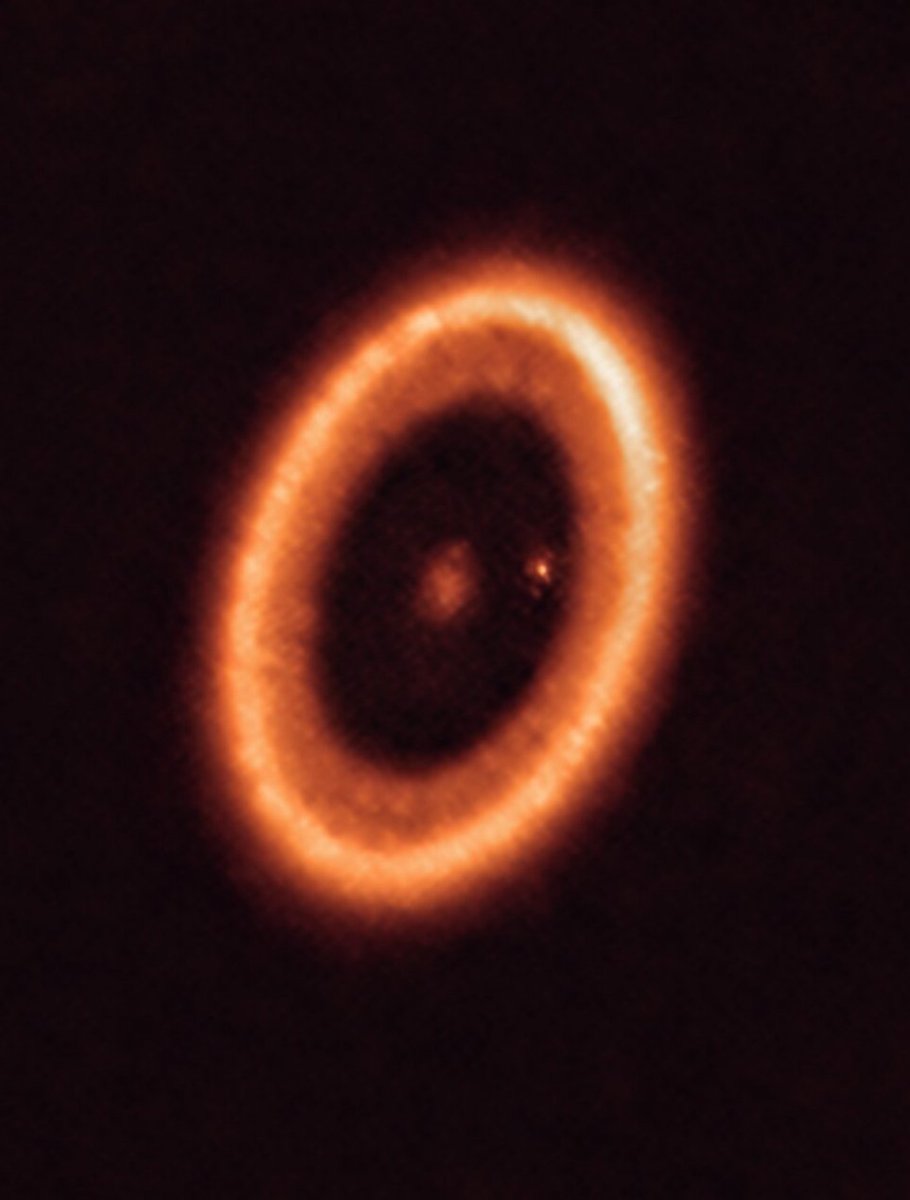
See that ring?
That's the circumstellar disk around PDS 70, a star 370 light-years from Earth.
And that bright spot to the right is a new planet being born—a planet the size of Jupiter.
Which has its own circumplanetary disk... where moons are being born.
@smuhalifax@SMUAlumniHfx@smu_studentlife @smuprez This office was one of Carlton's favourite places, it had a nice bed just for him and treats were occasionally offered when he walked in waiting to be served. RIP Carlton, you will be missed.
Huge congrats to my colleague James Barron whose research lead to the first detection of a magnetic field on Polaris 'the North Star'! https://t.co/G7mKqt7AH0
A flare near the black hole is reflected off of the accretion disk. The extreme gravity causes light to be bent from behind the black hole to the front, producing an echo of the flare.
Light echoes detected from behind a supermassive blackhole - published now in Nature featuring Luigi Gallo! @SMUScience@smuhalifax@ESA_XMM@Nature
https://t.co/uhhV2rshvG
Project MOMO is Published now on Universe. A review of the deep and long-term monitoring of the blazar and black hole binary candidate OJ 287. @MDPIOpenAccess@SMUScience
https://t.co/KSp50voS5E
A detailed and long-term multiwavelength study of the blazar and black hole binary candidate 'OJ 287' is out now on arXiv!: https://t.co/aZ9LCYoaBF
@SMUScience 🎉
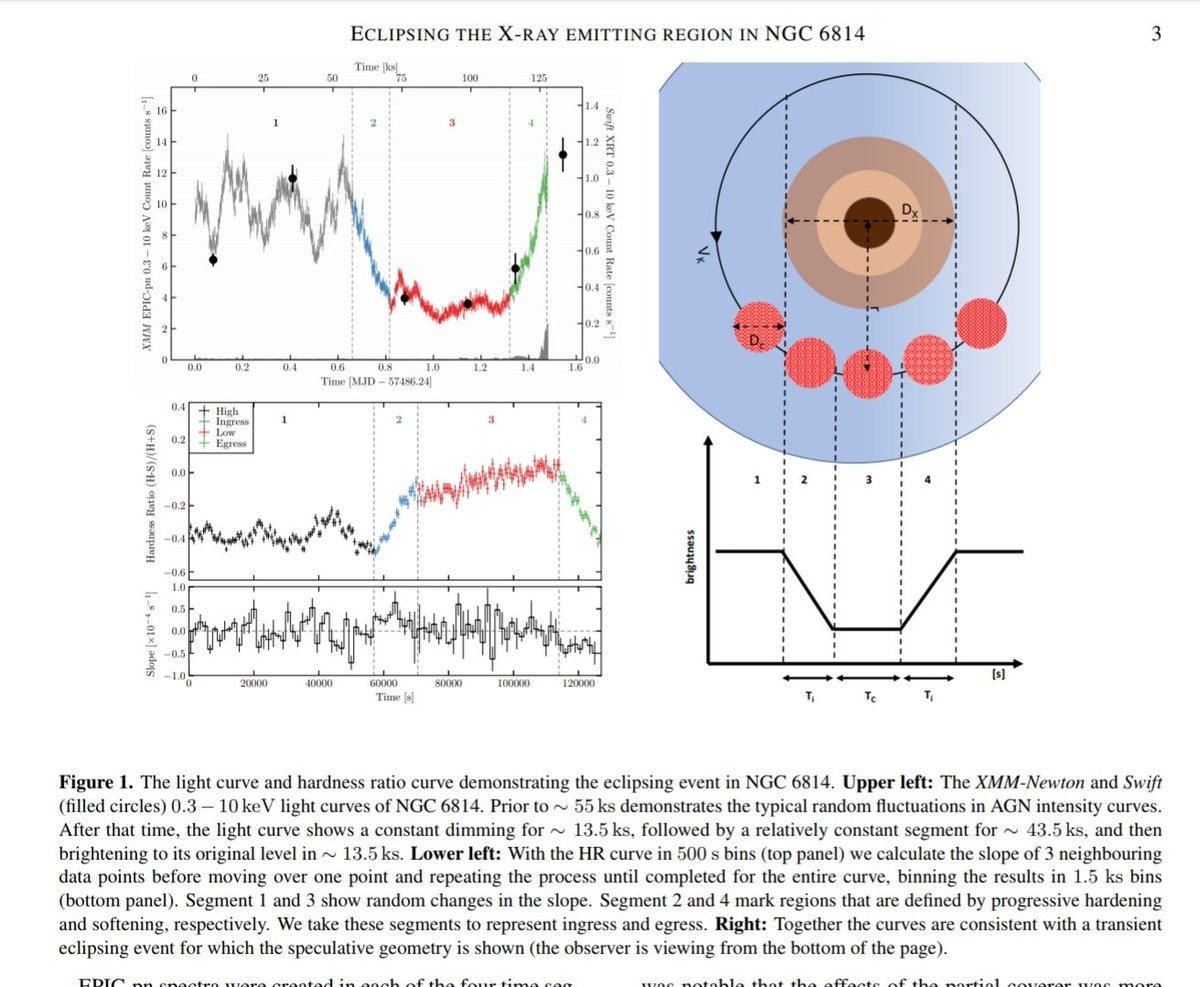
New XMM-Newton paper: "Eclipsing the X-ray emitting region in the active galaxy NGC 6814" by L. Gallo et al.! They found an X-ray eclipse in the lightcurve of this AGN & use it to constrain the size of the X-ray emitting region to ~25 r_g. Full paper here: https://t.co/r0eUijk3Vl
You've heard of solar and lunar eclipses... but have you seen a black hole eclipse? New paper from Dr. Luigi Gallo including PhD student Adam Gonzalez reports a black hole eclipsing event in NGC 6814. https://t.co/jgpXyOgK83
@SMUScience#astrophysicaljournal
Through his #research on black holes and supermassive black holes, @SMUScience’s Dr. Luigi Gallo has helped gain new understanding of the topic worldwide. https://t.co/xOtal3hCP6 #SMUCommunity#dowhatyoudo