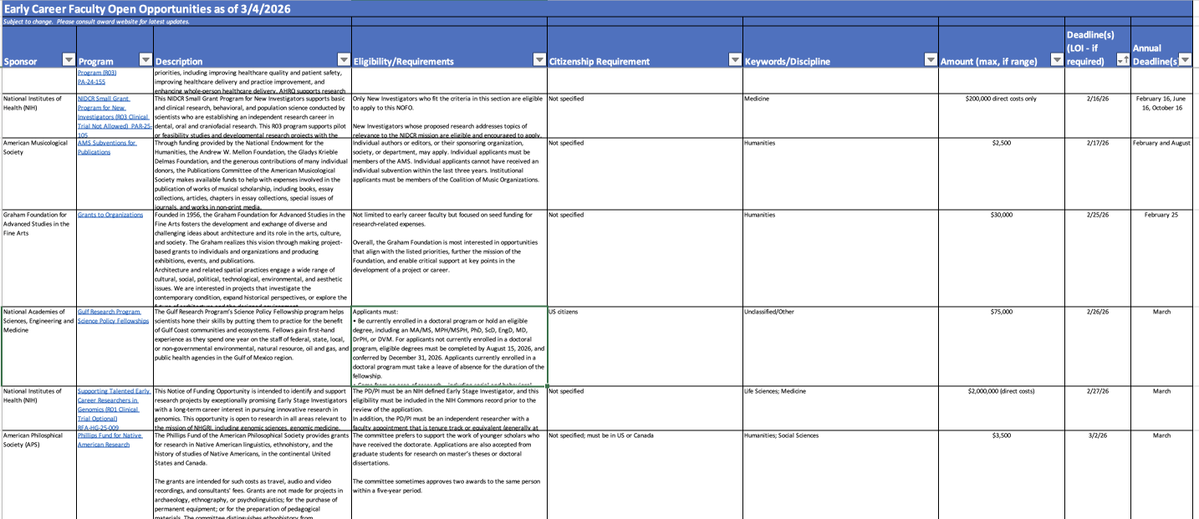
Here is our updated database of grants for early careers researchers in all fields.
It goes way beyond traditional NIH and NSF funding opportunities. We list 428 types of grants.
Download it here: https://t.co/RGXGrdp2uf
🎉 Exciting news!
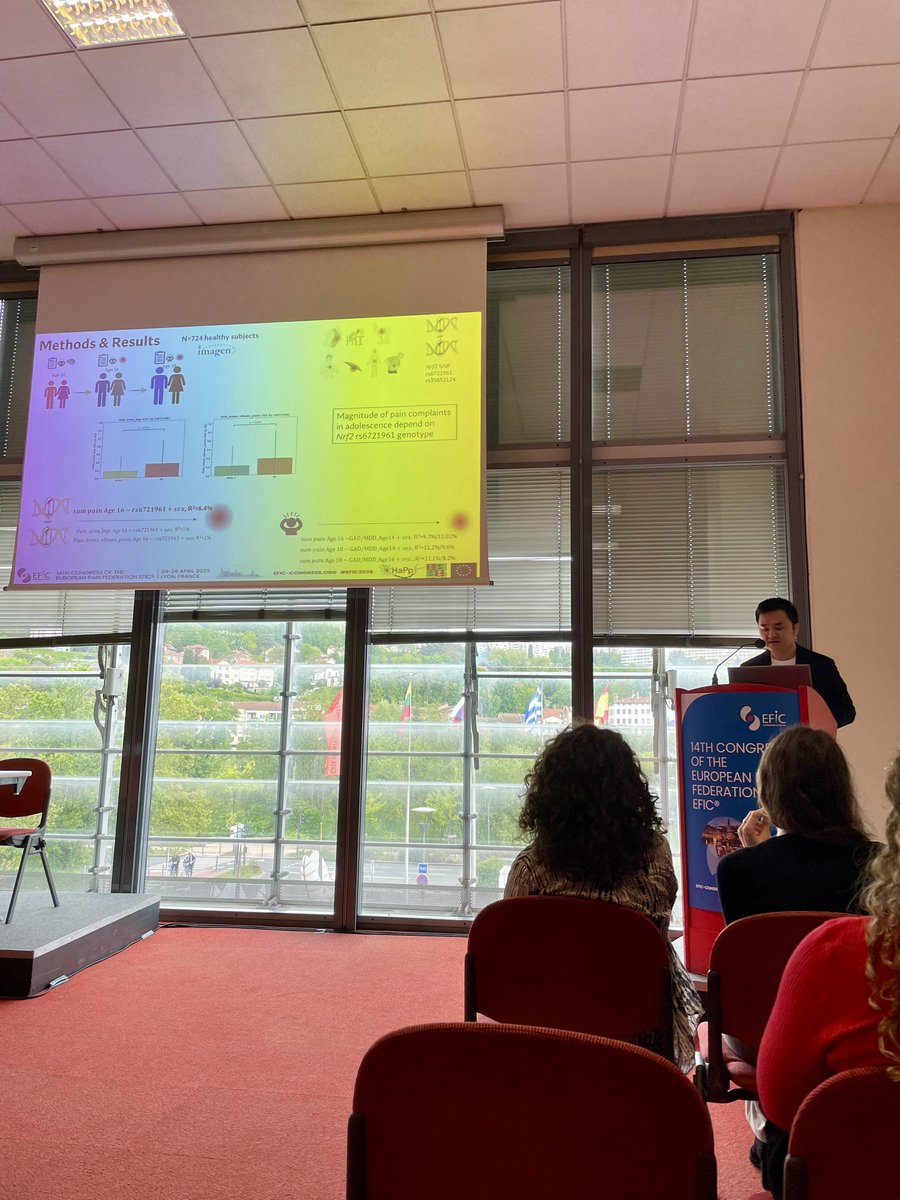
Our ESRs @FrancescoScarl9 @Anh_lecong93 and Ginevra will be presenting at #ISPP2025 in Glasgow!
📅 Don’t miss their talk on June 18, 3:30–5:00 PM:
"Unraveling the Complexities of Pain and its Comorbidities from Adolescence to Early Adulthood" @HaPpYejd2021
5/5 The findings help contribute to the growing but still under-investigated field of identifying biological markers for chronic pain development.
You are very welcome (and it is my pleasure) for any discussion regarding this work.
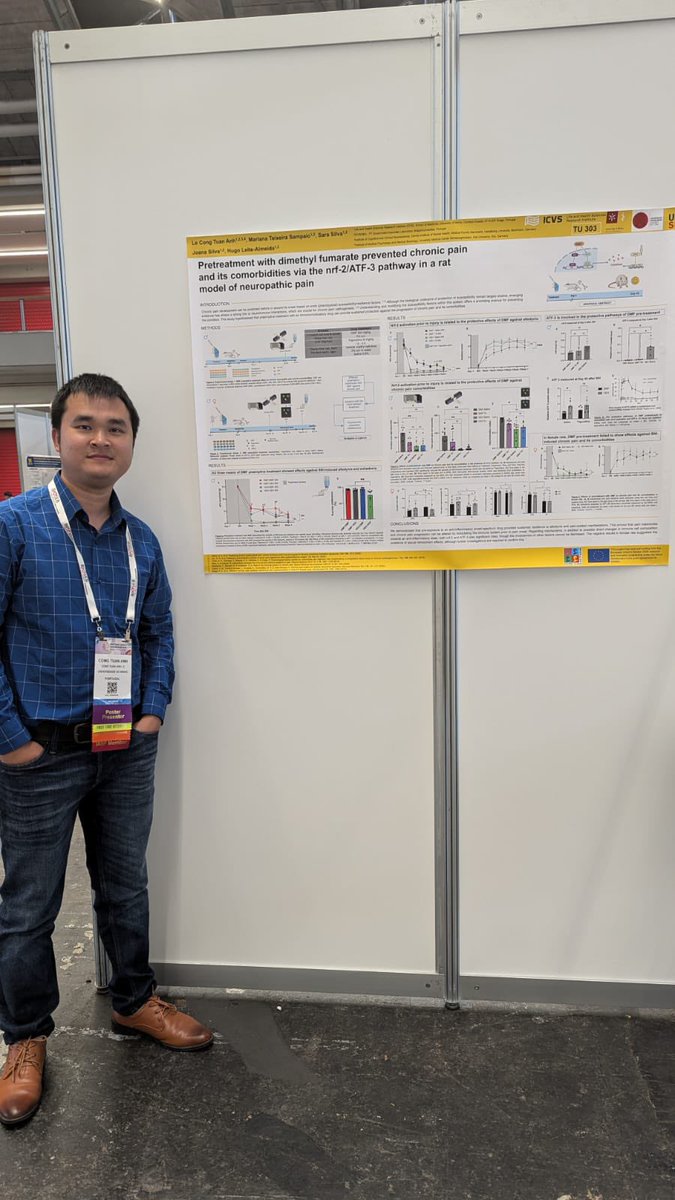
I am thrilled to share that the first paper from my PhD has been published in Brain Behavior and Immunity. Here, we examine whether susceptibility/resilience to the development of chronic pain and related comorbidities could be modulated by activating Nrf2
https://t.co/yvRq4tnFFx
4/5 These outcomes suggest the Nrf2 inflammatory pathway (and potentially other immune molecules) may play a role in determining susceptibility/resilience to the development of chronic pain and related comorbidities.
2/5 Molecular analysis indicated that Nrf2 activation before nerve injury appears to be associated with the protective effects of DMF.
DMF treatment altered the immune response, increasing IL-10, G-CSF, IL-6, IFN-g, IL-17A, and CXCL2, and decreasing leptin.
1/5 Preexposure to DMF protected rats against mechanical and cold allodynia, with the protection persisting up to 49 days after SNI.
DMF alleviated pain-related manifestations,measured between day 35-49,including anxiety, depression-like,and cognitive dysfunction-like behaviors
We employed the spared nerve injury to model chronic neuropathic pain and the immunomodulator dimethyl fumarate (DMF) as an Nrf2 inducer. Below are key findings from the study:
Join us!
Are you passionate about the brain, and want to know how neuronal circuits influence behavior?
Do you want to pursue a PhD testing the potential of modulating serotonin circuits to revert emotional/ cognitive dysfunction in neuropsychiatric disorders? Then let’s talk! https://t.co/dEKL9qSM74
Vamos, @RafaelNadal!
As you get ready to graduate from tennis, I’ve got a few things to share before I maybe get emotional.
Let’s start with the obvious: you beat me—a lot. More than I managed to beat you. You challenged me in ways no one else could. On clay, it felt like I was stepping into your backyard, and you made me work harder than I ever thought I could just to hold my ground. You made me reimagine my game—even going so far as to change the size of my racquet head, hoping for any edge.
I’m not a very superstitious person, but you took it to the next level. Your whole process. All those rituals. Assembling your water bottles like toy soldiers in formation, fixing your hair, adjusting your underwear... All of it with the highest intensity. Secretly, I kind of loved the whole thing. Because it was so unique—it was so you.
And you know what, Rafa, you made me enjoy the game even more.
OK, maybe not at first. After the 2004 Australian Open, I achieved the #1 ranking for the first time. I thought I was on top of the world. And I was—until two months later, when you walked on the court in Miami in your red sleeveless shirt, showing off those biceps, and you beat me convincingly. All that buzz I’d been hearing about you—about this amazing young player from Mallorca, a generational talent, probably going to win a major someday—it wasn’t just hype.
We were both at the start of our journey and it’s one we ended up taking together. Twenty years later, Rafa, I have to say: What an incredible run you’ve had. Including 14 French Opens—historic! You made Spain proud... you made the whole tennis world proud.
I keep thinking about the memories we’ve shared. Promoting the sport together. Playing that match on half-grass, half-clay. Breaking the all-time attendance record by playing in front of more than 50,000 fans in Cape Town, South Africa. Always cracking each other up. Wearing each other out on the court and then, sometimes, almost literally having to hold each other up during trophy ceremonies.
I’m still grateful you invited me to Mallorca to help launch the Rafa Nadal Academy in 2016. Actually, I kind of invited myself. I knew you were too polite to insist on me being there, but I didn’t want to miss it. You have always been a role model for kids around the world, and Mirka and I are so glad that our children have all trained at your academies. They had a blast and learned so much—like thousands of other young players. Although I always worried my kids would come home playing tennis as lefties.
And then there was London—the Laver Cup in 2022. My final match. It meant everything to me that you were there by my side—not as my rival but as my doubles partner. Sharing the court with you that night, and sharing those tears, will forever be one of the most special moments of my career.
Rafa, I know you’re focused on the last stretch of your epic career. We will talk when it’s done. For now, I just want to congratulate your family and team, who all played a massive role in your success. And I want you to know that your old friend is always cheering for you, and will be cheering just as loud for everything you do next.
Rafa that!
Best always, your fan,
Roger
Preemptive minocycline decreases allodynia and depressive-like behaviors in a peripheral neuropathy rat model: a preliminary study https://t.co/fZlUGMlLtS #biorxiv_neursci