Does your milk come from ‘battery cows’? writes @TBIJ
The Bureau of Investigative Journalism has found that there has been a rise in farms housing cows confined indoors 24/7 in the UK.
Many of these intensive dairy farms supply major supermarkets, while consumers are left in the dark when it comes to the origin of the dairy products they buy.
Our Executive Director, Edie Bowles, said:
“A single retailer can draw its milk from a pool [of many] suppliers. In practice, this makes it close to impossible for consumers to know where the product they are buying came from. Consumers, when given clear information, opt for higher-welfare options. There is no such opportunity for dairy products.”
“The way animal agriculture is portrayed often contrasts with the reality of animal life on farms”
Read the full article: https://t.co/NN60fAwhq1
Find out more about #FoodChainMisinformation: https://t.co/djwXwjuM23
#AnimalProtection #ConsumerProtection
Tail docking is a mutilation – prohibited by Section 5 of the Animal Welfare Act 2006, Section 5 of the Welfare of Animals Act (Northern Ireland) 2011, and Section 20 of the Animal Health and Welfare (Scotland) Act 2006.
It may only be performed as a last resort as laid out by the Mutilations (Permitted Procedures) (England) Regulations 2007, and the equivalent legislation in the rest of the UK, after measures to improve environmental conditions or management have been taken to prevent tail-biting. Even then, there must be evidence that biting injuries have actually occurred.
Yet 72 to 85% of commercially raised pigs in the UK have their tail mutilated, showing the law is being ignored at scale.
🧵
Changing this means addressing the systemic failures in enforcement, and the root causes of tail biting within industrial farming settings – as other countries like Finland, Switzerland, Norway and Sweden have already done.
🧵
5 activists linked to @AnimalRising were acquitted after rescuing 18 beagles from a facility that breeds dogs for animal testing. The defendants acknowledged their role in the rescue, arguing their actions were driven by compassion for animals. Summary: https://t.co/HBUGytL4Mm
2.2%.
That's how many cases of non-compliance with animal protection law on farms led to prosecution in the UK in 2024.
Non-compliance is the failure to meet the minimum legal standards that were created to protect animals from a whole host of maltreatment, and ensure their welfare needs are met.
🧵
When 97.8% of cases of non-compliance with the law go unpunished, the animal protection enforcement system is failing the 1.2 billion animals farmed in the UK – undermining the integrity of the legal system itself.
🧵
What’s missing is enforcement. We’re calling for detailed official guidance setting out what these legal protections for crustaceans mean in practice for businesses and regulators.
Find out more: https://t.co/iFgkto7ZGy
#PainAtTheTimeofKilling#AnimalLaw#AnimalProtection
The law is clear. The science is clear. 🦞
In December 2025, the UK government officially recognised that boiling these animals alive is unlawful under current law.
🧵👇
Under the Welfare of Animals at the Time of Killing Regulations 2015, causing avoidable suffering to animals is illegal. Under the Animal Welfare (Sentience) Act 2022, decapod crustaceans are recognised as sentient beings capable of feeling pain.
🧵👇
In 1822 Parliament passed the Ill Treatment of Cattle Act – better known as Martin’s Act – championed by Irish MP Richard Martin.
For the first time, cruelty to certain animals was recognised in national law.
Over time, protections expanded. What began as a narrow protection slowly evolved into a framework.
Today, much of that framework sits under the Animal Welfare Act 2006 – largely governing animals under human control – alongside separate regimes for other animals, such as wildlife.
On paper, there are a whole host of legal protections.
And yet…
In this episode of The Disclosure, @earthling_ed sits down with our Executive Director Edie Bowles, to trace this journey – and confront the uncomfortable question:
If the legal foundations have strengthened over two centuries, why are more animals than ever caught in industrial systems today?
Watch the full episode "Inside the legal fight against animal farming": https://t.co/TylTDfbYB9
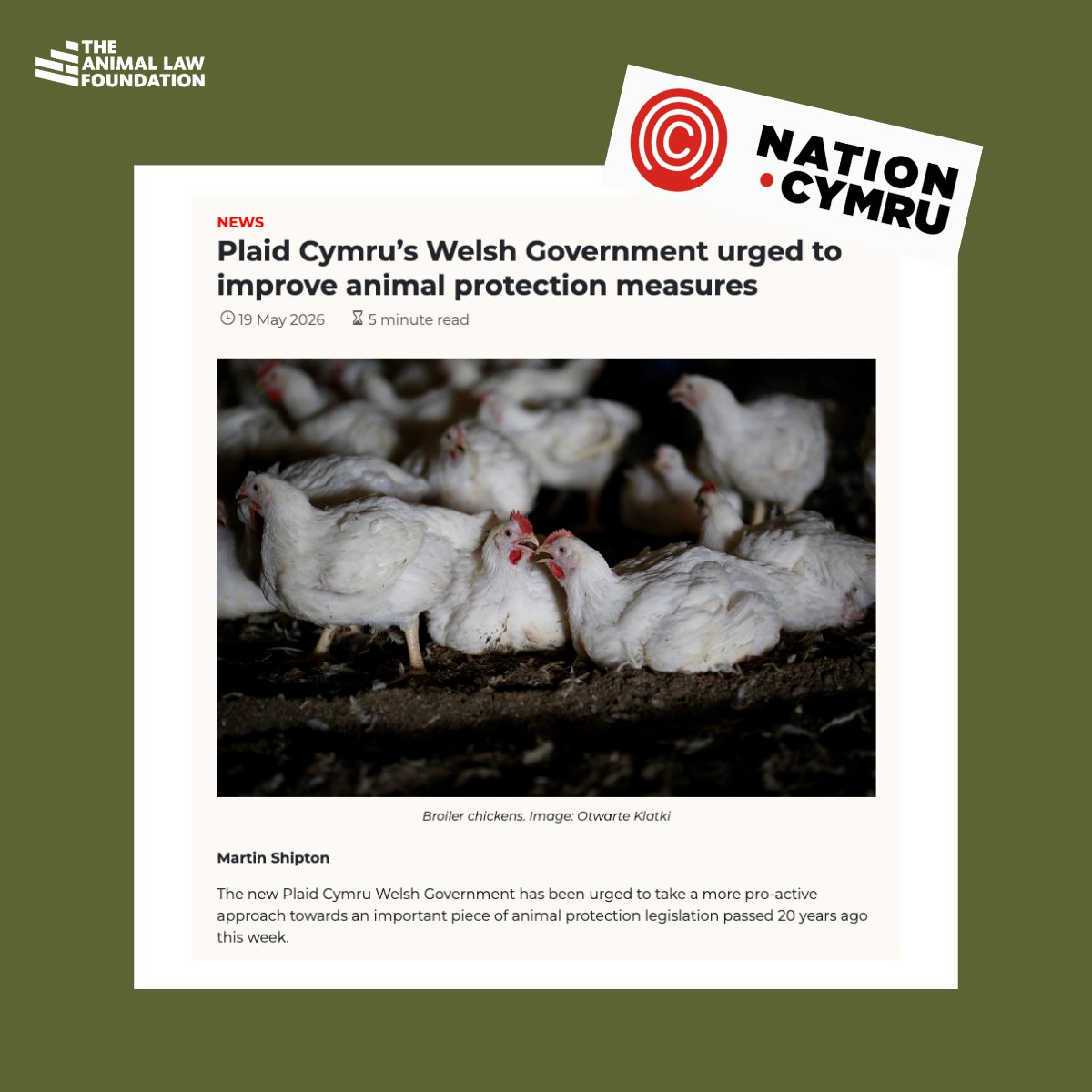
We’ve joined fellow animal welfare organisations in signing a letter led by @AnimallawFDN asking the new Welsh Government to take a more proactive approach to enforcing the 20-year-old Animal Welfare Act to help reduce animal suffering https://t.co/xnqlMSppx4
Plaid Cymru’s Welsh Government urged to improve animal protection measures’ reports @NationCymru
Following the elections in Wales, we have written to the new Welsh Government calling on them to put animals back into the Animal Welfare Act 2006.
This year marks the 20th anniversary of the Act, and the letter argues that weak interpretation, poor enforcement and the exclusion of entire animal categories have allowed widespread and avoidable suffering to continue.
With Plaid Cymru having committed in its manifesto to a renewed Animal Health and Welfare Plan, we believe this is a unique moment to ensure the law finally delivers on its promise so that animals in Wales are protected in practice.
Read the full article here: https://t.co/iQGL11gBXR
#AWA20 #AHWA20 #AnimalProtection #AnimalLaw
“[the claimant’s barrister] has manfully attempted to elevate chickens to a status that somehow makes them victims and persons affected…”
These were words spoken in a UK High Court hearing about billions of animals suffering fractures and breathing difficulties.
Language matters - we unpacked the vocabulary used in the courtroom, and what it reveals about how animal suffering and animal law is treated.
Read our latest insight on ‘The courtroom vocabulary of animal suffering’: https://t.co/rfryDarhJ3
#AnimalLaw #AnimalProtection
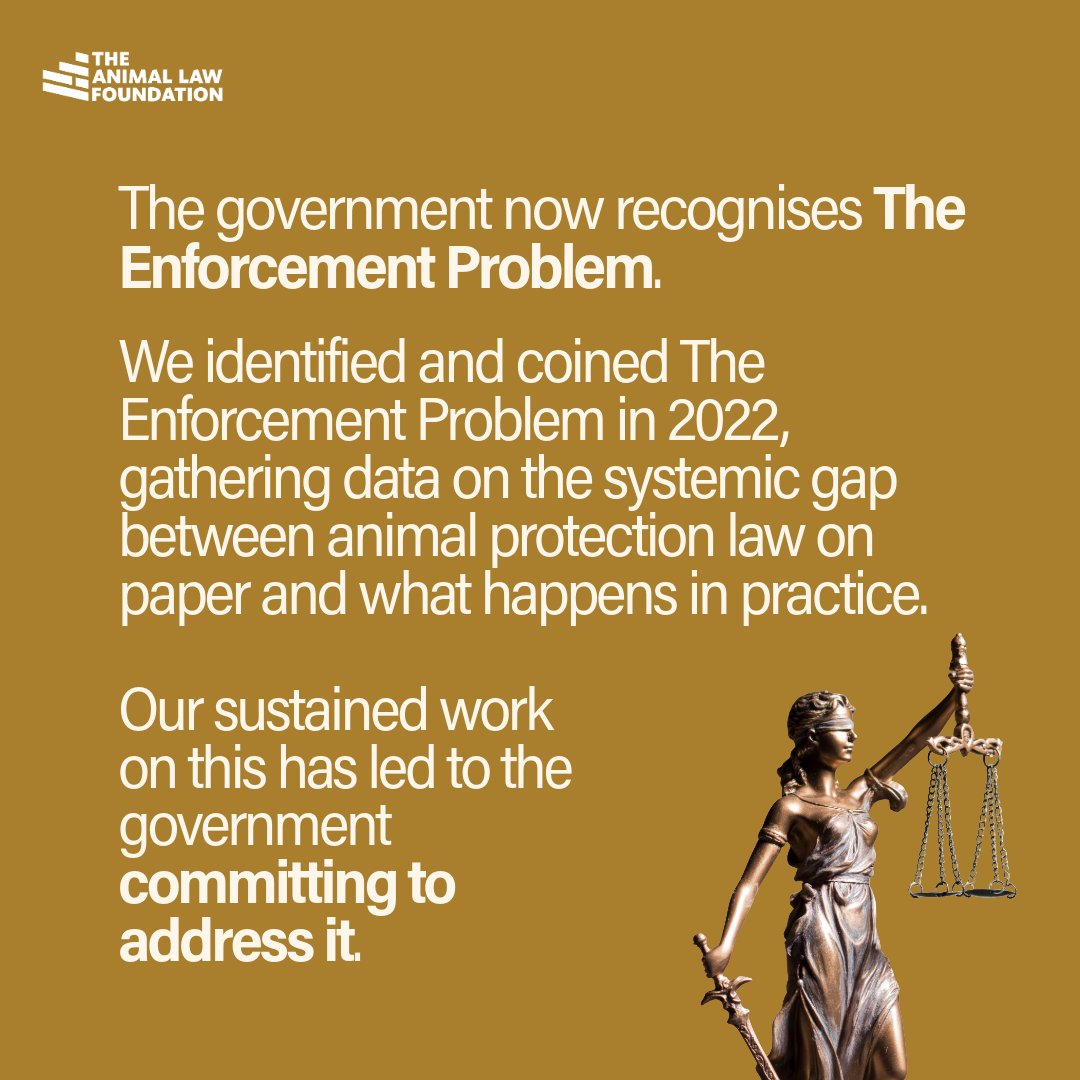
Our work has recently reached some significant milestones in the government’s Animal Welfare Strategy.
From Defra's position on crustaceans to several government commitments on enforcement, tail docking and fish protection, our progress for animal protection is increasingly visible.
Scroll to see what's been achieved, and what it means for what comes next.
#AnimalLaw #AnimalProtection









![AnimallawFDN's tweet photo. Does your milk come from ‘battery cows’? writes @TBIJ
The Bureau of Investigative Journalism has found that there has been a rise in farms housing cows confined indoors 24/7 in the UK.
Many of these intensive dairy farms supply major supermarkets, while consumers are left in the dark when it comes to the origin of the dairy products they buy.
Our Executive Director, Edie Bowles, said:
“A single retailer can draw its milk from a pool [of many] suppliers. In practice, this makes it close to impossible for consumers to know where the product they are buying came from. Consumers, when given clear information, opt for higher-welfare options. There is no such opportunity for dairy products.”
“The way animal agriculture is portrayed often contrasts with the reality of animal life on farms”
Read the full article: https://t.co/NN60fAwhq1
Find out more about #FoodChainMisinformation: https://t.co/djwXwjuM23
#AnimalProtection #ConsumerProtection](https://pbs.twimg.com/media/HJ5GiZaW0AAyO0w.jpg)


![AnimallawFDN's tweet photo. “[the claimant’s barrister] has manfully attempted to elevate chickens to a status that somehow makes them victims and persons affected…”
These were words spoken in a UK High Court hearing about billions of animals suffering fractures and breathing difficulties.
Language matters - we unpacked the vocabulary used in the courtroom, and what it reveals about how animal suffering and animal law is treated.
Read our latest insight on ‘The courtroom vocabulary of animal suffering’: https://t.co/rfryDarhJ3
#AnimalLaw #AnimalProtection](https://pbs.twimg.com/media/HInW11MXYAA1ua_.jpg)


