Very much enjoyed discussing my research with the general community at #BSF2019#FamilyDay Was particularly impressed by the interest and engagement from the young audience. #batteryresearch
🚨 EXPOSED: Unseen footage reveals the DEVASTATING impact of bottom-trawl fishing. David Attenborough’s new film #OCEAN is a call to arms to end this heartbreaking destruction of our marine protected areas. Will you heed his call?
TAKE ACTION with us now👉https://t.co/5RxrqOqtPi
That’s why Nortvolt are having problems…
Making batteries is damn hard.
Northvolt has learned that the hard way. While the media is discussing bankruptcy threats, the discussion forum Reddit held an Ask Me Anything chat with one of the company's engineers, where he anonymously, candidly talked about the problems the company faced and still faces. Reddit has verified his employment at Northvolt.
According to the engineer, Northvolt's management underestimated the difficulty of manufacturing batteries, had unrealistic schedules and ambitions.
"Battery production is genuinely difficult," he says. It is incredibly difficult to maintain consistent quality of millions of batteries to be manufactured - especially when many of the quality problems are not discovered until the entire battery is fully assembled. Investors, management and staff alike underestimated the problem.
The staff also worked under constant time pressure, "Tesla schedules" as the engineer called it. Both the company's CEO Peter Carlsson and several of the other key players were defectors from Tesla who tried to transfer Tesla's way of working, with unreasonable schedules. Which meant that no one really believed in the timetables. It has also led to many occasions where things had to be fixed afterwards because half-finished things were stamped ready.
The engineer also talked about completely unrealistic ambitions. Northvolt tried to solve everything, simultaneously, everywhere. "We came up with a lot of 'smart' new solutions on everything from IT to operations to how to label cables internally inside machines, all of which have led to cost increases, delays and problems when we tried to force subcontractors to work in ways they are not at all used to with."
Northvolt also bet on far too many horses at once. In addition to the actual battery production in Skellefteå, they would also build factories that manufacture the anode and cathode materials, recycling facilities, research new battery chemistries, plus build lots of new battery factories around Europe before they even finished their first one. However, the crisis of the last few weeks has caused management to concentrate more on the main track: increasing production volumes in the factory in Skellefteå.
However, the engineer disagreed with rumors that China would sabotage Northvolt. Many of the machines that will manufacture the batteries were purchased from the Chinese company Wuxi Lead. But contrary to media speculation, they weren't trying to sabotage Northvolt at all. On the contrary, they viewed Northvolt as a key customer that would open their way to more European business.
About 60% of the machines in Northvolt One in Skellefteå are from Wuxi Lead, but the problem was that it was Northvolt themselves who designed the factory, "in many respects in ways that the Chinese find complicated and unnecessary" according to the engineer.
The main problem with the machines was rather the procurement: “We have sent Wuxi Lead incredibly poorly written, vague specifications. They have then put in some cheap cables they think will do, but which in Europe would never have been accepted under normal conditions. When our staff then went to China to give the machines the green light to be shipped to Skellefteå (each individual machine must be approved by the customer according to the contract, it is standard with this type of purchase) our staff either missed the bad cables, or then it has been flagged as unacceptable, whereupon some middle manager approved it anyway because otherwise some schedule would have broken. You get what you ask for and what you pay for, and what you put your signature on is “OK to ship.”
Scientists file antitrust lawsuit against major publishers 😮 I don’t think anyone saw this coming….will be keeping a close eye on this 👀
👉 https://t.co/iDiSPK6anD
Details here: https://t.co/KF4lmKXRGd
Publishers “conspired to unlawfully appropriate billions of dollars that would have otherwise funded scientific research” - says the lawsuit filed against publishers whose revenue was $10 billion.
📍 The lawsuit mentions three major wrongdoings:
1️⃣ Unpaid Peer Review Rule:
- Publishers agreed [...] not to pay for their peer review services.
- Publishers essentially agreed to hold the careers of scholars hostage so that the publishers could force them to provide their valuable labor for free.
2️⃣ Single Submission Rule:
- Publishers agreed not to compete with each other for manuscripts by requiring scholars to submit their manuscripts to only one journal at a time.
- It substantially reduces competition among Publishers. It substantially decreases incentives to review manuscripts promptly and publish research quickly.
3️⃣ The Gag Rule:
- Publishers agreed to prohibit scholars from freely sharing the scientific advancements described in submitted manuscripts while those manuscripts are under peer review, a process that often takes over a year.
- Publishers will often require scholars to sign away all intellectual property rights, in exchange for nothing.
- The manuscripts then become the actual property of the Publishers. The Publishers charge the maximum that the market will bear for access to that scientific knowledge.
📍 As a result, the lawsuit says:
1. Through the Scheme, the Publishers have sustained profit margins that far exceed the most successful corporations in the economy. For instance, in 2023, Elsevier alone generated $3.8 billion li in revenue from its peer-reviewed journals, with an operating profit margin of 38 percent. This profit margin exceeded Apple’s (30 percent) and Google’s (25 percent).
2. The Publishers’ Scheme diverts billions of dollars every year in taxpayer money away from scientific research to the Publishers. This is an enormous amount of funding that would have otherwise gone to pay for critical scientific research.
3. Impaired ability of scientists to do their jobs. The pace of scientific progress has dramatically slowed down. Worsening peer review crisis. Scholars can’t freely exchanging scientific knowledge.
❗ “It will take longer to find effective treatments for cancer. It will take longer to make advancements in material science that will support quantum computing. It will take longer to find technological tools to combat climate change.“
Dean Harvey, co-counsel:
“The academic publishing industry has acted as though the antitrust laws do not apply to them, and believe scholars do not deserve the same protections as everyone else. They are mistaken.”
📍 My view:
1. Life in academia has become so harsh partly because of the publishing culture. It won't change unless the publishers change their policies.
2. Building business with 38% margin using research money is UNETHICAL. Let's see if judges think it's also unlawful.
#science #AcademicChatter #phdchat
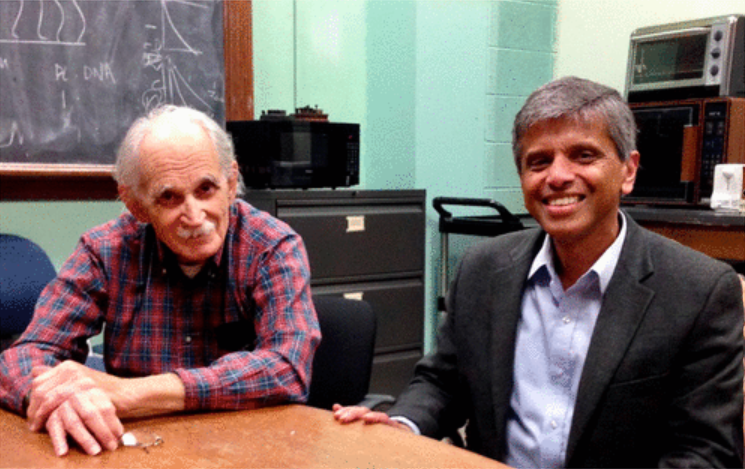
We have lost a great legend of our times. It is with great sadness we note that Prof. Al Bard, father of electrochemistry passed away on October 11.
RIP Al.
Here is a conversation with Al Bard we published in 2017
https://t.co/ae5hFmXIoO
Designing new batteries is difficult and takes a long time. AI helped researchers speed through the process in mere months. Their new battery trims the need for the costly material lithium by up to 70 percent https://t.co/rMT2DbFMNo
In Gujarat, India, a project launched in 2012 is aimed to use the 532 km long network of Narmada canals across the state for installing solar panels & generate electricity. A solution that saves land, reduces evaporative losses & keeps solar panels cooler: https://t.co/Diea5TOECJ
Just hit 10k subscribers on @YouTube 📽 with >700k views and >50k hrs watched! Youtube is a great platform to openly extend the reach of the content beyond lecture theatres.
Check out one of my videos on solid-state batteries and others on my channel.
https://t.co/tMHYn4pwd5
TAE Power Solutions was founded after TAE created a way to turn 2 MW from the grid into 750 MW of power for our fusion device Norman. Now that invention is being adapted for more efficient EVs and energy storage systems.
Read more in @BloombergNEF: https://t.co/7Eg9s7cxOK
We need more women in #science and #technology, because there's so much to do, including making it safe for people. Plus, solving problems is fun!
https://t.co/SO8A9XyezT
Proud to have worked with London’s diverse communities to organise another fantastic Diwali in Trafalgar Square.
Over the next few weeks London will see some of the biggest Diwali celebrations outside of India.
BREAKING NEWS
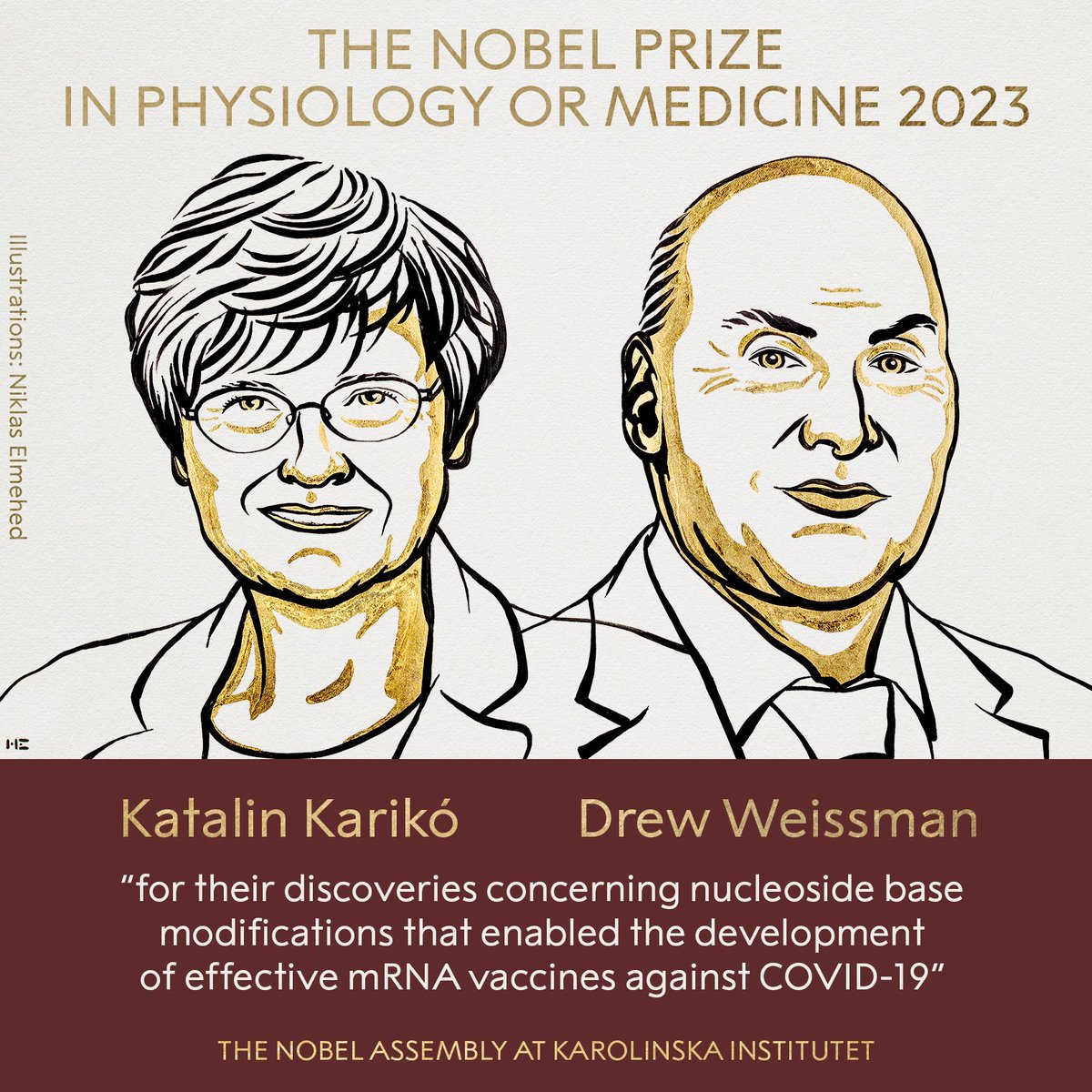
The 2023 #NobelPrize in Physiology or Medicine has been awarded to Katalin Karikó and Drew Weissman for their discoveries concerning nucleoside base modifications that enabled the development of effective mRNA vaccines against COVID-19.
Selecting the proper reference electrode is crucial to making sure that data is reproducible and trustworthy. The teams found that thousands of studies used the wrong ones.
https://t.co/BsxdPNK7XF
Visit to my old lab at Paris Diderot University, what a treat it was! The Chemistry department sure knows how to handle a heatwave! #bbq#terraceparty@FKanoufi @NolJeanMarc4 next time!
@ICBillyWu@ElsevierConnect Shocking that they still send these. Should start a petition to demand journal publishers go PDF as default and have physical copies as be requestable options. #Sustainability#GoGreen
Now trained as a mental health first aider ⛑💪🏽Highly recommend taking the course. Research life isn’t easy. Being a women in STEM isn’t easy. Proud to be able to support the people around me. #Breakthebias#AcademicMentalHealth#WomenInSTEM#IWD2022