Read about our recent ARPA-E CIRCULAR proposal win on Development of an Autonomous Robotic Disassembly Process for Applications in Battery Pack Circularity. @NREL @ORNL@Toyota Waygate Technologies.
https://t.co/TtRh26Nr8a
Exciting stuff @LiamFedus. Any goals aligned with battery energy storage? We need next gen battery materials to rapidly electrify the world (aviation, ships...).
Today, @ekindogus and I are excited to introduce @periodiclabs.
Our goal is to create an AI scientist.
Science works by conjecturing how the world might be, running experiments, and learning from the results.
Intelligence is necessary, but not sufficient. New knowledge is created when ideas are found to be consistent with reality. And so, at Periodic, we are building AI scientists and the autonomous laboratories for them to operate.
Until now, scientific AI advances have come from models trained on the internet. But despite its vastness — it’s still finite (estimates are ~10T text tokens where one English word may be 1-2 tokens). And in recent years the best frontier AI models have fully exhausted it.
Researchers seek better use of this data, but as any scientist knows: though re-reading a textbook may give new insights, they eventually need to try their idea to see if it holds.
Autonomous labs are central to our strategy. They provide huge amounts of high-quality data (each experiment can produce GBs of data!) that exists nowhere else. They generate valuable negative results which are seldom published. But most importantly, they give our AI scientists the tools to act.
We’re starting in the physical sciences.
Technological progress is limited by our ability to design the physical world.
We’re starting here because experiments have high signal-to-noise and are (relatively) fast, physical simulations effectively model many systems, but more broadly, physics is a verifiable environment. AI has progressed fastest in domains with data and verifiable results - for example, in math and code. Here, nature is the RL environment.
One of our goals is to discover superconductors that work at higher temperatures than today's materials. Significant advances could help us create next-generation transportation and build power grids with minimal losses. But this is just one example — if we can automate materials design, we have the potential to accelerate Moore’s Law, space travel, and nuclear fusion.
We’re also working to deploy our solutions with industry. As an example, we're helping a semiconductor manufacturer that is facing issues with heat dissipation on their chips. We’re training custom agents for their engineers and researchers to make sense of their experimental data in order to iterate faster.
Our founding team co-created ChatGPT, DeepMind’s GNoME, OpenAI’s Operator (now Agent), the neural attention mechanism, MatterGen; have scaled autonomous physics labs; and have contributed to some of the most important materials discoveries of the last decade. We’ve come together to scale up and reimagine how science is done.
We’re fortunate to be backed by investors who share our vision, including @a16z who led our $300M round, as well as @Felicis, DST Global, NVentures (NVIDIA’s venture capital arm), @Accel and individuals including @JeffBezos , @eladgil , @ericschmidt, and @JeffDean. Their support will help us grow our team, scale our labs, and develop the first generation of AI scientists.
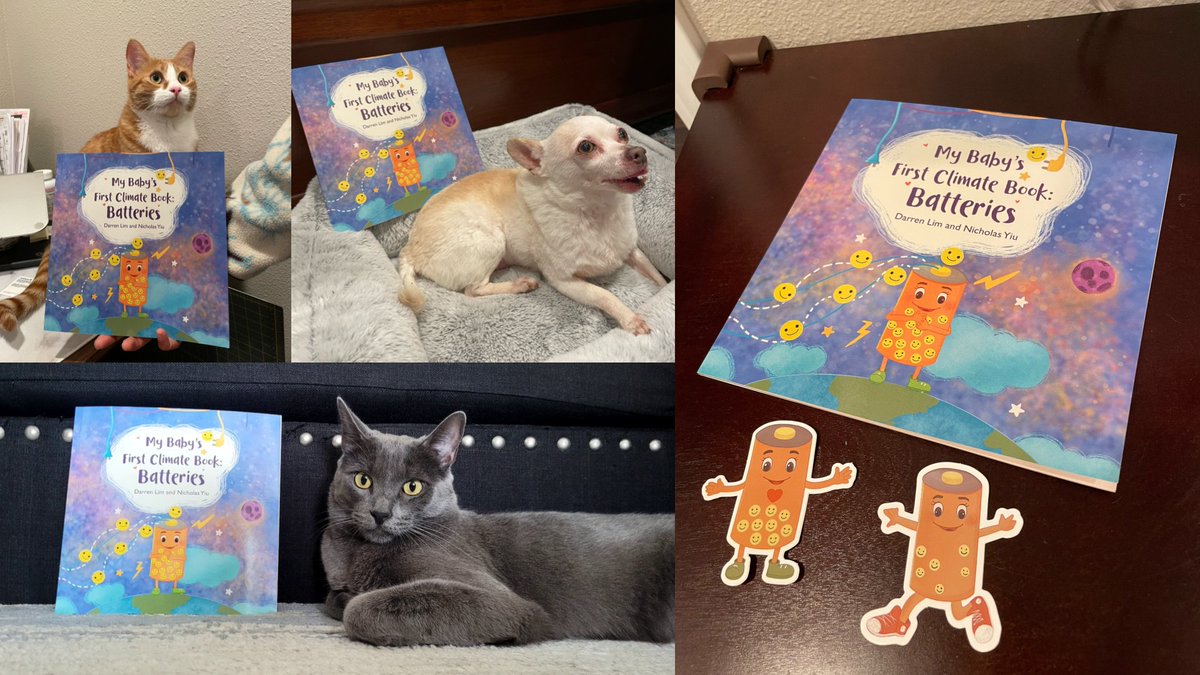
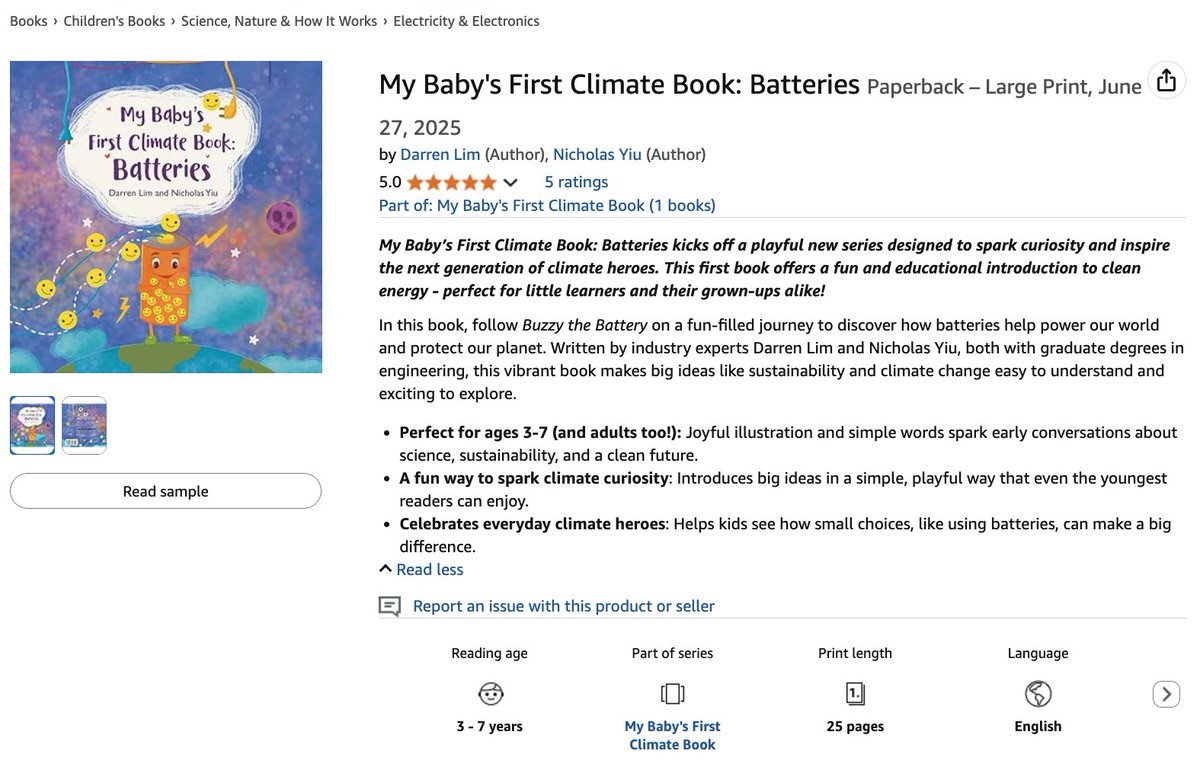
“My Baby’s First Climate Book: Batteries” is out now!
co-authored with Darren Lim, perfect for sparking tiny STEM brains. Got kiddos? Grab a copy and start them young 📚⚡👶
.@ORNL researchers will work with @Toyota to develop disassembly and remanufacturing processes for #ElectricVehicle battery components, reducing waste & emissions per mile while preserving #CriticalMaterials to address #SupplyChain challenges. 🚗🔋 https://t.co/lOFkP0LNNH
Cheaper installation of charging infrastructure is key to driving mass adoption of #ElectricVehicles! A new NREL-led project is enabling the deployment of a nationwide charging network by finding pathways to reduce hidden “soft costs.”
Read more ➡️ https://t.co/wPGrWdBh5K
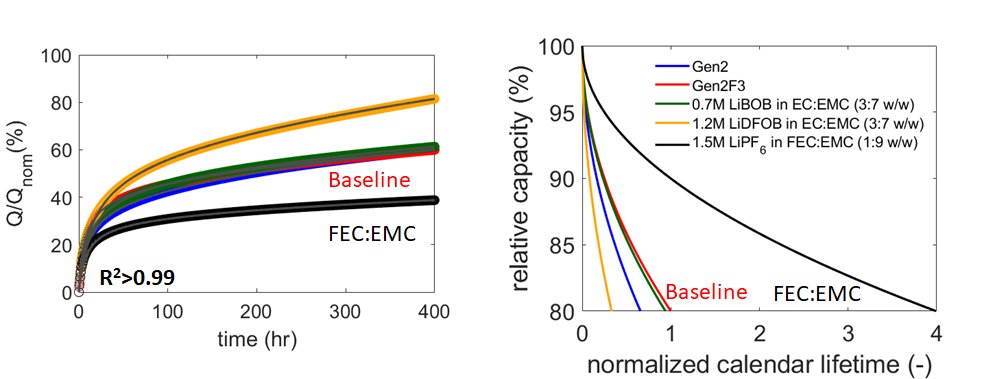
New article screening 16 electrolytes for calendar life of silicon-based lithium ion batteries! Salient highlights:
1. V-hold protocol holds a lot of information that makes it amenable for rapid materials screening for calendar life improvements.
https://t.co/YPvBCtSSPB
2. EC free FEC:EMC electrolyte is good for calendar life.
Up to 4 times calendar life improvement is possible.
3. Not all electrolyte fluorination is good: FEC with FEMC is good, FEC with TFPC is bad. Both FEMC and TFPC have 3 F's.
Check out this most read article in @ACSEnergyLett on boron silicon nanoparticles for long cycle life batteries led by @NREL colleagues Greg, Pashu, Mike and Nate. In the most read list for the month of May!
#batteries#battchat
#OA article from @NREL
Boron–Silicon Alloy Nanoparticles as a Promising New Material in Lithium-Ion Battery Anodes | ACS Energy Letters https://t.co/czAdUF2aL1
@NREL is pioneering the development of stable, long cycle life Si rich anodes with surface functionalization of silicon nanoparticles that remedy the fracture challenges. Other works include:
Si@pitch: https://t.co/Q1o4tctiWW
Come find out how we can upcycle aged graphite anodes from EOL lithium-ion batteries with some solid electrolyte interphase intact!
At the @TMSSociety annual meeting on Thursday 03/07 at 8:30 AM.
Thanks to @ParthaPMukherj1 for the invite.
#battchat#recycle
New paper “Thin Free-Standing Sulfide/Halide Bilayer Electrolytes for Solid-State Batteries Using Slurry Processing and Lamination” in @ACSEnergyLett. We fabricate 60 um bilayer SEs in a dry room, with 10x lower ASR than pressed pellets. SSB manufacturing!
https://t.co/mHOXVu04N5
Check out our @Joule_CP preview on micelle-like structure of localized high concentration electrolytes. Also discusses how the conventional electrolyte structure evolves with increasing salt concentrations.
https://t.co/c1JABNhDX8