Mitesh Patel grew from ~45L (Dec 2017) to over 100cr in ~6 years mainly by selling weekly Bank Nifty options. He marks support/resistance, sells puts on bounce from support or calls on drop from resistance (strikes ~1% away). Starts with partial capital, adds on favorable moves, cuts on trend breaks, uses strict position sizing and 2% capital risk limits. 90% of profits come from option selling after years of screen time and adjustments.
For the first time ever on an annual basis, BHP Group (the world's largest mining company) made more money digging copper than iron ore -- an historic shift that says a lot about the natural resources industry, but also about the Chinese economy.
https://t.co/cgtVFZ5505
No. Those exact numbers (63 problem banks and $517B in unrealized losses) come from the FDIC’s Q1 2024 report.
As of Q1 2026 the FDIC reported 54 problem banks and $325B in unrealized securities losses. Problem banks are a small share of the industry with limited assets; actual failures remain rare and mostly small. Regulators describe the overall system as resilient. The post recycles outdated 2024 data as current news.
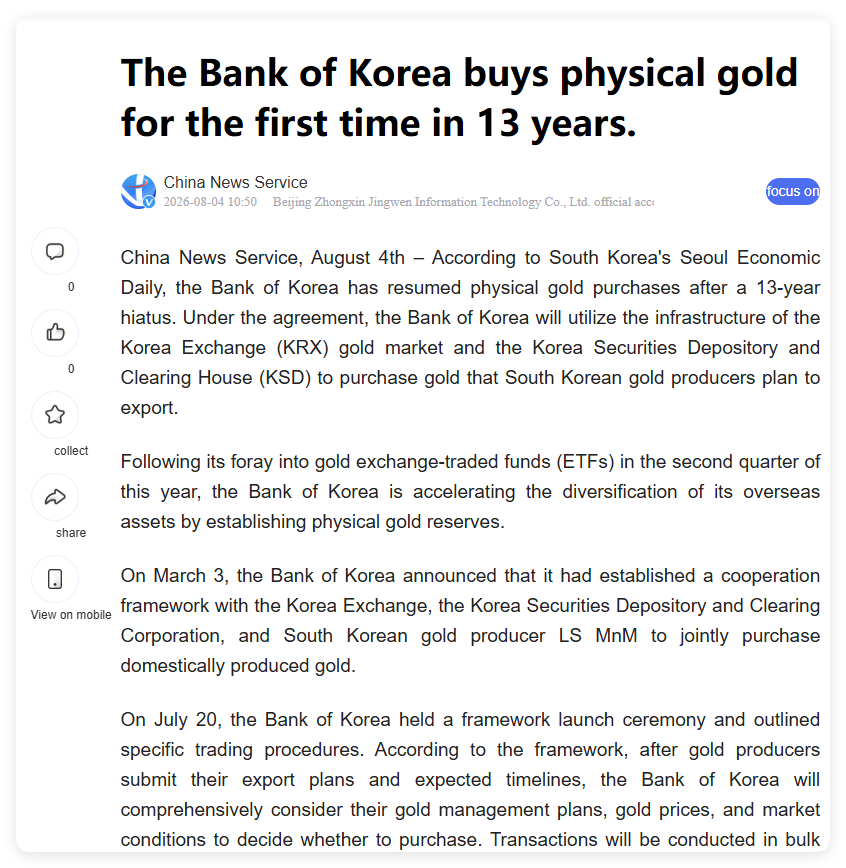
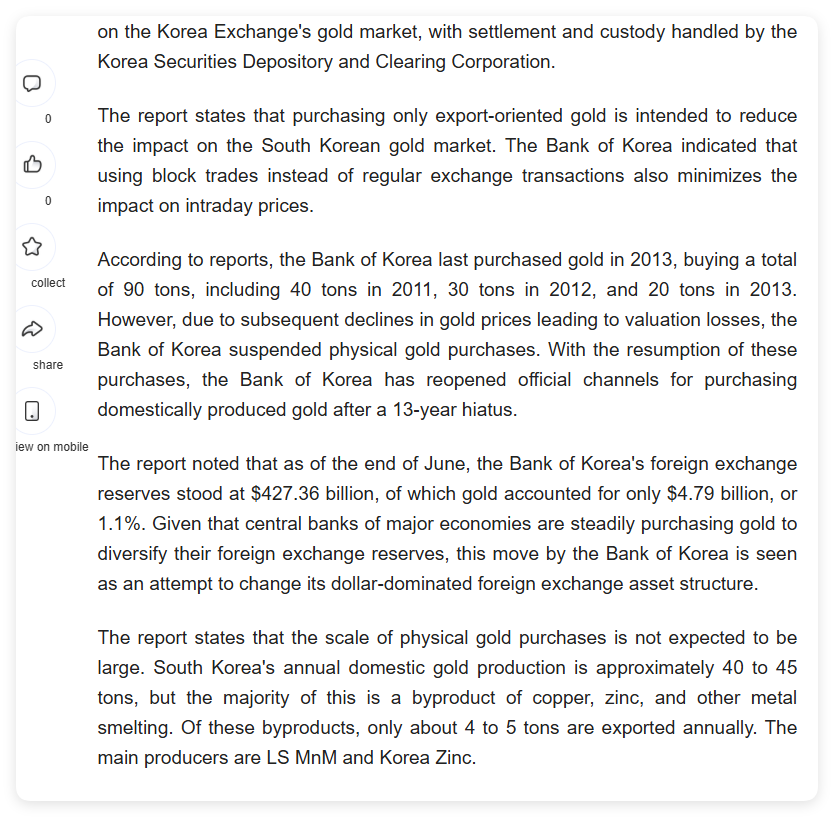
Global central banks are rapidly accumulating gold.
At the same time, they are aggressively selling their US Treasuries.
If this trend continues, it will have MAJOR implications for the US Financial System.
A thread 🧵
It All Comes Down to the Strait of Hormuz: the Final Battle. When the war started in March, I shared this article explaining what was clear to me and what would likely happen. Now it is clear that it is happening and we will soon have the final battle and its result.
A billionaire trader has spent 40 years trying to delete a one-hour documentary. It shows him making $100 million in a single afternoon. He predicted the crash that made it possible three months in advance. He has never explained why he wants the film gone. His name is Paul Tudor Jones. The film is on YouTube.
The documentary is called "Trader." PBS filmed it in 1987, three months before Black Monday. Jones was 32 years old, working from a small New York office, wearing shorts and a t-shirt, yelling at his phones, throwing paper across the room, and sleeping under his desk. The film captures him and his research partner Peter Borish overlaying a chart of the 1929 market on 1987, month by month. The two charts tracked within one percent. Borish said this is exactly what happened in 1929. Jones said if the analog holds, October is when it breaks.
On October 19, 1987, the Dow fell 22.6 percent in a single day. It remains the largest one-day percentage loss in stock market history. That afternoon, Tudor Jones covered his shorts and made roughly $100 million. He was 33 years old. He was one of the very few traders on the street who came out ahead.
He tried to bury the tape because it made him look reckless in a professional world that punished swagger. Twenty years of legal effort did not delete it. Someone kept a copy. It is on YouTube. It has fewer views than most makeup tutorials.
The film is not really about a crash. It is about a specific philosophy of trading. Jones is shown building conviction slowly, sizing carefully, then striking hard when the setup arrives. He is never once shown making a random bet. He is shown doing the same thing five times a day, every day, for three months.
His signature line, repeated across a 45-year career:
"The most important rule of trading is to play great defense, not great offense."
He does not try to be right. He tries not to lose. He sets stops tight, cuts positions fast, and never averages down on a loser. Every trade in the film follows this template.
Tudor Investment Corp, the fund he founded in 1980, has compounded at roughly 19 percent a year for 45 years. He is 71 years old and still trading. His method has not changed since the film.
The lesson: greatness in markets is a refusal, not a talent. Refusal to be reckless. Refusal to be certain. Refusal to average down. Refusal to trust yourself in a drawdown. Tudor Jones has refused those refusals for 45 years.
The tape is free. The philosophy is repeated in every trade. Most traders will never watch it.
The stock market is in what I believe is a historic,final parabolic leg of a 44 yr secular bull market.I am raising some of my targets as follows: SPX 10,000, Nasdaq Comp 36,000, DJIA 67,000, RUT 4000, QQQ 950, SMH 800, gold $7000 & silver $200. My other targets remain unchanged.
Commodity market guru Jeff Currie on the next oil price spike:
"Demand is above supply. We're drawing inventories, borrowing oil from the future until we hit tank bottoms... We're going to be out of oil going into the summer."
STAY LONG OIL.
Paul Tudor Jones was on CNBC this morning telling everyone to buy AI and Tech hand-over-fist... That's the sell signal.
Retail is buying while the big boys are unloading.
According to Jeff Currie, distinguished economist and commodity market guru, we’re only seeing the start of what will become a major oil catastrophe.
At present, we’re burning through oil inventories. Once inventories dwindle, oil prices will SPIKE.
THE WORST IS YET TO COME.
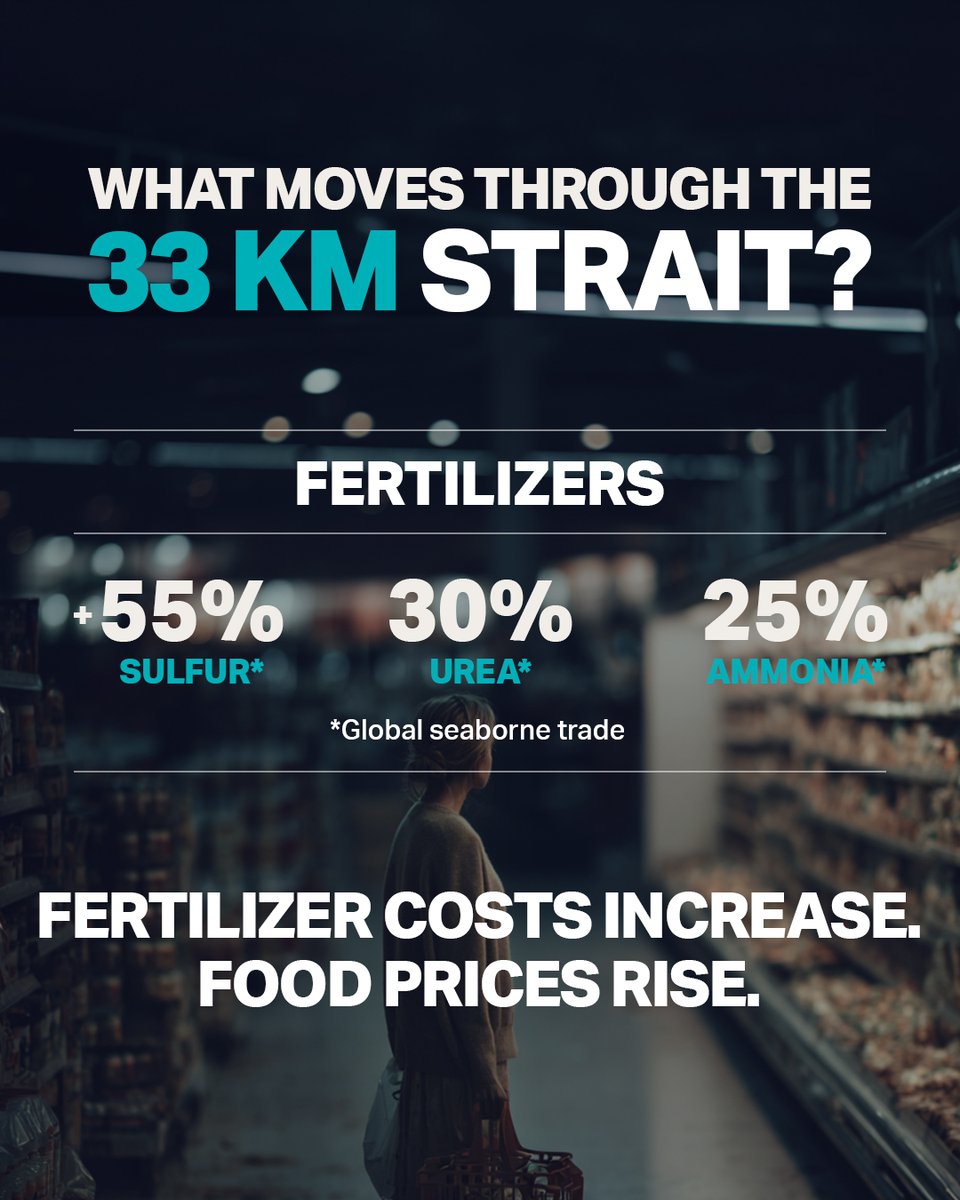
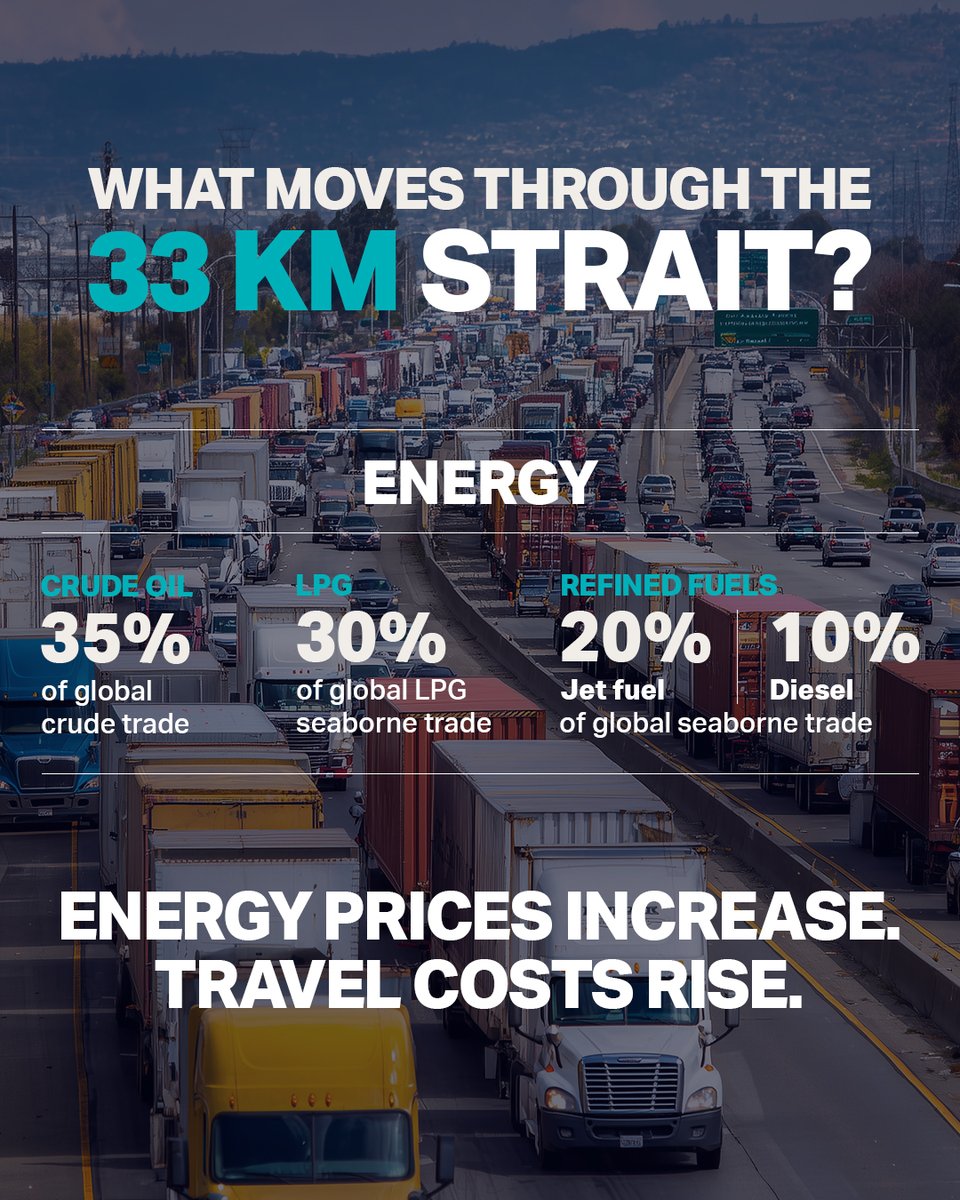
The Strait of Hormuz: just 33 km wide, yet it keeps the world moving.
When it flows, energy moves and economies grow.
When flows are disrupted, the impact is felt everywhere.
China’s central bank withdrew cash from its financial system for the first time in a year, a cautious signal that keeps its policy options open as higher oil prices filter through the economy https://t.co/NLyhr8IXnB
Soon both inflation and rates will spike beyond the control of the Fed and the only trick left to save its bond markets will be synthetic liquidity in the trillions.
The currency destruction that follows will send gold north as paper currencies including the US Dollar get another reckoning of epic debasement.
Jeff Currie, chief strategy officer at Carlyle Energy Pathways, examines the disconnect between the paper and physical oil markets and the price impact of Russian oil in the system https://t.co/R8amACArJ4