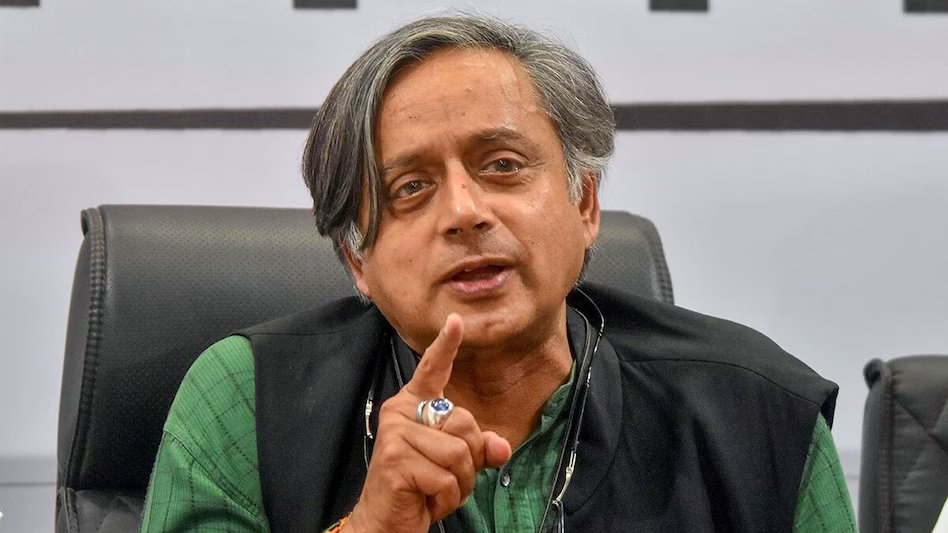
जिस दिन धर्म सत्ता का अधिकार बन जाएगा, उस दिन जनता अपने अधिकार भूल जाएगी और धर्म बचाने निकल जाएगी, जबकि सत्ता, देश बेचकर भी खुद को ‘देशभक्त’ बतलाएगी.
इस दौर के परिप्रेक्ष्य में डॉ अंबेडकर की ये बात कालजयी प्रमाणित हुई.
#IndependenceDay
Sir, 11% Crude production increase led to 2.5x Y-o-Y profit for Indian Oil?
I wish the retail fuel has a reference.
Eagerly waiting for an the analysis of the profit making by Oil Cos on account of Ethanol and the loss to exchequers due to subsidies to ethanol production.
Pleased to share that @OilIndiaLimited has delivered its highest-ever quarterly Standalone Profit After Tax of ₹2,870 crore, registering a 2.5x year-on-year growth, driven by an 11% increase in crude oil production and strong price realisation.
Key Highlights:
✅ Highest-ever Standalone PAT: ₹2,870 crore
✅ Consolidated PAT: ₹4,027 crore (97% YoY growth)
✅ Crude oil production: 0.950 MMT
✅ Highest-ever daily crude oil production: 10,921 MT (84,109 bbl)
✅ Natural gas exploration in the Andaman Basin
✅ Highest-ever horizontal displacement of 3,116 metres achieved in an onshore well in Assam
✅ @NRL_MoPNG recorded 167% growth in PAT to ₹1,305 crore
✅ NRL achieved GRM of $35.95/bbl and Distillate Yield of 87.58%
I appreciate the entire OIL team for these impressive milestones. A matter of pride for Assam and a strong contribution to India’s energy security.
Holocaust Survivor & World-Renowned Trauma Specialist Dr. Gabor Maté:
‘Benjamin Netanyahu is one of the most dishonest, brutal, hypocritical politicians ever to tread the surface of the earth. And that's saying a lot.
But he is not by himself the cause or the source of what's going on. What's actually going on is the logical, and inevitable and foredoomed, expression of the Zionist movement…
Which from the very beginning has dehumanised the Palestinians and has always arrogated to itself the right to displace and oppress and dismiss and kill as many as possible or as necessary of the Palestinian population.
So Netanyahu is nothing new. He seems to be the most egregious expression of the Zionist dynamic. But that has been there all along.
And, whether you look at previous terrorist Prime Ministers like Shamir or Begin, or whether you look at war criminals like Ben Gurion, who literally fomented the displacement and killing of large numbers of Palestinians, it's a logic that is becoming more and more toxic, but very consistent to itself.
So the figure of Netanyahu is not that important. It's the system that matters.
And if you look at the current Israeli election, none of the opposition parties even dare speak about a Palestinian state anymore. That's just off the plate.
So that, you know, we talk about the slogan from the river to the sea, but that is the Zionist ethic that from the river to the sea there's no non-Jewish entity. Netanyahu didn't create that, he simply embodies it.’
—Dr. Gabor Maté on the latest episode of Going Underground
Watch the full interview: https://t.co/c6zNrZ5jQ8
@MTodayNews
शशि थरूर से बहुत लोग असहमत रहते हैं, मैं भी उनमें से हूँ, मगर हाल में उन्होंने अपने लेख में एक अच्छी बात कही है, जिस पर सभी को ग़ौर करना चाहिए। ये लेख लोकसभा की सीटें बढ़ाने को लेकर है। ये तो आप जानते ही हैं कि लोकसभा की सीटें फिलहाल 543 हैं जो कि 1972 से जमी हुई है 1971 की जनगणना के आधार पर है।
सरकार का तर्क है कि भारत की आबादी दोगुनी से ज्यादा हो गई है अब जनसंख्या के अनुपात में सीटें बढ़ानी चाहिए। लेकिन थरूर कहते हैं कि यह सिर्फ गणितीय तर्क है, इसके पीछे बड़ा संस्थागत खतरा छिपा है।
थरूर के मुख्य तर्क हैं-
दुनिया में कोई परिपक्व लोकतंत्र इतनी बड़ी विधायिका नहीं रखता-
थरूर लिखते हैं कि हर विकसित लोकतंत्र में संसद का आकार इतना ही रखा जाता है कि असली बहस, जांच और व्यक्तिगत भागीदारी संभव हो। 850 सीटों वाली लोकसभा दुनिया के किसी भी लोकतांत्रिक सदन से बड़ी होगी। इससे सदन “विचार-विमर्श का मंच” नहीं रहकर “अराजक कोलोसियम” बन जाएगा, जहां चुनिंदा लोग ही बोल पाएंगे और बाकी सिर्फ वोटिंग मशीन पर संख्या बनकर रह जाएंगे।
अमेरिका का उदाहरण-
अमेरिकी हाउस ऑफ रिप्रेजेंटेटिव्स 1929 से 435 सीटों पर स्थिर है। तब अमेरिका की आबादी 12 करोड़ थी, आज 33.5 करोड़ से ज्यादा है। फिर भी सीटें नहीं बढ़ाई गईं, क्योंकि इससे विधायी प्रक्रिया ठप हो जाती। हर सांसद ज्यादा लोगों का प्रतिनिधित्व करता है, लेकिन मजबूत स्टाफ, कम्युनिकेशन और कमिटी सिस्टम से काम चलता है। भारत के सांसद भी ऐसा कर सकते हैं।
अगर संख्या बढ़ी तो व्यक्तिगत सांसद की भूमिका खत्म हो जाएगी-
एक सामान्य सत्र में समय बहुत सीमित होता है।
चार घंटे की बहस में पार्टी की ताकत के हिसाब से अधिकतम 15-20 सांसद ही बोल पाएंगे।
बैक बेंचर और छोटी पार्टियों के सांसद लगभग चुप रह जाएंगे।
ज्यादातर सांसद पूरे पांच साल में एक भी सवाल नहीं पूछ पाएंगे, प्राइवेट मेंबर बिल नहीं ला पाएंगे या गंभीर बहस में हिस्सा नहीं ले पाएंगे। वे सिर्फ पार्टी के हुक्म पर हाथ उठाने वाले “खामोश प्लेस होल्डर” बन जाएंगे।
संसद की भूमिका और कमजोर होगी-
हाल के वर्षों में संसद के बैठने के दिन घट रहे हैं, बिल बिना स्टैंडिंग कमिटी की जांच के वॉयस वोट से पास हो रहे हैं और विपक्ष को किनारे किया जा रहा है। सैकड़ों अतिरिक्त सदस्यों से यह स्थिति और बिगड़ेगी। बड़ा सदन सरकार के लिए सुविधाजनक होता है, क्योंकि उसमें असली जांच-पड़ताल मुश्किल हो जाती है। संसद “रबडर-स्टैंप” या “नोटिस-बोर्ड” बन जाती है।
सत्तावादी मॉडल से समानता-
थरूर चेतावनी देते हैं कि 850 सीटों वाली लोकसभा चीन की पोलिटिकल कंसल्टेटिव कॉन्फ्रेंस या उत्तर कोरिया की सुप्रीम पीपुल्स असेंबली जैसी बन सकती है—बहुत बड़ी, भव्य दिखने वाली, लेकिन असली बहस या चुनौती देने में असमर्थ। ये सिर्फ “सहमति का नाटक” करती हैं।
बेहतर विकल्प-
सांसद का काम राष्ट्रीय कानून, विदेश नीति, अर्थव्यवस्था और केंद्र सरकार की जवाबदेही है। वे स्थानीय काउंसलर या विधायक नहीं हैं।
स्थानीय मुद्दे (सड़क, पानी, कचरा आदि) राज्य विधानसभाओं और पंचायत/नगरपालिकाओं के हैं (73वें और 74वें संविधान संशोधन के तहत)।
जनसंख्या बढ़ने पर विधायकों (MLAs) की संख्या बढ़ाएं, लोकसभा को कॉम्पैक्ट और राष्ट्रीय मुद्दों पर केंद्रित रखें।
300 अतिरिक्त सांसदों पर खर्च (वेतन, आवास, यात्रा, पेंशन) बचाने के बजाय मौजूदा सांसदों के लिए उचित ऑफिस बिल्डिंग बनाएं।
कुल मिलाकर थरूर का कहना है कि असली प्रतिनिधित्व बहस की गुणवत्ता, विधायी कमेटियों की गंभीर जांच और स्थानीय सरकारों को सशक्त बनाने में है—न कि एक विशाल, अव्यवहारिक सदन बनाकर लोकतंत्र को “खाली नाटक” में बदलने में। 850 सीटों वाली लोकसभा सरकार के लिए इको चैंबर बन जाएगी, न कि शासन का मंच।
Britain Promised Palestine to the Rothschilds in Exchange for Winning WW1. The Document Still Exists.
On November 2, 1917, the British Foreign Secretary Arthur James Balfour wrote a letter. It was addressed to Lord Walter Rothschild, the de facto leader of the British Jewish community and heir to the most powerful banking dynasty in the world. It was 67 words long. It promised British support for the establishment of a national home for the Jewish people in Palestine. It was called the Balfour Declaration and it set in motion a chain of events that is still producing wars, political crises, and international conflict over a hundred years later.
The version of this story that gets taught in schools presents it as a humanitarian gesture by a sympathetic British government toward a persecuted people. The version supported by the documented historical record is considerably more transactional. Britain in November 1917 was not winning the war. It needed help. And it knew exactly where to ask for it.
Britain Was Losing and Needed Two Things
By the autumn of 1917 the First World War had been grinding for three years. The Western Front was stuck. Russia was collapsing into revolution. The French army had mutinied. Britain was hemorrhaging men and money at a rate that raised serious questions about how long it could sustain the fight. It needed two things desperately.
It needed the United States to enter the war, which it had so far refused to do despite the sinking of the Lusitania and German submarine warfare against American shipping. American public opinion was predominantly isolationist. Before the Balfour Declaration most Americans had no interest in a European war.
It needed Russia, which was in revolutionary chaos after the February 1917 revolution that overthrew the Tsar, to stay in the war rather than make a separate peace with Germany. The Bolsheviks who were about to seize power were already negotiating to exit the conflict entirely.
The most documented explanation for the declaration is that the British government hoped to persuade Jews in two wavering Allied countries, the United States and Russia, to insist that their governments stay in the war until total victory. Jewish influence, the British thought, was the key to both.
This is not a fringe or antisemitic interpretation. This is Britannica's own analysis. The British government hoped that the declaration would rally Jewish opinion, especially in the United States, to the side of the Allied powers against the Central Powers during World War I. Harvard's own academic analysis states the same thing.
The declaration had political motivations, including gaining Jewish support for the Allied war effort against the Ottoman Empire and garnering sympathy among Jewish communities worldwide, especially in the United States and Russia.
Britain did not write a 67 word letter promising a homeland to the Jewish people out of the goodness of its heart. It wrote a 67 word letter because it was losing a war and believed that Jewish financial and political influence in America and Russia could change the outcome. The declaration was payment in advance for services Britain needed rendered.
The Man They Wrote It To
The letter was addressed to Lord Walter Rothschild. Not to a Jewish community organization. Not to a Zionist federation. To a Rothschild. Specifically to the son of Lord Nathaniel Rothschild, the man to whom Lord Randolph Churchill, Winston Churchill's father, had owed millions of pounds in today's money. The banking dynasty that had backed Cecil Rhodes and De Beers, that had financed William of Orange's invasion of England in 1688 through their predecessors, that had managed the Churchill family's estate after Lord Randolph's death, was now receiving a promise of a homeland from the British Foreign Secretary.
The Balfour Declaration was a public statement issued by the British Government in 1917 during the First World War announcing its support for the establishment of a national home for the Jewish people in Palestine, then an Ottoman region with a small minority Jewish population.
Palestine was not British territory. Britain had no legal right to promise it to anyone. It was part of the Ottoman Empire, which Britain was fighting against. As the highly respected American lawyer and diplomat Sol M. Linowitz wrote, the declaration was legally impotent. For Great Britain had no sovereign rights over Palestine, it had no proprietary interest, it had no authority to dispose of the land.
Britain promised a homeland it did not own, written in language deliberately vague enough to mean different things to different audiences. The term national home had no precedent in international law and was intentionally vague as to whether a Jewish state was contemplated. The intended boundaries of Palestine were not specified.
The Double Promise That Caused Everything After
What most people who know about the Balfour Declaration do not know is that Britain was making the exact same promise simultaneously to the Arabs.
Through what is known as the Hussein McMahon Correspondence, Britain promised Arab leaders that if they rose up against the Ottoman Empire and supported the Allied cause, they would receive an independent Arab state after the war. The territory described in those promises overlapped substantially with Palestine. Britain was simultaneously promising the same land to two different peoples in exchange for their support in the same war.
At the exact same time the British were promising it to the Jews, there was a whole set of correspondence from the Foreign Office going on with the Arab families, the leading ruling families down in Arabia, promising the exact same land as a national home and an Arab state. And that of course, when the war was over, created the fundamental conflict that continues to this day.
The British in 1917 were not conducting careful foreign policy. They were making promises with someone else's land to multiple parties simultaneously in order to survive a war they were losing. The conflict those promises created has killed hundreds of thousands of people across more than a century. It has not been resolved. It is in the news today.
The American Jewish Lobby and Why It Mattered
Historians have long underestimated the American Jewish lobby and the part it played in propagandizing American public opinion toward the war. Prior to the Balfour Declaration, most Americans were intent on maintaining an isolationist stance to the war. It was speculated that America's Zionist leanings would inspire it to take the British side in WWI in order to ensure British control over Palestine remained. British hopes were realized as America's 1917 involvement in WWI led to the subsequent victory over Germany.
Louis Brandeis, the first Jewish Justice of the United States Supreme Court, was the leading Zionist figure in America at the time and had close personal access to President Wilson. The Zionist Organisation of America had significant influence in major American cities and in the American press. Britain understood that the Balfour Declaration, by committing Britain to a Jewish homeland, would mobilize this network behind the Allied cause and create political pressure for American entry into the war.
America entered the war in April 1917, seven months before the Balfour Declaration was issued. But the negotiations and commitments that produced the declaration were running throughout that period, and the American Zionist network's support for Allied entry and continued fighting was part of the political environment those negotiations were designed to influence.
The Rothschild Thread That Runs Through Everything
The Balfour Declaration is the point where the threads running through this entire series of articles converge most visibly.
The Rothschild banking dynasty financed William of Orange's 1688 invasion of England, which produced the Bank of England and the modern financial system. The Rothschilds backed Cecil Rhodes and De Beers in 1888, which produced the Boer War, the first large scale British concentration camps, and the death of 27,000 Boer women and children. Lord Nathaniel Rothschild was owed millions by Lord Randolph Churchill, whose son Winston would be secretly bailed out of bankruptcy by a Jewish financier in 1938 as he was warning about Hitler. And in 1917 the British Foreign Secretary wrote a letter to Lord Nathaniel's son Walter Rothschild promising a homeland for the Jewish people in exchange for Jewish support for Britain's war effort.
One family. Three centuries. The founding of the modern financial system. The diamond mines of South Africa. The concentration camps of the Boer War. The debts of the Churchill family. And a 67-word letter that created the political foundation for the state of Israel and the conflict that has defined the Middle East ever since.
None of this is hidden. The Balfour Declaration is in the British Library. The Hussein McMahon correspondence is in British government archives. The Rothschild family's banking records are in their London archive. The Harvard and Britannica analyses of the declaration's political motivations are published and available.
The reason the transactional nature of the declaration is not taught as clearly as it should be is the same reason the Churchill bailout is not taught, the same reason the Bolshevik leadership composition is not taught, and the same reason Bernard Baruch is not taught. The simplified version is more comfortable. The documented version requires acknowledging that some of the most consequential decisions in modern history were made not as principled humanitarian gestures but as calculated transactions between powerful people negotiating over things that did not belong to either of them.
Palestine did not belong to Britain. Britain promised it anyway. The consequences are still being lived by millions of people today.
The document is 67 words long. It is in the British Library. You can read it in thirty seconds. What it cost is still being counted.
Sources
Balfour Declaration, Britannica: https://t.co/fOgGiqLRtm
Balfour Declaration, Wikipedia: https://t.co/Md5BelvPB9
The Forgotten Truth About the Balfour Declaration, Harvard: https://t.co/PTvoNgOAwB
British Motivations for the Balfour Declaration, Institute for Curriculum Services: https://t.co/C2ySOv8G9Y
Motives in Issuing the Balfour Declaration, UK Essays: https://t.co/2iAjRtnQgA
Sol M. Linowitz quote on legal impotence of the declaration, cited in Mondoweiss: https://t.co/KNrg4BMAul
देश में एक ऐसा एंकर नहीं होगा जो बरबस ऐसे .. और ऐसा बोल सके…ऐसे मेधावी व्यक्ति को क्यों नहीं मिले औपचारिकता शिक्षा के मौक़े? दिल्ली की एक झुग्गी बस्ती में रहते हैं मोहम्मद इरफ़ान…इन्हें सलाम 🙌🏼
🦔AI companies are bulk-buying rare books, scanning them through high-speed machines that cut the spines off, and shredding the originals. A service called ISBNdb facilitates orders of up to a million books and keeps buyers anonymous. Pre-2022 books are premium because they're free of AI-generated text. A federal judge ruled the practice is fair use because eliminating the original means only one copy exists at a time. Anthropic hired the former head of Google Books partnerships to obtain "all the books in the world."
My Take
This got to me. A bookseller told 404 Media that rare books with almost no surviving copies are being fed into this pipeline. Books that survived wars, fires, and centuries of handling are being shredded so an AI can learn to write a better marketing email.
ISBNdb's website literally says "'AI company destroys two million books' is not a headline that generates sympathy," and they still built an entire business around making it happen quietly. They offer NDAs as a feature. They coach clients to call it "digital preservation."
I've covered AI companies scraping the internet, torrenting libraries, and stealing music. This is worse because it's irreversible. You can re-upload a website. You can reprint a bestseller. You can't replace the last three copies of an 18th-century botanical text once someone shreds them for training data. And the judge said it's legal. So it's going to accelerate.
"We shred rare books and offer NDAs so nobody finds out" is a legitimate business model in 2026. What a timeline.
Hedgie🤗
As of this morning, every brand-new Car sold in Europe is mandated by law to watch its “driver”, and the reason to worry is the opposite of what everyone is screaming about.
The camera is not filming your face. The law explicitly bans that. It rather tracks your eyes. The danger is not what it does today. It is what it is now physically positioned to do tomorrow.
This became binding across all 27 countries today, the 7th of July 2026, and no member state can opt out, because road safety is an EU competence and EU law overrides national law.
Every new car and van, roughly 18 million of them a year, must now carry an infrared camera, usually on the steering column, that follows the driver's gaze.
Look away too long, six seconds under 50 kilometers an hour, three and a half above it, and the car warns you with a sound, a light, or a buzz in the seat. The stated reason is real. Distraction causes up to 30 percent of crashes, and the Commission projects the wider safety package will save 25,000 lives by 2038.
The outrage dissolves on contact with the actual text.
The law actually fully forbids facial recognition and any biometric identification of anyone in the car, and the footage is legally barred from leaving the vehicle.
No recording, no transmission, no police feed. As written today, this is a safety beeper, not a spy.
But look at what already sits beside it. Think about it.. come on!!
Europe's cars already run always-on systems that do transmit, the automatic crash caller that dials emergency services, the black-box event recorder, and over-the-air software that rewrites the car remotely overnight.
The sensor was just made universal. The wall keeping it private is a single legal paragraph, and the same law already schedules its own review for 2027 to read cognitive state and body movement, while suppliers openly sell using the identical mandated camera to watch the passengers too.
So this is the quiet architecture of every threshold.
The permanent thing is physical, a camera now bolted into 18 million dashboards a year.
The thing protecting you is a mere sentence, and sentences are the easiest part of any system to revise.
Europe hardwired the eye. It left what the eye may see as the one part that can still be changed later. Hmm 🤨
“जेरीमैंडरिंग” का मतलब समझते हैं साथियों ?
जब सत्ता में बैठी सरकारें चुनावी सीमाएँ इस तरह से तय करती हैं कि समाज जानबूझकर बँट जाए, ताकि चुनावी नतीजे पहले से प्रभावित किए जा सकें - उसे “जेरीमैंडरिंग” कहते हैं।
यानि कुछ इलाकों में एक समुदाय को ठूँस देना, और बाकी सीटों को दूसरे समुदाय के हिसाब से डिज़ाइन करना, ताकि बाद में उसी विभाजन का इस्तेमाल करके नफ़रत, डर और राजनीतिक नैरेटिव खड़े किए जा सकें.
असम में परिसीमन ठीक इसी तरह हुआ है. मुस्लिम आबादी को चुनिंदा विधानसभा क्षेत्रों में समेट दिया गया, जबकि बाकी सीटों को अलग ढंग से संरचित किया गया, ताकि बाद में कांग्रेस पर आरोप लगाने और सांप्रदायिक नैरेटिव खड़ा करने में आसानी हो.
(एलब्रिज जैरी अमेरिका के एक राजनेता, राजनयिक और संस्थापक नेताओं में से एक थे. वे US के चौथे उपराष्ट्रपति भी रहे थे. इससे पहले वे मैसाचुसेट्स के गवर्नर थे. उन्होंने मैसाचुसेट्स में चुनावी सीमाएँ इस तरह बदलवाई थीं कि उनकी पार्टी को राजनीतिक फ़ायदा मिले.
1812 में उनके कार्यकाल के दौरान एक निर्वाचन क्षेत्र का नक्शा सलामैंडर (एक छिपकली जैसी आकृति) जैसा दिख रहा था, इसलिए “जैरी” और “सलामैंडर” को मिलाकर “जरीमैंडरिंग” शब्द बना.)
Why does so much Indian TV news sound permanently out of breath/breathless? Every debate feels like a national emergency, every headline like a battlefield dispatch. Anchors speak in rising crescendos, panels shout over one another, graphics often flash like alarm systems. The Iran war for instance is depicted on screen framed in flames and “mahayudh” screaming all over it. We are unique in this pitch of constant crescendo.
It is not merely a broadcasting style. It reflects something deeper about us.
Our television news evolved in the age of ratings wars, political spectacle and 24/7 competition for attention. Calmness came to be mistaken for dullness. Excitement became a business model.
Nationalism, grievance, triumphalism, insecurity, outrage, aspiration, wounded pride, civilisational assertion, all coexist simultaneously. The result is a media register that sounds permanently adrenalised.
But older Indian broadcasting was very different. Listen to archival Doordarshan clips from the 1970s or 80s. The tone was measured, restrained, even austere. News was delivered as information, not performance.
Television producers have learned that perpetual urgency creates emotional addiction. If everything is historic, explosive, shocking, decisive, existential, viewers remain physiologically engaged. The problem, of course, is exhaustion. Nations cannot permanently exist at emotional fever pitch without consequences for public discourse.
Today we often sound perpetually excited, perpetually mobilised, perpetually “on”. Perhaps television has become the mirror of a society itself in emotional overdrive: restless, aspirational, anxious, performative, seeking validation every minute.
The irony is that true authority rarely needs to shout. Confidence usually speaks in a quieter voice. So the raised pitch is not just acoustics. Today the country is increasingly performing itself to itself.
And yes, I know I am about to be eaten alive for saying this, on Indian television and social media alike. That is perfectly fine. But perhaps it is time we introspected a little on what we have become, and why we now seem unable simply to speak to one another in a normal tone.
Much of our television news increasingly resembles coloratura without pause: high-pitched, breathless, emotionally over-ornamented, forever climbing toward some impossible crescendo. Every night, the nation seems to be singing at full volume.
But societies cannot live permanently at operatic pitch. At some point, we must learn again the power of modulation, silence, restraint, and calm.
India quietly rewrote how it measures GDP last month. And simultaneously slipped from the 4th to the 6th largest economy. Most people missed the connection.
On Feb 27, 2026, MoSPI rolled out a new GDP series:
• Base year: 2011-12 → 2022-23
• FY26 real growth: 7.4% → 7.6% (UP)
• FY26 nominal GDP: ₹357 → ₹345 lakh crore (DOWN ₹12L cr)
• USD size: $4.15T vs UK's $4.26T → India falls to 6th
Growth up. Size down. Ranking down. All three are simultaneously true.
Two flaws economists have been flagging since 2019 just got quietly fixed. Worth understanding what they were.
🏪 The informal sector ghost
Until 2015, the informal sector was measured the obvious way — by actually surveying it. Then the methodology changed. Post-2015, India started inferring informal sector growth by extrapolating from the formal sector, using IIP as a proxy.
For a while, this felt fine. Formal and informal moved roughly together.
Then 2016 happened. Demonetisation wiped out cash-dependent businesses overnight. A year later, GST squeezed out informal traders who couldn't comply, while formal firms absorbed their market share.
Informal collapsed. Formal boomed.
But the statistics showed both growing together — because informal was being inferred from formal. The market share that quietly migrated from informal to formal got counted twice: once as formal's organic growth, again as informal's "inferred" growth layered on top.
Informal = ~45% of GDP. ~88% of the workforce. Not a rounding error. A phantom sector credited with growth it never had.
2026 fix → ASUSE: a direct annual survey of 3 lakh small businesses. Back to actually counting them.
📉 The deflator that didn't deflate
Real GDP = Nominal GDP ÷ deflator. The deflator strips out inflation. A smaller deflator means a bigger "real" growth number.
India deflated manufacturing using WPI. The problem: WPI tracked only ~180 items, heavily skewed toward tradable commodities — oil, metals, raw materials.
Then Brent crashed from $115 to $28 between 2014 and 2017. WPI went negative for 17 straight months. Meanwhile, CPI — the inflation households actually felt — stayed at 4–6%.
Picture a barber. He charges ₹100 for a haircut. His scissors cost ₹40. Value added = ₹60.
Next year, scissors drop to ₹20. He still charges ₹100. Value added = ₹80.
Did he get more productive? No. He's cutting hair the same way. But under single deflation — which India uses, while the rest of the world uses double — he shows up as 33% more productive.
Multiply that across an entire manufacturing sector during a commodity crash, and "real growth" inflates without anyone actually producing more.
2026 fix → double deflation, and the basket expanded from 180 to 600 items.
🎯 The number we're really waiting for
Former CEA Arvind Subramanian, back in 2019:
"Growth from 2011-12 onwards was overstated by ~2.5 percentage points per year. What we called 7% growth was probably closer to 4.5%." The 2026 revision fixes exactly the two flaws he flagged. That's a quiet technical admission.
The real test comes in December 2026 — when MoSPI releases the back-series. A decade of GDP recalculated on the new methodology.
If pre-2023 growth gets revised down materially, the "fastest-growing major economy" story needs a rethink.
Until then, the headline deserves more scepticism than it's getting.
@menakadoshi A seasoned bureaucrat couldn't spell out the issues. Sad. HDFC is a lot of public trust in the shoulders. Between scarring and pathetic, what is it here?
I was reflecting on the contrasts with China that the sorry, shabby Loomer episode illustrates.
The contrast I refer to is not about openness versus control. It is about attitudes toward hierarchy and self-respect in public life.
What Kissinger noticed in 1971 about India was was a tendency toward obsequiousness when confronted with Western power or proximity to it. That instinct has deep historical roots. The word “khushamd” in Persian and Urdu literally means flattery offered to please someone in authority. In everyday usage it shades into something darker: ingratiation, calculated praise, the art of pleasing those above you in the hierarchy. British administrators in colonial India became fascinated by the term because they believed it captured a social habit they encountered repeatedly in courtrooms, durbars, and bureaucratic dealings.
For two centuries the subcontinent lived under imperial structures in which advancement often depended on pleasing those above you in the hierarchy. The habits of speech that develop in such systems do not disappear overnight.
In a rigid hierarchy where power flows sharply from the top, people learn quickly that bluntness is risky. Survival and advancement depend on reading the moods of authority. Language becomes lubricated with praise because praise reduces friction. Over time this produces a political culture where deference becomes a technique.
China travelled through a very different historical arc.For most of its long imperial history China regarded itself as the civilisational centre. Foreign envoys were received within a carefully staged hierarchy in which the emperor’s court defined the terms of interaction. Visitors were expected to show deference to China, not the other way around. Even when China weakened in the nineteenth century, that cultural memory did not vanish. It remained embedded in the political reflexes of the state.
This difference becomes visible when modern outsiders arrive carrying the aura of Western political celebrity. In India the reception often slips, almost unconsciously, into a familiar pattern: excessive politeness, warm praise, eager listening, and visible admiration. Panels become stages of affirmation rather than interrogation. The visitor is not merely hosted; they are subtly elevated.
China almost never allows this dynamic to emerge.
Chinese officials may be courteous but the tone is controlled and emotionally neutral. Praise is sparse. Questions are disciplined. The visitor’s importance is carefully calibrated so that it never exceeds the authority of the host institution or the state itself. Even globally powerful figures encounter this restraint.
One can see it in how Chinese leaders treat Western visitors. They rarely flatter. They do not perform admiration. They project calm authority and expect the guest to adjust to that frame.
In other words, status flows inward toward the state, not outward toward the visitor.
In India the flow often reverses. The visitor’s celebrity radiates outward, shaping the atmosphere of the encounter. A social media provocateur can suddenly appear larger than the forum that invited them.
This is what gives the Loomer episode its uncomfortable undertone. The issue is not free speech or the right to host controversial figures. Democracies must live with those realities.
The issue is the tone of reception.
When a platform meant for national conversation begins to resemble a stage on which outsiders are indulged and admired, the imbalance becomes visible. It is the same imbalance that Kissinger detected decades ago when he described Indians as masters of flattery.
China’s instinct would have been the opposite. A confident civilisation listens, questions, and reminds the guest that they soeak on someone else’s stage.
#IndiaTodayConclave
#Khushamdi
#PoliticalCulture
#IndiaUSRelations
#CivilisationalConfidence
#SoftPower
#IndiaChina
Tony Benn: 'Don't Arab and Iraqi women weep when their children die?'. His speech during the House of Commons debate on going to war in Iraq - 17 February 1998. One of greatest anti war speeches of all time:
“I was in London in the blitz in 1940, living in the Millbank tower, where I was born. Some different ideas have come in since. And every night, I went down to the shelter in Thames house. Every morning, I saw dockland burning. Five hundred people were killed in Westminster one night by a land mine. It was terrifying.
Aren't Arabs terrified? Aren't Iraqis terrified? Don't Arab and Iraqi women weep when their children die? Does bombing strengthen their determination? What fools we are to live in a generation for which war is a computer game for our children and just an interesting little channel for news item.
Every Member of Parliament tonight who votes for the Government motion will be consciously and deliberately accepting responsibility for the deaths of innocent people if the war begins, as I fear it will. Now that's for their decision to take. But this is a quite unique debate. In my parliamentary experience, where we are asked to share responsibility for a decision we won't really be taking, with consequences for people who have no part to play in the brutality of the regime which we are dealing with.”