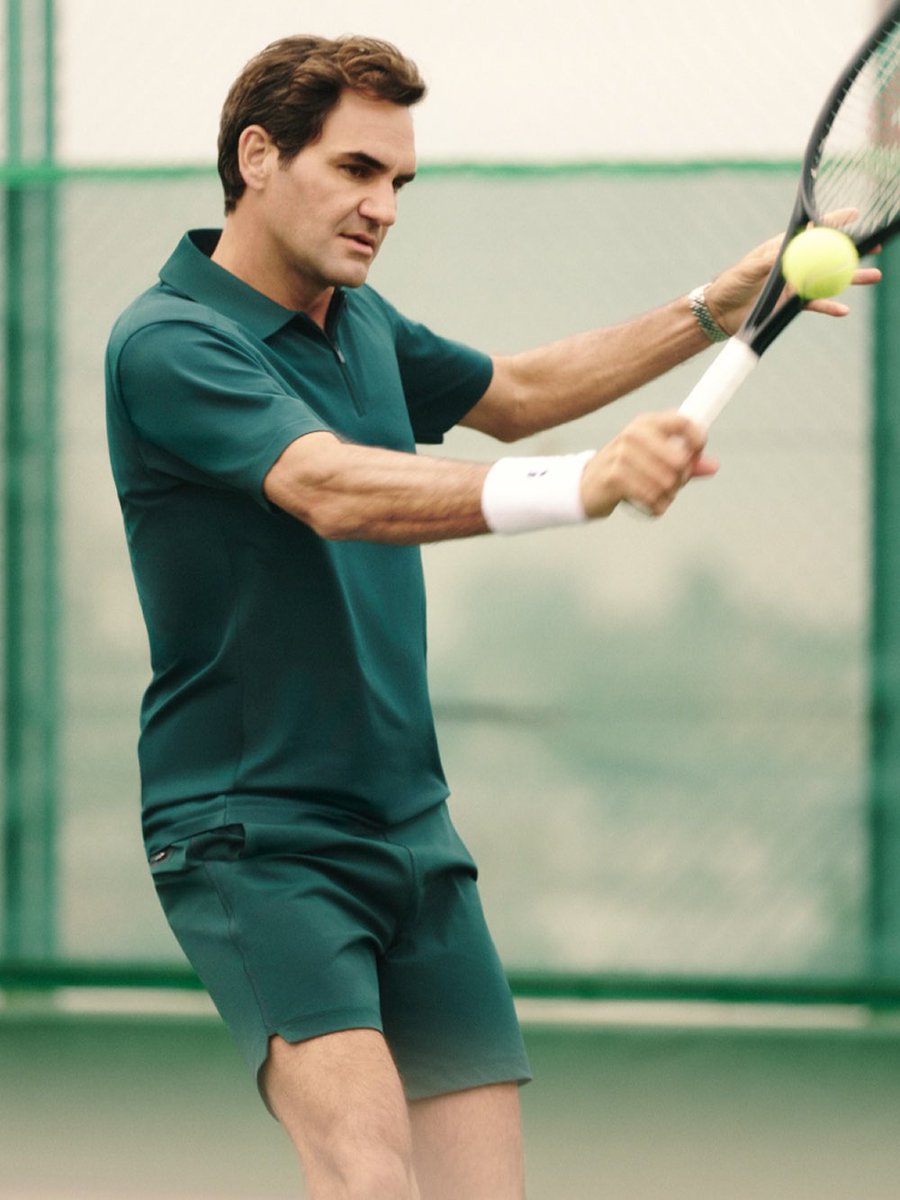
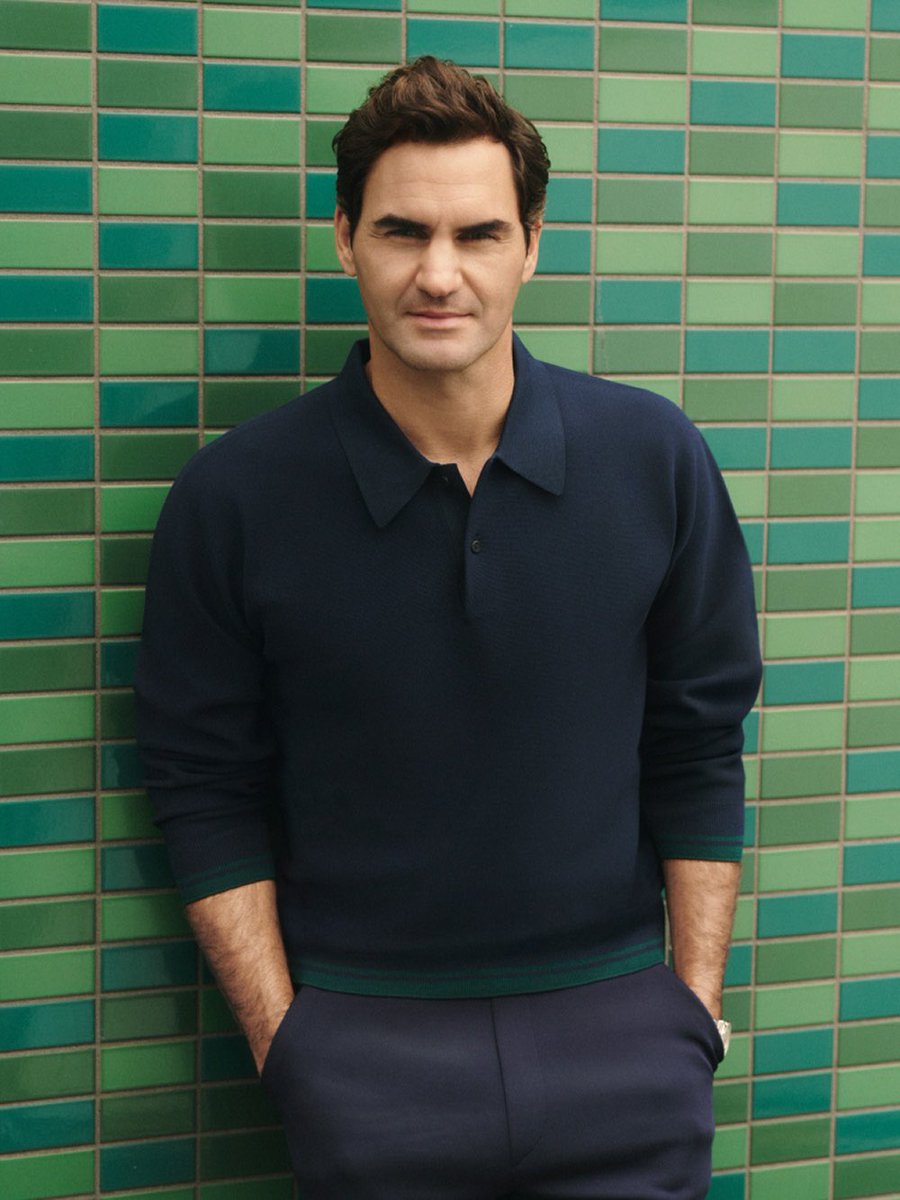
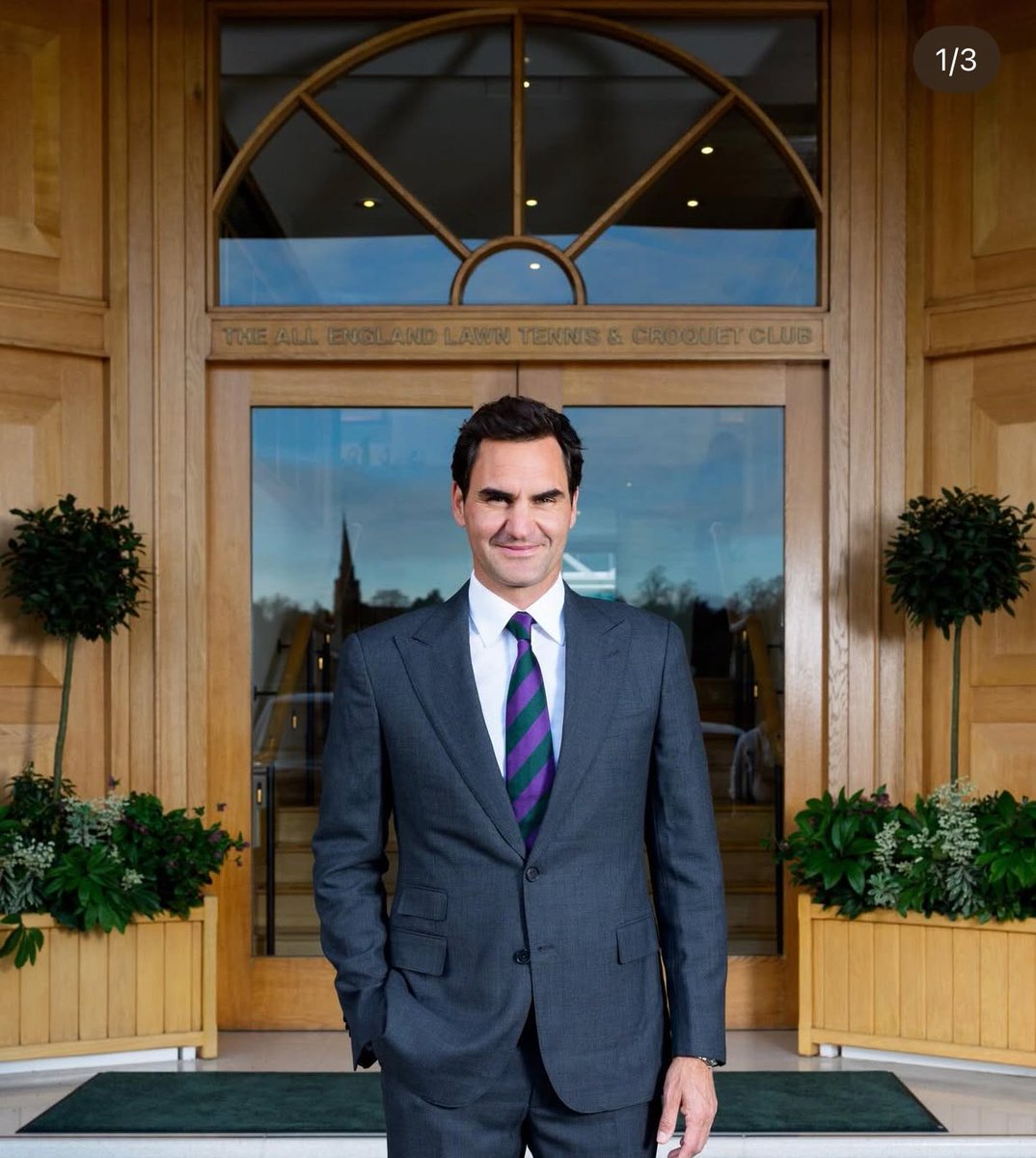
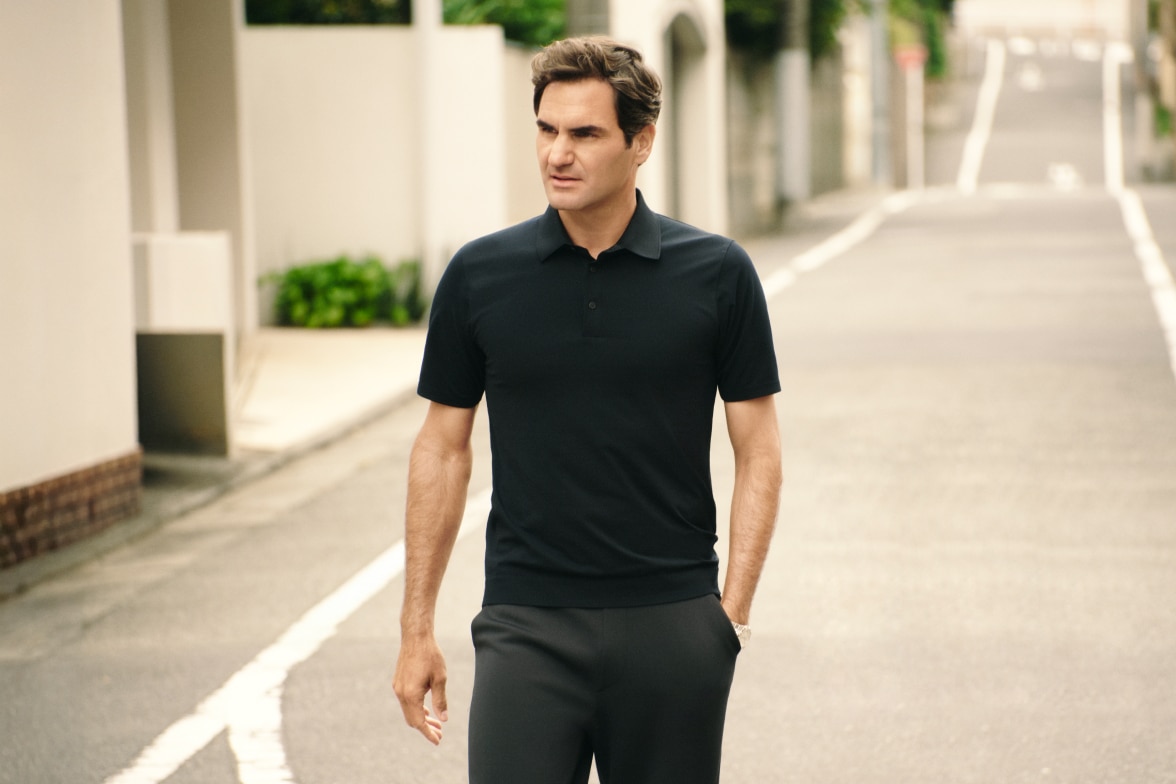
@usopen@rogerfederer As usually it was complete craziness with ticket presale for insides. As soon as sale is open you are placed "in queue" for 20 min by ticketmaster, and when it is your turn, all tickets are already sold out. And you can find them immediately on stubhub for double price.
" Game, set, watch.
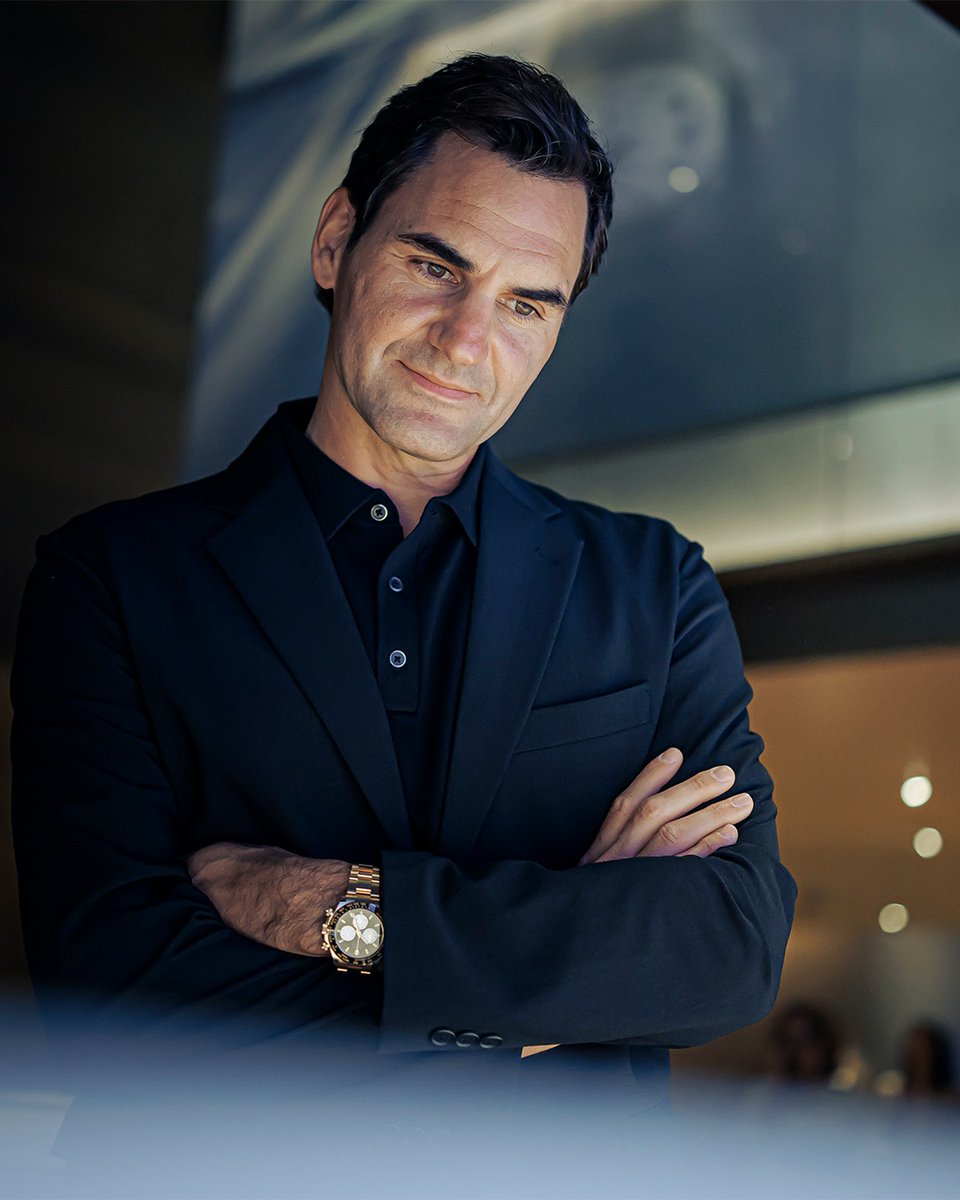
A legend on the court, a legend in the Salon. Roger Federer visits the Rolex booth at Watches and Wonders Geneva 2026.
#ROLEX#WatchesAndWonders2026
Watches and Wonders IG
Roger Federer: "Effortless is a myth. I worked very hard to make it look easy."
"I left school at age 16 to play tennis full-time. So I never went to college. But I did graduate recently. I graduated tennis. I know the word is 'retire', but retired sounds awful. Like you, I finished one big thing and I'm moving on to the next. Like you, I'm figuring out what that is."
Lesson 1: Effortless is a myth.
"People would say my play was 'effortless.' Most of the time, they meant it as a compliment. But it frustrated me when they'd say, 'He barely broke a sweat' or 'Is he even trying?' The truth is, I had to work very hard to make it look easy."
Roger shares the wake-up call:
"An opponent at the Italian Open publicly questioned my mental discipline. He said, 'Roger will be the favorite for the first two hours. Then I'll be the favorite after that.' Everyone can play well the first two hours you're fit, you're fast, you're clear. After two hours, your legs get wobbly, your mind starts wandering, your discipline starts to fade. My parents, my coaches, even my rivals were calling me out. So I started to train harder. A lot harder."
He explains the paradox:
"I got the reputation for being 'effortless' because my warmups at tournaments were so casual that people didn't think I'd been training hard. But I had been working hard before the tournament when nobody was watching."
Roger redefines talent:
"Yes, talent matters. But talent has a broad definition. Most of the time, it's not about having a gift, it's about having grit. A great forehand can be called a talent. But discipline is also a talent. Patience is a talent. Trusting yourself is a talent. Embracing the process, loving the process, these are talents too. Some people are born with them. Everybody has to work at them."
Lesson 2: It's only a point.
"You can work harder than you thought possible and still lose. I have many times. Tennis is brutal. Every tournament ends the same way: one player gets a trophy. Every other player gets back on a plane, stares out the window, and thinks, 'How the hell did I miss that shot?'"
Roger shares the statistic that changed his mindset:
"In the 1,526 singles matches I played in my career, I won almost 80% of those matches. But what percentage of points do you think I won? Only 54%. Even top-ranked tennis players win barely more than half of the points they play."
He explains what this teaches:
"When you lose every second point on average, you learn not to dwell on every shot. You teach yourself to think: 'Okay, I double-faulted. It's only a point.' 'I came to the net and got passed again. It's only a point.' Even a great shot, an overhead backhand smash that ends up on ESPN's Top 10, that too is just a point."
Roger shares the key mindset:
"When you're playing a point, it has to be the most important thing in the world. And it is. But when it's behind you, it's behind you. This frees you to fully commit to the next point with intensity, clarity, and focus."
He reflects on losing Wimbledon 2008:
"Some call it the greatest match of all time. Okay, all respect to Rafa, but I think it would've been way better if I had won. Looking back, I feel like I lost at the very first point. I looked across the net and saw a guy who just a few weeks earlier crushed me in straight sets at the French Open. And I thought, 'This guy is maybe hungrier than I am.' It took me until the third set to remember 'Hey buddy, you're the five-time defending champion. You're on grass. You know how to do this.' But it came too late."
Roger shares what champions understand:
"The best in the world are not the best because they win every point. It's because they know they'll lose again and again, and have learned how to deal with it. You accept it. Cry it out if you need to. Then force a smile. Move on. Be relentless. Adapt and grow. Work harder, work smarter."
Lesson 3: Life is bigger than the court.
"A tennis court is 2,106 square feet. That's where singles matches happen. Not much bigger than a dorm room. I worked a lot, learned a lot, and ran a lot of miles in that small space. But the world is a whole lot bigger than that."
Roger explains his philosophy:
"Even when I was just starting out, I knew that tennis could show me the world, but tennis could never be the world. I knew that if I was lucky, I could play competitively until my late 30s, maybe even 41. But even when I was in the top five, it was important to me to have a life, a rewarding life full of travel, culture, friendships, and especially family. These are the reasons I never burned out."
He shares what matters most:
"Tennis has given me so many memories. But my off-court experiences are the ones I carry forward just as much. The places I've travelled, the platform that lets me give back, and most of all the people I've met along the way."
Roger concludes:
"Tennis, like life, is a team sport. Yes, you stand alone on your side of the net. But your success depends on your team, your coaches, your teammates, even your rivals. All these influences help make you who you are."
His final words:
"Whatever game you choose, give it your best. Go for your shots. Play free. Try everything. And most of all, be kind to one another, and have fun out there."
The day Federer invented a new shot in tennis at Cincinnati.
He shocked the world with ‘SABR’ (Sneak Attack By Roger)
Return was often considered as starting the point in defence but Roger changed the dynamic by rushing the opponent 🤯👏
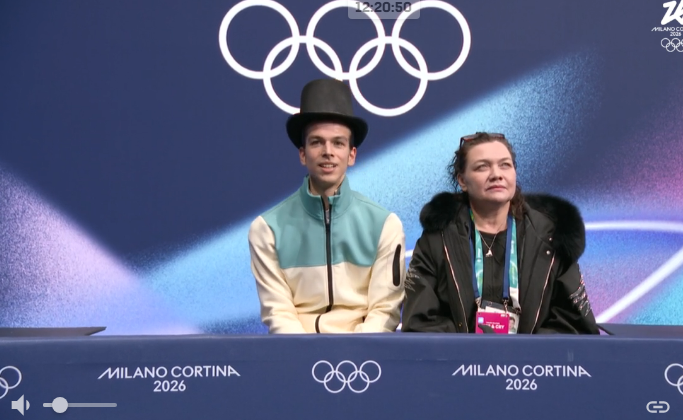
Las calles nunca olvidarán como en un mes de febrero de 2026 un ruso tímido metalero, se presentó en los Juegos Olímpicos con escaso roce internacional , y dio técnica, drama, elegancia, clase y vestuario en sus dos programas.
Mi último reporte de estos Juegos ✨
Tatiana Tarasova praised Amber Glenn's free skate at the 2026 Milan Olympics:
"Amber Glenn skated magnificently. To be honest, I didn’t notice any major mistakes - there was a small error, but it was nothing significant.
I’ve never seen an axel like that, not from any other female skater. I’ve seen plenty of axels - after all, I worked with a Japanese girl who performed the axel even in the short program - but I have never seen a jump executed with such quality."
photo: Alaxander Safonov, Championat / Team USA, gettyimages
#iceskate #iceskating #フィギュアスケート #figureskate #figureskating #MilanoCortina2026
⛸ As the @Olympics draw to a close, let’s revisit the stunning figure skating performance by Russia’s rising star – Petr #Gumennik.
While others stumbled & fell, his clean skate stood out – pure elegance, grace & precision on ice.
✊ #See4Yourself & #Think4Yourself