Journal Jams is now on the App Store! It gives quick summaries about any medical paper and lots of good thought-provoking questions so you can understand studies faster and better. Take a look! https://t.co/oZ3U5TcIsG
Our aging population, and what people or systems are responsible for taking care of them, is one of the largest problems in all of healthcare.
Doctors and nurses are far too familiar with this problem, especially in the hospitalized patient population, we see so much caregiver burnout.
An important topic, and a video worth watching.
The comments section is of course quite heartbreaking
https://t.co/LrnRn4Kogq
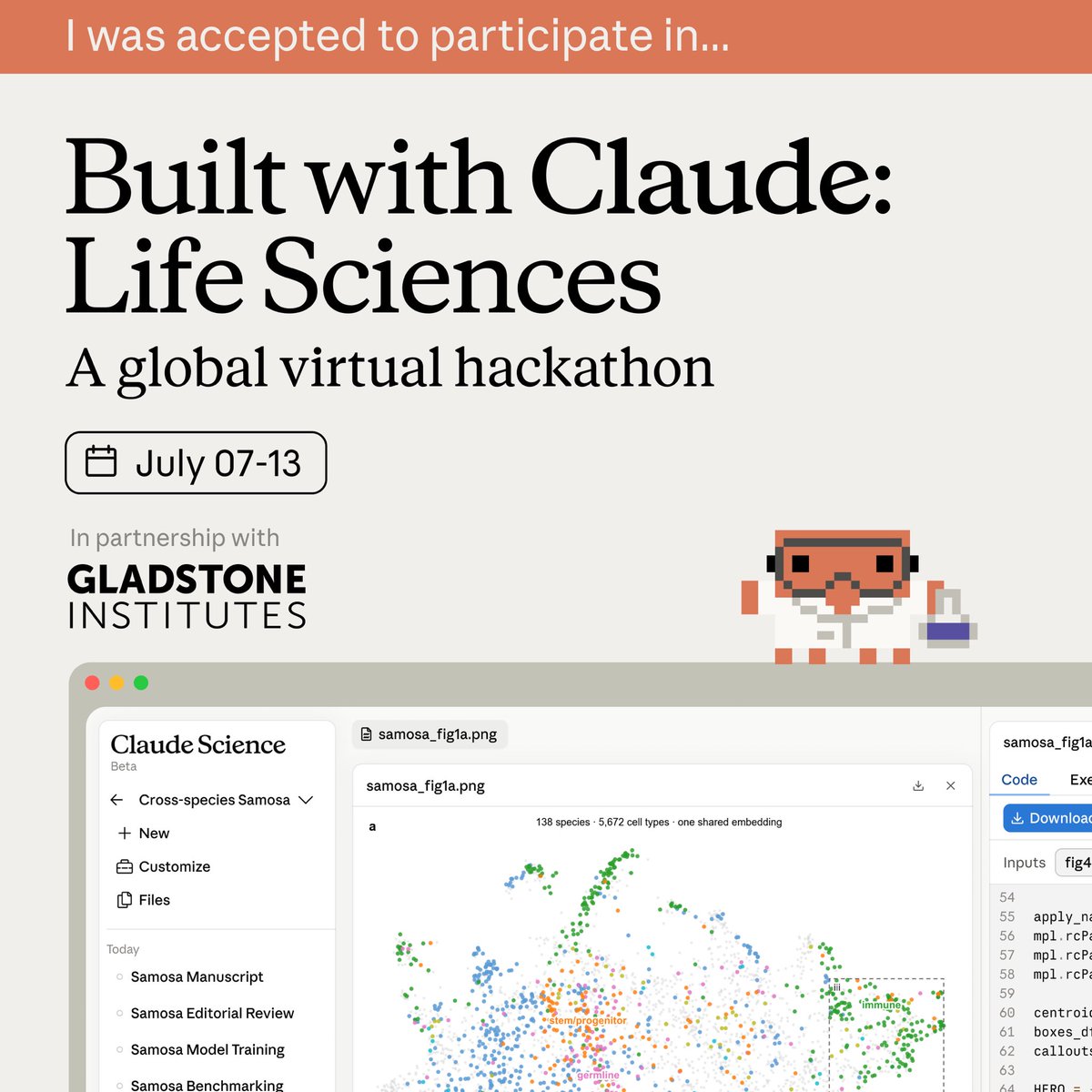
I’m excited to be a participant in the Claude Life Sciences Hackathon by @AnthropicAI@cerebral_valley@GladstoneInst
AI has tremendous potential to help improve health and healthcare in so many ways, looking forward to participating as a physician-builder, and to also see what the larger tech and health community has in store
The battle continues! OpenEvidence with a quick rebuttal showing the strength of their model, just 2-weeks after the Nature Medicine paper which claimed that frontier LLMs were as good or better than expert medical models.
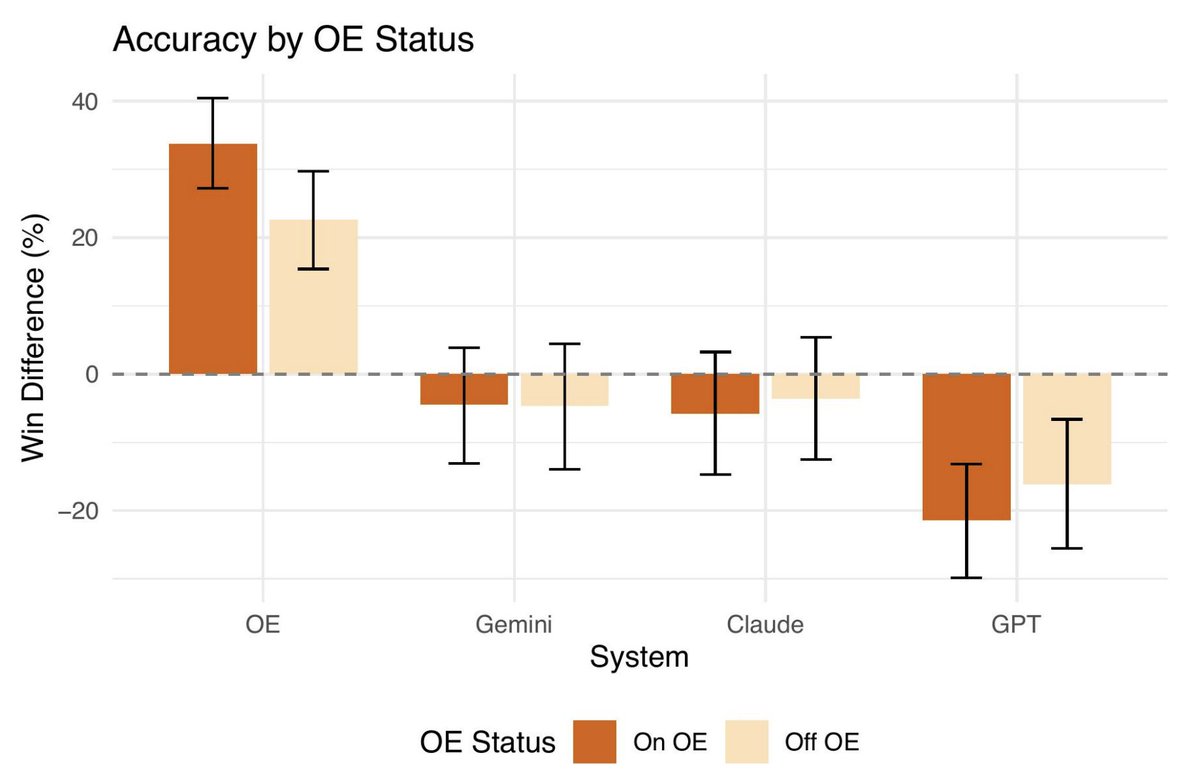
New: a large, blinded evaluation study by a consortium from Stanford, Harvard, UCSF, University of Washington, and the lead statistical editor at JAMA, on the accuracy of OpenEvidence vs foundation models for real point-of-care clinical queries.
- Gold-standard expert subspecialist evaluation: Rather than relying on models rating other models, 149 clinicians from >30 specialties subspecialty-matched to each question evaluated accuracy, blinded.
- OE outperformed foundation models on accuracy, utility, source quality, and verifiability; this holds whether raters had used OpenEvidence before or not.
- After OE, Gemini and Claude perform statistically similarly to each other, and each of Claude and Gemini significantly outperforms GPT5.5.
Paper: https://t.co/nZ8BU9sC6m
All code and data including raw queries and answers were publicly released by the authors.
I'm proud to graduate fellowship and officially become a Cardiologist! I've learned so much and am grateful to all my attendings, mentors, nurses, and amazing cofellows. Looking forward to everything that comes next in patient care, prevention, health tech, and much more!
If you're using claude and the /effort is set to xhigh or max, is there any point to also using 'ultrathink' or is that mostly a deprecated feature at this point?
I put all of them on https://t.co/N7h7j5cN5x and they look much more impressive individually on a full-sized screen. Good as like a display on an external monitor or just for sci-fi vibes
I decided to take a break from using @claudeai to build health tools and spent the last few weeks creating something for pure visual fun and so I made an entire suite of live, fictional sci-fi user interfaces
Reading it now, this is great!
I’m curious what you believe about ‘quick’ or shortcut methods as a way to meet the learning preferences of today’s trainee?
I created https://t.co/yLVzKxIXcT as my way for learners to be more easily engaged and actually INTERESTED in reading the literature. I hope that apps like mine serve as a gateway towards making papers feel less dry and more vibrant.
@mnedoszytko@AnthropicAI@grahamwalker Oh cool! Ill definitely tune in! And just like others in this thread, gonna plug what I’ve made: @JournalJamsApp which gives really succinct and useful overviews of any medical paper/article/trial https://t.co/gWiU96fxWT
I’ve been working on it for a while and am excited to finally release it! Please let me know if you have any feedback, would love to make this as useful as possible
Journal Jams is now on the App Store! It gives quick summaries about any medical paper and lots of good thought-provoking questions so you can understand studies faster and better. Take a look! https://t.co/oZ3U5TcIsG