Fascinating.
Chief Economist at Apollo: agents could cause a bank run by sweeping household cash into accounts paying 3-5% instead of the 0.1% national average, causing banks to lose a large share of their cheap deposits.
If you live in the US, you spend about 21 hours a day inside a building. That's 87% of your time, according to the big EPA-funded survey of how Americans spend their days, plus another 6% in a car.
In 1984, a researcher named Roger Ulrich published a study in Science in which he analyzed data from gallbladder surgeries at a Pennsylvania hospital from 1972 to 1981. After controlling for age, sex, weight, and smoking habits, he found patients with a window view of trees went home 18 hours sooner, 7.96 days versus 8.70 days, than patients with a window view of a brick wall. Patients with a view of trees also needed fewer doses of moderate and strong painkillers on days two through five than patients with a view of a brick wall, and nurses made under a third as many negative comments about the tree-view group as they did the brick wall-view group.
In 2016, a University of Illinois study of 94 high school students in Illinois determined that students who had a view of grass and trees during classroom sessions were able to focus more than students who had no window view or a view of buildings. Their attention scores increased by 13 percent.
A small 2014 pilot study published in the Journal of Clinical Sleep Medicine found that office workers with a window slept about 46 minutes longer on work nights than workers who spent their time in windowless rooms.
The most data I've seen comes from England, where a 2019 paper in Scientific Reports discusses the results of a survey of 19,806 adults conducted by the University of Exeter. Researchers found that adults spending less than 120 minutes per week in nature saw no significant health benefits compared to adults who spent no time at all in nature. Adults spending 120 minutes or more per week in nature had around 1.6 times the odds of reporting good health compared with adults who spent no time in nature.
That kitchen looks like a computer render, and none of these studies looked at a tree growing through a house. I'd still take the window seat. The Exeter line works out to 17 minutes a day, and in their data it made no difference whether you got it in one long visit or a handful of short ones.
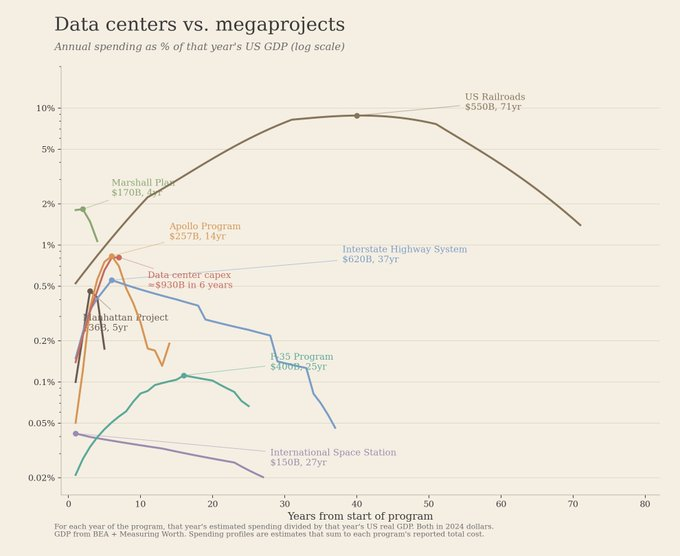
It's still hard to fathom that Big 4 capital expenditure buildout for AI is 2x the peak of Telecom a quarter of a century ago at 2.4% of GDP.
Reminder that this is the biggest buildout in infrastructure in America, eclipsing even railroads.
This analysis is pointing to an acceleration in long term real GDP growth well beyond 7-8%, the annual rate @ARKInvest is anticipating during the five years. Love this chart, @DMaguireARK!
An 18-year-old girl, a classical guitar, and one of Paganini’s most famous technical challenges. Haruna Miyagawa performs Caprice No. 24 with remarkable finesse, bringing its intricate variations and arpeggios, originally written for violin, into the world of classical guitar.
In one hundred years, all eight billion people currently breathing on this planet will be dust beneath the grass.
The boss who intimidated you, the critic who mocked you, and the people you tried to impress will all be gone.
In a theater that empties so completely, why are you still afraid to speak?
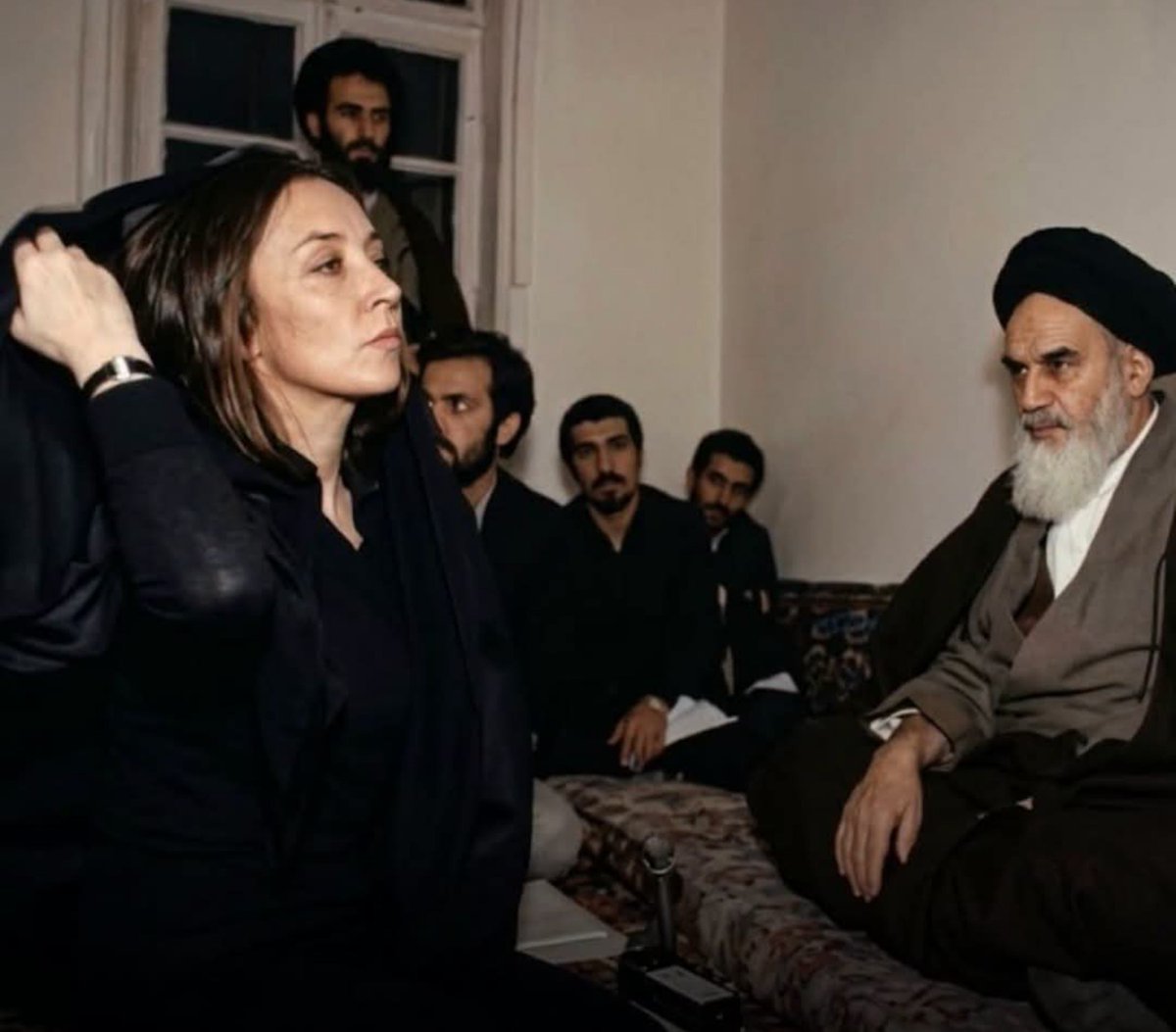
Italian journalist Oriana Fallaci removing her chador during her tense 1979 interview with Ayatollah Ruhollah Khomeini in Qom, Iran...
In October 1979, Italian journalist Oriana Fallaci traveled to Qom, Iran, to interview the Islamic Revolution's supreme leader. To get inside the room, Fallaci was forced to cover herself from head to toe in a heavy black chador, leaving only her face visible.
The conversation inside the room was tense from the very start. Fallaci did not hold back her questions.
She pushed the Ayatollah on political executions, the sudden shutdown of independent newspapers, and the sharp loss of rights for Iranian women under the new regime.
When she asked about the forced wearing of the veil, Khomeini dismissed her concerns and claimed the garment was meant to protect young and respectable women. He then added,
"If you do not like the Islamic dress, you are not obliged to wear it."
Fallaci took his words literally and replied, "Thank you, Mr. Imam. Since you tell me so, I am taking it off right now."
With a quick move, she pulled the chador off her head, leaving her hair completely exposed right in front of the Supreme Leader.
Khomeini was furious.
He stood up without saying another word and walked out of the room. The room fell silent, and the interview was abruptly stopped. However, Fallaci refused to leave Iran until he returned a day later to finish the conversation.
This confrontation became legendary in the history of journalism.
It showed a reporter refusing to bow down to authority, even in one of the most dangerous settings imaginable.
Fallaci proved that real journalism requires standing up to power, asking hard questions, and refusing to be silenced by fear or tradition.
When journalists trade raw courage for easy access and comfortable silence, we lose one of our strongest shields against tyranny.
In an era where true courage in reporting feels rare, her brave stand reminds us that honest journalism still has the power to light up the dark, giving a voice to the voiceless and inspiring future generations to speak truth without fear.
#archaeohistories
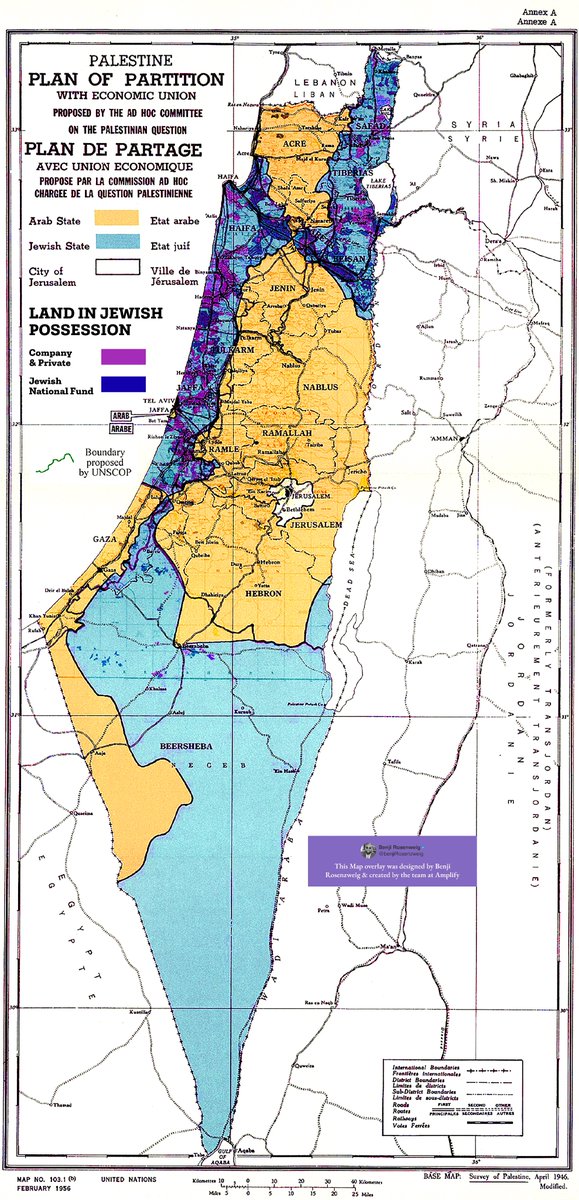
The land was not stolen. It was for sale.
By 1947, Jews held about 463,000 acres. Most of it bought. 73% of the plots were purchased from absentee landowners living in Cairo, Damascus, and Beirut.
John Hope Simpson walked the country in 1930 and wrote the sentence the slogans cannot survive: the Jews paid high prices, and then paid tenants to whom they were under no legal obligation to pay a dime.
In 1944 as the Holocaust raged, Jews were paying $1,000 to $1,100 an acre for sand and marsh. For comparison, Iowa black dirt that year was going for $110 an acre.
King Abdullah later wrote in his memoirs that the Arabs were as prodigal in selling as they are in weeping.
It was all the rage to sell worthless land to Jews for exorbitant prices. The mayors of Gaza and Jerusalem sold land to Jews. Members of the Muslim Supreme Council sold land to Jews. As’ad el-Shukairy, the father of the first PLO chairman, took Jewish money for land.
The nationalism came after the check cleared.
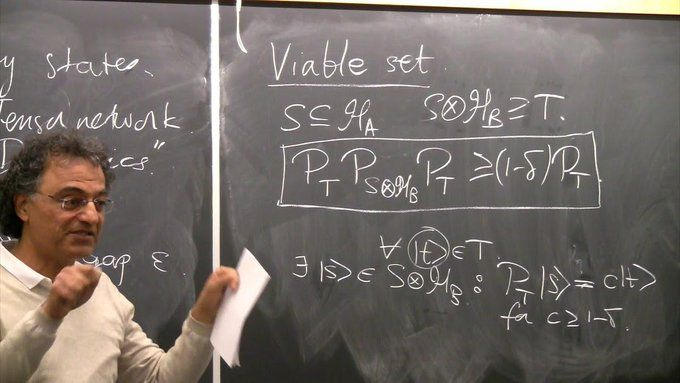
Most people treat a zero-failure record as a flex. In computer science, there is a sharper perspective famously known as "Umeshisms."
During his PhD at UC Berkeley under quantum computing pioneer Umesh Vazirani, computer scientist Scott Aaronson noted an aphorism his advisor loved to repeat:
"If you have never missed a flight, you are spending too much time in airports."
The math logic is simple: a 0% miss rate often means you are overpaying in friction, prep time, and missed opportunity. Occasional failure is often the price of a better expected-value tradeoff.
Aaronson named these "Umeshisms" in a 2005 blog post and penned a few sequels in the same spirit:
- "If you have never been rejected, you are not asking enough."
- "If you never cut yourself while shaving, you are not shaving close enough."
The lesson is recognizing when extreme risk aversion costs you more than the risk itself.
Not every reminder of 11 September 2001 is a photograph of the towers.
Some of them were ordinary cars that stayed in an ordinary lot.
The old Giants Stadium commuter park-and-ride in the Meadowlands filled that morning the way it always had. People left vehicles there, took the bus into Manhattan, and went to work.
After the attacks, some of those cars did not move. Their owners did not come back to claim them. For days and weeks the lot held that fact in metal and glass: a space reserved for a person who would not need it again.
The stadium is gone, now. The lot is gone. The cars were towed long ago.
Twenty-five years later the number still used for those killed that day is 2,977, and the families those deaths remade are still here. The Meadowlands picture is only one place where absence had a parking space.
Delta Flight 15 takes off from Frankfurt at dawn.
On board: 218 passengers. Families. Business travelers. A pregnant woman. Shirley Brooks-Jones, 65 years old, heading home to Columbus, Ohio.
Five hours into the flight, a note reaches the cockpit.
All U.S. airspace is closed. Land immediately.
The captain says nothing about why. He tells passengers it's a minor instrument problem. Privately, the crew already knows about the World Trade Center.
Gander International Airport. Newfoundland, Canada. Midday.
The plane touches down 400 miles off its route. Out the window, passengers count 38 other jumbo jets already parked on the tarmac.
By nightfall, 53 international flights sit grounded here. Nearly 6,600 people are stuck, with nowhere to go.
Nobody is allowed off.
For 28 hours, 218 people sit inside that plane. No real answers. No word on what's happening back home.
Here's what makes it worse: most of them don't yet know if their own families are safe.
Word finally spreads through the cabin. Two hijacked planes. The towers. The Pentagon. A field in Pennsylvania.
The plane goes silent.
Gander. Day two.
Passengers finally step off the aircraft. They're bused 45 kilometers to a town called Lewisporte.
Population: just over 3,300 people.
Lewisporte has no idea 218 strangers are about to double its guest capacity overnight. It doesn't matter.
The mayor puts out one call for bedding and food.
The whole town answers.
Schools close. Churches open. The Lions Club clears its hall and sets up cots by hand. High schoolers skip class to serve meals and translate for confused travelers.
The pregnant passenger is placed in a home across the street from urgent care.
Elderly passengers are welcomed into private houses, not shelters.
Phone lines are opened for free, unlimited, day and night.
When passengers try to pay shopkeepers back, the answer is always no.
Nobody in Lewisporte will take a dollar.
Local volunteers even bring out screech, the region's famous rum, and host a mock "screeching-in" ceremony to make the exhausted travelers laugh.
For three days, this town of fishermen and loggers cares for people it has never met and will likely never see again.
Brooks-Jones later calls it something simple.
She says: "the most beautiful experience I have ever had in my life."
Gander Airport. Three days later. Departure.
Flight 15 is finally cleared to fly home.
Before takeoff, Brooks-Jones asks the captain for one thing: permission to speak on the intercom.
He hands her the microphone.
She reminds everyone what Lewisporte just did for them. Then she asks for something back.
Pledge sheets start moving up the aisle.
Business travelers write checks. Strangers pass around pens. By the time wheels touch down in Atlanta, passengers have pledged $15,000.
Brooks-Jones doesn't stop there.
Back in Columbus, she calls the Columbus Foundation. An anonymous donor hears the story and matches it instantly, doubling it to $30,000.
In 2002, the fund gets a name: the Lewisporte Area Flight 15 Scholarship Fund.
It's built for one purpose. Send local kids to college.
More than two decades later.
The fund is still active.
It has sent more than 300 students from the Lewisporte area to college and trade school. Doctors. Nurses. Engineers. Teachers.
Some of them weren't born yet when Flight 15 landed.
Brooks-Jones has flown back to Newfoundland more than two dozen times since 2001. She still shows up for graduation ceremonies.
The friendships that started on cots in a high school gym are still going, more than 20 years on.
Most people who know this story didn't hear it from a history book.
They heard it from a Broadway stage. Lewisporte and Gander's kindness became a musical called "Come From Away." It has since played in cities across the world.
Few people watching that show realize the scholarship fund behind it is still cutting checks to real students, every single year.