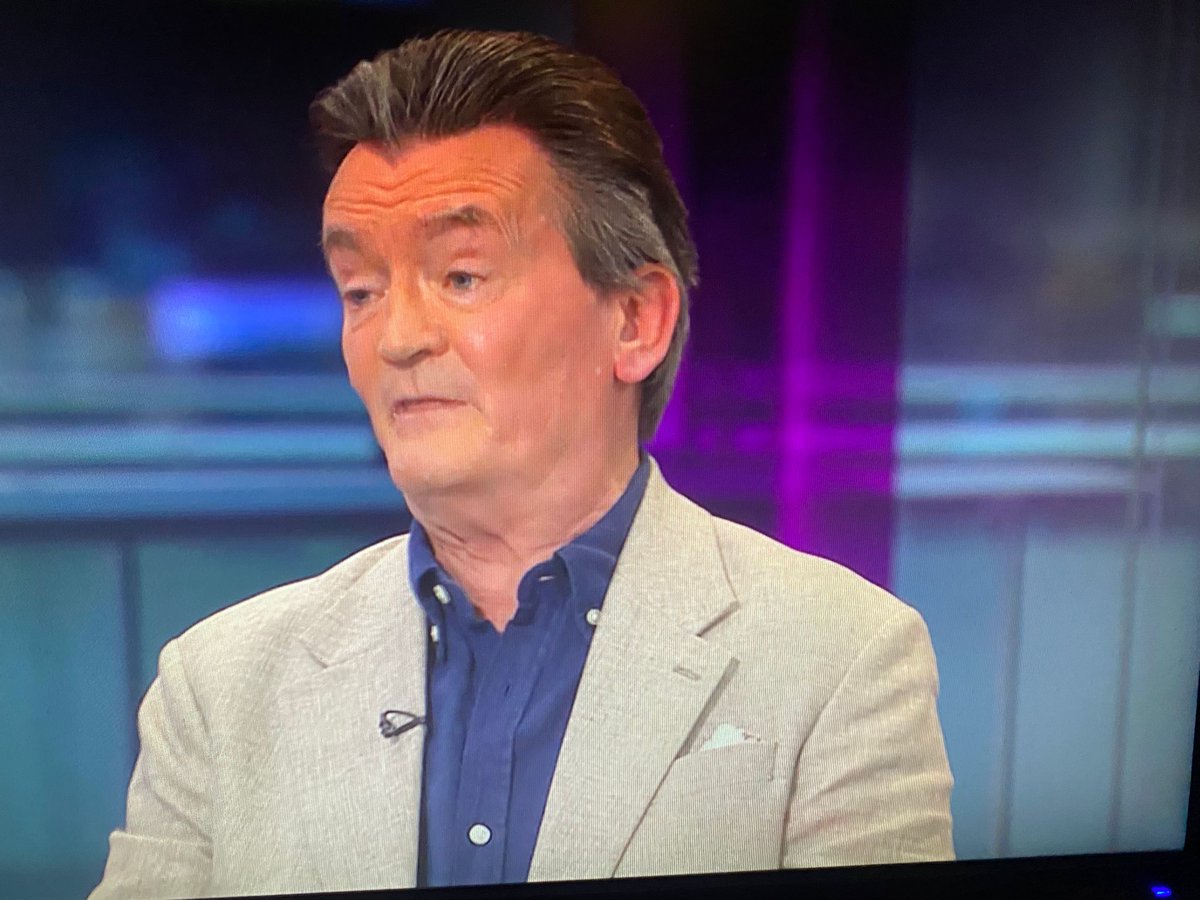
.@Feargal_Sharkey is absolutely right: the government is complicit in the damage to our rivers and seas. No more window dressing. It is time for real action.
Give the public a say. Give us a referendum on water ownership. Sign the petition: https://t.co/Z9HiPo3BmL
🚨High street post offices to shut forever
This comes as 100 TG Jones stores will shut in a major restructure.
Private Equity firm Modella Capital will shut down 100 branches shut down.
They acquired WHSmith's high street news agent estate in 2025.
Instead of improving our high streets, Private Equity saps the energy and utility out of it.
Feargal Sharkey, "Water companies... The fines don't work, it's time we actually started upholding the law, and sending some of these executives and directors to jail"
Krishnan Guru-Murthy, "You think we should put them in jail?"
Feargal Sharkey, "If we put one water company boss in jail for six weeks the whole industry would transform itself"
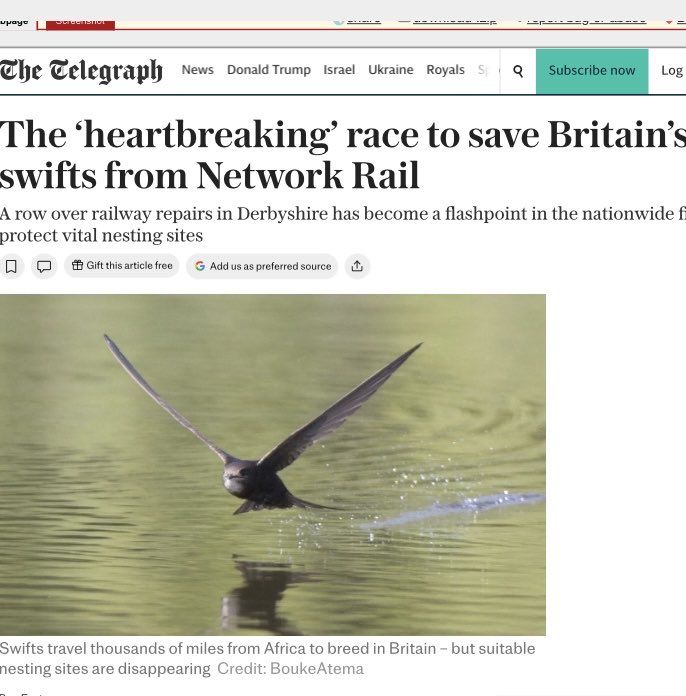
TheTelegraph sums up the strength of feeling about swifts & the Network Rail swift saga is a lens to see the entire problem - of loss of nesting habitat. Until this government takes securing national scale nesting habitat seriously, these birds will continue to decline #swifts
Labour MPs are asking - “this could have looked so different if @AndyBurnhamGM was the candidate”. Is Labour no longer the main progressive party alternative to Reform?
What a result! Huge congratulations to @GreenPartyHan - everyone in Gorton & Denton have just made history. This result shows @TheGreenParty can win anywhere, that the politics of hope can win over the politics of hate & there is no longer any such thing as a Labour safe seat 💚
Fantastic news that Gorton and Denton now has an MP who says
"Privatisation has failed"
"We can [reduce bills] by nationalising the water companies and the energy companies"
"I will not stop shouting about an NHS that could be as brilliant as it once was, where we have free prescriptions, free dentistry, free eye care, free hearing aids"
We look forward to Hannah Spencer standing up for public ownership in parliament!
👏👏👏
If Lord Falconer believes these safeguards are unnecessary, he should say so plainly. If he is paring back because of govt cost concerns he should say so. Cutting away at safeguards MPs' inserted — while claiming new amendments are stronger — is, in his words, 'smoke and mirrors'
Hundreds of illegal waste dumps - including 11 vast “super sites” - are threatening England’s rivers, wildlife and communities downstream.
Why is the Environment Agency still refusing to publicly explain what action it’s taking?? 🔽
https://t.co/I3kDYyiFPo
The mother-baby interface, where the placenta embeds into the uterus wall, is an immunological battleground.
It is in baby’s best interests to invade deeply enough to draw maximum nutrients and oxygen from Mum’s blood supply for growth. To achieve this, baby remodels Mum’s blood vessels and modulates her immune system to make the uterus welcoming rather than hostile.
It is Mum’s best interests to keep that invasion under control so she can protect her own health. To achieve this, her immune system regulates the placenta and restrains its growth without harming baby.
A normal maternal-fetal battle is one of compromise. But in a normal maternal-fetal battle, Mom and baby have partially compatible immunogenetics, and this makes the delicate balance easier to maintain.
When baby is not genetically related to Mum, the balance can be harder - or even impossible - to achieve. Mum’s immune system may ramp up to fight against the wholly foreign tissue. In response, placental invasion becomes more aggressive.
The result is tissue damage, blood vessel damage, and inflammation, and this risks placental dysfunction/disorders.
Ergo, surrogate pregnancies have a higher complication rate than those where Mum is related to baby.
(There are additional reasons for pregnancy complications, like those more generally associated with IVF.)
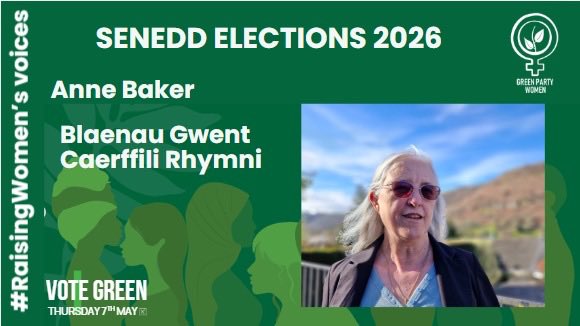
@ZackPolanski Ordinary people every time! I look forward to you visiting us in Blaenau Gwent, Caerfilli, Rhymni, where people are desperate for decent jobs and good public transport. You could see the birthplace of the NHS as well
Morning @DavidLammy,
I am going to message every single day that Crown Court courtrooms are closed not sitting and you still keep pretending that’s it’s juries that are holding up the CJS. Now, today we have 78 out of the 516 courtrooms NOT sitting. What you doing about it?
K
Tony Blair sold Freedom of Information as a democratic milestone. He praised it as a constitutional breakthrough. Then, the moment it began to work, he recoiled in horror. Newly declassified papers show a prime minister who realised – far too late – that he had armed the public with a tool he never intended them to use.
Within weeks of FOI coming into force, Downing Street was already alarmed. Requests were flooding in. Ministers' diaries were being probed. Correspondence was being asked for. The private machinery of power was being dragged into daylight. Blair's chief of staff warned that the system was "seizing up". Blair's response was not confidence in accountability, but a frantic question: What is the solution?
That instinct tells you everything. When Blair spoke of openness, he meant managed openness. When he spoke of scrutiny, he meant controlled scrutiny. What FOI delivered instead was unscripted exposure and that was intolerable.
The documents show ministers less concerned with public understanding than with optics. They worried about gaps in diaries. They debated which minister would be most likely to approve refusals. Officials strategised about how to time disclosures to minimise embarrassment. This was not transparency culture struggling to adapt. It was secrecy culture fighting back.
And this was not limited to trivia. FOI threatened the most sensitive areas of the Blair era: Iraq, media manipulation, lobbying, personal ambition. Civil servants openly discussed steering requests away from ministers who might approve disclosure. Requests about the Iraq war were managed not on public interest, but on who could be relied upon to say no.
Blair later called FOI an act of "stupidity". That word is revealing. Because FOI did exactly what it was supposed to do. It exposed expenses abuse. It revealed lobbying. It showed how power actually operates when it thinks no one is watching. The stupidity, from Blair's perspective, was allowing the public inside the room.
This wasn't about good governance being "furred up". It was about authority losing its insulation. FOI disrupted the unspoken assumption that decisions could be made, favours exchanged, and narratives shaped without challenge. It reminded politicians that the state does not own information – the public does.
What makes this episode so important is that it explains everything that followed. The constant attempts to narrow FOI. The growth of informal messaging. The use of WhatsApp and private emails. The push for exemptions. The obsession with "process" over principle. FOI was tolerated only because it could not be repealed without backlash. So it was slowly blunted instead.
Blair's regret was not personal. It was cultural. It revealed a governing class that believes scrutiny is a threat, not a safeguard. That sees the public as a problem to be managed, not citizens to be informed. That instinct did not end with Blair. It became the template.
Freedom of Information remains one of the few tools that punctures the administrative state's self-image. That is why it is resented. And that is why it matters more than ever. Because when even its architect calls it a mistake, he is admitting something far more serious than naivety.
He is admitting that openness was never the point.
"When Blair spoke of openness, he meant managed openness. When he spoke of scrutiny, he meant controlled scrutiny."
💔Biggest eco crime on Earth now ignored by western media
Over 5 million acres of millions year old ancient forest in Sumatra is going to be transformed into this a lifeless desert of nothing
Birds wildlife tigers Orangutan Elephant will see their homes destroyed for bio fuels