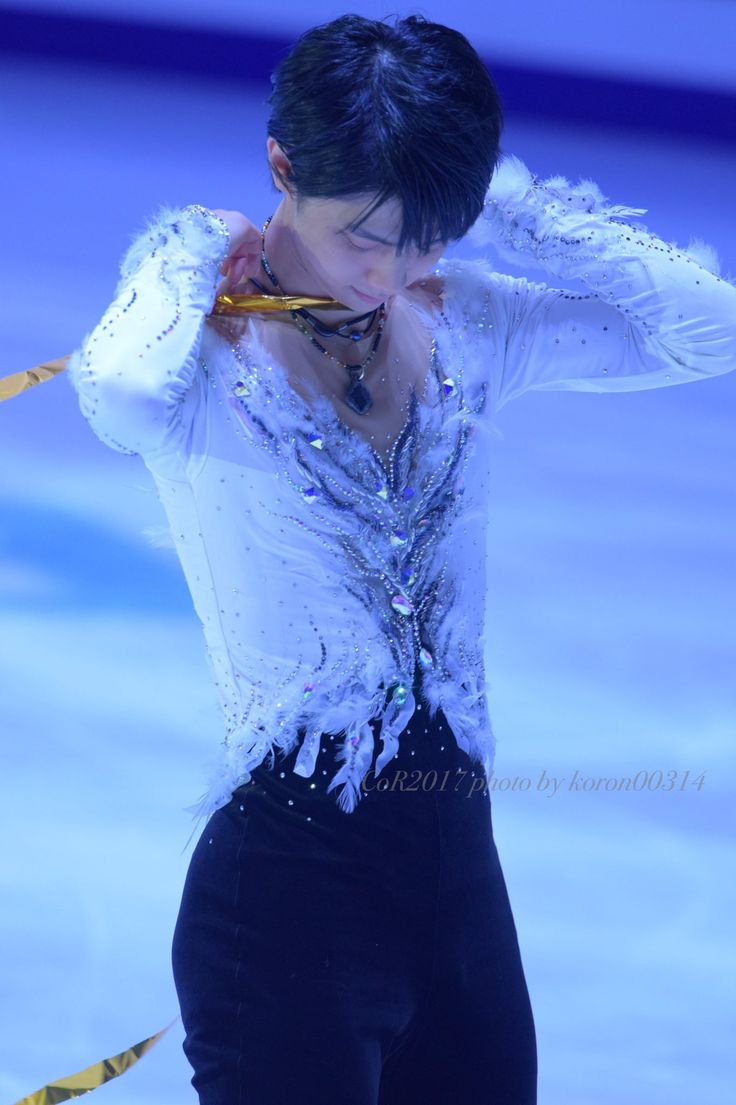
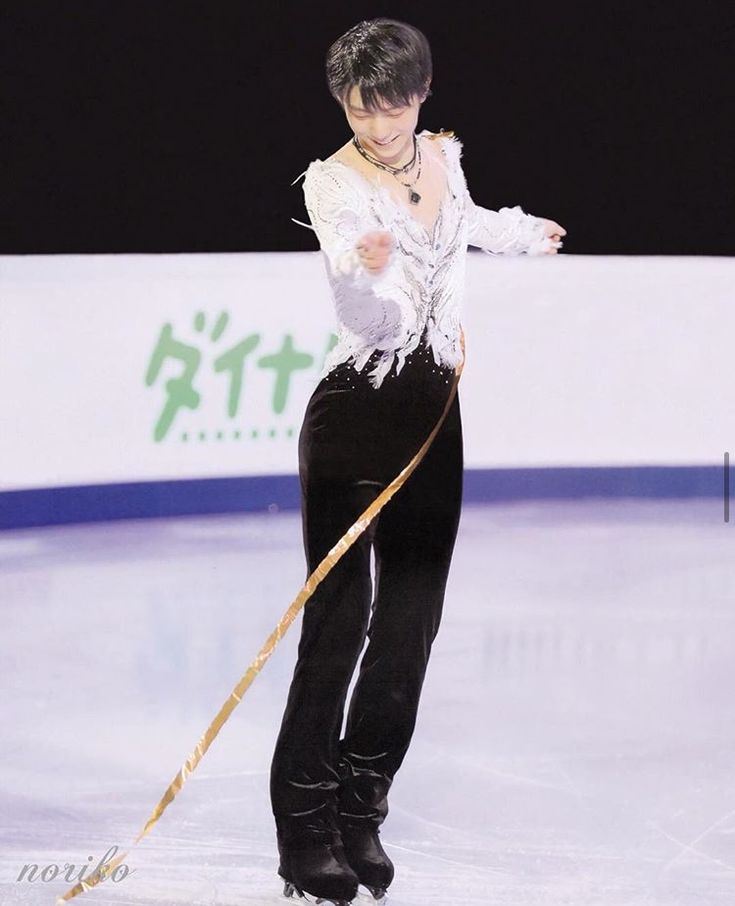
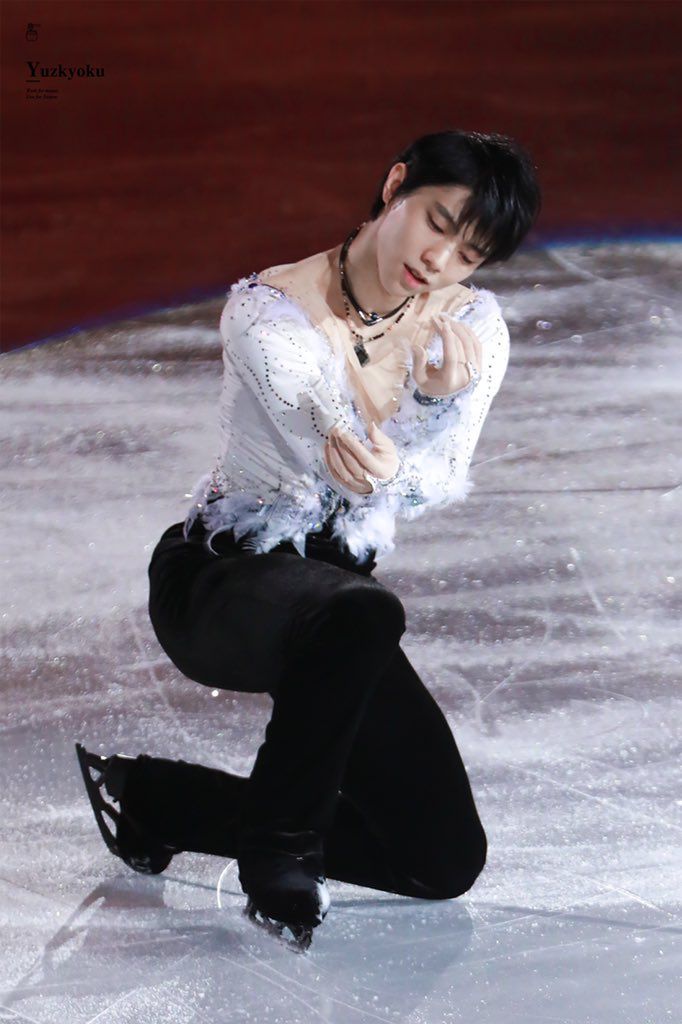
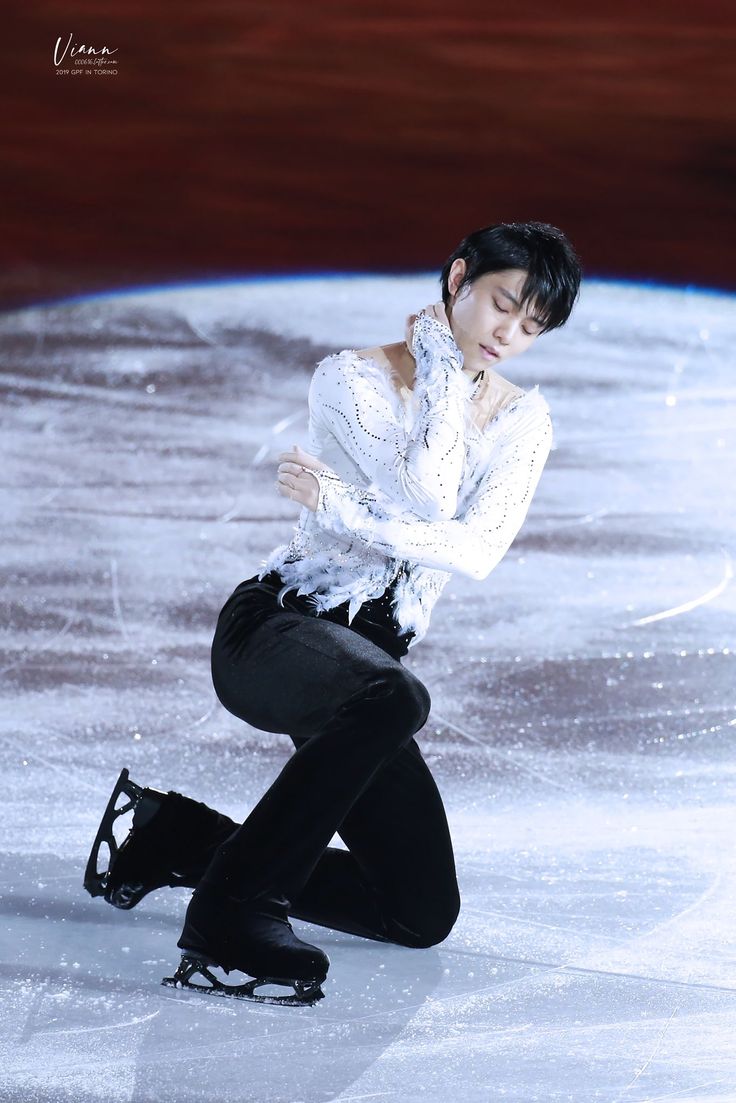
This may sound a little abstract, so let me compare SEIMEI and Ten to Chi to. Both draw on Japanese historical figures, yet each embodies Japaneseness through a very different organization of the body in space.
In SEIMEI, fixed positions, gaze, gestures, rhythmic accents, and a clearly defined axis repeatedly establish the body as the center of space, making the entire space submit to the character’s will. This is what produces Seimei’s authority and brings him into being as a character.
Ten to Chi to, by contrast, dissolves the clear hierarchy between body and space. The body no longer establishes power by occupying the center; power arises from moving with existing momentum, yielding to it, and transforming it, while the relation between body and space is continually reconfigured. This produces a figure who exists within heaven and earth rather than ruling over them.
In neither program does Yuzu begin with a finished character and then make the skating express it. The character emerges from the way the movement itself is organized.