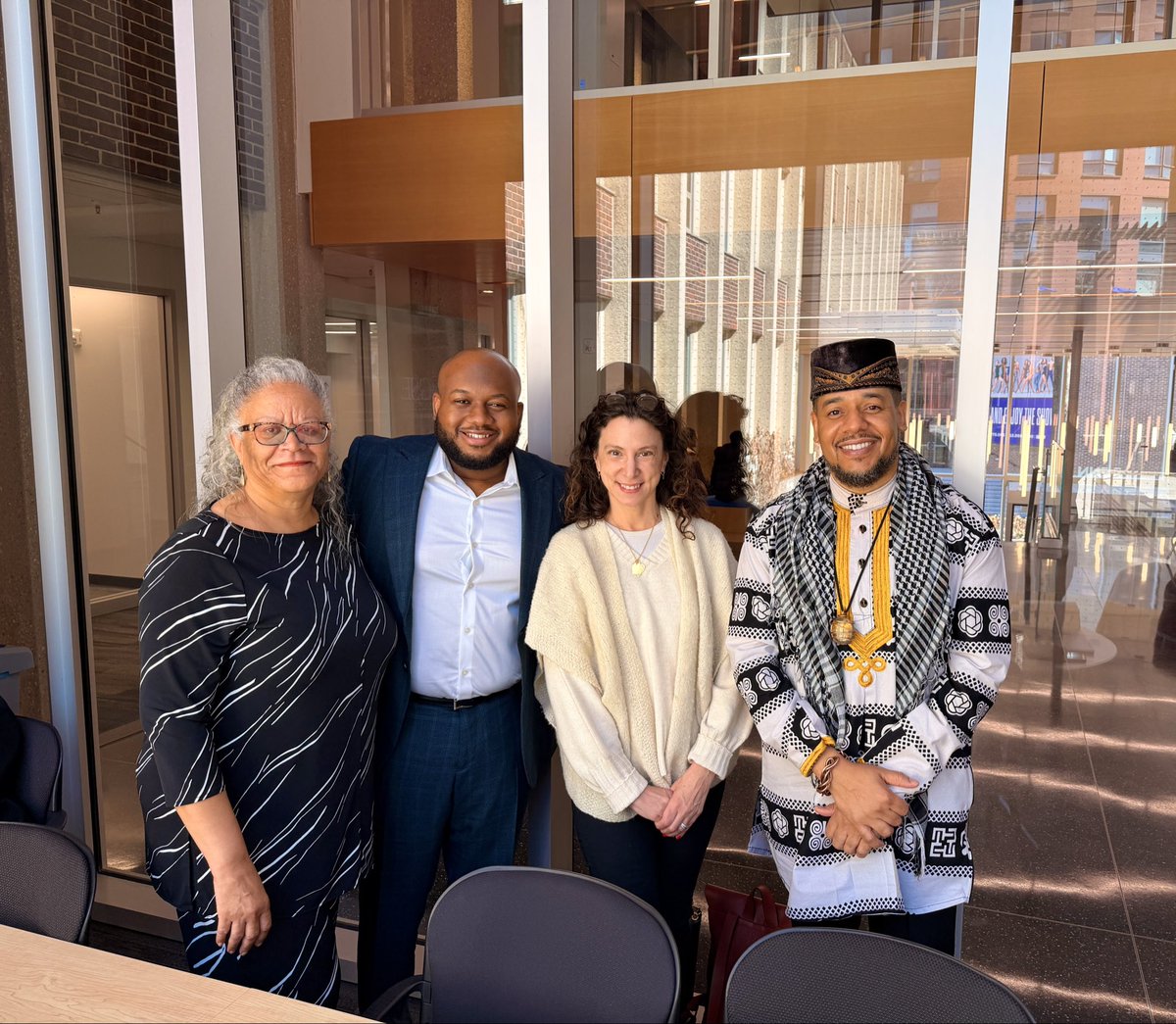
Thank you, dear Greg! Honoured to support Pro Bono Students Canada (PBSC) in its efforts to galvanize access to justice through student leadership & experiential learning. #A2J
— Content d’épauler les actions d'Étudiant(e)s pro bono du Canada (EPBC) pour renforcer l’accès à la justice par l’implication estudiantine & l’apprentissage expérientiel. @LawSocietyLSO@UofTJackmanLaw
Glad to have presented tonight at the conference by Ti Koze sou Konstriksyon. I discussed how earthquake engineering research became more intensive in Haiti after 2010, and the importance of continuing to strategically advance this field for future generations.
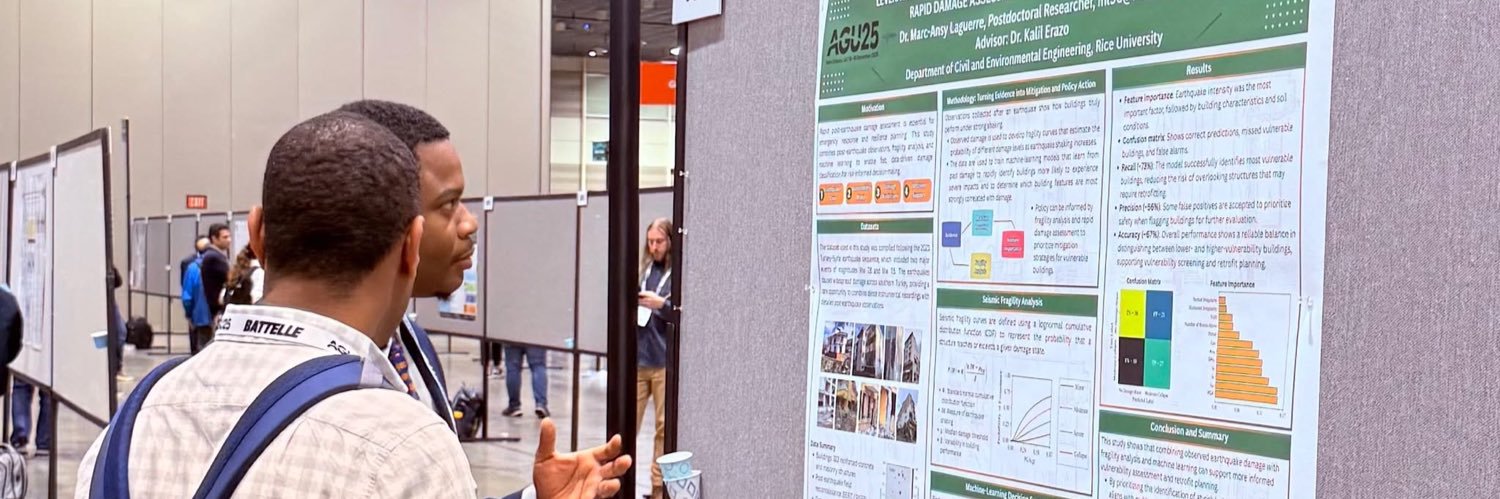
Happy to share that I will be presenting at the 4th anniversary conference organized by Ti Koze sou Konstriksyon on the use of machine learning and uncertainty quantification in earthquake engineering, with a focus on reinforced concrete building stock in Haiti.
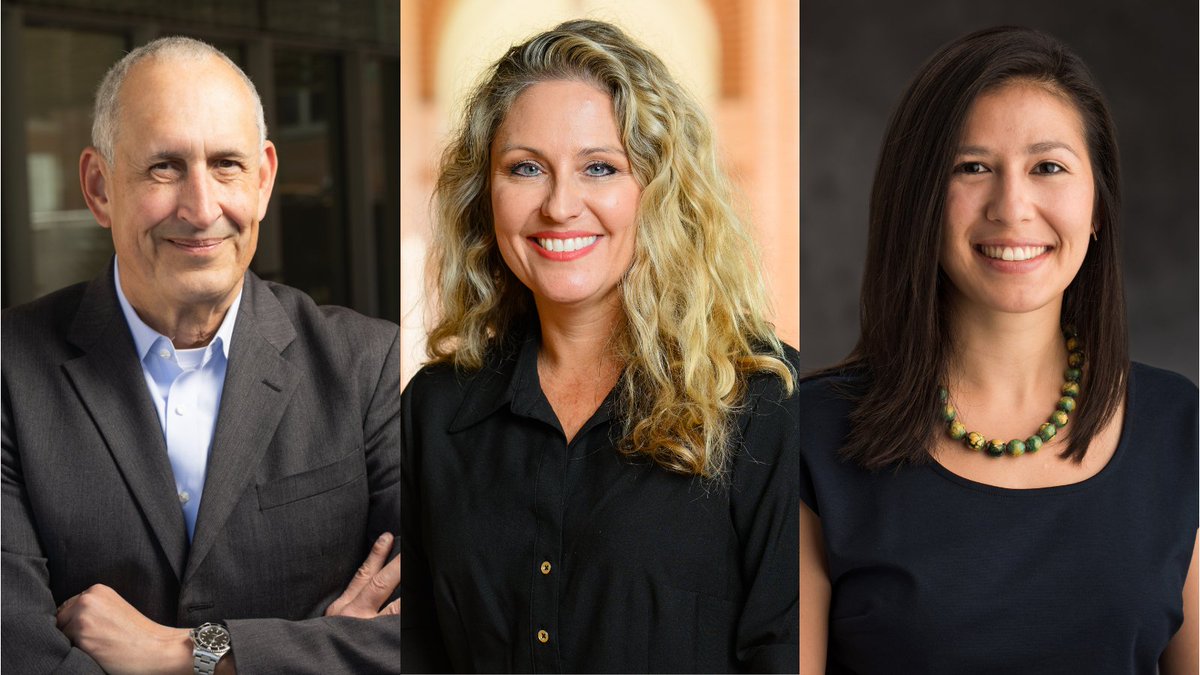
@RiceCEVE faculty earn top honors from the @ASCETweets — including the society's highest membership distinction and two of its most competitive research prizes — for leadership in water systems, resilient infrastructure and public health engineering.
https://t.co/xs2b7ju3VB
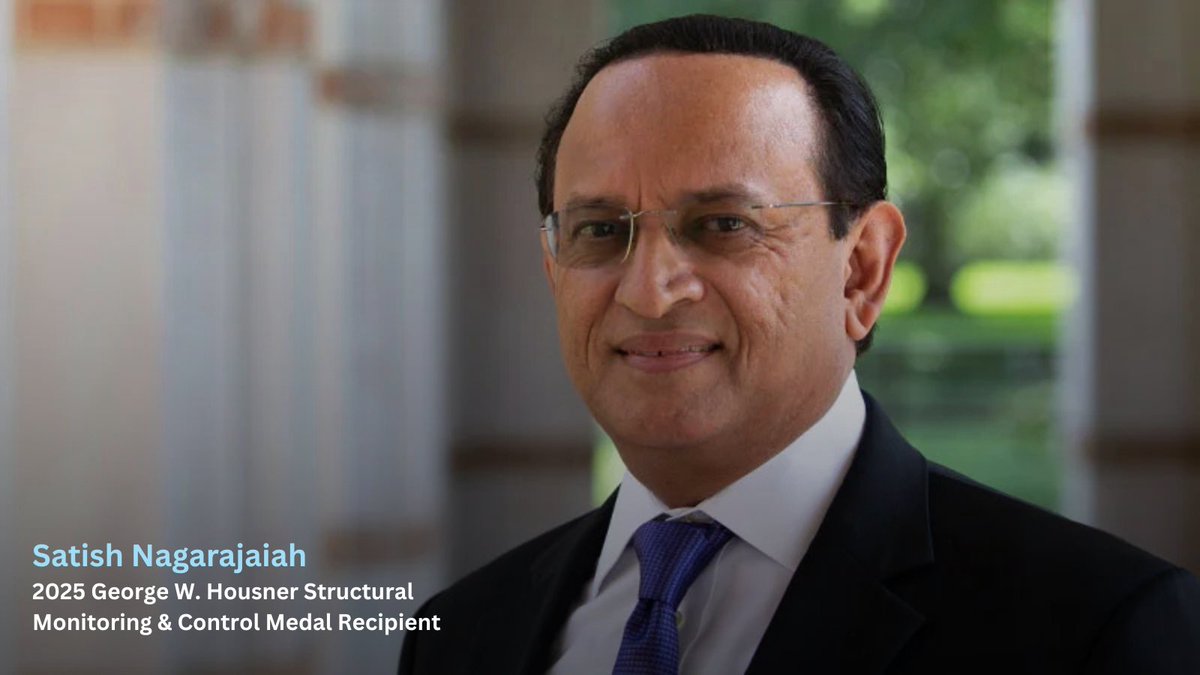
Prof. Satish Nagarajaiah named 2025 George W. Housner Structural Monitoring & Control Medal recipient by @ASCE_EWRI — honoring his research in structural control and health monitoring that protects buildings and bridges from earthquakes and wind. https://t.co/RcgZbYfy7f
Happy to share this part of the EMBRACE podcast about my path from trauma due to earthquake loss to purpose. A path I believe can lead to healing and renewed motivation.
I appreciate this conversation on resilience and my perspective on engineering as a people-centered field. The episode is available on:
🎧 Spotify: https://t.co/sbMUw4rSvV
🎧 Apple Podcasts: https://t.co/eN12Ub5P61
🎧 YouTube: https://t.co/eotCIMcuiU
Thanks to @Daphning for the invitation to join The EMBRACE Podcast. I’m looking forward to share this upcoming conversation on resilience and my perspective on engineering as a people-centered field.
Haiti can be very ambitious in its effort to strengthen the entire higher education system and increase access to quality education for a larger number of people. Several aspects deserve further attention, particularly online education and the use of remote expertise across the many universities, both private and public, in the capital as well as in other cities. There is also the academic diaspora, which may be willing to contribute to teaching. Alongside these resources, the willingness to mobilize them effectively is also an important step. These are not magical solutions, and they are already being implemented to some extent, but it is essential to be aware of them and to strive for a more effective use of these resources.
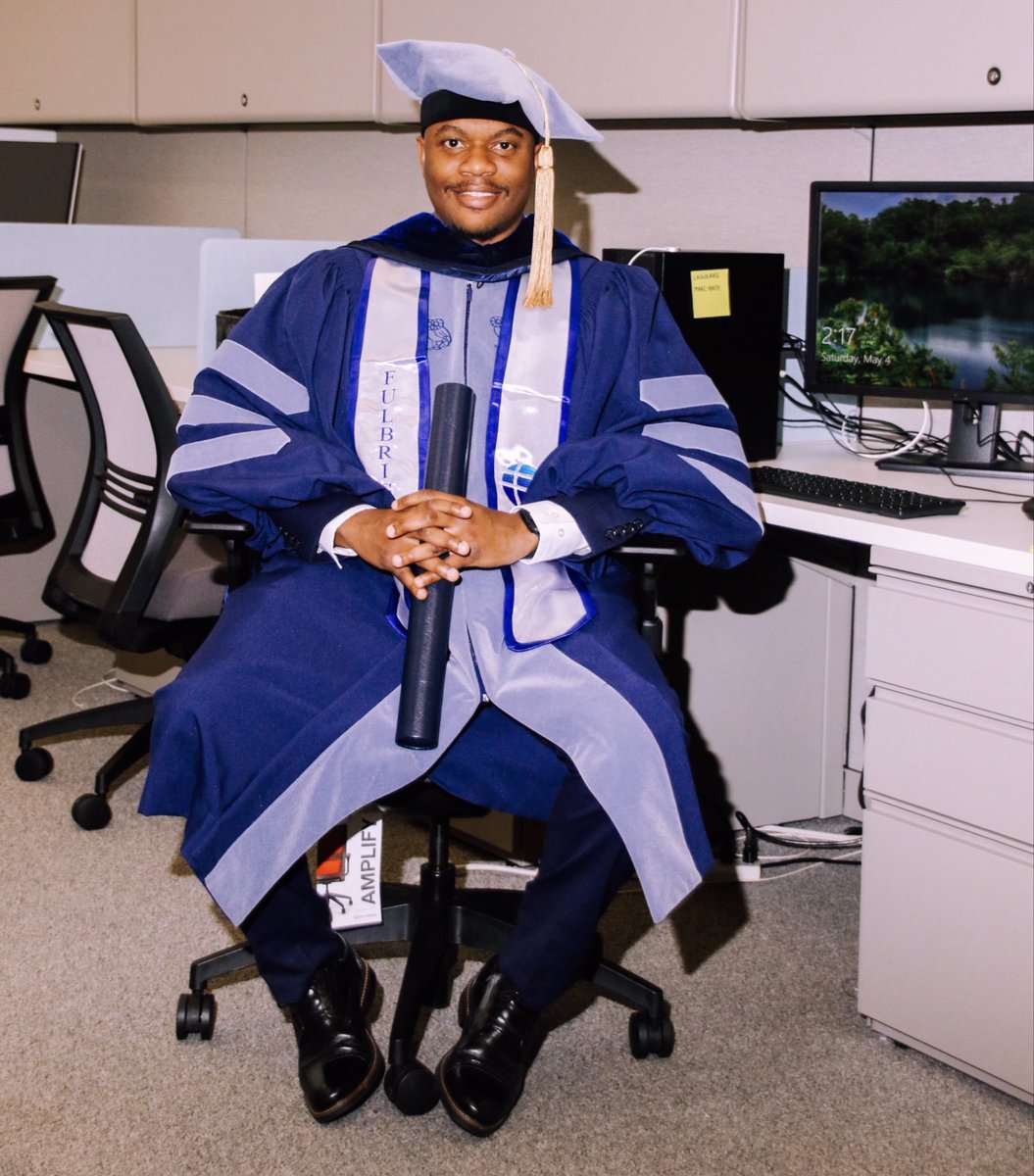
Jodia mwen soutni tèz doktora mwen ak siksè nan @Penn.
Rechèch mwen te chita sou yon pwoblèm pratik: Migrasyon, Konfyans Enstitisyonèl ak Fintech. Mwen te eksplore Enklizyon Finansyè Imigran Ayisyen k ap viv Etazini nan kontèks chanjman politik piblik migratwa tankou fen TPS ak Program Biden
Rechèch sa a te egzamine kijan imigran ayisyen k ap viv Etazini konstwi konfyans nan sèvis teknoloji finansyè, epi kijan pwogram tankou CHNV (Biden) ak Temporary Protected Status (TPS) enfliyanse konfyans sa a ak fason yo pouswiv enklizyon finansyè.
Nan fon li, se te yon etid sou konfyans enstitisyonèl nan moman ensètitid. Sou kijan moun deside ki sistèm ki merite lajan yo, done yo, ak konfyans yo.
M ap ofisyèlman resevwa diplòm mwen nan an Me. Travay la ap kontinye nan kwazman migrasyon, finans, enfrastrikti dijital ak konfyans enstitisyonèl.
Ak anpil gratitid m ap di kominote m, vilaj ki antoure m e ki rann eksplwa sa posib MÈSI!
In the Cornell Policy Review, I raise concerns about the risks that U.S. migration policy poses to Haiti.
“For Haitian migrants, such policies may affect not only their legal status and employment opportunities but also their ability to maintain financial ties with relatives in Haiti.”
https://t.co/c5LkGYDNXD
Proud to share our new article on the use of post-earthquake data to calibrate seismic vulnerability functions for buildings assessed after the 2010 Haiti earthquake. Using two complementary datasets, we develop and update fragility models through Bayesian estimation within a Markov Chain Monte Carlo framework. The results highlight the influence of key structural and site attributes on seismic fragility.
https://t.co/O0xPLVH0RY
Happy to share our recent paper published in the Journal of Earthquake Engineering (Taylor & Francis), where we present empirical fragility curves and machine learning-based damage classification models developed using strong-motion data from the 2023 Turkey-Syria earthquakes. The study also relies on post-event performance evaluations and investigates the predictive capability of several non-traditional intensity measures.
https://t.co/ShKNaNAFQF
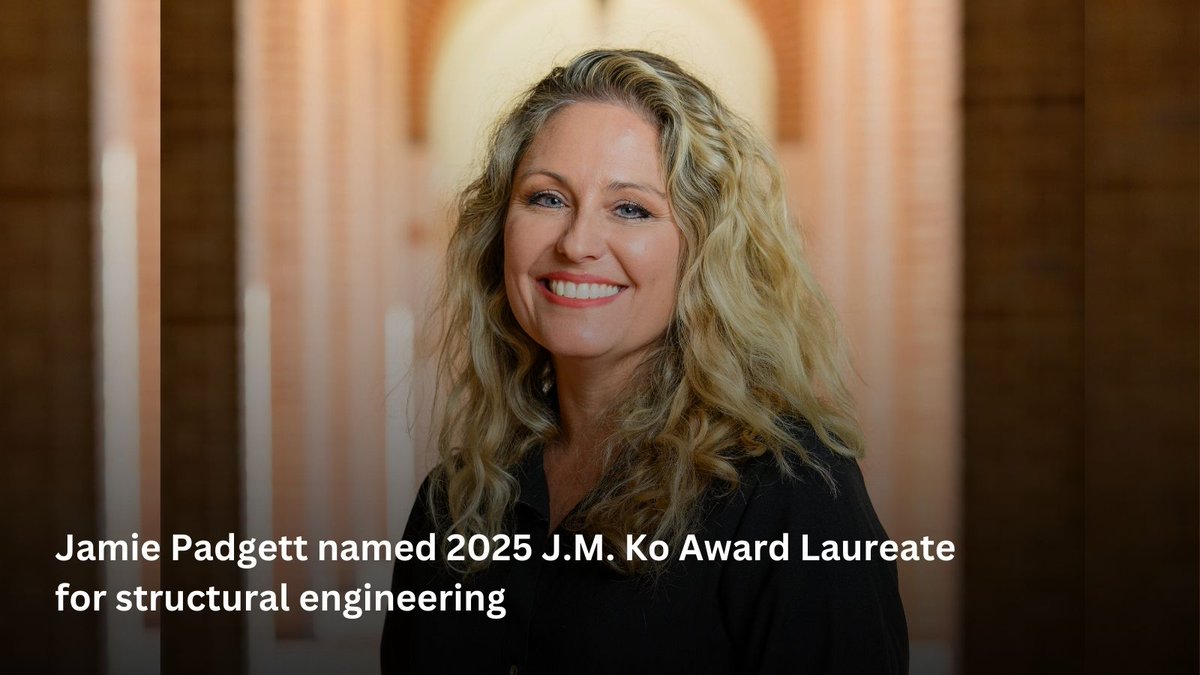
👏 Congrats to Prof. Jamie Padgett, @RiceCEVE Department Chair, on being named a 2025 J.M. Ko Award Laureate for her contributions to risk assessment tools that strengthen infrastructure resilience against earthquakes, hurricanes, floods, and aging.
https://t.co/CG82crsvll
New paper. Proud to contribute to machine learning and explainable artificial intelligence in earthquake engineering, leveraging empirical data from the 2023 Turkey earthquake sequence.
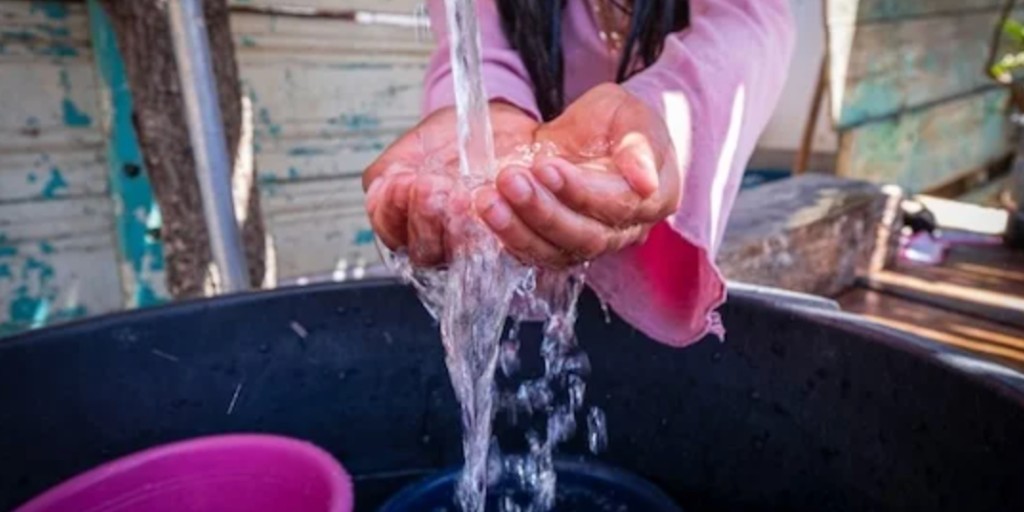
@RiceCEVE Prof. Li is leading a Gates Foundation-funded project to develop modular household water treatment systems that recycle wastewater on-site, reduce dependence on centralized infrastructure, and could transform sanitation for billions worldwide.
https://t.co/9AdaywENeA