COVID cure vs Climate cure, comparable cost & benefit?
A number I can't stop turning over this week - $79bn.
Developing & rolling out COVID vaccines cost ~$79bn. A new study in PLOS Medicine puts value they saved in 1st year (lives & economic damage avoided) at $6.4tn-$64tn.
But a 10x return on the largest infrastructure programme in history is not a cost. It is the deal of the century, quite literally.
The bottom line/maths beats fire and brimstone!
Pleasure to be joined on stage at the Battery Asset Management Summit today by Freddie Ward of WiseEnergy and Tom Blackwood, CFA of Octopus Energy Generation to talk on where value really lies in BESS, both at the point of transaction and the long term.
Aside from some excellent insight, a couple of takeaways:
- Tom pointed out revenue isn’t as important as a seller might think as they have their own view.
- Freddie showed us retaining contract flexibility (O&M, route-to-market, etc.) helps buyers create value in a transaction.
I'm looking forward to speaking at the Battery Asset Management Summit UK & Ireland next week.
I'm speaking (briefly!) on what investors value and want on BESS projects (Tuesday 13th 14:45), with some current market pricing.
If you're attending, I'd love to meet you there.
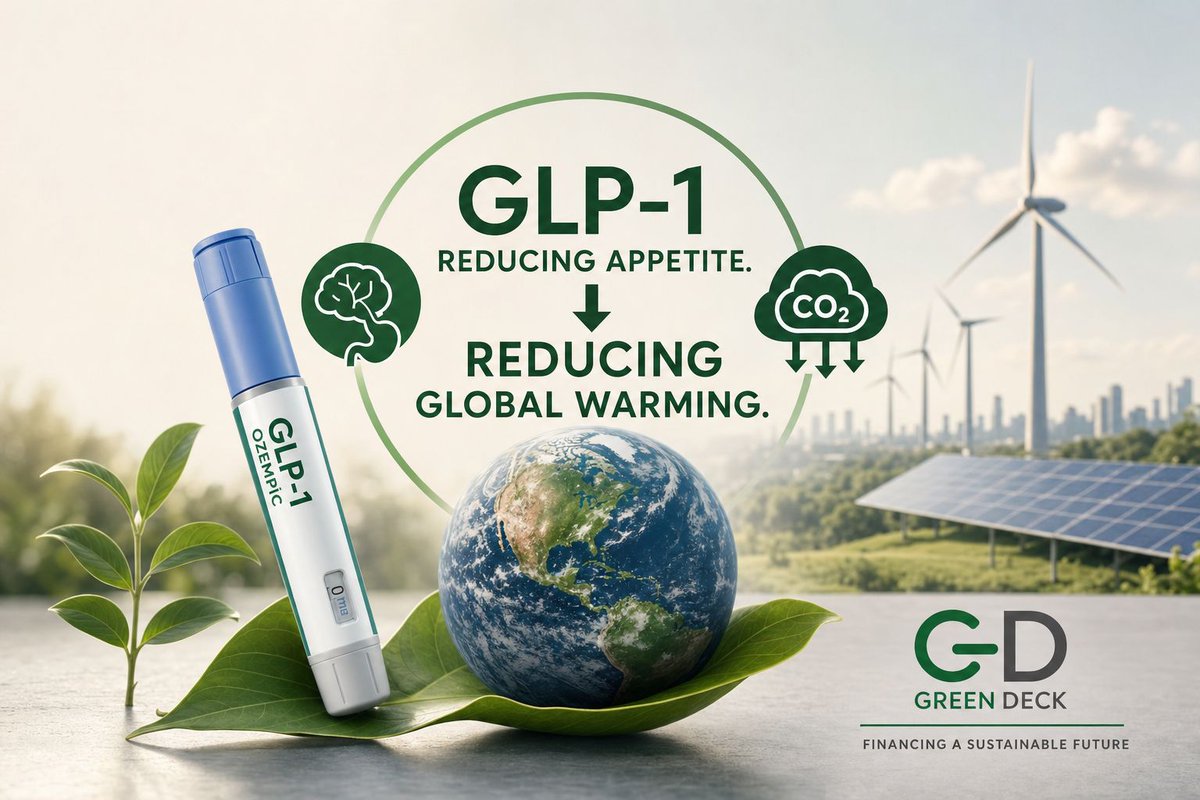
GLP-1 / Ozempic - the side effect you didn't think of...
In the US, 12% of the population (32m) use the drug, according to Cornell, rising to 20% by 2035, according to Morgan Stanley.
Why is that interesting to someone focused on renewable energy and reducing global warming?
Whilst moving the needle by 0.04% of US emissions (0.07% by 2035) might not sound like a lot, that's equivalent to the emissions of 550,000 cars (980k by 2035). Compared to the US beef industry footprint, that's only 1% of its CO2 equivalent (2% by 2035).
At Solar & Storage Live London at Excel today.
Looking forward to conversations, learning, what's happening across solar and storage.
If you're around, say hi.
#SSLLondon
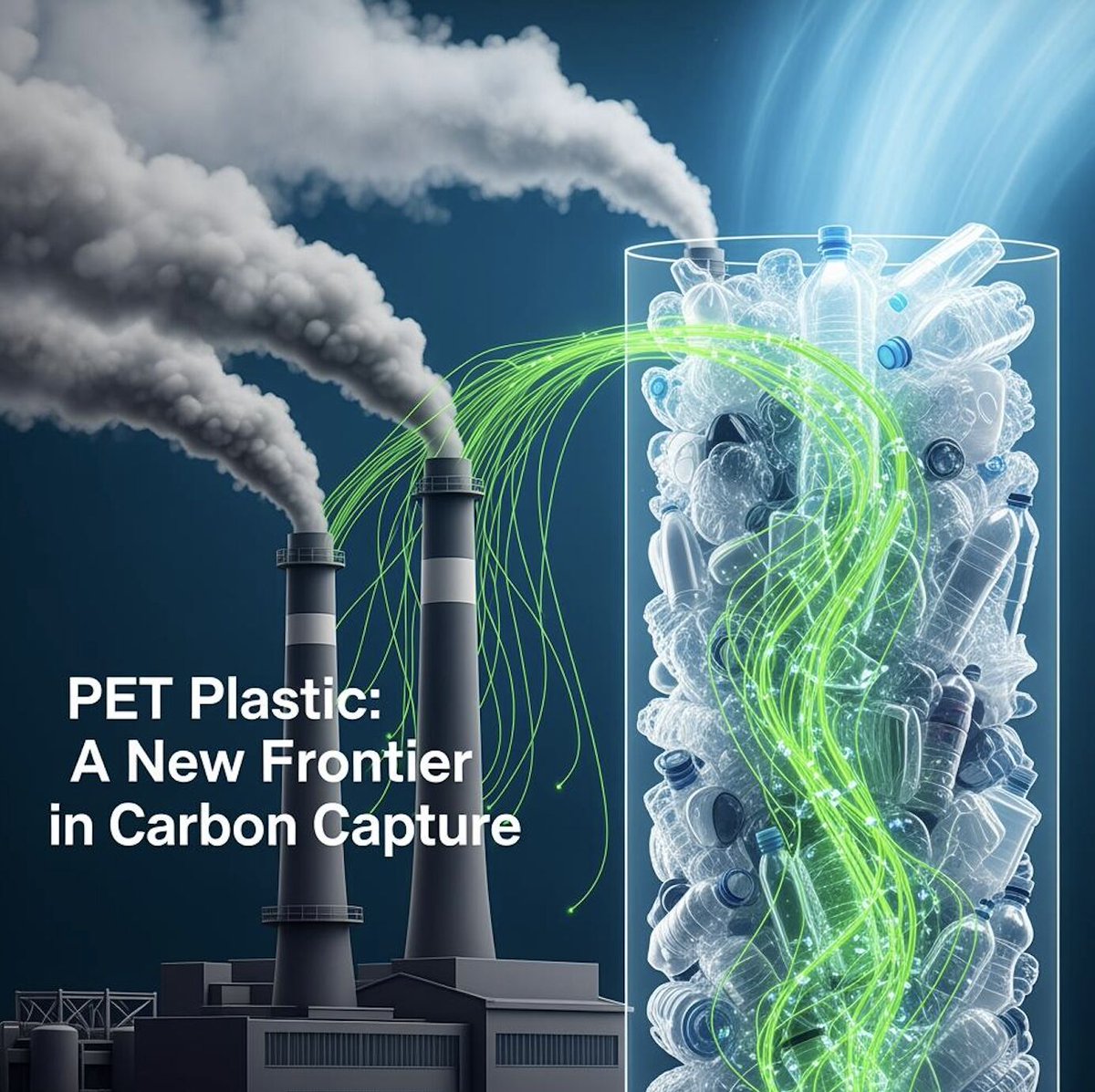
PET plastic can now be utilized for carbon capture!
Scientists at the University of Copenhagen have discovered a method to upcycle PET, the world's most widely used plastic, into a new material called BAETA.
By heating the plastic, CO2 is then released at high concentrations, which can then be sequestered, such as through pumped underground storage, or utilized in chemical processing. For instance, it could be mixed with green hydrogen to produce low-carbon aviation fuel.