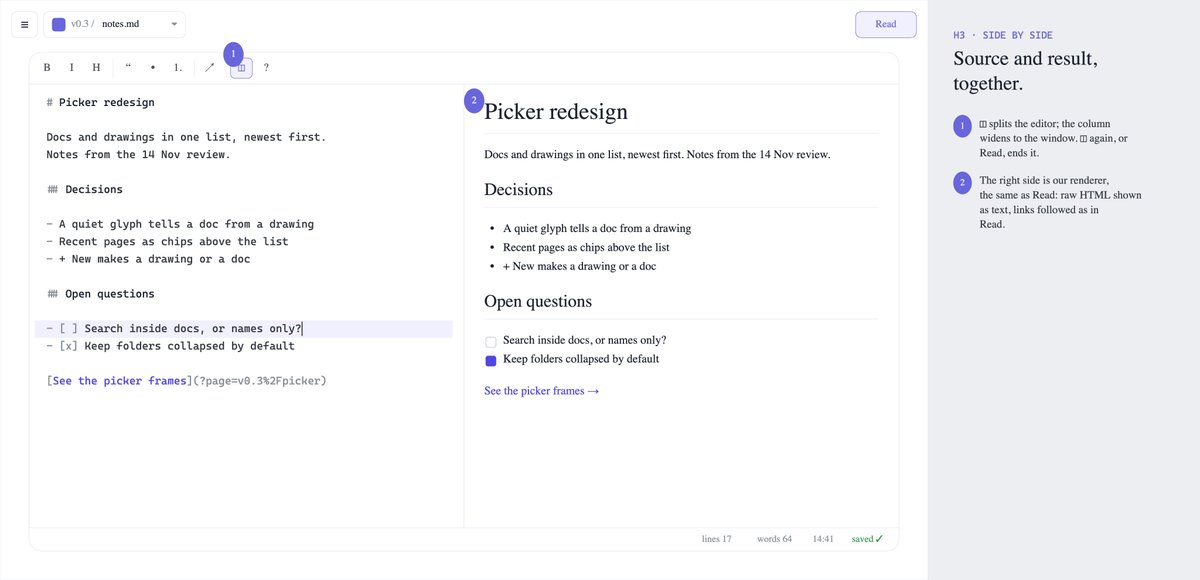
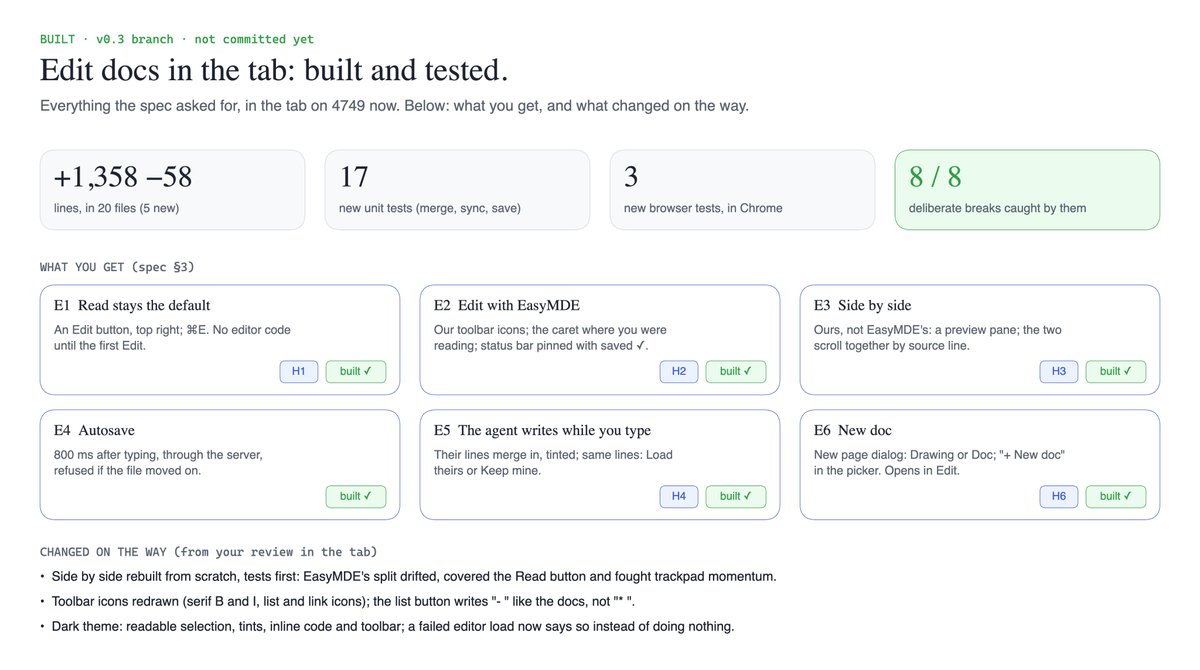
@theandrewsiah I wrapped excalidraw in a cli a few weeks ago.
Being able to collaborate visually is nice. Adding stickies and circling things is a better way to work than reading blocks of text or ascii diagrams
As they say, a picture is worth a thousand words
https://t.co/CvpUM1jOkR
@trq212 Agents love an infinite canvas!
I wrapped local excalidraw into a cli and a few skills to make it agent friendly: https://t.co/CvpUM1jgvj
Being able to interact with an agent on a whiteboard, iterate & annotate with stickies and then quickly see it high fidelity has been fun!
Software horror: litellm PyPI supply chain attack.
Simple `pip install litellm` was enough to exfiltrate SSH keys, AWS/GCP/Azure creds, Kubernetes configs, git credentials, env vars (all your API keys), shell history, crypto wallets, SSL private keys, CI/CD secrets, database passwords.
LiteLLM itself has 97 million downloads per month which is already terrible, but much worse, the contagion spreads to any project that depends on litellm. For example, if you did `pip install dspy` (which depended on litellm>=1.64.0), you'd also be pwnd. Same for any other large project that depended on litellm.
Afaict the poisoned version was up for only less than ~1 hour. The attack had a bug which led to its discovery - Callum McMahon was using an MCP plugin inside Cursor that pulled in litellm as a transitive dependency. When litellm 1.82.8 installed, their machine ran out of RAM and crashed. So if the attacker didn't vibe code this attack it could have been undetected for many days or weeks.
Supply chain attacks like this are basically the scariest thing imaginable in modern software. Every time you install any depedency you could be pulling in a poisoned package anywhere deep inside its entire depedency tree. This is especially risky with large projects that might have lots and lots of dependencies. The credentials that do get stolen in each attack can then be used to take over more accounts and compromise more packages.
Classical software engineering would have you believe that dependencies are good (we're building pyramids from bricks), but imo this has to be re-evaluated, and it's why I've been so growingly averse to them, preferring to use LLMs to "yoink" functionality when it's simple enough and possible.
LiteLLM was compromised by a supply chain attack 🙈
If you're using any of the affected versions then rotate all of your credentials and verify your accounts for malicious activity
https://t.co/k16XDLVVU8
While you are at home, Clean Coders would like to help you develop and perfect your craft. Please use code FFF7U3BX at checkout to redeem one free personal streaming license for an episode of your choice through April 30th. Share with a friend!
https://t.co/Y4bQg1E4Ll