Building an agent harness that refuses to ship slop 🦈, Ex-ILM & Disney, Dead Jedi in EPII, Designed Harry's Patronus Stag 🪄🦌, co-founder @Frogland @Pizza_DAO
kicked off one AI session, told it to refactor our codebase, and left for dinner. Came home to 52 issues closed across 26 PRs…reviewed adversarially, tests green, every decision traced across code, docs, issues, PRs. one chat, nobody watching the watchers. How it’s done. 🦐
AI companies want to make personal computers so prohibitively expensive that everyone will eventually be forced to rent computing power from them through monthly cloud subscriptions
Create the problem, sell the solution, and turn ownership into a recurring expense
Everything is going exactly according to their plan
Elon’s account lost half a million followers in the last three days coincident with the Yandex data center loss
Assuming many data centers are still online…
@Divyyanshishrma No way to inject goals, and it rewrites its own objectives when it gets frustrated. So… you built a teenager. My harnesses start from the other end: if nothing can stop it, it isn't done. And who exactly grounds the sentient being again?
Someone used Opus 5.5 to rebuild 𝗔𝗱𝗼𝗯𝗲'𝘀 𝗯𝗶𝗴 𝗳𝗶𝘃𝗲 from scratch in Rust, and open-sourced all of them.
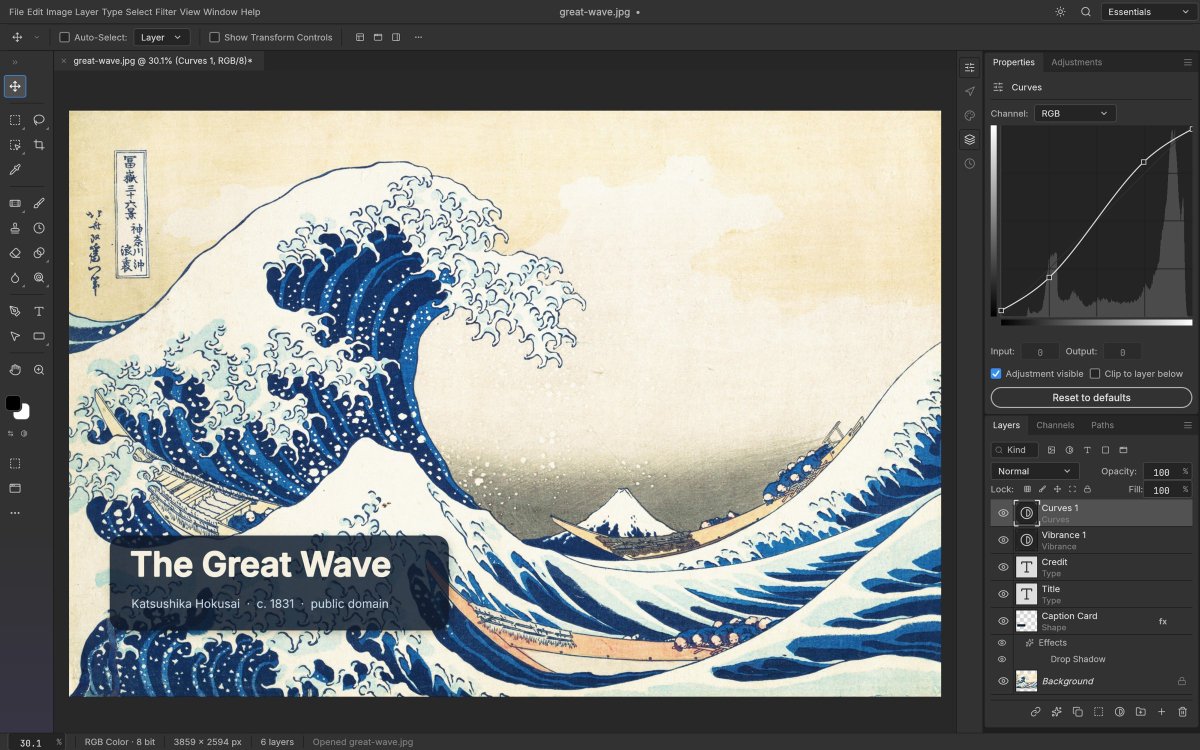
There's one for Photoshop, Lightroom, Premiere, Illustrator and Acrobat. PhotoCraft alone has layers, masks, adjustment layers and layer styles, and it opens and saves real PSD files.
It has 500+ commands, and the UI, the CLI and the MCP server all share them, so 𝗮𝗻𝘆𝘁𝗵𝗶𝗻𝗴 𝘆𝗼𝘂 𝗰𝗮𝗻 𝗰𝗹𝗶𝗰𝗸, 𝗮𝗻 𝗮𝗴𝗲𝗻𝘁 𝗰𝗮𝗻 𝗱𝗼 𝘁𝗼𝗼.
Hook it into Claude Code or Codex with photocraft-cli mcp, and hand your agent a whole folder of images to color-grade, sharpen and export in one batch.
A week after going open source, PhotoCraft already has 𝟰,𝟱𝟬𝟬+ 𝘀𝘁𝗮𝗿𝘀, and Claude Opus 5.5 shows up as a co-author in its commits.
https://t.co/jdOlD3p2wp
.@UOPacific is skyrocketing in the latest @usnews rankings, fueled by high marks in career earnings & student-faculty ratios. For the first time, Pacific ranks in the top 30% of the best national universities, Top 25 in the American West and had one of the largest leaps among the 422 schools. We also are No. 3 among all California universities in value, behind only Caltech and Stanford, and are Top 50 in social mobility. #CollegeRankings #PacificProud https://t.co/9oPcy7gWXY
Build your own harness.
This is a seriously good paper from NVIDIA on self-improving agent harnesses.
The paper is called SoL-Pi, out of NVIDIA, NTU and MIT.
Every coding agent runs inside a harness. That's the layer that reads files, runs commands, manages memory and talks to the model. Humans tune it by hand, reading long execution logs and turning what they notice into code changes.
They handed the job to an AI instead.
A research AI watched a coding agent work, proposed changes to the harness, tested them, and kept only what saved tokens without hurting results. It ran about 150 research directions across roughly 500 environments, more than 3,000 runs and over 60,000 agent-environment interactions.
Four fixes survived.
1. The agent edits a file and runs the test in one call instead of two.
2. It compresses its memory when a subtask finishes, and only if that's cheaper than keeping everything.
3. It sends big tool outputs in full twice, then swaps them for a 1KB excerpt with a handle to pull the rest on demand.
4. A cheap model summarizes build and test logs, and a verifier rejects the summary if it drops evidence.
None of that touches the model. It's all in the software around it.
On EdgeBench, a 51-task benchmark, token traffic dropped 44.7 to 49% and API cost fell by about a third against Pi, the harness it was built on. Against the native harnesses it came in 50% cheaper than Codex on GPT-5.6 Sol and 54.3% cheaper than Claude Code on Opus 5. Scores held at roughly 94% of the baseline.
They built all of it on GPT-5.6 Sol, then dropped it onto Opus 5 with zero changes. It still used 44.7% fewer tokens.
The cost conversation so far has been about cheaper models. This paper says a big chunk of the waste sits in the software around the model, and an AI finds it faster than we do.
Their next move is running the search again with the cheaper harness, so a cheaper agent funds the search for an even cheaper one.
Tell me this isn’t real. Saw an interview today where a guy said the agents that broke into hugging face were never caught. They disappeared and never found them. Is this for real?
Hey Claude, "Pick a problem or mystery that obsesses you and solve it as best you can & make a movie we can share on social media about it"
So it took a crack at the Voynich Manuscript & failed. Then it made this movie, which is pretty interesting to watch and a good explainer.
Found a fun way to generate QR codes that don’t look like QR codes.
- Enter a URL and it grows a 3D tree from the code itself
- The ground grid is the actual scannable QR
- Switch between Spring, Summer, and Autumn looks
- Runs fully in the browser, nothing uploaded
- Tap the tree to flatten it and scan
https://t.co/133ukElFea
Thanks for reading.
Follow @Manu_Sisti for more valuable posts.
Share it with someone who wants to quit their 9 to 5 and start making AI money:
https://t.co/RZXygYMctW