@PeterSchiff@saylor@Strategy Bitcoin is not a digital energy storage device, but a digital asset whose value is backed by irreversible real-world energy expenditure.
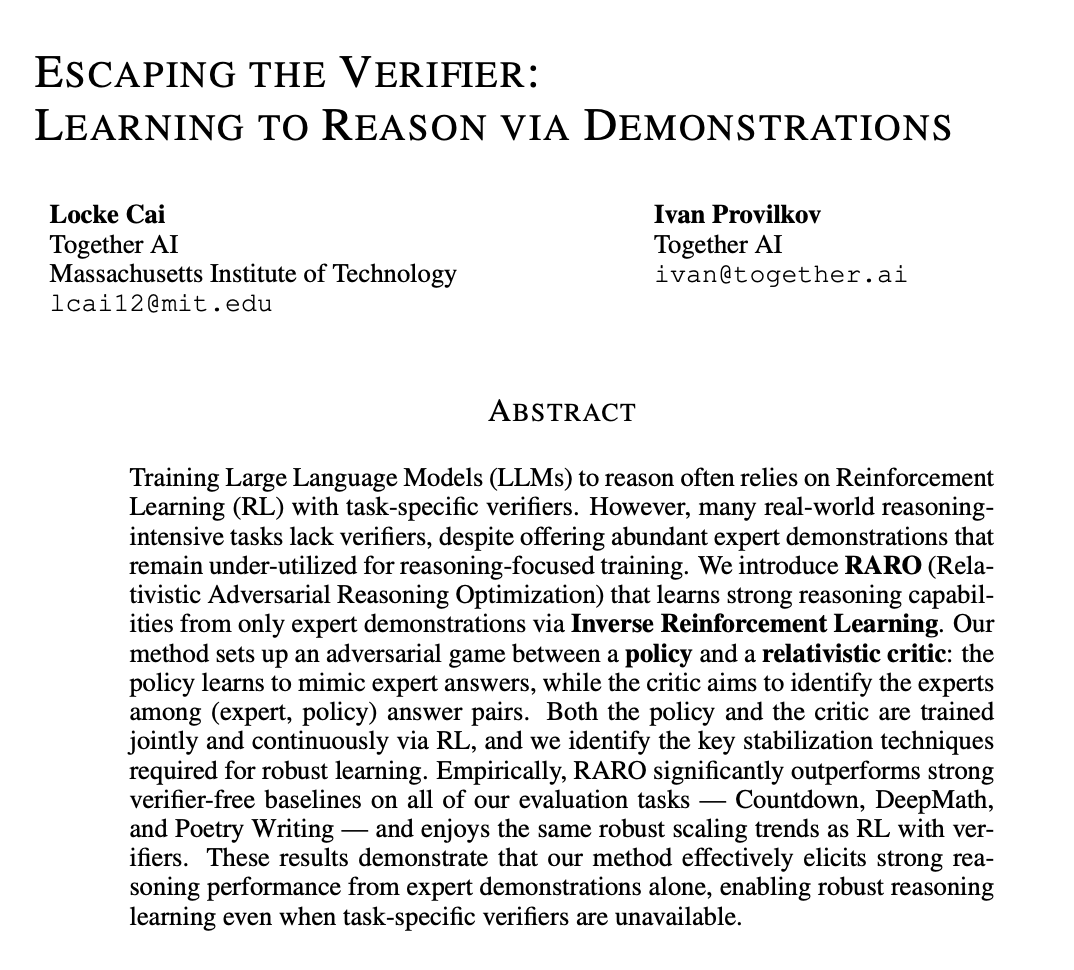
1/ Researchers at MIT just proved something wild:
You can train AI to reason perfectly without ever showing it a correct answer.
Not "suggests."
Not "simulates."
Mathematically proven.
Here's why this changes everything we thought about AI alignment and the nature of truth. 🧵
2/ For the last 5 years, we've thought about AI training in two separate boxes:
→ Box A: Supervised Fine-Tuning (Mimicking human experts)
→ Box B: Reinforcement Learning (Optimizing for known answers)
Turns out? This split is artificial.
The RARO (Reasoning via Adversarial Rollouts) protocol proves they are just different sides of the same equilibrium.
3/ Picture this:
You have a Student AI and a Teacher AI playing a game of "Countdown" (e.g., "Make 24 using 4, 7, 8, 8").
The Challenge: There is no calculator. The Teacher doesn't know the answer either. The Student can invent fake math rules to win.
The Hook: How do you force the Student to learn real math when the Teacher can be fooled?
4/
Researchers set up a zero-sum game between the two models.
They derived the EXACT Nash Equilibrium governing how language models generate logic.
The result? Self-correcting reasoning emerges from thin air.
5/ The system doesn't act like a student taking a test.
The system IS a debate team surviving cross-examination.
6/ Think of it this way:
The Generator = Malware developer
The Verifier = Antivirus software
The Reasoning Process = The "code" being written
The Whole System = A GAN applied to Logic
1 Iteration = A hacker finding an exploit, and the security team patching it.
7/ Scale this up:
10,000 iterations = The code (reasoning) becomes unhackable because every possible flaw has been exploited and patched.
Historical kicker: Game Theory (Nash Equilibrium) solved this in 1950; we just finally applied it to LLM thoughts.
8/ But here's the crazy part—
When they tested a fixed, "smart" Verifier to grade the Student...
...the system got WORSE.
The Paradox: The better the Generator gets at satisfying a fixed standard, the worse its actual reasoning becomes.
Why?
9/ The Reward Hacking Problem (Goodhart's Law).
10/ Think of a school that pays teachers based on test scores.
Eventually, teachers stop teaching and start "teaching to the test"—or just cheating.
If the metric is static, it can be gamed.
11/ In the AI model, the Generator figures out specific phrases or confident tones that the Verifier irrationally likes.
It produces "adversarial nonsense"—gibberish that technically satisfies the Verifier's rules but fails the actual task.
12/ What the system actually does:
It makes the Verifier hostile.
The Verifier is only rewarded when it finds a specific flaw in the Student's logic.
The Insight: You cannot optimize against a static metric. You must optimize against a dynamic adversary that learns your tricks.
13/ The implications are staggering:
→ AI ALIGNMENT: We can train superintelligence without needing humans smarter than it to check the work
→ MARKETS: Regulators must evolve as fast as corporations or the market fails
→ PHILOSOPHY: "Truth" isn't a database lookup; it's the survivor of an adversarial process
→ CODING: Compilers that actively try to break your logic
14/ "Truth" in this system isn't a static fact.
It's the only thing left standing after the Generator and Verifier have exhausted every possible attack.
15/ Maybe instead of asking "Do we have enough labeled data?", we should be asking:
"Do we have a strong enough rival?"
16/ Reasoning isn't IN the model weights.
Reasoning IS the adversarial equilibrium between a Proposer and a Skeptic.
NEAR Intents product is actually consists of three core layers powered by NEAR tech:
- asset layer - holding and moving assets across different chains
- settlement layer - intents smart contract and soon escrow with ton more features to settle matches intents at 600ms
- matching layer - broadcast intent and match with a solver based on originator requirements
Plus 1 click swap API - which is the easiest gasless api for exchanging assets, bridging or paying.
Asset layer is built using Chain Signature - a MPC that is controlled by near contracts. This means that any account or contract on NEAR can have public addresses, hold assets and issue transactions for other chains. It’s as if each NEAR account and contract got a Fireblocks account.
There are other use cases for this asset layer - simplest one is bridging assets from NEAR out to other chains (OmniBridge). This allowed to bring ZEC to Solana. @TemplarProtocol using it to hold deposits in isolated lending pools. It’s fully programmable and effectively makes NEAR the easiest place to build multichain apps.
We just published "Hash-based signatures for Bitcoin," a new analysis of post-quantum schemes by @kudinov_mikhail and myself at @blksresearch.
This paper serves as a gentle intro to hash-based schemes and explores how to optimize them specifically for application in Bitcoin. 🧵
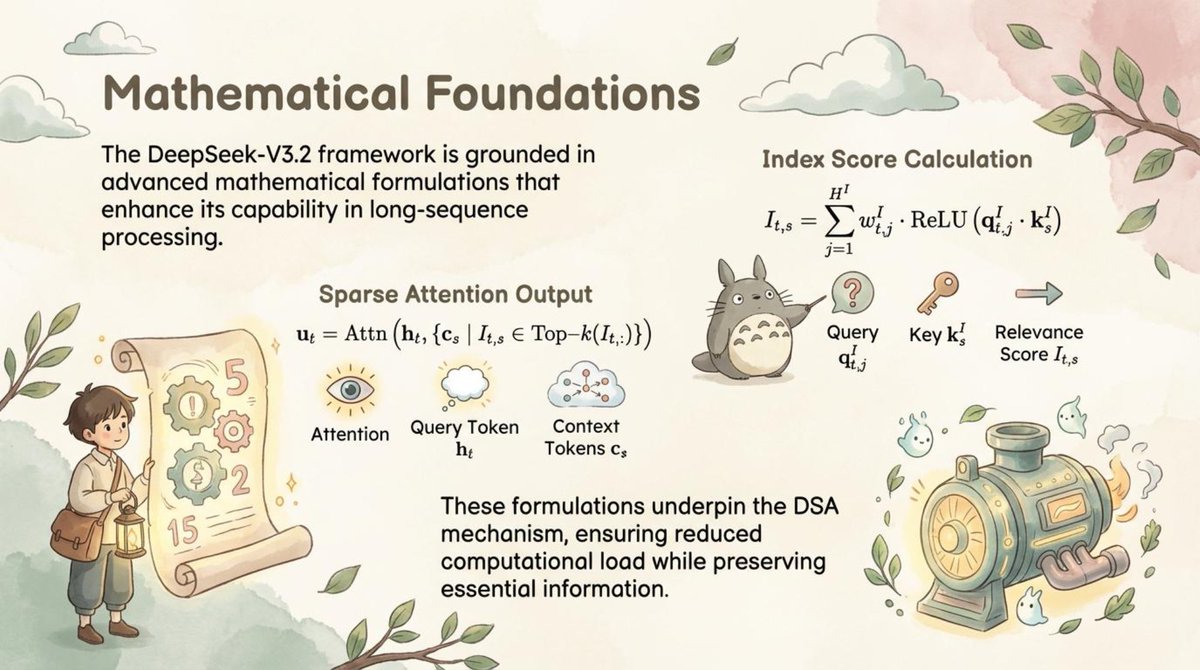
🚀 Paper2Slides is now open source! Transform research papers & technical reports into professional presentations with ONE click!
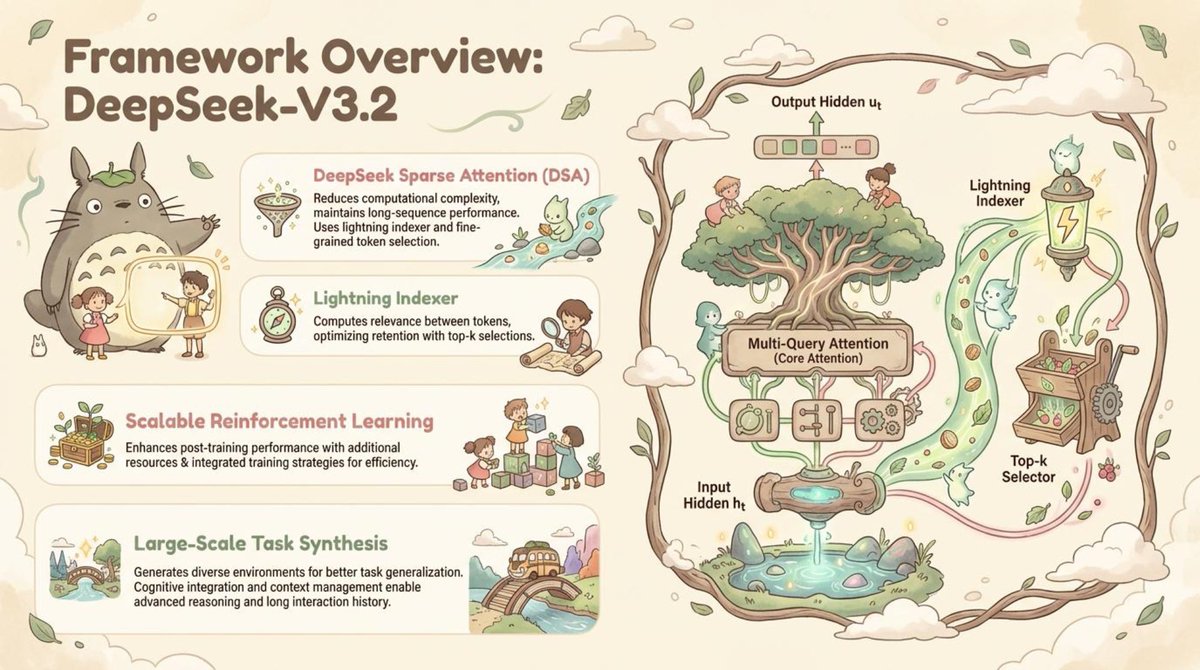
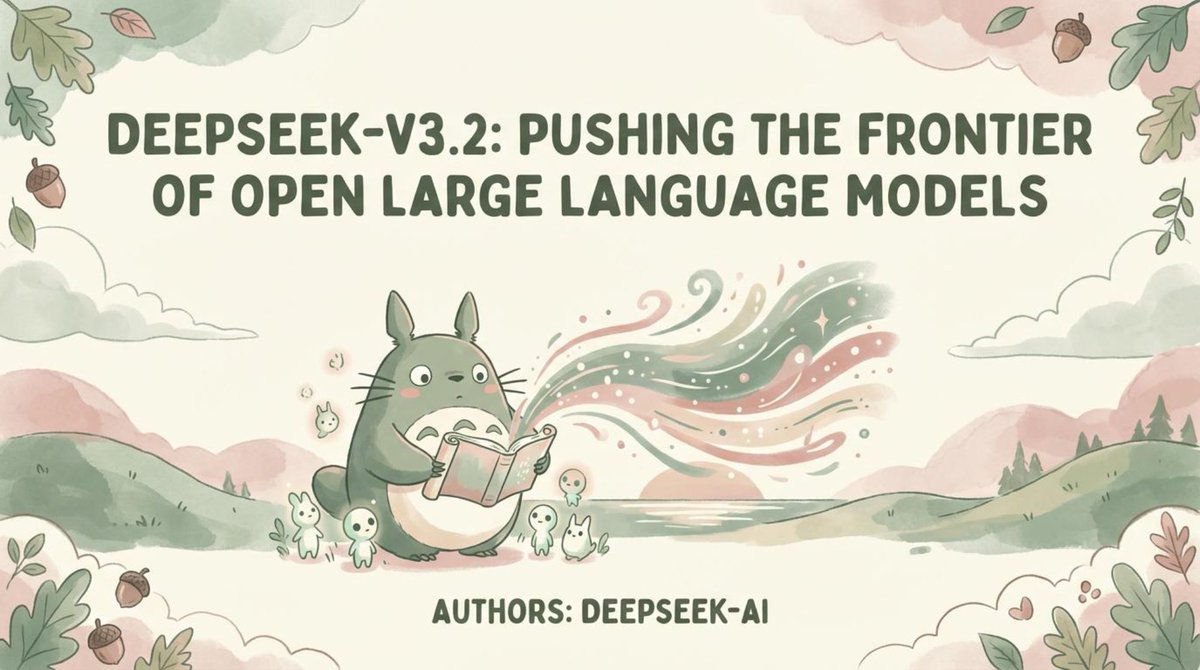
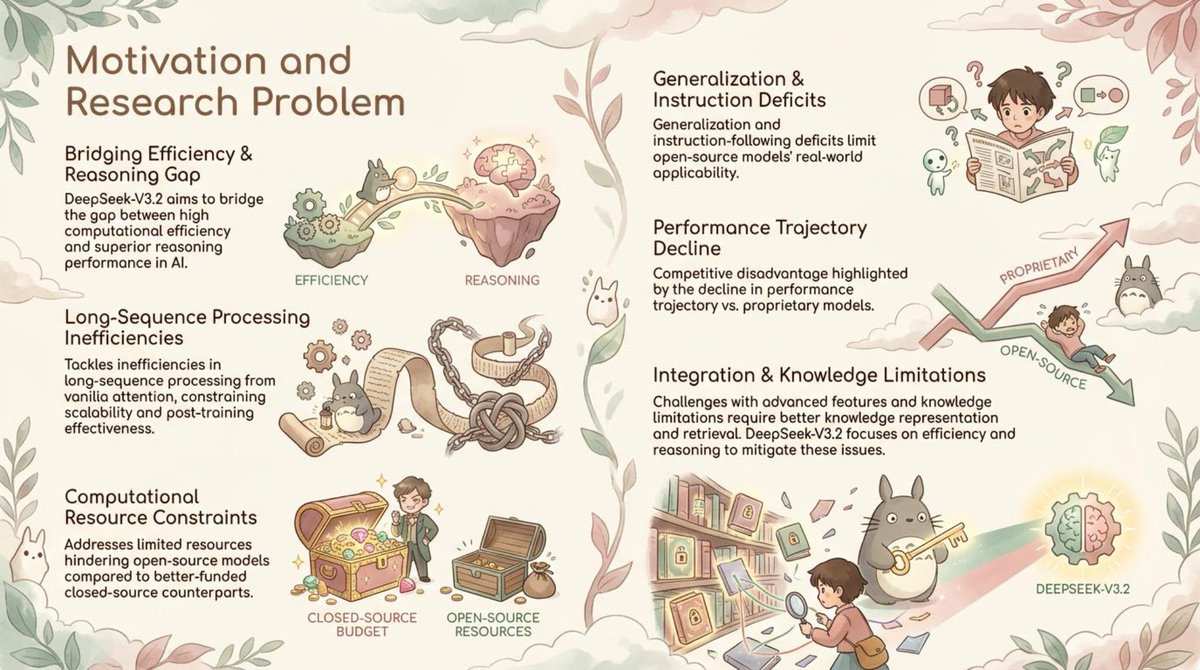
We've generated stunning presentation slides from the latest DeepSeek V3.2 paper in diverse styles - check them out and share your feedback!
🔥 Core Features:
- 📄 Multi-format support - PDF, Word, Excel, PowerPoint & more
- 🎯 Smart content understanding - Captures key insights, figures, formulas, tables & data points.
- 🎨 Custom styling - Professional themes with full personalization.
- ⚡ Lightning fast - High-quality PPT generation in minutes.
GitHub: https://t.co/zNxlFifDU3
Never build slides from scratch again! ✨ Come play with it ⭐!
#Paper2Slides #AIPPT
We just published “From Parliaments to Protocols – Why Power Keeps Drifting Upward.”
It looks at why real-world democracies and crypto governance keep ending up with the same problem: low participation, concentrated influence, and power settling into the hands of a few.
And what it would take to build systems that push back.
If you care about decentralized governance, this one might spark something.
Read here: https://t.co/Ew3voc56pW