Your crypto portfolio can now text you back.
I made a quick tutorial on connecting Kryptos to an AI agent (Claude) using MCP.
Once it's hooked up you can just ask it stuff directly, things like "what's my portfolio looking like today," DeFi/NFT positions, P&L. I also set up a daily digest that shows up every morning with holdings, market news, yield opportunities, and rebalancing flags (it caught that 97% of my bag is sitting in one wrapped BTC token lol).
No dashboard hopping. full walkthrough below 👇
Try it: https://t.co/qzG9wiltp7
MCP docs: https://t.co/Uuso7VC0P1
@KryptosConnect
Old way: paste a wallet address, get a wall of numbers.
New way: I asked Claude to go through my portfolio and help me survive this market - live, across every chain.
It caught scam airdrops, wrapped-vs-native BTC, and my missing dry powder. 🎥👇
This is Kryptos Connect. 5,000+ integrations, one layer - no parsers, no downtime, no price issues.
👇 Comment the most painful integration you've ever built — we're killing them one by one. Get early access.
10 papers behind the AI world we live in today.
Most people think it started with ChatGPT.
Its foundations were laid more than 70 years earlier.
🔹 1950 - Computing Machinery and Intelligence
Alan Turing replaced the vague question "Can machines think?" with something testable => the Imitation Game.
Philosophy, made testable.
🔹 1958 - The Perceptron
Frank Rosenblatt formalised the perceptron => a trainable model that could learn from examples.
It became one of the most important ancestors of modern trainable neural networks.
It sounded like science fiction. It was mathematics.
🔹 1986 - Learning Representations by Back-Propagating Errors
David Rumelhart, Geoffrey Hinton and Ronald Williams showed clearly and influentially how multilayer networks could learn by propagating error gradients backward through their layers.
Backpropagation.
The paper was four pages. Its influence was enormous.
🔹 1997 - Long Short-Term Memory
Sepp Hochreiter and Jürgen Schmidhuber introduced LSTMs, designed to preserve error flow over long intervals and learn long-range dependencies.
They later became central to speech recognition, translation and language modelling.
🔹 2012 - AlexNet
Two NVIDIA GTX 580 GPUs.
One decisive ImageNet result.
AlexNet won by a margin that forced the field to recalibrate.
ReLUs. Dropout. Data augmentation. GPU training.
Several ideas that became standard in modern deep learning, brought together in one result.
🔹 2014 - Generative Adversarial Nets
A generator learns to produce synthetic data.
A discriminator learns to distinguish generated data from real data.
Both improve through competition.
GANs became one of the defining approaches to generative modelling, before diffusion models took a fundamentally different route.
🔹 2015/2016 - Deep Residual Learning
ResNets successfully trained networks 152 layers deep.
The insight => residual blocks learn what needs to change relative to their inputs, rather than learning complete transformations from scratch.
Shortcut connections made substantially deeper networks easier to optimise.
🔹 2017 - Attention Is All You Need
Quiet title. Loud consequences.
The Transformer dispensed with recurrence and convolution, building its architecture around attention.
It was substantially more parallelisable than recurrent models and required significantly less training time in the paper’s translation experiments.
It became the architectural foundation of BERT, GPT, T5 and most large language models used today.
🔹 2018/2019 - BERT
BERT demonstrated deep bidirectional Transformer pretraining by conditioning representations on both left and right context.
The result was a major improvement across question answering, natural-language inference and other NLP benchmarks.
🔹 2020 - Language Models Are Few-Shot Learners
Scale a language model large enough, and it learns new tasks from just a few examples in the prompt, no retraining required.
The links to all ten papers are in the comments.
Avg job description for AI/ML Engineers in 2026
- Python programming, SQL, NoSQL
- ML, Sklearn, computer vision, NLP, Transformers, PyTorch
- FastAPI, Docker, Kubernetes, CI/CD, Cloud deployment
- FAST PACED capabilities
- Gen AI libraries and LLMs
- Problem solving, ETL, Data Engineering
Simply means you've to level up in your skills so fast and learn complete AI/ML lifecycle with deployment and not just a toy project. There's no alternate to this.
And yes you need to learn all these things at once even while they will ask DSA or distribution systems in an interview.
Which means,
Prepare
DSA (Medium) + ML algorithms + Deep Learning + Gen AI + LLMs + MLOps + Cloud + ML system design + Distributed systems
There's a no shortcut and that's the truth!!!
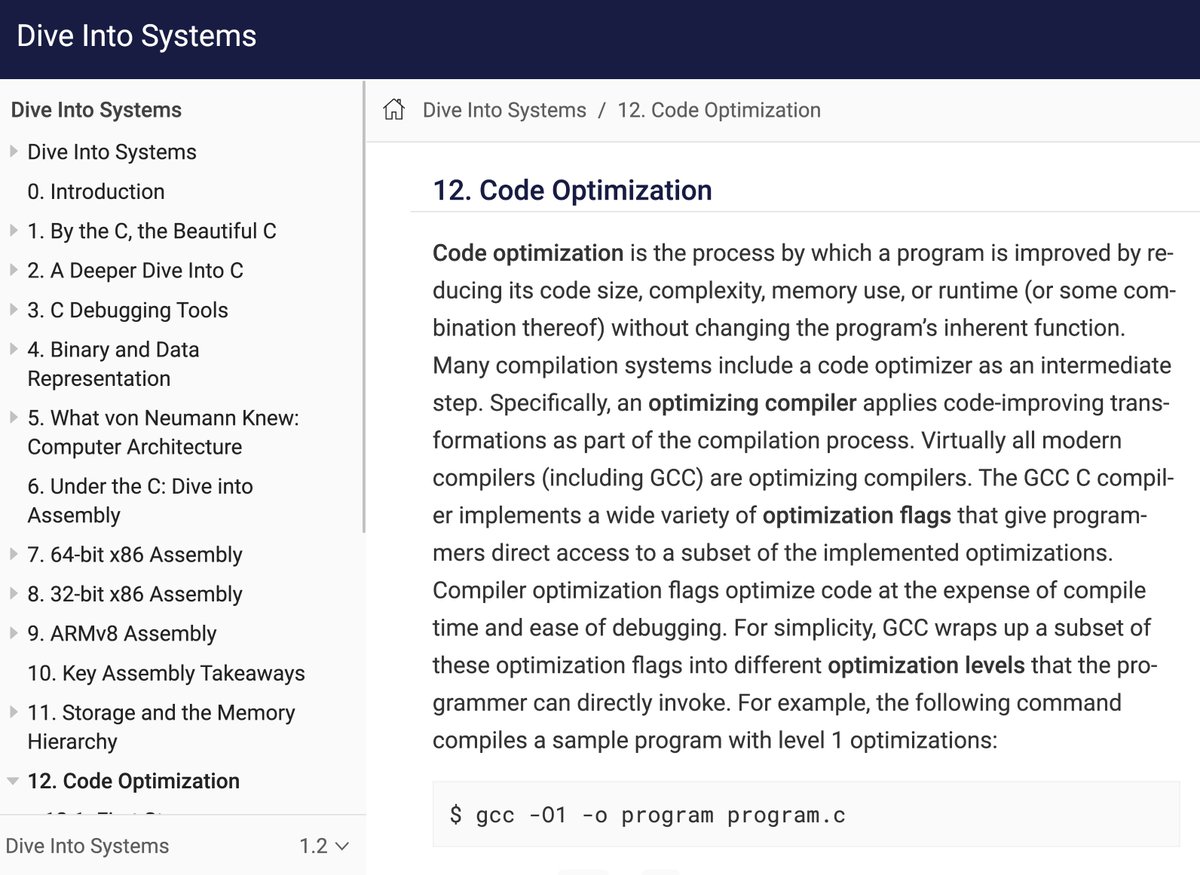
Dive Into Systems - free online book diving into systems engineering. The chapter on code optimization talks about various compiler flags and the respective work done.
https://t.co/0nuYiNiC1O
This is the best site on the internet to learn harness engineering.
Free. Completely.
Most AI engineers have never heard the term.
https://t.co/bwDbTTYsjM
Bookmark this site.
Then read this setup ↓
A backend engineer asked me why I recommend Fundamentals of Data Engineering for backend folks.
Because most backend engineers accidentally become data engineers the moment their API hits production.
Backend = owns writes.
Data Engineering = owns reads.
But both eat the same consequences when the data sucks.
If you learn Data Engineering fundamentals, you level up faster because you stop treating data as “someone else’s problem.”
You get better at:
- Designing schemas that won’t break downstream
- Shipping clean, traceable events (no dual-write disasters)
- Thinking in batch vs. streaming trade-offs
- Debugging data issues faster than “blame analytics”
- Building APIs that scale with actual usage patterns
Backend without data fundamentals = “the feature works”
Backend with data fundamentals = “the business trusts what you build”
The short answer:
Most backend engineers only understand half the system.
This book helps you finally see the whole thing.
this is the guide I wish someone had handed me on day one of CS.
it builds up, from a single transistor, why your computer spends most of its life just waiting for memory instead of doing math. barely a calculator at all.
understanding this one idea rewired how I read every program I write, and I tried hard to make it click for you too.
if you've never really understood the memory wall, you're missing one of the biggest "aha" moments in computer science.
it took me 20+ days of deep research and a lot of work to make it as simple as possible, and honestly there's still a long way to go. every piece of feedback would mean the world to me 🙏
here's mine article: https://t.co/vKr1JCRRe7
I am reading this one right now. Had to ask Chatgpt to create a deep research primer on group theory to be able to follow through.
Honestly dunno if this learning method would be beneficial- I plan on reading this in break-time to fill the gap between my “actual work targets”…
unbelievably good series on how traditional RL evolved into everything we see today!!!
my rule of thumb for good educational content is combining technical details with the context/history surrounding them; it gives a much richer understanding of why things are the way they are
pov: you're Bjarne Stroustrup - the man who created C++
> born in Denmark in 1950
> dropped out after 10th grade
> decided computers were the future when nobody else did
> flew to Cambridge for a PhD, nearly broke
> got kicked off the university mainframe for using too much compute
> rewrote the entire research in BCPL - the most brutal language alive - just to survive
> it ran 50x faster
> flew to Bell Labs on his own dime with no job offer
> Dennis Ritchie said he liked how Bjarne thought
> one week later - a phone call from the director
> spent the next 20 years building a language that didn't exist yet
> lunch with Dennis Ritchie every week for 16 years
> someone unplugged the live trading system while vacuuming the office
> his language now runs every OS, browser, AI agent framework, and trading system on the planet
and at 75 he sat down and explained exactly what separates senior engineers from everyone else
save this before your next job interview