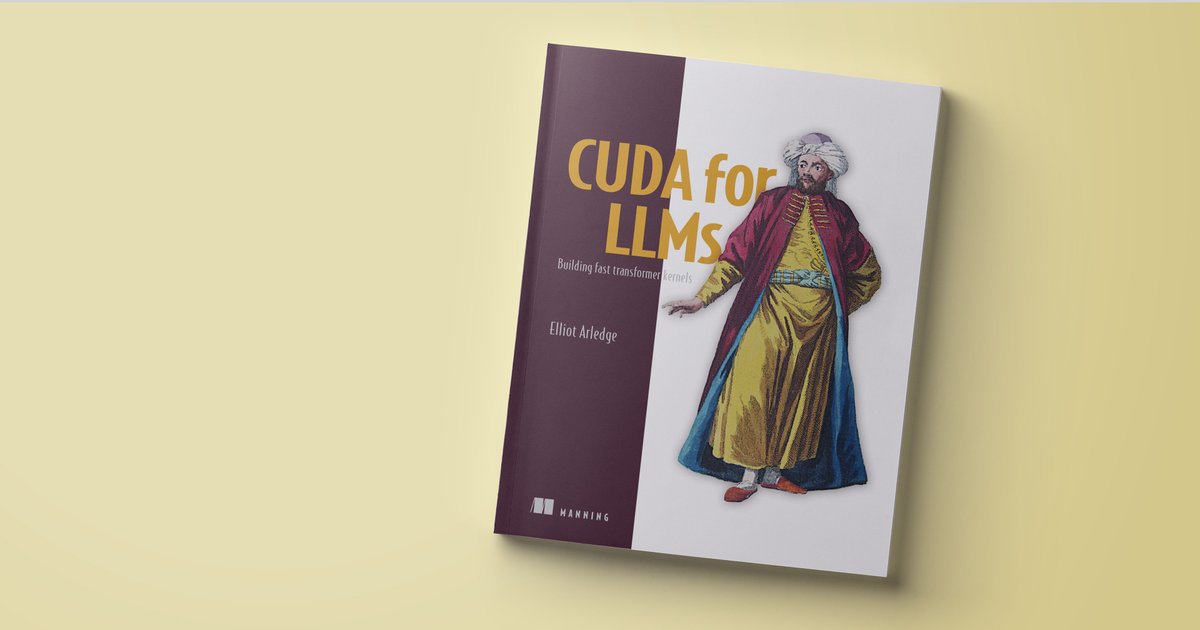
My book "CUDA for LLMs" is now in print!
If you followed along while it was in early access as "CUDA for Deep Learning", this is the finished version, now as a physical book too.
Manning gave me a code for 50% off every format through Dec 4: PBArledge
https://t.co/L3riD6Pg1F
Timelapse #187 (8 hrs)
- submitted Phonon 1.5 to the iOS App Store, ordered a Pixel 10a for Android testing, and ran Entity-GRPO RL on Qwen3-ASR-1.7B (99.5% entity recall, 6.11% hard-speech WER vs 8.38% on Parakeet)
- probed Inkling-2-Mini interpretability and inference
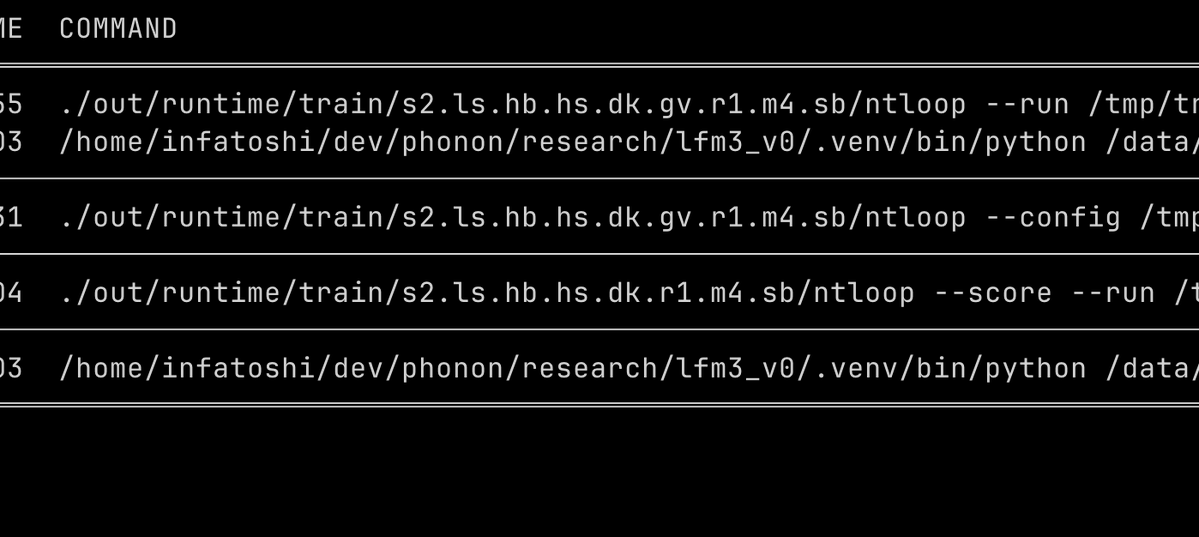
- expanded my local computer-use suite to 9 synthetic desktop/web apps and babysat training runs
- made a superfast netherite stage to act as a teacher to train the policy running the full fidelity game
- Wired GLM 5.4 into Codex inside my custom IDE and kept GLM 5.4 KernelBench runs going
- Daily work at infinity
this is why I'm using Daytona MacBook sandboxes to post-train Inkling Small and force it to be basically a perfect computer use model running on RTX Pro 6000 Black while at home to do rapid fire computer use. even Codex takes far too long for the use cases I need. it's basically going to be a Jarvis soon. we'll keep you updated. FULL DESKTOP COMPUTER USEEEEE
GLM 5.4 is very terse. It doesn't need to ramble, scare itself, or reflect during thinking. Almost ALL tokens are reasoning about time ("before", "was", "just did"), quantities, and associations between objects in its given task. Not sure how correlated if at all this is to the looped nature of it, but it's certainly nice for saving wall clock on hard SWE tasks.
I anticipate this will be much needed for computer use at all, since the user will see when it screws up. There is no room for error, must be perfect and very efficient in its *thinking*.