Look what I just unlocked 👀🔥! Mythical card for 20000 XP.
A nice surprise! Want one too? Jump in at https://t.co/grO8cBXw6Y and claim your rewards!
Each card holds surprise XP. The rarer the card, the bigger your boost!
Look what I just unlocked 👀🔥! Mythical card for 20000 XP.
A nice surprise! Want one too? Jump in at https://t.co/grO8cBXw6Y and claim your rewards!
Each card holds surprise XP. The rarer the card, the bigger your boost!
Look what I just unlocked 👀🔥! Mythical card for 20000 XP.
A nice surprise! Want one too? Jump in at https://t.co/grO8cBXw6Y and claim your rewards!
Each card holds surprise XP. The rarer the card, the bigger your boost!
🩺 Community Question:
Elon Musk recently said that, based on current human constraints, AI-powered robotics could become better surgeons than the best human surgeons within three years at scale.
Do you agree with him?
Viewpoint A:
Agree. With few great surgeons, slow and costly human training, and unavoidable human error, AI and robotics could learn faster and scale surgical skill beyond human limits.
Viewpoint B:
Disagree. Even acknowledging the human constraints Elon Musk points out, surgery is not only about speed, scale, or error reduction. It also depends on judgment, responsibility, and trust in high-stakes situations, which remain difficult to validate and deploy safely at scale.
Is this a near-term breakthrough or a vision that overestimates how quickly surgical autonomy can be safely scaled?
👇 Drop A, B, or share your perspective.
🩺 Community Question:
Elon Musk recently said that, based on current human constraints, AI-powered robotics could become better surgeons than the best human surgeons within three years at scale.
Do you agree with him?
Viewpoint A:
Agree. With few great surgeons, slow and costly human training, and unavoidable human error, AI and robotics could learn faster and scale surgical skill beyond human limits.
Viewpoint B:
Disagree. Even acknowledging the human constraints Elon Musk points out, surgery is not only about speed, scale, or error reduction. It also depends on judgment, responsibility, and trust in high-stakes situations, which remain difficult to validate and deploy safely at scale.
Is this a near-term breakthrough or a vision that overestimates how quickly surgical autonomy can be safely scaled?
👇 Drop A, B, or share your perspective.
💊 Community Question:
Can AI help discover and develop new medicines much faster and cheaper than traditional methods?
Viewpoint A:
Yes. AI can rapidly test millions of drug ideas, cut early research time and costs dramatically, and in some cases bring medicines to patients years faster.
Viewpoint B:
Not fully. AI helps at the start, but human trials are still slow, expensive, and unpredictable, keeping overall drug development costly and time-consuming.
If AI is expected to change how medicines are made, is the impact already real or mostly promise?
👇 Drop A, B, or share your perspective.
💊 Community Question:
Can AI help discover and develop new medicines much faster and cheaper than traditional methods?
Viewpoint A:
Yes. AI can rapidly test millions of drug ideas, cut early research time and costs dramatically, and in some cases bring medicines to patients years faster.
Viewpoint B:
Not fully. AI helps at the start, but human trials are still slow, expensive, and unpredictable, keeping overall drug development costly and time-consuming.
If AI is expected to change how medicines are made, is the impact already real or mostly promise?
👇 Drop A, B, or share your perspective.
🩺 Community Question
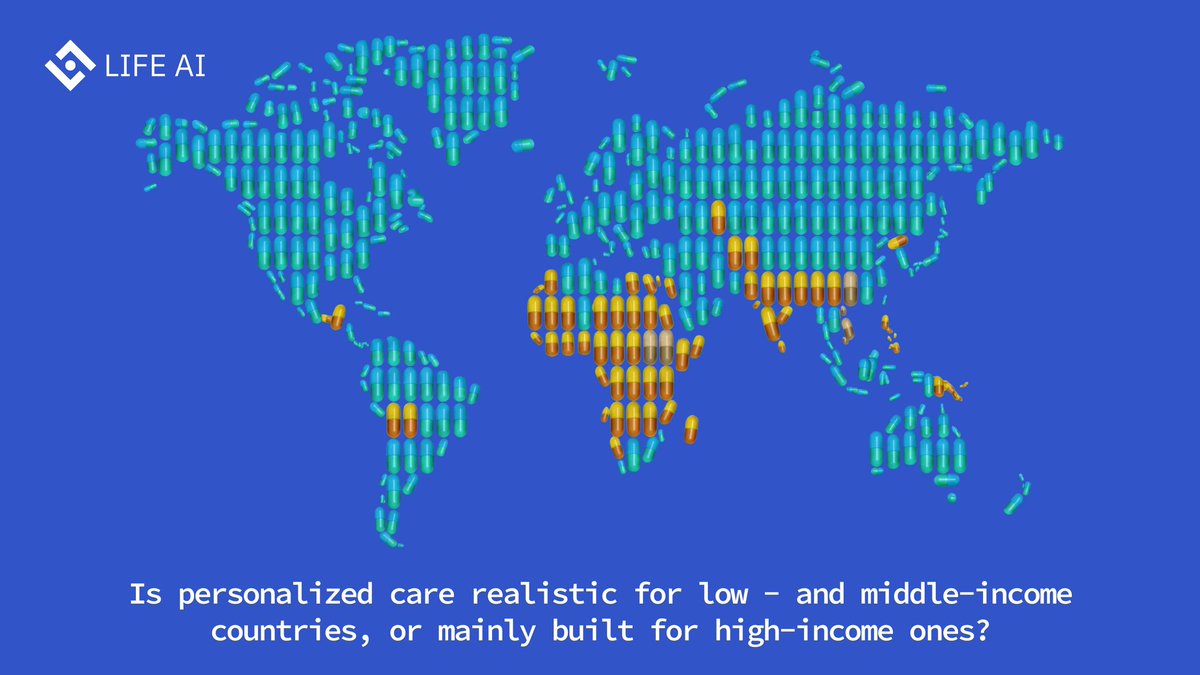
Is personalized care realistic for low- and middle-income countries (LMICs), or is it still a model built mainly for high-income countries (HICs)?
Viewpoint A: Gradually achievable in LMICs
Personalized care can scale over time. Costs of genetic and digital tools are falling, AI-driven insights are becoming more accessible, and hybrid models already work in areas like oncology and chronic care. With the right partnerships and focus, personalization doesn’t have to remain a luxury.
Viewpoint B: Not practical for most LMICs
For many LMICs, personalized care remains unrealistic. High costs, limited infrastructure, workforce gaps, and unequal access make large-scale adoption difficult. Healthcare systems should prioritize proven, low-cost interventions like vaccination, screening, and basic prevention.
Or is the future of healthcare built by combining both approaches?
👇 Drop A, B, or share your perspective.
Tag someone who should weigh in on this.
🩺 Community Question
Is personalized care realistic for low- and middle-income countries (LMICs), or is it still a model built mainly for high-income countries (HICs)?
Viewpoint A: Gradually achievable in LMICs
Personalized care can scale over time. Costs of genetic and digital tools are falling, AI-driven insights are becoming more accessible, and hybrid models already work in areas like oncology and chronic care. With the right partnerships and focus, personalization doesn’t have to remain a luxury.
Viewpoint B: Not practical for most LMICs
For many LMICs, personalized care remains unrealistic. High costs, limited infrastructure, workforce gaps, and unequal access make large-scale adoption difficult. Healthcare systems should prioritize proven, low-cost interventions like vaccination, screening, and basic prevention.
Or is the future of healthcare built by combining both approaches?
👇 Drop A, B, or share your perspective.
Tag someone who should weigh in on this.
🩺Community Question:
Should healthcare prioritize personalized care for individuals, or one-size-fits-all care for everyone?
Viewpoint A: One-size-fits-all as the default
Standardized care is more practical, affordable, and equitable for large populations and resource-limited settings. It delivers consistent, proven outcomes at scale, reduces disparities, and avoids the high cost and access barriers of full personalization.
Viewpoint B: Shift to personalized care
Personalized care is more precise, effective, and preventive. Leveraging genetics, AI, and real-world insights enables better outcomes, fewer side effects, and long-term cost savings as personalization becomes increasingly accessible.
Have you benefited from standardized care or struggled because it wasn’t personalized enough?
👇 Share A, B, or a short personal insight.
Tag someone who should be part of this conversation.
🩺Community Question:
Should healthcare prioritize personalized care for individuals, or one-size-fits-all care for everyone?
Viewpoint A: One-size-fits-all as the default
Standardized care is more practical, affordable, and equitable for large populations and resource-limited settings. It delivers consistent, proven outcomes at scale, reduces disparities, and avoids the high cost and access barriers of full personalization.
Viewpoint B: Shift to personalized care
Personalized care is more precise, effective, and preventive. Leveraging genetics, AI, and real-world insights enables better outcomes, fewer side effects, and long-term cost savings as personalization becomes increasingly accessible.
Have you benefited from standardized care or struggled because it wasn’t personalized enough?
👇 Share A, B, or a short personal insight.
Tag someone who should be part of this conversation.
Look what I just unlocked 👀🔥! Mythical card for 20000 XP.
A nice surprise! Want one too? Jump in at https://t.co/grO8cBXw6Y and claim your rewards!
Each card holds surprise XP. The rarer the card, the bigger your boost!
⭐️ New FatBot update is here ⭐️
Over the past few weeks, we’ve been working hard on a bunch of new features that we’re excited to introduce to you! It’s a package that will significantly increase your earning potential — whether you’re a trader or a KOL.
🩺 Community question:
Where will the next major breakthrough in healthcare come from?
Viewpoint A:
From established systems like the US and UK where world-class institutions, funding, and decades of research infrastructure continue to drive innovation.
Viewpoint B:
From outside traditional power centers where emerging regions, new models, and fewer legacy constraints enable faster experimentation and unexpected breakthroughs.
Which side do you believe in and why?
👇 Drop A, B, or share your perspective.
Tag someone who should weigh in on this.