We also need to start considering emerging markets for offshore wind, which often lack the data and capacity in assessment and regulation that we take for granted #BOUasm24
Because we keep talking about collision & displacement, we ignore important emerging issues, such as the potential for wider ecosystem impacts and the need for spatial planning at a flyway scale #BOUasm24
But we still keep talking about collision & displacement. Partly because the assessment methods haven't kept up with technology, and partly because we're still reliant on monitoring data from earlier projects, which isn't as robust as the data we are able to collect now #BOUasm24
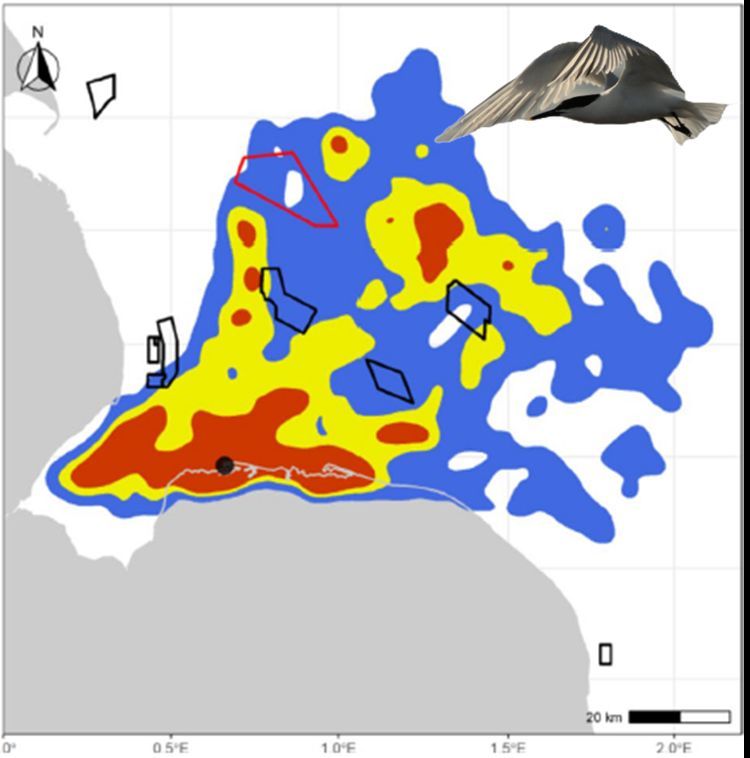
Data from tracking studies allows us to investigate movements of birds throughout their annual cycles, and link impacts from interactions with multiple wind farms back to populations, giving us a better understanding of cumulative impacts #BOUasm24
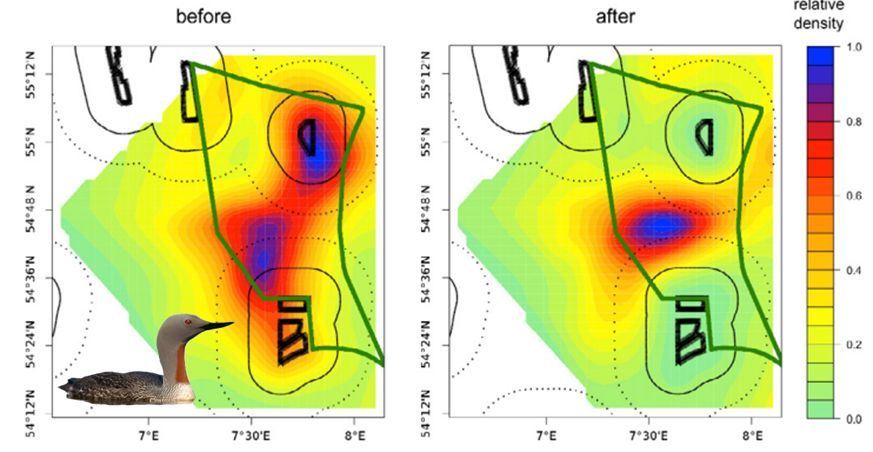
Outside wind farms, we're able to investigate how birds respond to, and interact with wind farms at both a population, and an individual level #BOUasm24
We've developed new, and more effective ways to assess the numbers of birds at collision risk height, and to understand how this risk varies spatially, temporally and in response to environmental conditions like weather #BOUasm24
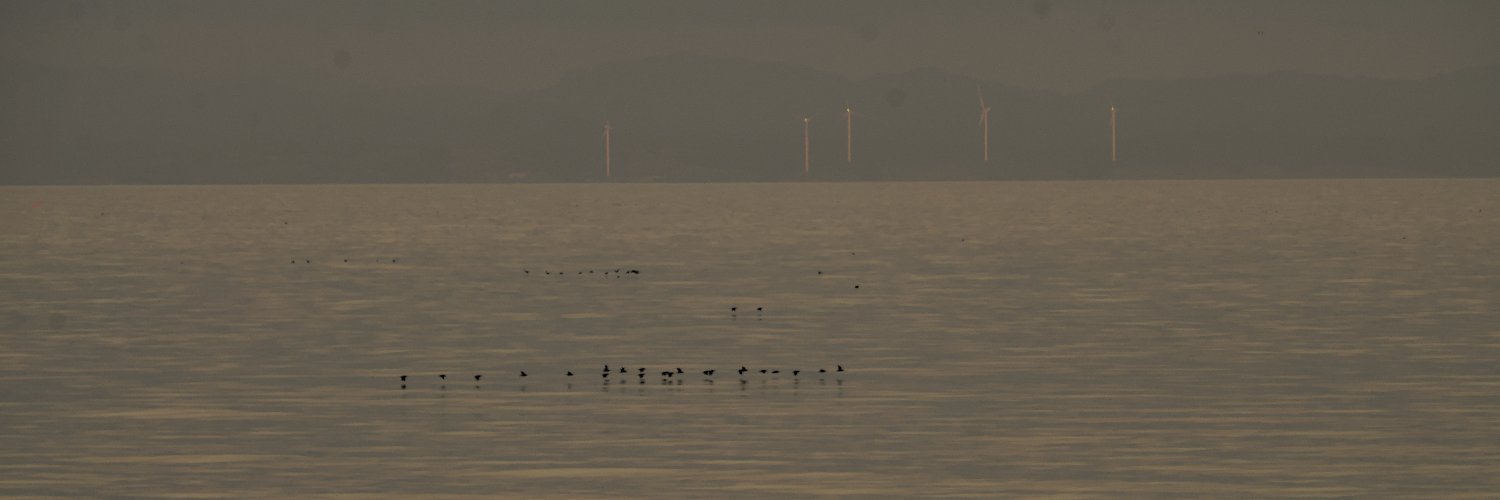
Using tools like GPS and Digital Aerial Survey, we can monitoring changes in bird distribution and movements within wind farms, showing how they respond to the presence of turbines #BOUasm24
We're able to collect really finally scale information using camera data to monitor collisions and describe the evasive actions that birds take to avoid collisions #BOUasm24
As the offshore wind industry has developed, we have taken advantage of a range of novel technology to monitor and assess the impacts of offshore wind farms on birds #BOUasm24
In the past 33 years, we've built 67 GW of offshore wind. To meet net zero goals, we need 380 GW in the next 30 years. The industry began in Europe but is expanding globally, with China now leading in installed capacity. #BOUasm24
At #BOUasm24, I will discuss how new data collection and analysis methods help tackle challenges in delivering environmentally sensitive renewable energy and the issues to consider as the industry rapidly expands.
New paper: We investigated kittiwake avoidance/attraction responses to three OWFs in the North Sea at macro-scale (0-4km) and to individual turbines (meso-scale). Results indicate slight attraction to the OWF boundary, but avoidance of individual turbines https://t.co/HYbS8uekJ9
@yoavperlman@_BTO@BirdLifeMarine@BirdLifeIsrael Only two studies have actually observed collisions, not sure how easy it would be to actually get the footage
https://t.co/TFnZIwpds6
https://t.co/zv6Ua7XeI0