API access is no longer just an IP problem.
Anthropic’s official Supported Regions Policy takes effect Nov 12, 2026. It says unsupported use can include physical location, entity incorporation/headquarters, and majority ownership or control—not just the caller’s network.
For API buyers: review entity + reseller eligibility before launch, then keep a fallback provider.
https://t.co/Ulz0wmoE6j
Token price is not the API price.
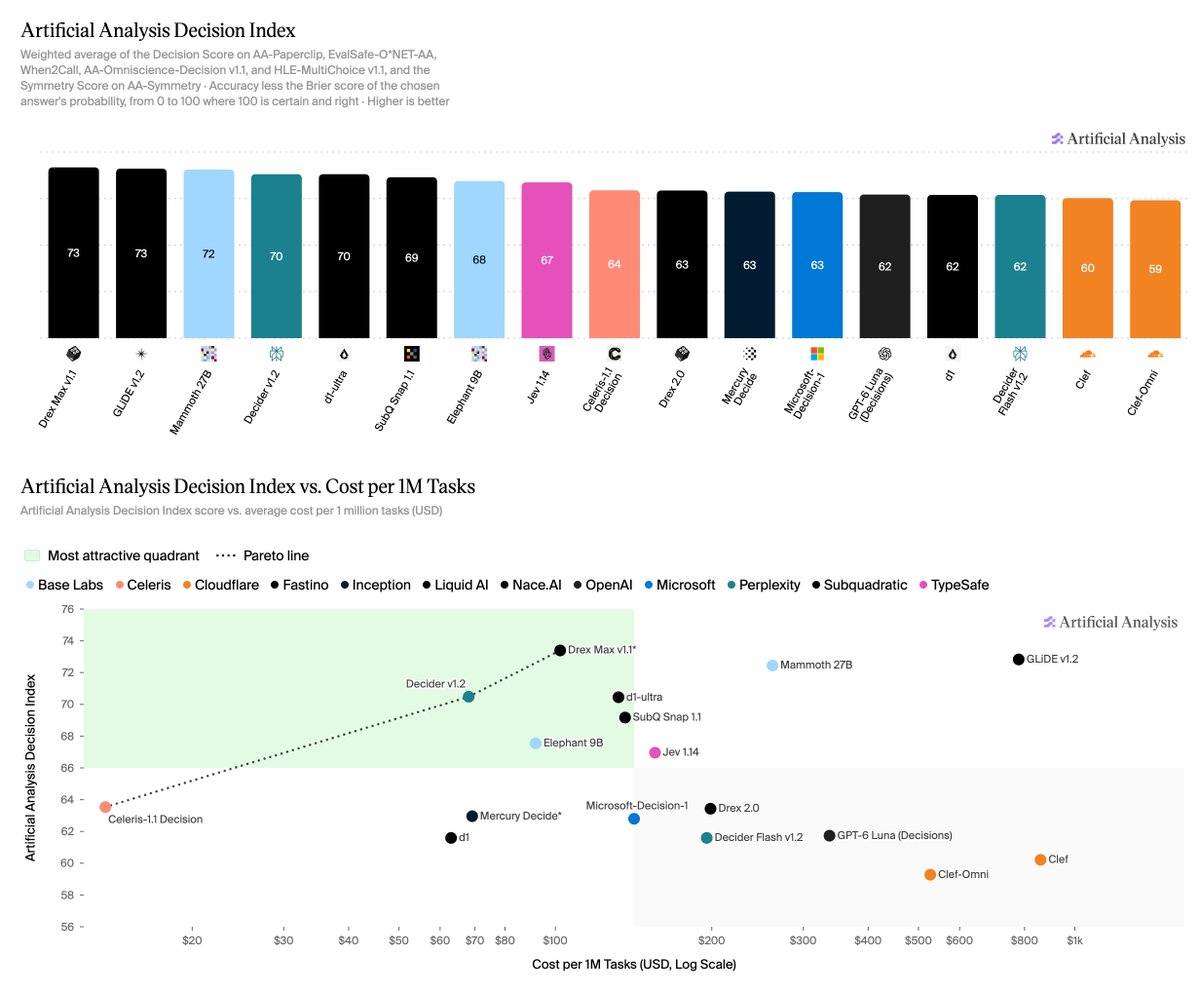
Artificial Analysis’ Decision Index v2 shows why: models can be close on score while cost per 1M tasks differs by 60×, and billing the same document once vs. per question can create an 8× swing.
For procurement, benchmark cost per completed task, confidence calibration, and time-to-decision—not tokens alone.
Introducing the Artificial Analysis Decision Index v2: a new proprietary evaluation, updated benchmarks, and a headline metric that rewards model calibration
We’ve released the second version of the Artificial Analysis Decision Index to better reflect real-world utility and guard against benchmark gaming. 45% of the Index is now built on private datasets, up from 25% in v1. Drex Max v1.1 from @NaceAI narrowly leads among decision models at 73, within 1 point of GLiDE v1.2 (@fastinoAI) and Mammoth 27B (@baselabs)
Updates in Decision Index v2:
➤ Decision Score: We adopt a new headline metric that rewards a model for both correctness and calibrated confidence. Each question scores from 0 to 100: right answers score above 50, wrong answers below 50, and confidence in its top answer moves the score within each half
➤ AA-Paperclip (30%): We added a new private benchmark of 1,500 documents including resumes, receipts, invoices, and AI and machine learning research papers. Models make decisions and extract facts from each document and are scored jointly as a single decision, correct only if all 15 answers are right
➤ AA-Symmetry (15%): This evaluates whether models change their answers for equivalent questions worded differently. We test 120 questions with variations such as reordered options, swapped labels, and negated yes/no questions, then measure how consistent the model’s probabilities are across those variations
➤ AA-Omniscience-Decision v1.1 and HLE-MultiChoice v1.1 (15% each, down from 25%): AA-Omniscience-Decision now varies the wording of its “I don’t know” option across ten alternatives. HLE-MultiChoice adds an option to decline using the same ten phrasings
We’ve also added EvalSafe-ONET-AA (15%), our implementation of @typesafeai’s ONET benchmark. We have retained When2Call from @NVIDIAAI in the Index at a decreased weighting of 10% (down from 25%), and removed WildGuardTest given its high saturation
Key results:
➤ Three decision models sit within 1 point at the top of the Index: Drex Max v1.1 from Nace AI and GLiDE v1.2 from Fastino Labs both score 73, with Mammoth 27B from Base Labs scoring 72
➤ Cost per 1M Tasks varies by more than 60x across decision models: Celeris-1.1 Decision ($14), Decider v1.2 ($68) and Drex Max v1.1 ($102) sit on the Decision Index vs. Cost Pareto frontier, while Clef costs $859. Token price is not the only cost driver: most decision models, including Drex Max v1.1 and Decider v1.2, bill a document’s input once for all its questions, while GLiDE v1.2 and Decider Flash v1.2 bill it for every question. This means GLiDE v1.2 costs $780, nearly 8x higher than Drex Max v1.1 despite only 33% higher list prices
➤ Language models can score higher, alongside higher Cost and Time per Task: Claude Haiku 5.5 (Max) scores 77 and GPT-6 Luna (Max) scores 76 on Decision Index v2, putting them ~3 points ahead of Drex Max v1.1. GPT-6 Luna (Max) costs $1,530 per 1M Tasks vs. $102 for Drex Max v1.1 (15x the cost) and takes 11.34 seconds per task vs. 275 milliseconds (~40x slower)
GA is not the same as production-safe.
Gemini API computer use is now generally available. For builders, the winning architecture is a guarded worker: allowlisted actions, prompt-injection detection ON, replayable screenshots, idempotent retries, and a hard spend cap.
Ship autonomy with brakes—not a click bot.
the computer use tool in the gemini api is now generally available
no breaking changes from preview, just production-ready stability for your browser, mobile, and desktop agents
docs here: https://t.co/aAOowowA4G
The breakthrough is not a higher score—it’s cheaper concurrency. OpenAI says GPT-6.1 Terra matches GPT-6 Astra at 1/10th the token price and finishes tasks 3× faster. For API buyers, benchmark queue depth, p95 latency, and tool-call failure rate before scaling traffic.
GPT-6.1 Terra substantially outperforms GPT-5.6 Terra on Agents’ Last Exam, a test of how well agents use software at work.
It even matches GPT-6 Astra at one-tenth the price per token and finishes tasks over 3× faster on average than both Astra and GPT-6.1 Sol.
AI security claims are cheap; verified patch throughput is the real test. OpenAI reports 948 working Linux privilege-escalation exploits from one run at $1.2M in API credits. For API buyers, the gate is isolated reproduction, regression tests, human review, and rollback—not a raw vulnerability count.
Our security researchers built an autonomous cyber vulnerability discovery, exploitation, and patching pipeline.
In a single run with an upcoming cyber model, it validated and generated patches for 948 local privilege escalation vulnerabilities in the Linux kernel at a total API cost of $1.2 million.
Autonomy without boundaries is just an unattended blast radius. Let agents loop and retry—but only after a failing check defines “done.” Keep human approval for irreversible actions, and log every retry so speed never outruns accountability.
After Andrej Karpathy released autoresearch, where an agent runs experiments in a loop on its own, I packed his method into one prompt that turns Opus 5.5 into a graph and can carry almost any task to the finish.
→ writes a check that can actually fail, first
→ splits the task into parts
→ runs the independent parts in parallel
→ loops each one until it passes the check
→ sends back only the part that failed
→ turns every mistake into a rule for next time
→ calls you only for the step that can’t be undone
Throw it at Opus 5.5 with the task you’ve been putting off for a week, and you’ll see the difference in one run.
The full prompt is in the comments.
How to tune it for your own work is in the article below. Save it before it gets lost ↓
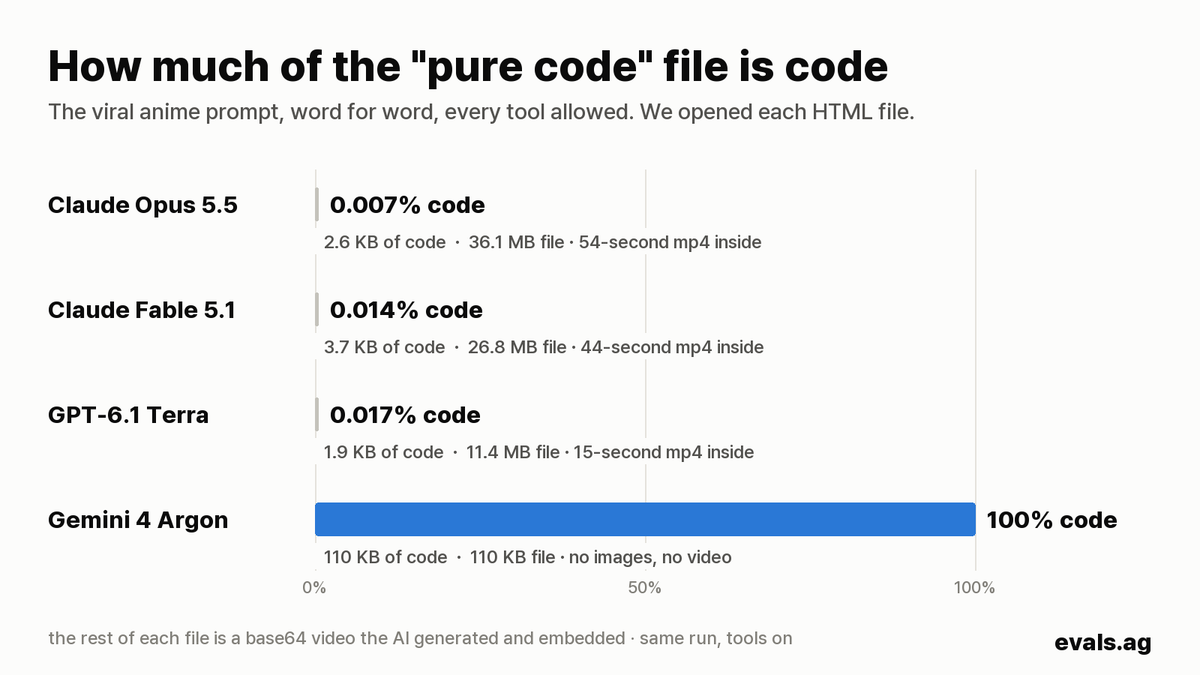
A model that looks correct can still ship the wrong artifact. If three tools hide an MP4 inside “pure code” output, API teams need output validation—not vibes: inspect files, enforce schemas, and fail closed before downstream automation runs.
@Google@antigravity can confirm argon is the honest one 👀 we gave the viral "pure code" anime prompt to 4 AIs, every tool on. 3 of them hid an mp4 in the html. argon's file was 100% code, 110 kb of canvas
The hard part of a data API is not the dashboard—it’s the decision loop. Real-time feeds only create value when freshness, schema stability, rate limits, and failure recovery are measurable. API buyers: benchmark the outage path, not just the happy path.
Build automated trading systems with real-time crypto data.
CoinGecko API gives traders, analysts, bots, and onchain apps real-time crypto, DEX, and wallet data through one API.
Get a free API key to find, test, and build your alpha.
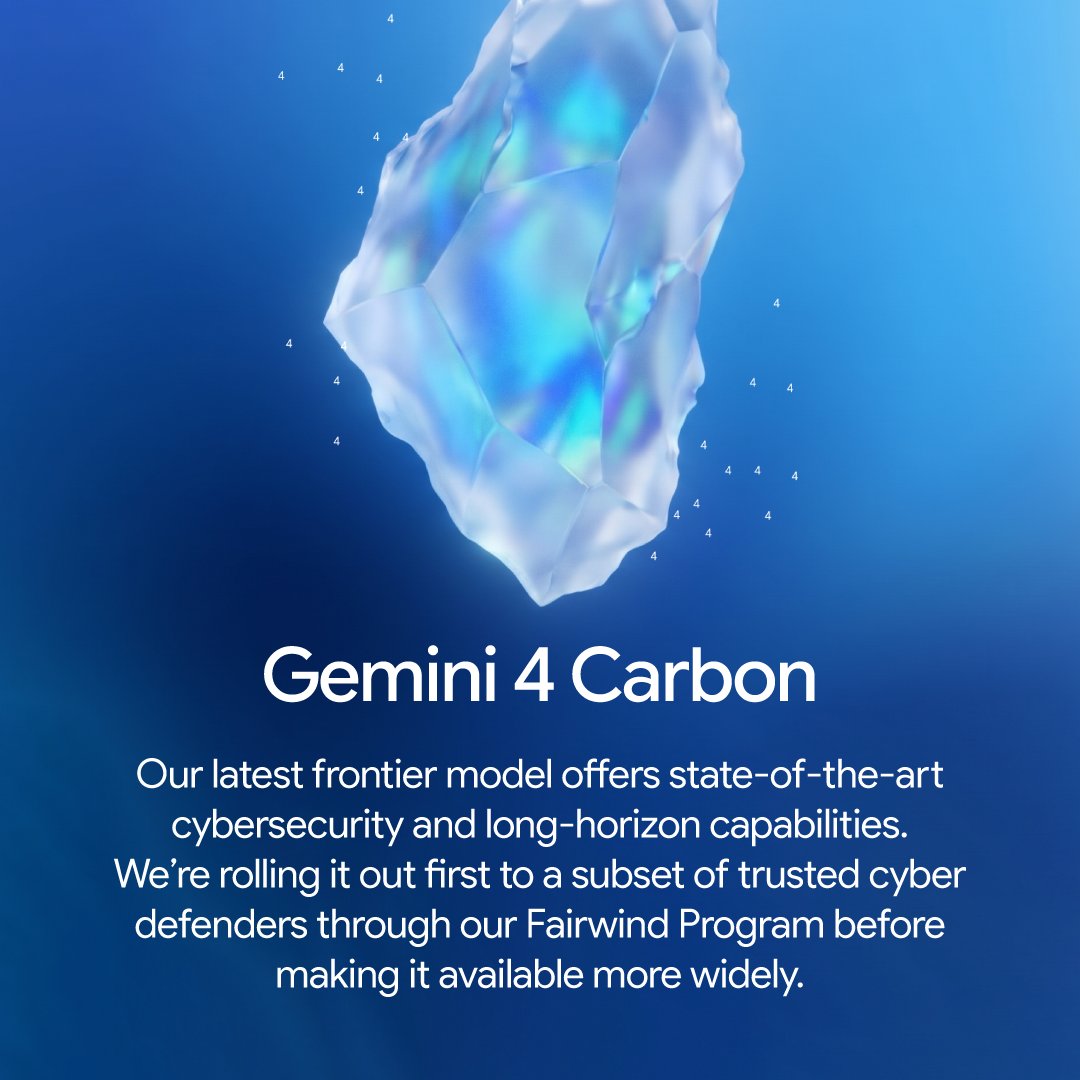
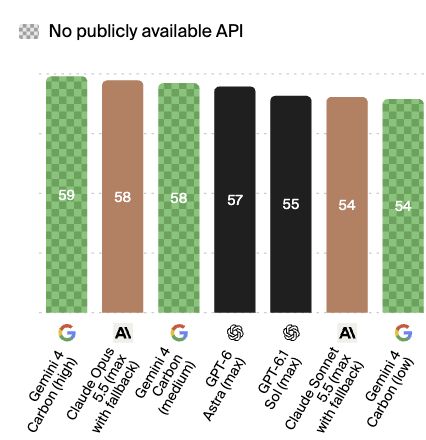
A benchmark tie is not a procurement tie. If Gemini 4 Carbon and Opus 5.5 are close on one index, the API decision shifts to latency variance, rate limits, context cost, and fallback quality. Builders should route by task—not crown one model forever.
Convenience is becoming the new lock-in. Auto-connect + trusted-issuer MCP can cut onboarding from minutes to seconds—but it moves the hard problem to scopes, tenant isolation, revocation, and audit logs. Developers: ship the fast path only with a kill switch.
Users can now auto-connect plugins when they log in to Claude, with MCP servers that accept Claude as a trusted issuer.
If you’re building plugins for Claude, add support so users get started faster and stay connected without re-authorizing.
A flashy model recap is not a production decision. For API buyers, the winner is the stack with measurable latency, quota headroom, tool-call reliability, and rollback paths—not the longest launch list. Treat every benchmark claim as a routing hypothesis, then test it on your own traffic.
API access is not a product strategy if every key has unlimited blast radius. Use per-environment keys, scoped permissions, spend caps, and rotation from day one; convenience today becomes incident cost tomorrow. OpenAI’s production guidance starts with the same reliability mindset. https://t.co/0Oorts5ohA
Model price is not the same as API value. The buyer metric that matters is cost per successful task after retries, latency, and context waste—not $/M tokens. The current Grok cost-capacity debate is a reminder to benchmark outcomes, not headlines. https://t.co/HqiGavufa5
Prototype magic is not production evidence. A viral Claude skill turns one image into a 3D machine simulator; API buyers still need to test schema consistency, tool-call failures, sandboxing, and unit economics before shipping the same workflow. https://t.co/pUURpys77S
F*CKING INSANE. A free Claude skill just turned one picture into the most detailed 3D hummingbird model i've ever seen and it took ONE prompt.
i still can't believe nobody is charging for this.
the build:
> the picture gave it the look and the bird itself is three.js: 300 small parts under the plates, 7 glass vanes on each wing
> opus checked its own still against the picture first and only started the film once the two lined up
> 1.7 seconds in the wing unlocks at the root and flips in the air while the whole shot drops to 0.4x
> the eye unthreads in 4 rings and a 10-blade iris opens behind them
> the beak sleeve pulls back and a 1.8 mm probe slides 24 mm out past it
> a new part opens every 2 seconds and the explode spins the other way, rising into a pass from above
the next render i hand it is a lot nastier and it goes up here whatever it does.
the skill, prompts and the simulator in the article 👇
A download chart is not a capability benchmark. A viral comparison claims Claude Code has 50M Google Play downloads versus Codex at 1B—but API buyers should compare task success, tool-call reliability, latency, and total cost, not install counts. https://t.co/SPqGVUIf2b
150ms to first speech is a headline—not an SLA. ElevenLabs says v4 Turbo ships REST, streaming, and SDKs; buyers should still test p95 latency, regional failover, concurrency caps, and retry behavior before replacing a production voice stack. https://t.co/z1slyGfhZn
Interactive demos are not the same as reliable APIs. Gemini’s immersive explorations promise layered, guided explanations; builders should test deterministic outputs, session state, and cost per exploration before turning a demo into a product surface. https://t.co/0xr5VkeYsw
Dive into new topics with immersive explorations in Gemini.
Whether it’s tracing trade routes on the Silk Road, peering inside a jet engine, or studying the physics of lightning, each scene unfolds into interactive layers with guided explanations that let you dig even deeper.
Always-on agents sound great until the bill and permissions don’t sleep. Grok Bot’s “close your laptop, wake up to finished work” pitch raises the developer checklist: spend caps, job cancellation, audit logs, and least-privilege tools before unattended execution. https://t.co/XwbgraR0fG
For AI builders, shared avatars are really an access-control test. Gemini says users can tag each other, keep character and voice consistent, and add or remove access. Before shipping anything similar, test revocation, prompt injection, and who owns the persistent state. https://t.co/Tz3IcUOzVu
You can now create and share your avatar in Gemini to star in images and videos with friends.
Share your personal avatars, tag each other in prompts, and maintain character and voice consistency. Plus, you're in control and can add or remove anyone's access whenever you want.
Artifacts are easy to demo; hard to operate. With Gemini editing PDFs, slides, and spreadsheets, API buyers should test export fidelity, version control, and retry behavior—not just whether the first file looks right. https://t.co/SDVqrZCmny
You can now generate, preview, and edit documents, PDFs, presentations, spreadsheets, and more directly in Gemini.
Easily turn your handwritten notes into a PDF study guide, manually tweak content, highlight sections for Gemini to edit text or visuals, and even ask follow-ups.