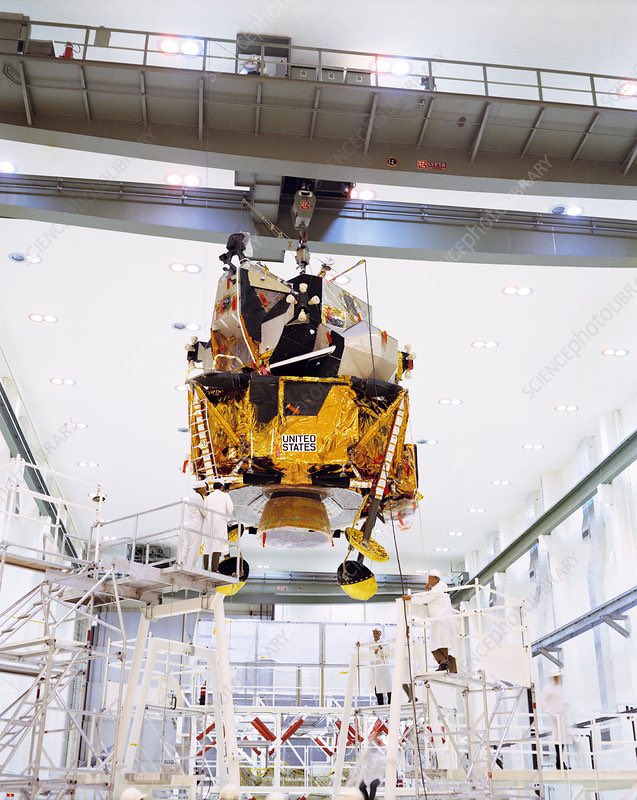
Grumman were instructed by NASA to build a LM where no single point failure would endanger the crew. This was achieved through redundant / backup systems.
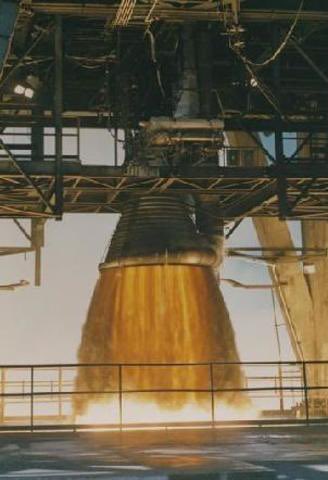
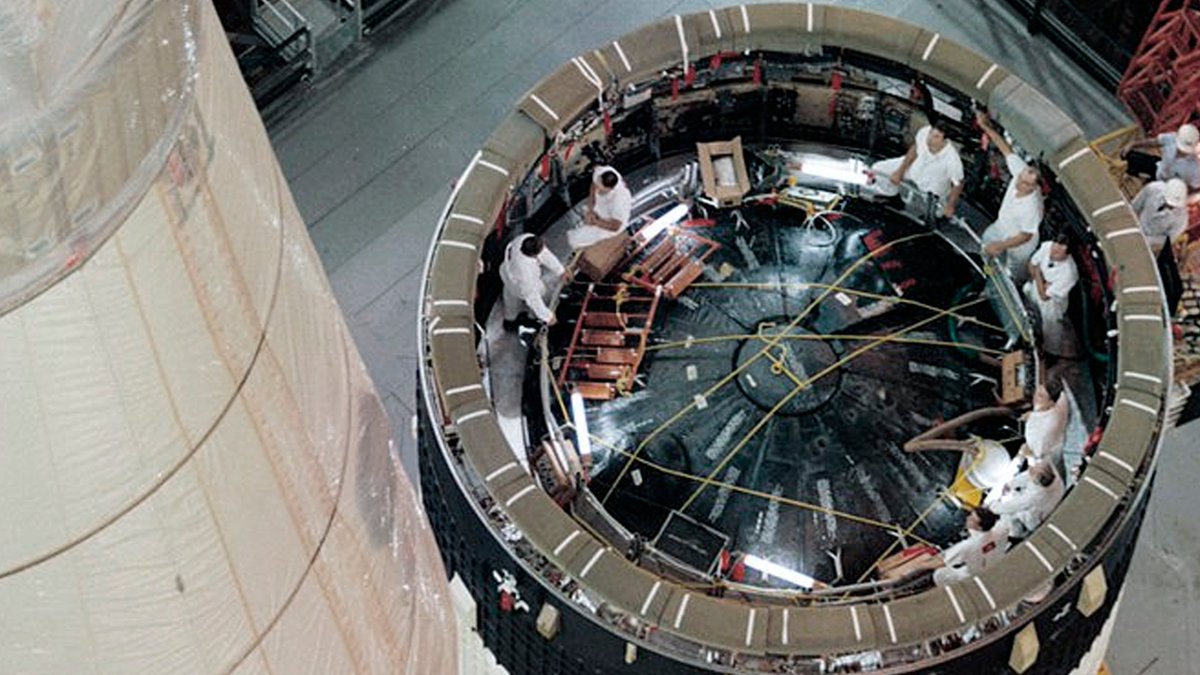
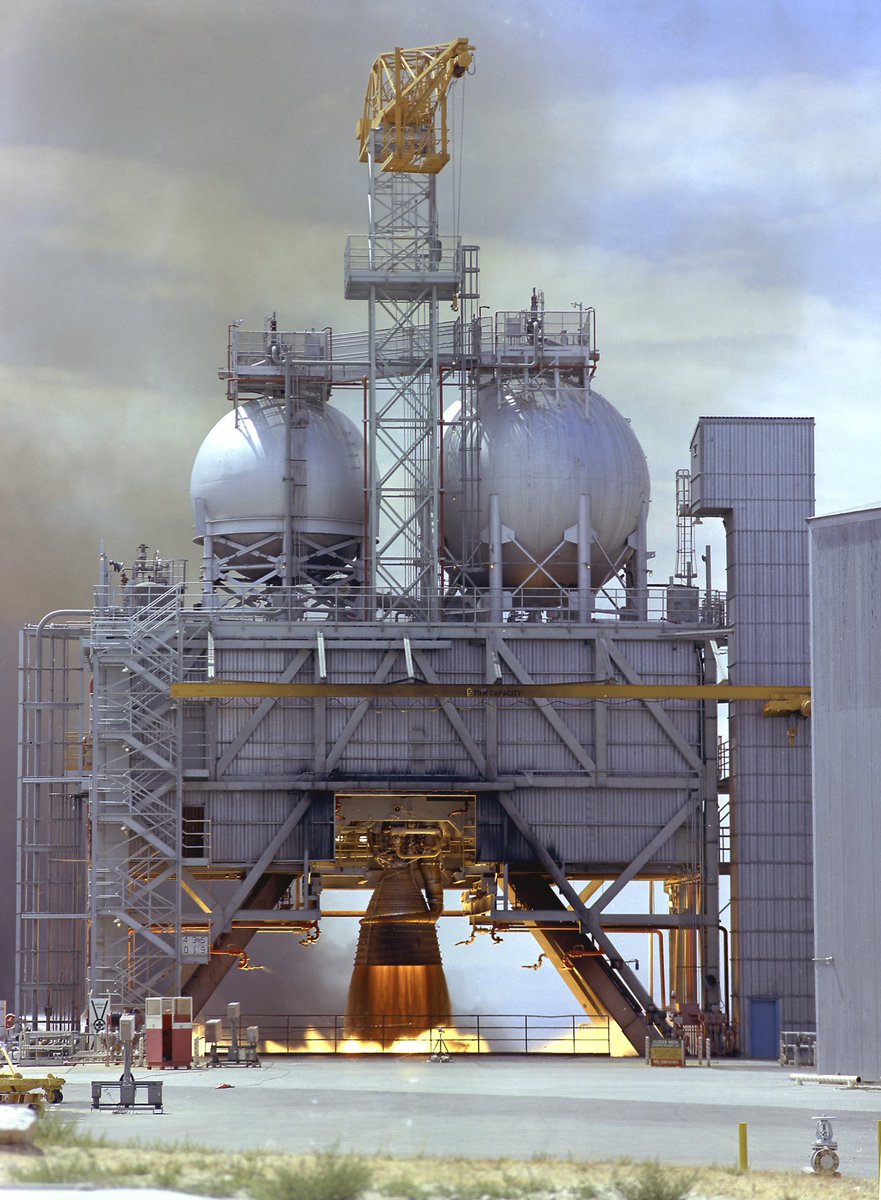
However there was one primary system which couldn’t really have a backup - the Ascent Propulsion System / APS.
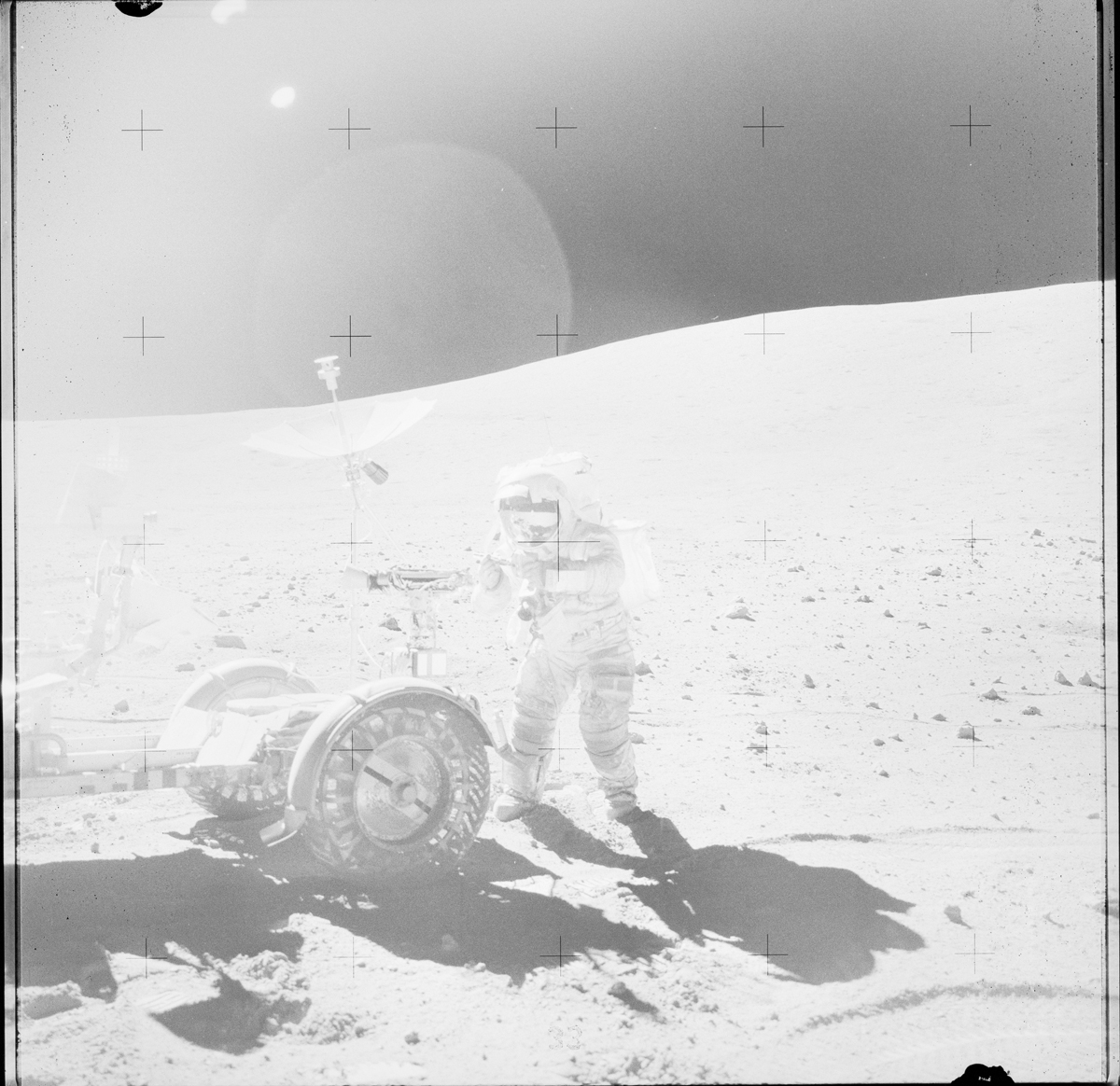
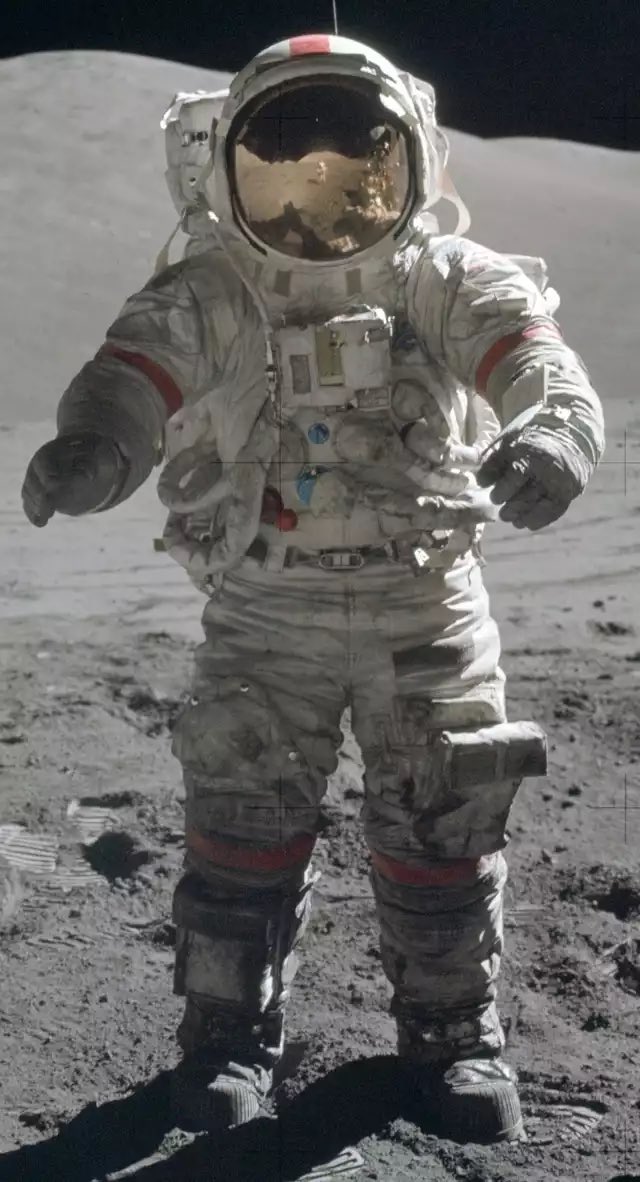
Born #OTD in 1930 - the 'astronaut's astronaut', John Young.
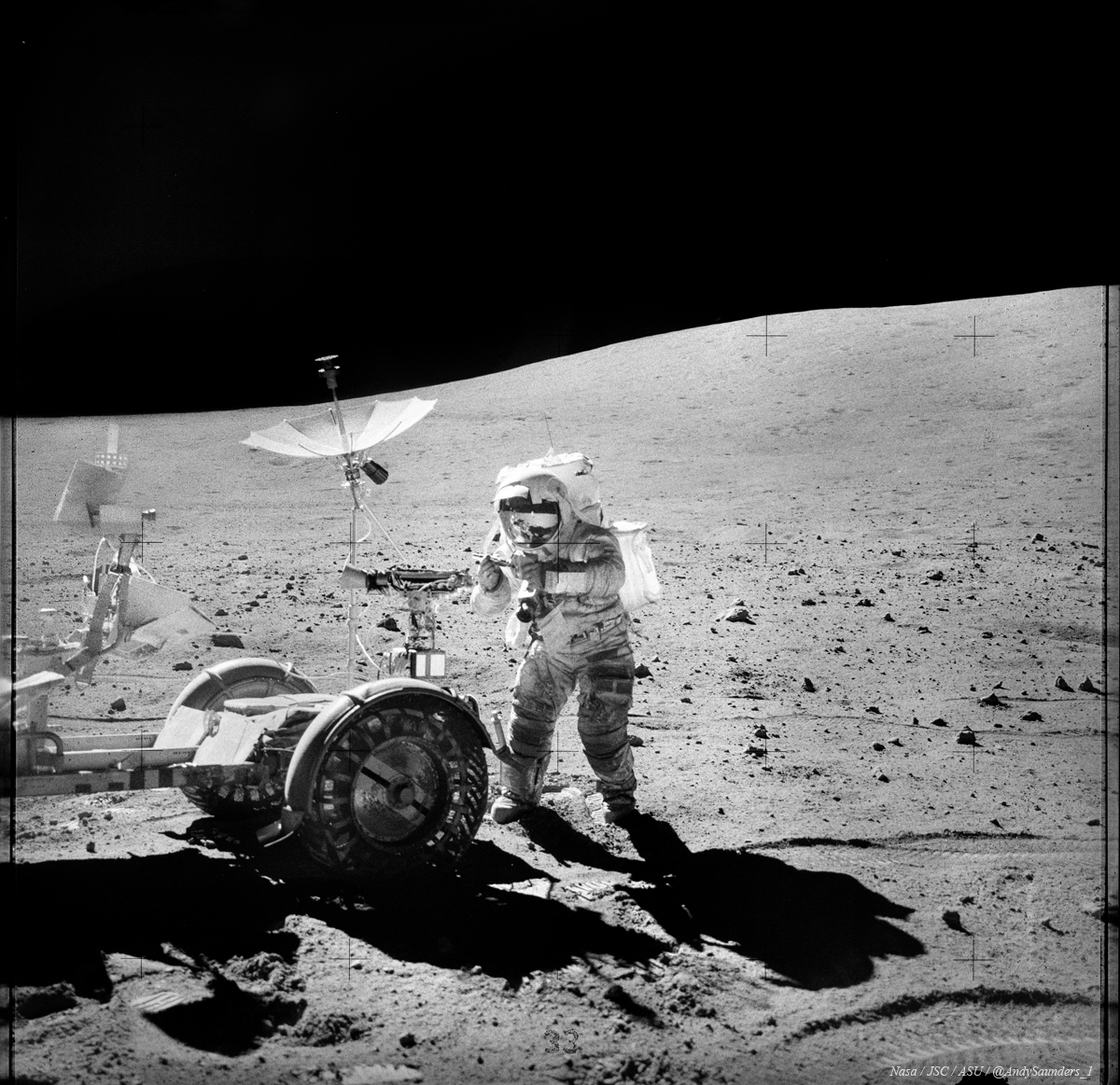
Here he is on the Moon, during Apollo 16, inspecting his Moon dust brush - all future Moon voyagers will need one!
Newly recovered from high resolution scan of Hasselblad 70mm flight film.
#ApolloRemastered#NASA
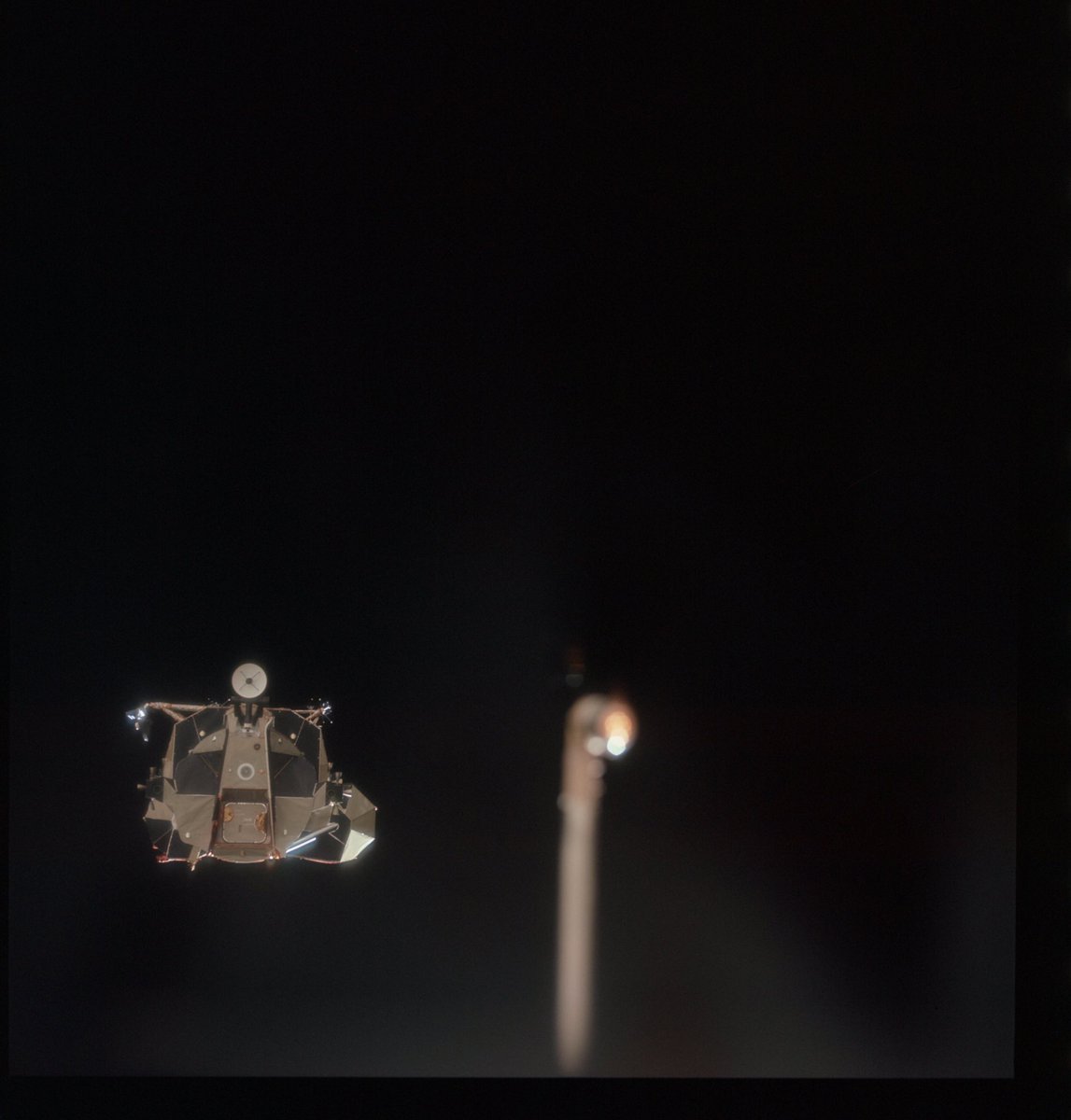
Next time you visit a LM look out for the running lights that are placed across its body. These lights were copied from aircraft coding at the time and they helped determine a vehicles altitude and attitude with respect to a vehicle to which it would dock.
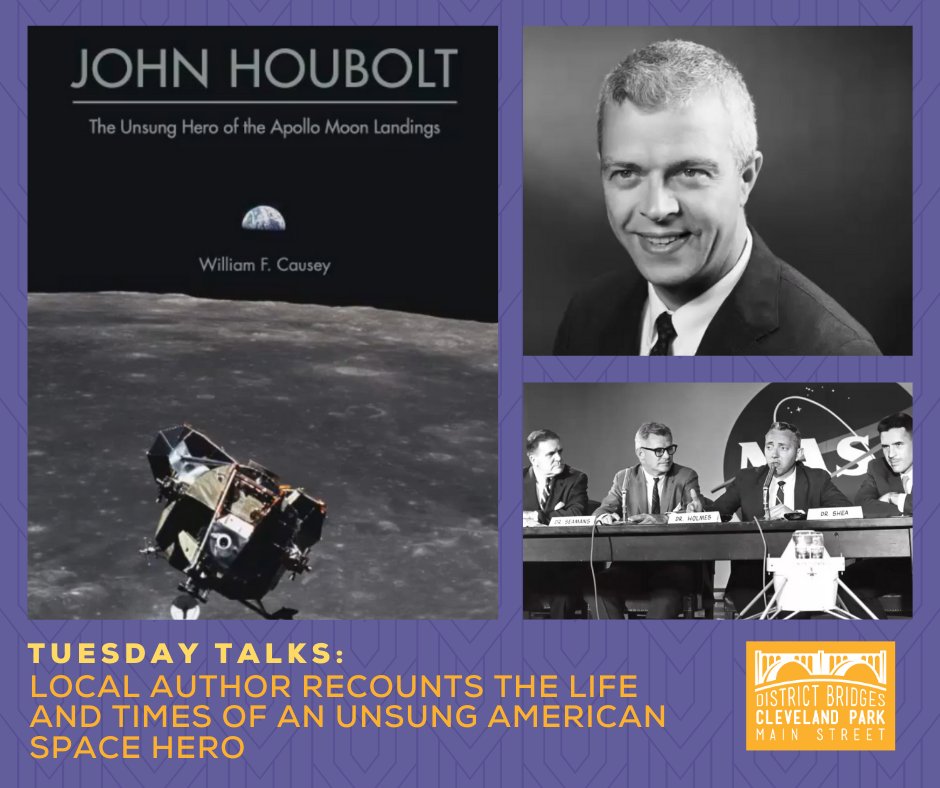
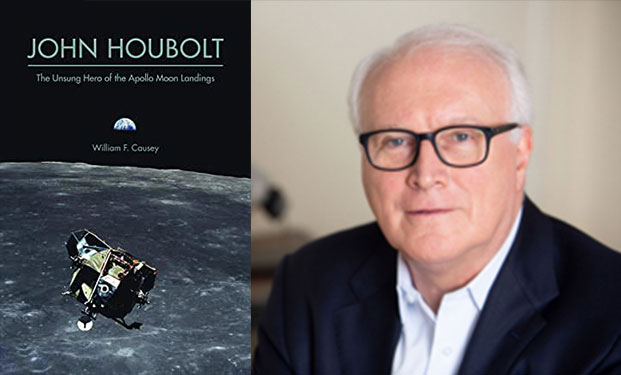
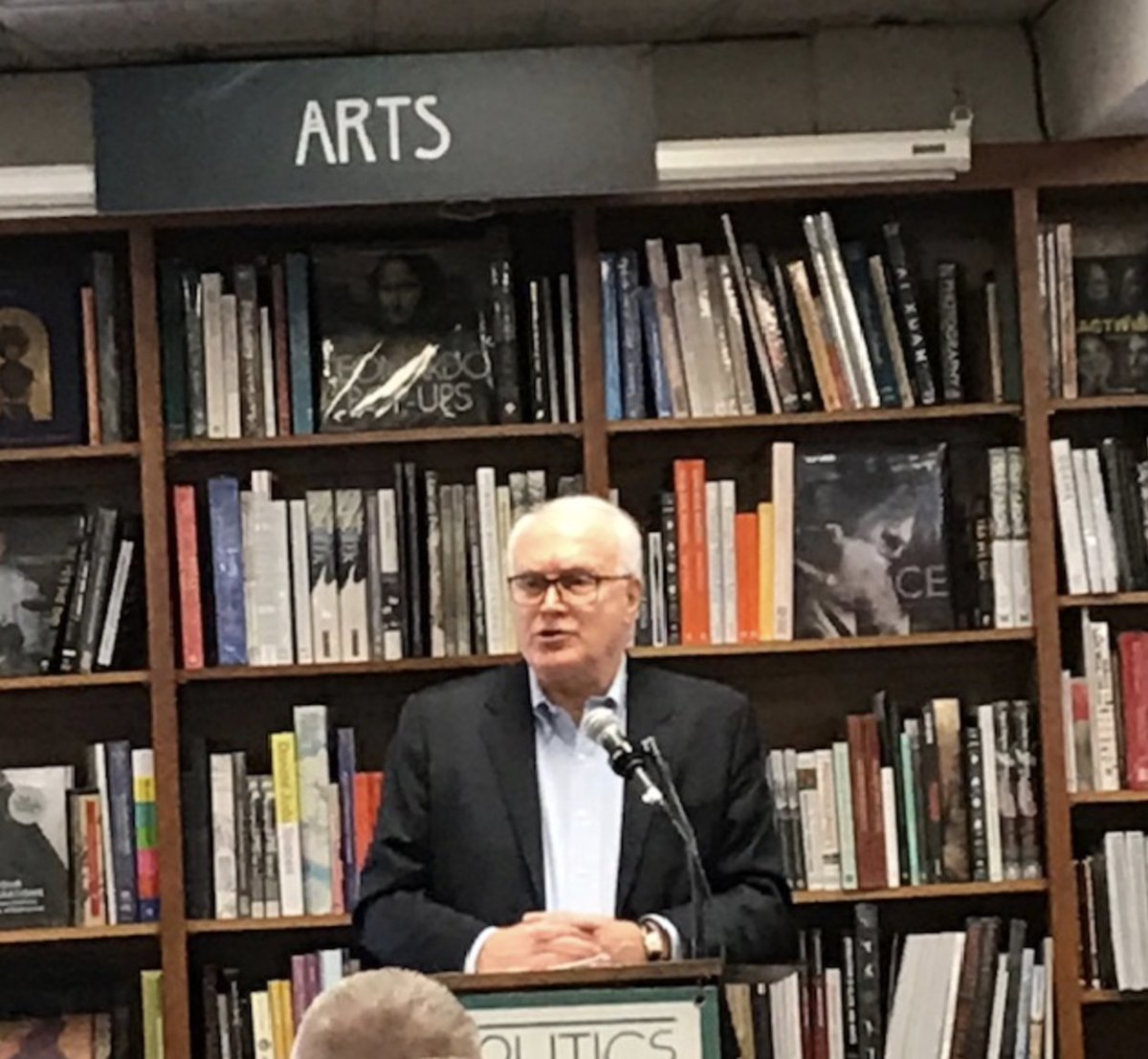
At a recent Tuesday Talk, we were “over the moon” to have Woodley Park’s @ApolloAuthor discuss his book about an “unsung” hero of the Apollo moon-landing missions. https://t.co/Wau4OXkMPW
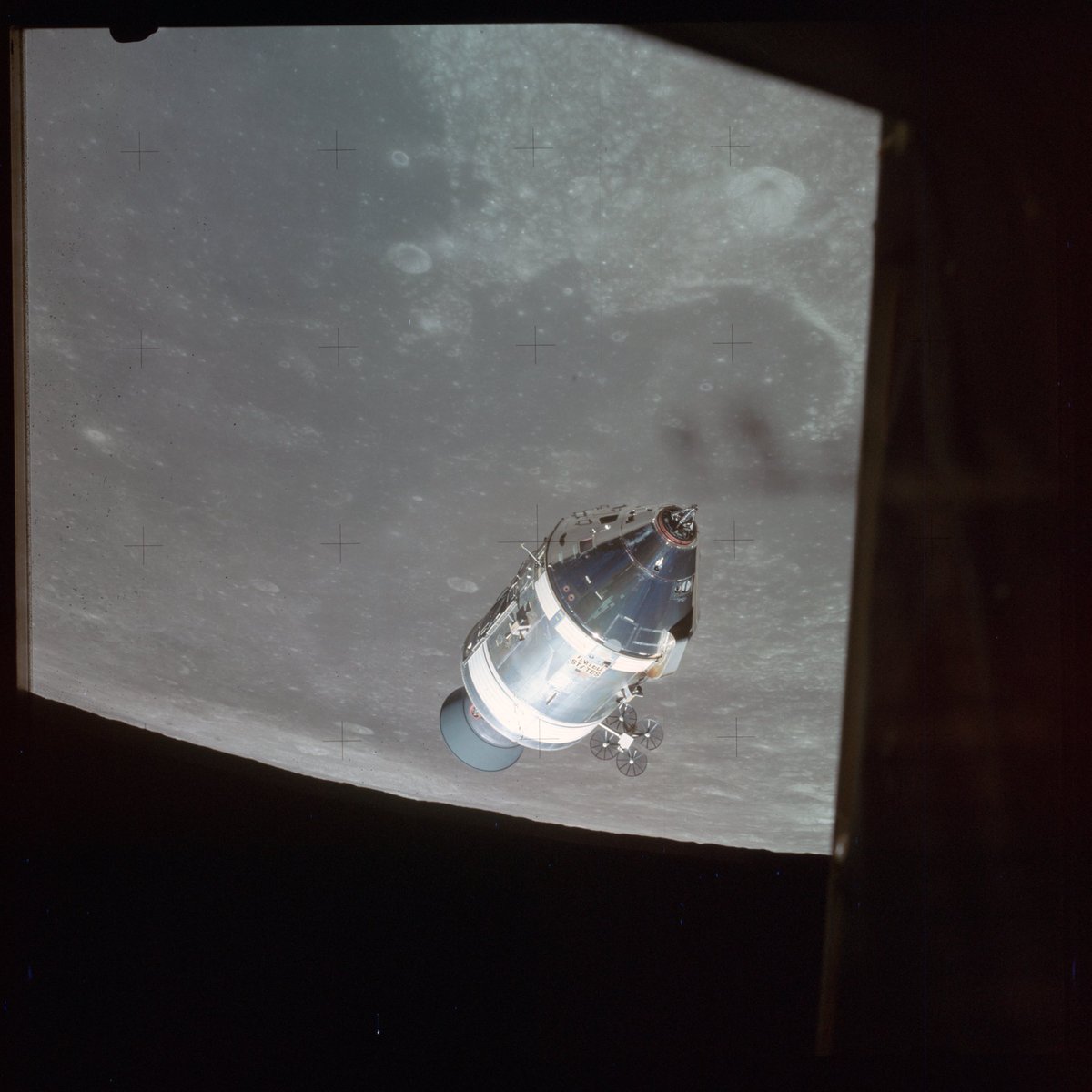
Rendezvous of the Apollo LM & CSM. I love this image of Al Worden looking at Falcon. In the picture you can see that the EVA floodlight is extended, just in case an emergency EVA transfer needs to be conducted.
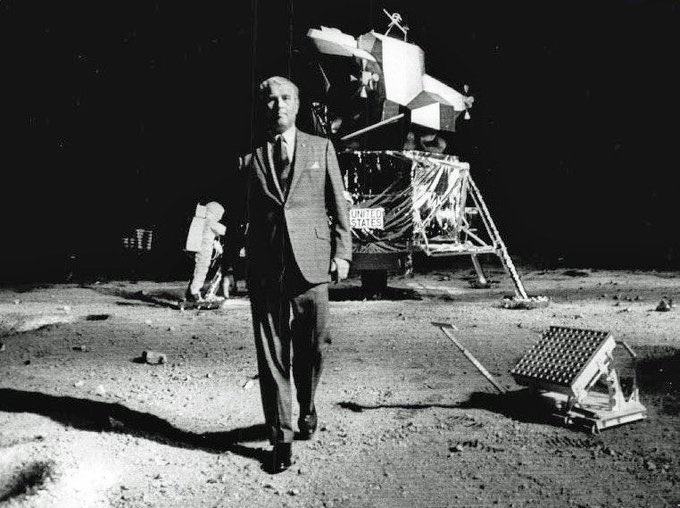
March 24, 1950: A book editor at Doubleday writes Wernher von Braun rejecting his novel The Mars Project. “It’s a perfectly fascinating book—but not…a salable novel…There isn’t much story there…The only thing I can think of that we could do with it is build a rocket ship.”
Bill Causey @ApolloAuthor introduces his definitive bio of John Houbolt, the persevering #NASA engineer who figured out how to put human beings on the moon by the end of the 1960s -- and bring them back! @PurduePress#Apollo
@goodreads New book released this past Sunday by @ApolloAuthor at @PoliticsProse on NASA engineer John Houbolt. Great read, no time like the present to #ReadUP. https://t.co/o3D52YTCTq