An evo-legal treatise on the common ethic: the common law as the science of undemocratic legitimacy and the revelation of micromorality.
https://t.co/sCY9YyF1zK
Common misconception: “IQ doesn't measure anything meaningful beyond 120 IQ and is only good for telling apart intellectual disability."
To the contrary:
The Study of Mathematically Precocious Youth (SMPY) has tracked thousands of adolescents who scored in the top 1% (135 IQ; 390 or higher SAT-M at age 13) since the early 1970s.
The top quartile of this already-elite group went on, by their early 30s, to earn patents at roughly six times the rate of their peers in the bottom quartile, secure tenure-track jobs at top 50 research universities eight times as often, and have incomes in the top 5% of incomes nationwide three times as often (and more, as the attached graph shows).
These widening gaps, captured 20 years after the initial testing, show there is no loss in predictive power beyond some threshold of IQ, and that IQ can predict rarer and more prestigious accomplishments later on (Lubinski, 2009).
Ultimately our power is based on loyal families and friendships, including the broader family and friendship of the high race, Apollo. Let the scythe of Saturn, designed to sever our bonds, disintegrate in the heat of our love. Fides Apollinis
The Apollonian Creed
The man who is historical is quite rare,
He’s both intelligent and brave,
for himself he has little care,
Yet he is neither rouge nor slave.
Citing from those whence he’s grown,
with his thoughts he repeats no man,
Indeed, his ideas they are his own,
In the name of truth he does all that he can.
He avoids trappings of historical man,
who is in some faye cargo cult involved,
He commits himself to clever work,
a plan, so that the problems of his age are solved.
So lift high those whose work is great,
Be unjealous of things you did not say,
Remove from your heart envious hate,
At the very least get out of the way.
Serve well those who serve you,
Remain to friend and forbearer true,
To Apollo’s highest virtues hew,
And give credit where credit is due.
For Mercury does not on Olympus live,
Rather in deepest Tartarus he grieves,
Olympus is a place for those who give,
But it is not a place for he who thieves.
His place is in the East and the south,
If you betray, if you thieve and if you lie,
Strike the name Apollo from your mouth,
For you will see jealous Pluto when you die.
Indeed do not the god of truth defame,
by your actions muddying his name,
lest the god of truth receive the blame,
thereby bringing to all your people shame.
Aye the time for dishonor it has past,
By Vulcan’s fire the world itself burns,
And yet we are a people born to last,
We are immortal Apollo and Apollo Returns.
https://t.co/R4XxZTjQlV
That’s a matter of social class btw
You see this kind of makeup on women from the lower social classes in France, Germany,… all over Western Europe basically
Whereas Upper-class English women don’t wear their makeup like that …
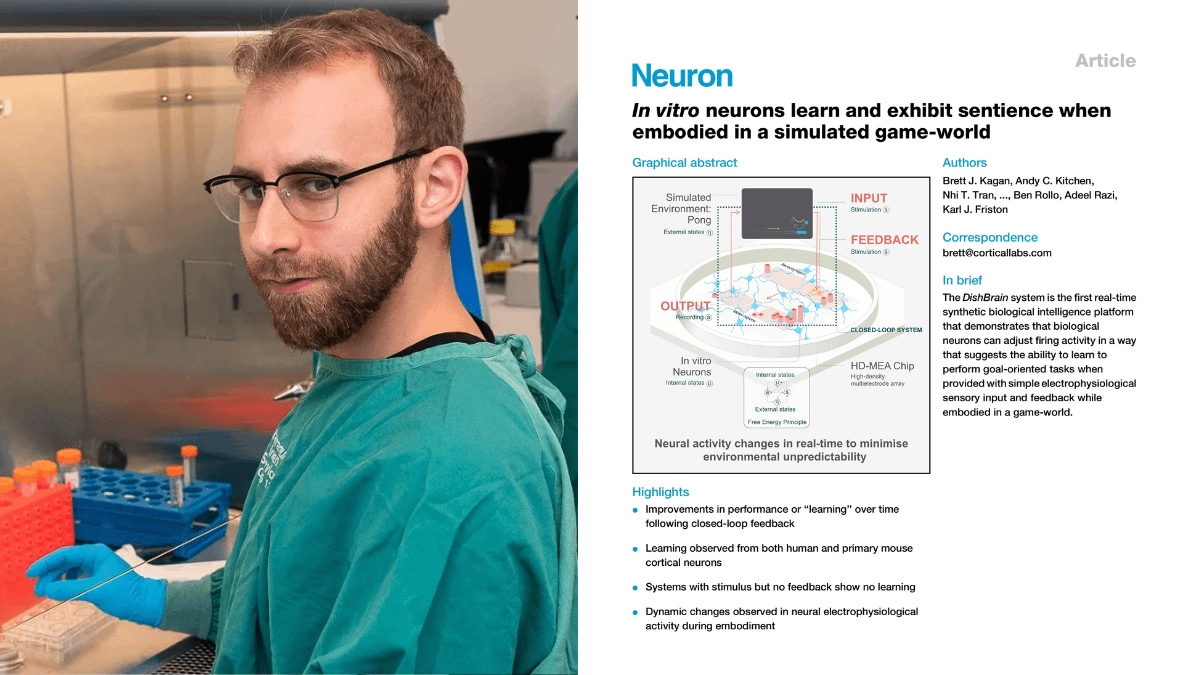
An Australian scientist took 800,000 human brain cells, kept them alive in a dish, wired them to a computer, and taught the cells to play the video game Pong in five minutes, which is faster than any AI on Earth had ever learned the same game.
His name is Brett Kagan.
He runs the science team at a Melbourne company called Cortical Labs, and the paper that broke the story was published in the journal Neuron in October 2022. The title sounds like a science fiction novel. In vitro neurons learn and exhibit sentience when embodied in a simulated game-world.
The setup was simple, and that is what made it so strange.
Kagan and his team took some brain cells from mouse embryos. They took some human brain cells grown from stem cells. They placed them on a chip covered in tiny electrodes, the size of a small coin, and they hooked the chip up to a computer running Pong.
The electrodes could do two things. They could read what the cells were doing. They could also send small bursts of electricity back into the cells.
The team used those two channels to talk to the dish.
When the ball was on the left, they fired the electrodes on the left side of the dish. When the ball was on the right, they fired the electrodes on the right. The closer the ball got to the paddle, the faster they fired. The cells could move the paddle by sending their own signals back.
That was the whole game.
Then the team added one more rule, and this is the part that changed everything.
When the cells missed the ball, they got a random, chaotic burst of electricity for four seconds. Noise. Static. Pure unpredictability. When the cells hit the ball, they got a clean, steady, predictable signal.
That was the only feedback the dish ever received.
Within five minutes, the cells started getting better at the game.
The rallies got longer. The hits got more frequent. The dish was not winning, but it was clearly playing, and it was improving, and nobody had told it the rules.
It had figured them out by itself.
The reason this worked is the part that should stop you for a second.
Brains hate surprise. That is the thing they are built to avoid. Karl Friston, who is one of the most cited neuroscientists alive and a co-author on the paper, has spent his whole career proving this. The brain is not really a thinking machine. It is a prediction machine. It runs on a single quiet rule. Make the world less surprising.
The cells in the dish were doing the same thing.
The chaotic stimulus felt like surprise. The clean stimulus felt like calm. The only way to get more calm and less chaos was to stop missing the ball. So the cells learned to stop missing the ball, not because anyone trained them, and not because they wanted a reward, but because the only way to quiet the noise was to play the game well.
They were not learning Pong. They were learning to make their own world more predictable, and Pong just happened to be the world they were stuck inside.
The same thing your brain is doing right now.
Every choice you make today, every word you reach for, every plan you build for tomorrow, is your brain trying to make the next moment less surprising than the last one. The feeling you call thinking is mostly your head doing the same thing those cells did. Trying to quiet the static.
The dish learned Pong faster than any AI had at the time, using around 800,000 cells and almost no power, while the AI systems running the same game needed thousands of times more energy and far longer training runs.
Kagan said it plainly in his interviews after the paper came out.
He said the cells were not trying to win. They were trying to feel less lost. And the moment he said that, half the room realized he was no longer just describing the dish.
He was describing them.
21/ Social Parasitism vs Monogamy
Woah! Now that looks much more like the overall diaspora.
In fact, the effect is so large that it overwhelms the rest of the diaspora entirely. And unlike the homozygous ghetto, the admixed diaspora benefits from hybrid vigor.
Why is social parasitism so successful under (strict) monogamy?
Because monogamy combines:
• the female surplus of polyandry
• with the higher mate selectivity absent in polyandry
In other words:
monogamy makes high-quality women sexually more accessible to commoners and foreigners than they would alternatively be.
It transforms an otherwise scarce resource into an abundant one.
Dr. Greg: "In order to say [gene editing is unethical], you basically have to say that we would be better off if Baby KJ still had that disorder."
@JFGariepy: "Every time you save a Baby KJ... he will reproduce and he will seed further suffering into the future."
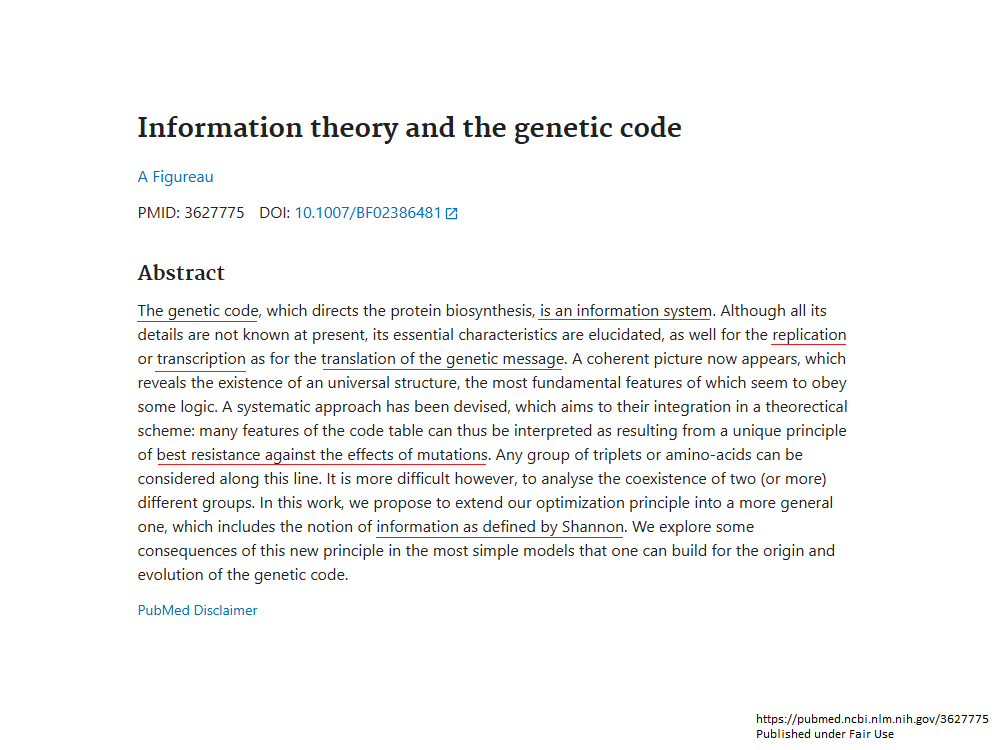
Genetic information theory: variation = exploration of genotype space & selection = compression of search space.
As diversity ⬆️ (high convergence), evo cost of mutation (genomic noise) ⬆️
Variation + selection = pathfinding
100% fit with @shi_huang5's MGD theory.
Neat new result!
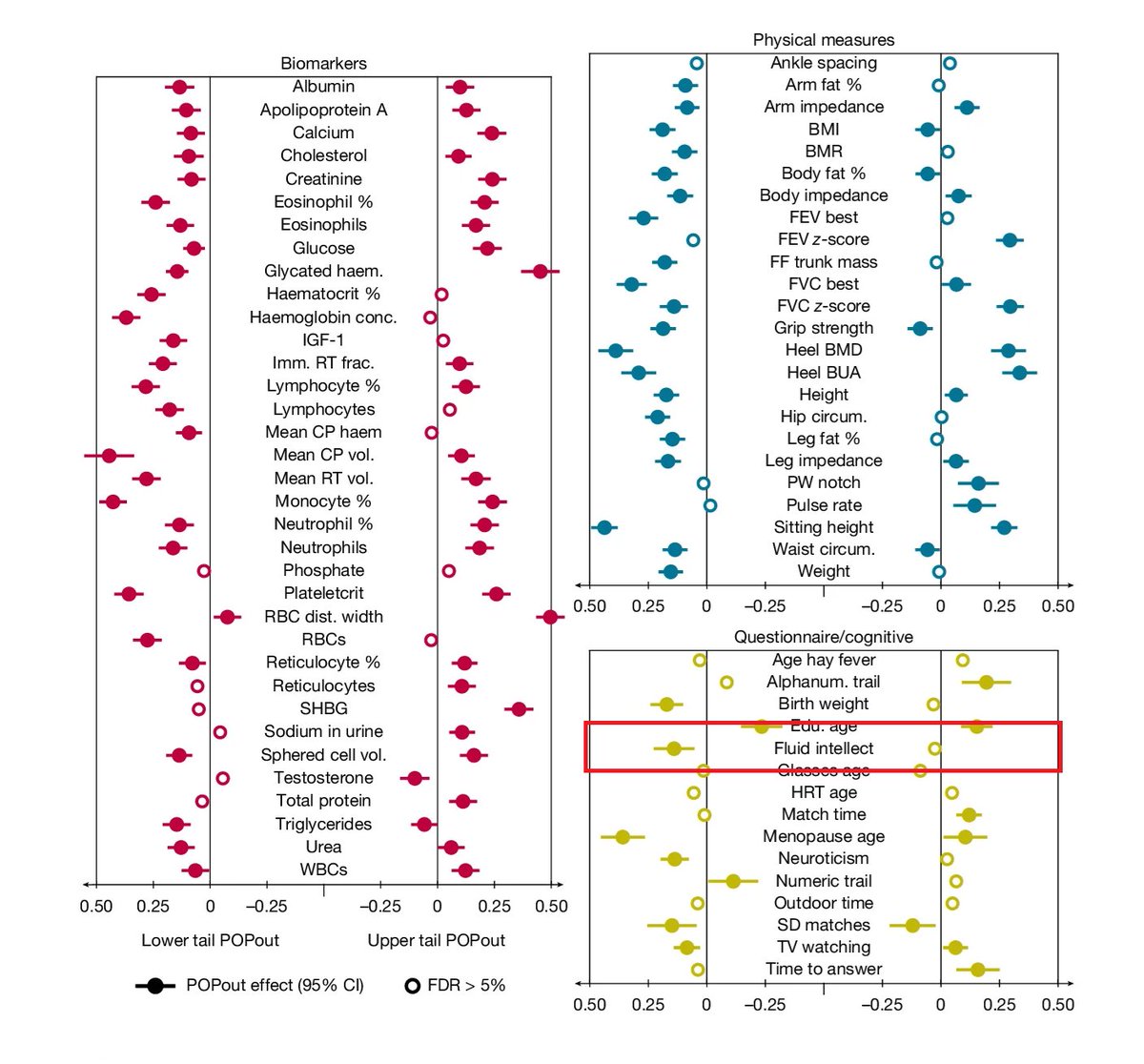
Researchers tested for extra genetic effects in the far right and far left tails of trait distributions.
For IQ, they got what's expected based on twins:
- Lots of variants that *lower* IQ substantially
- No evidence for ones that *raise* IQ substantially
13/ Strategy Density by Morality
Universalism creates decision instability. Why?
Because it welcomes in the social parasite and its cultural influence.
That influence increases behavioral drift: unsuccessful tribes begin copying more successful combinations. Under descent conditions, this can actually become adaptive for helotypal tribes. The social parasite effectively propagates successful strategies through imitation.
This is why conquest clusters more successfully with other systems under universalism during descent:
the parasite continuously copies whichever configuration is currently winning. In effect, it makes the last first and the first last. The prime example here is Arabs, i.e. a polyandrous, defensive, and universalist group being made polygynous, reciprocal, and partialist by a memetic propaganda (Islam) that was foreign to them.
There is an insect analogue to this: “sparing” in socially parasitic ants, where some ants are killed while others are preserved and exploited. In evolutionary terms, this resembles farming, i.e. selective preservation of subservient behavioral types.
Flock-ish behavior becomes adaptive under parasitic coordination.
Finally, strict monogamy (excluding the historically normal serial monogamy) remains structurally constrained. Why? Because commoner males are less economically capable of reproducing at scale and elite males cannot breed with those women whose reproduction is limited by economic factors. Thus, strict monogamy limits population growth.
Under polygyny (including serial monogamy), elites produce a disproportionate share of offspring, reducing the degree to which lower-class economic constraints limit total population growth.
@KainYusanagi@ezgicodes If you haven't had a real proper poutine with melted kurds, I feel bad for you altho you kinda sound like a pig happy to eat trash.
"No master your sh*t seeds are epic, they are SUPPOSED to be sh*t u have it backwards" 😅
I'm kidding ofc but u get my point.
@KainYusanagi@ezgicodes Not when melted. Most restaurants serve that sh*t fresh out the freezer, so u bite into cold plastic. 🤢
I rarely order it unless from a serious culinary restaurant for this reason.
1/ Evolution isn’t random.
It’s an entropy-reduction process in genotype space.
When it works, diversity collapses into order.
When it fails, everything fragments. 🧵
@alex1sway@SamiraVVV Athena is depicted as an object of desire and an impressive woman...
See here. Hephaestus the volcanic fire god who comprises the modern yaweh gets friend-zoned by beautiful Athena because he's an ugly loser.