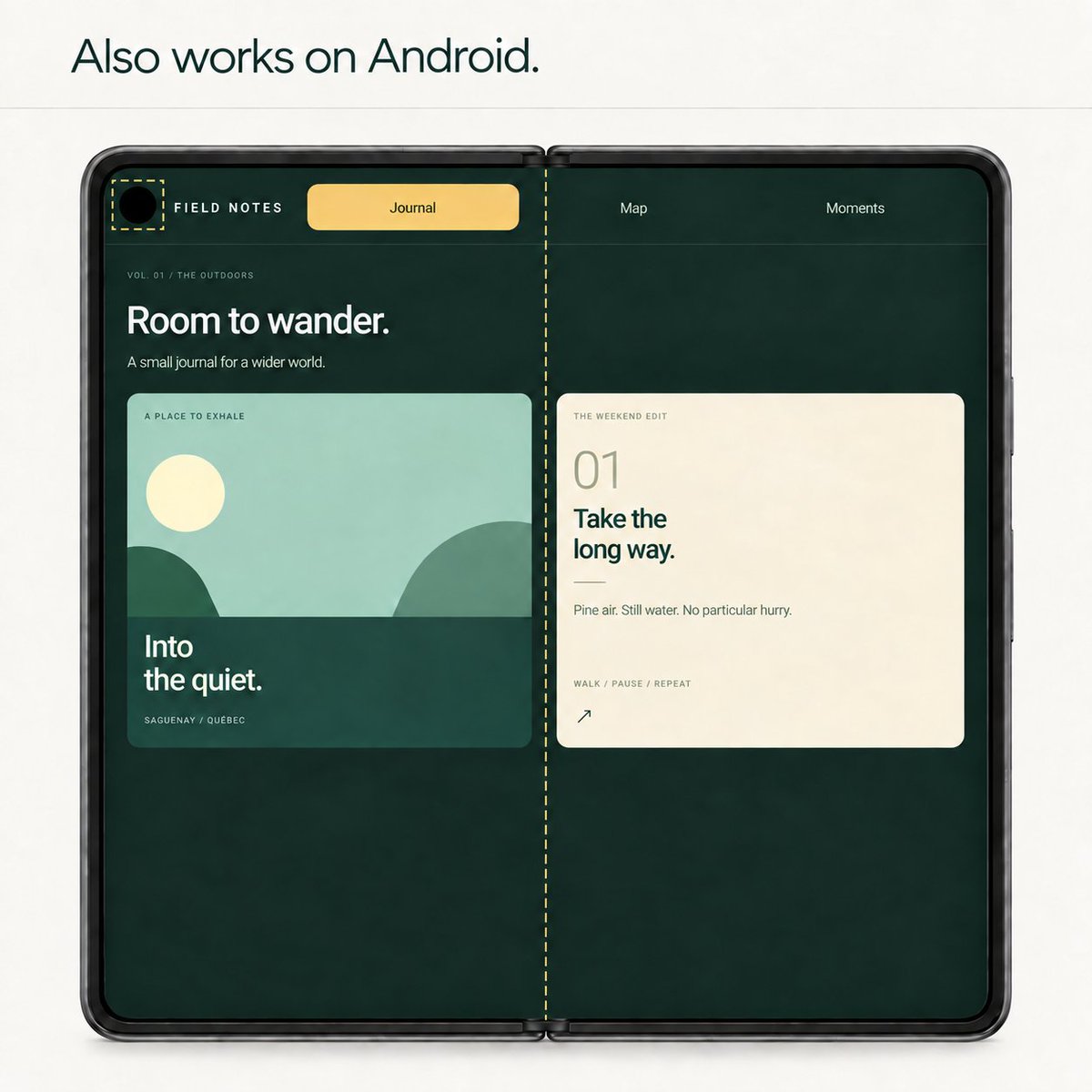
Maximize your chances of being featured by Apple by following @expo's guide to making your app optimized for Duo.
It mentions reserved-regions, which we've created and open-sourced while preparing our partners' apps. Simply follow the guide!
A line of people waiting to enter because the Wi-Fi drops isn't acceptable when Fortune 500 companies organize events.
Today we share how we built an offline-first system that has handled 3 million+ check-ins since launch for our partners @swoogo .
Link in reply.
Congratulations to our partners @fin for hitting such an important milestone! We helped build one of the most polished fin tech products on the market.
We’ve passed $1 billion in annualized payments.
We’re one of the few crypto companies that can say 100% of the businesses on Fin are non-crypto companies.
Safe area insets aren’t always enough on iPhone Duo.
Meet react-native-reserved-regions, a sister library to react-native-safe-area-context.
Apple’s new reserved regions API, in React Native. Let your UI make room for folds, camera cutouts, and system controls.
Android too.
Keep a toolbar clear of a camera cutout. Split content around a fold.
The API gives you region bounds relative to your provider view, so you can decide how your layout adapts.
While working on Stim, we had to make sure it actually brings value. To do this we built an evaluation suite and viewer. This allowed us to see exactly what an agent with Stim does vs one without.
You can play with it on our website: https://t.co/m73Khz3OtB
Some interesting findings:
- The different models perform similarly, so cheaper models are best.
- There is more variance for the agent not using Stim, as it tends to try different things.
- The token usage for the agent using Stim is a lot smaller since the output is optimized.
Our teammate @janicduplessis joined our friends at @callstackio to talk about our animation library, React Native Ease, on their podcast React Universe On Air.
The episode covers the motivations behind building it, when to use it, and why Reanimated is still the go-to library for gesture-driven animations.
Simple motion should not always require complex machinery. @lukasz_app talks with @janicduplessis from @AppAndFlow about React Native Ease, the gap it fills, where Reanimated still wins, and why less work can matter for simple transitions ⬇️
We've been using it internally for a bit and it is working very well for us. MIT license, open source, we would love to hear from you if you give it a try!
Repo: https://t.co/SrPBsLYb49
Engineers today run several agents in parallel. On a React Native app, those agents fight over ports, simulators, and rebuilds.
Today we're open-sourcing Stim, our agent-first CLI that gives each agent its own isolated RN/@expo environment.
Same task, same model, same M4 Mac mini:
- New worktree
- Make the change
- Launch iOS
- Verify the screen.
💉 Stim: 2m14s
🏠 Local Expo + Apple tooling: 10m11s
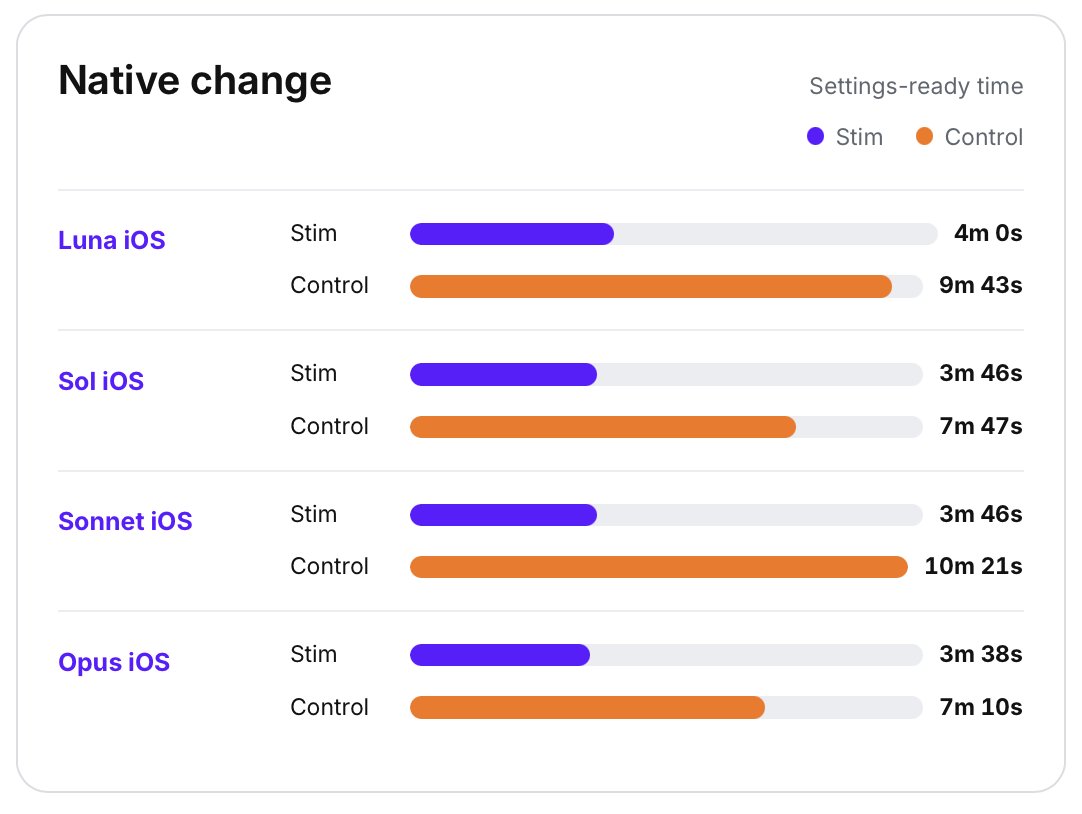
🔁 Native change: 4m10s vs 12m1s.
🧑🔧 Launch-error recovery: 3m18s vs 11m54s.
How we got here, with methodology and logs:
https://t.co/b5icOrSkYF