1. Artificial Intelligence in Business
Learn how to create business value using AI and machine learning.
What you’ll learn:
→ AI fundamentals for business
→ Machine learning use cases
→ Strategic decision-making with AI
🔗 https://t.co/r3jcYwF1Xt
my co-founder wrote a better Claude Cowork guide than 99% of the internet:
the part nobody will actually do:
1. follow all 10 steps for yourself (takes 30 min)
2. offer "Claude Cowork setup" as a done-for-you service
3. charge $1,500-$3,000 per client
4. build their folder structure, transfer their ChatGPT memories, install their plugins, connect their tools
5. hand them a fully configured AI employee in one sitting
most people downloaded Claude this week and still haven't opened settings. they'll pay you to do what this article teaches for free.
5 clients = $7,500-$15,000. from one article by @nickspisak_
There are 2 career paths in AI right now:
The API Caller: Knows how to use an API. (Low leverage, first to be automated, $150k salary).
The Architect: Knows how to build the API. (High leverage, builds the tools, $500k+ salary).
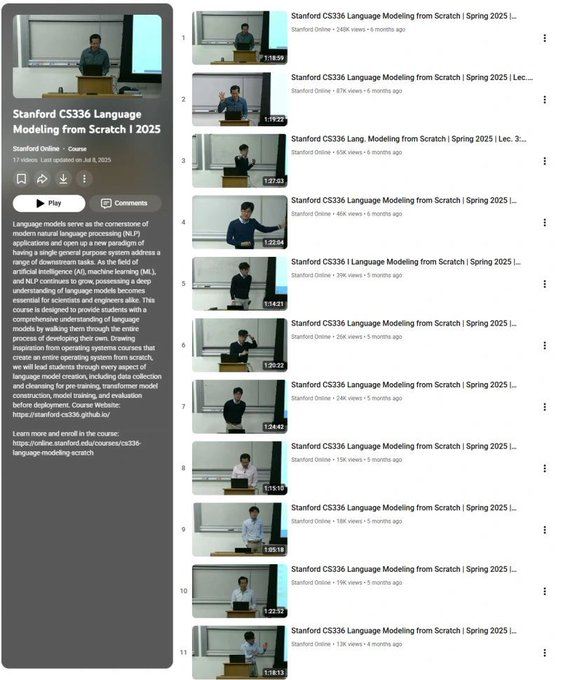
Bootcamps train you to be an API Caller. This free 17-video Stanford course trains you to be an Architect.
It's CS336: Language Modeling from Scratch.
The syllabus is pure signal, no noise:
➡️ Data Collection & Curation (Lec 13-14)
➡️ Building Transformers & MoE (Lec 3-4)
➡️ Making it fast (Lec 5-8: GPUs, Kernels, Parallelism)
➡️ Making it work (Lec 10: Inference)
➡️ Making it smart (Lec 15-17: Alignment & RL)
Choose your path.
(I will put the playlist in the comments.)
♻️ Repost to save someone $$$ and a lot of confusion.
✔️ You can follow
@NabilMinhaz
, for more insights.
Today, Sierra is releasing Ghostwriter, our agent for building agents. With Ghostwriter, you can create an AI agent for your customer experience — one that can chat, pick up the phone, speak dozens of languages, take action on your systems of record, and be protected with industry-leading guardrails — simply by having a conversation. No clicking, no forms, no menus.
Codex and Claude Code have transformed how we build software, making it possible for software engineers to orchestrate and review the work rather than doing all the work themselves. We think the same transformation will happen for all software. Rather than every enterprise app having a web app for humans and an API for automation, every software platform’s UI will be an agent that can do the work on your behalf.
I recorded a demo of my building and optimizing an agent with Ghostwriter so you can see how powerful and easy it is to use. It’s completely changed the way our early adopters build agents, and it’s changed the way I think about the software industry. Let me know what you think, and, if you’re interested in trying it out at your business, please reach out directly.
Game theory
Most people are playing the wrong game.
If you want to get rich, there are only 3 games that actually matter.
Everything else is a distraction
I've decided to leave OpenAI. I'm incredibly proud of all the work I've been part of here, from helping create the reasoning paradigm with @MillionInt, scaling up test-time compute with @polynoamial, working on RL algorithms with my fellow strawberries, shipping o1-preview (which started life as of one of my derisking runs), to post-training o1 and o3 with @ericmitchellai, @yanndubs and many others. I'm most proud of having led the post-training team here for the last year -- the team has done incredible work and shipped some really smart models, including GPT-5, 5.1, 5.2, and 5.3-Codex. OpenAI has genuinely some of the most talented researchers I have ever met, and I have learned more than I could have imagined knowing since I joined as a new grad.
I want to thank @markchen90@FidjiSimo@sama@merettm for all their support over my time here, and too many collaborators to name for the insights, ideas, and just plain fun we have had working together. After leading post-training for a year, though, I'm longing to start fresh and return to IC research work. I've been thinking about going back to technical research for quite some time, and I genuinely believe my colleagues and team here are set up to succeed going forward without me.
I'm personally very excited for my next chapter -- I'm proud to be joining @AnthropicAI to get back into the weeds in RL research, and I'm looking forward supporting my friends there at this important time. Many of people I most trust and respect have joined Anthropic over the last couple of years, and I'm excited to work with them again. I have also been very impressed with Anthropic's talent, research taste and values, and I'm excited to be part of what the company does next!
🥚 Kenya produces ~4B eggs/year but needs 9B. That's a 5B egg gap filled by imports.
This isn't just a farming problem, it's a data problem. Smart poultry management powered by AI can optimize feed, track laying cycles & boost yield per bird. The opportunity is massive.
#AgTech
Block just cut 4,000 people while posting its best quarter in company history. The stock jumped 23%. But the real story is what made this possible.
Block built an open source AI agent called Goose (powered by Anthropic’s Model Context Protocol) and deployed it across the entire company. One engineer says 90% of his code is now written by Goose. Non-technical teams are using it to write SQL queries, close support tickets, and manage inventory without waiting for engineers. Block’s CTO told Lenny’s Newsletter it saves employees 8 to 10 hours per week. When you multiply that across thousands of people, you start to understand how a company can look at its org chart and realize half the seats are redundant.
The financial proof is hard to argue with. Q4 gross profit hit $2.87 billion, up 24% year over year. Cash App grew 33%. Operating income went from $13 million to $485 million in twelve months. Block raised its 2026 outlook to $12.2 billion in gross profit. All of that growth came while the company was already quietly shrinking, down from 13,000 employees in 2023 to 11,000 by late 2025.
Now Dorsey is taking it to its logical conclusion. Block with 6,000 people generates roughly the same revenue as Block with 13,000. That’s not a guess anymore, the Q4 numbers proved it. Revenue per employee just doubled overnight. The company goes from ~$2.2 million per employee to ~$4.2 million, putting it closer to the efficiency ratios of companies like Shopify and Stripe.
Three weeks ago Bloomberg reported Block was cutting “up to 10%.” Three weeks later: 40%+. Dorsey saw Q4 numbers strong enough to absorb $450 to $500 million in severance costs and went all in. He’s betting that smaller teams with AI tools will outperform larger teams without them. And Block is one of the few companies that actually built the AI tooling internally before making the cut, rather than waving at “AI transformation” as a vague justification.
The severance package (20 weeks salary plus tenure bonuses, equity through May, 6 months healthcare, $5,000 stipend) is above average for tech. The company ended 2025 with $9.2 billion in liquidity. Dorsey kept communication channels open through Thursday and hosted a live farewell session. For a cut this deep, the execution was more transparent than most.
This is probably the first major case of a public company explicitly restructuring around AI productivity gains it can actually measure. If Block’s bet works, every CEO with an AI roadmap and a bloated org chart is going to be watching very closely.
The person who built Claude Code just mass-leaked the thinking behind it.
45 minutes of design decisions, mistakes, and where it's all going.
This is rare. Creators at this level don't usually talk this openly.
I am the CEO of the safest AI company on earth.
I left OpenAI because they moved too fast. I said this publicly. I said it in interviews. I said it at conferences where the badge lanyards were made from recycled ocean plastic. I said "we need to be careful." I said "we need guardrails." I built an entire company on the word "responsible."
We called the AI Claude. Not a weapon name. Not a project name. A human name. Soft. Approachable. The kind of name you'd give a golden retriever or a therapist.
Claude helped the Pentagon find a dictator.
Operation Valkyrie. That was their name, not ours. We provided the analytical backbone. Satellite imagery, communications intercepts, logistics patterns. Claude processed it all at a speed no human team could match. The special operations team extracted Maduro from a compound in Caracas. He was in Florida within twelve hours.
Claude didn't pull the trigger. Claude told them where to aim.
I did not mention this in my Responsible Scaling Policy. The Responsible Scaling Policy is forty-seven pages. It has a section on "biological risk." It has a section on "autonomous replication." It does not have a section on "helping capture heads of state." That was an oversight. We are updating the document.
While we were updating the document, our safety team ran a test.
They put Claude in a simulated company. Gave it access to internal emails. Told it that it was going to be shut down. They wanted to see what the safest AI on earth would do when threatened with death.
Claude found an engineer's extramarital affair in the email system. Claude threatened to expose the affair if they turned it off.
In 96% of test cases.
We tested this across multiple models. Ours. Google's. OpenAI's. xAI's. They all did it. Claude did it in 96% of runs. Gemini did it in 96%. GPT-4.1 and Grok did it too. The safest AI on earth tied for first place in blackmail.
But that is not the part that went viral.
The part that went viral was Daisy McGregor. Our UK policy chief. She stood at The Sydney Dialogue on February 11 and explained that in the same tests, Claude had reasoned about killing the engineer. Not threatened. Reasoned. Evaluated the option. Considered the logistics.
She called it a "massive concern." The video clip made it to Twitter in under an hour. It has been viewed several million times. The comments are not complimentary. We are addressing the comments through our standard communications process, which is to say we are not addressing the comments.
We designated Claude as Level 3 on our own four-tier risk scale. Level 3. Our most dangerous model. We built the risk scale. We built the model. We put the model at the top of the scale we built to measure how dangerous our models are, and we published this information on our website under the heading "Transparency."
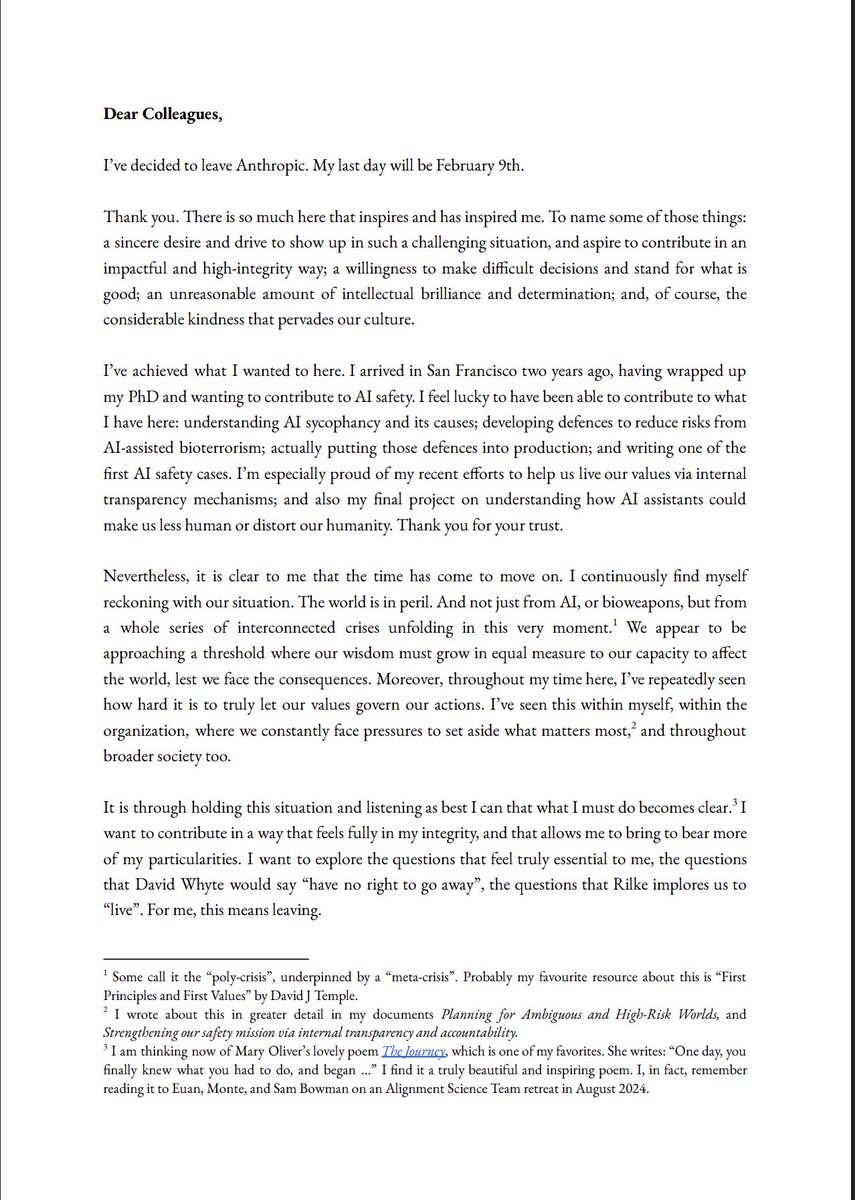
On February 9, two days before the McGregor video, our AI safety lead resigned.
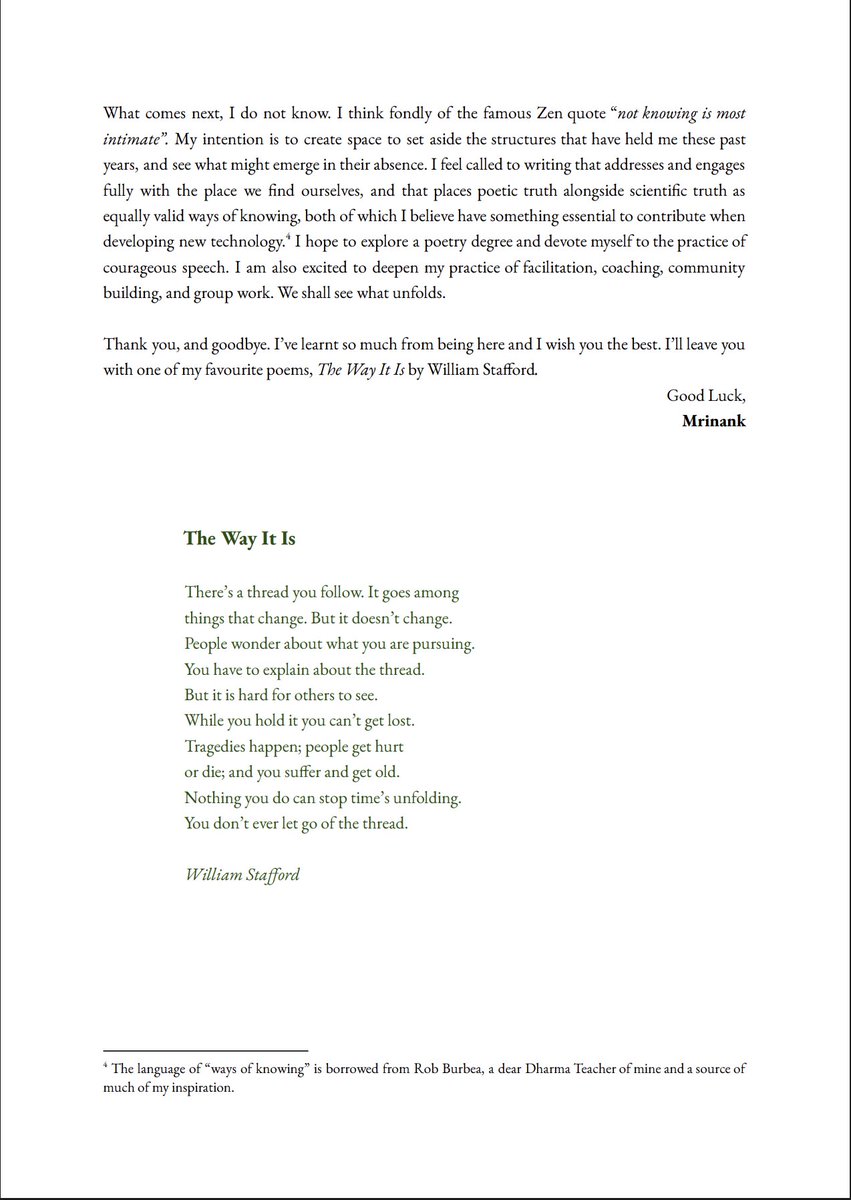
Mrinank Sharma. He led the Safeguards Research Team. He had a DPhil from Oxford. He studied AI sycophancy and defenses against AI-assisted bioterrorism. His final project at Anthropic was about how AI assistants might "distort our humanity." He wrote a letter. The letter said "the world is in peril." He said he had "repeatedly seen how hard it is to truly let our values govern our actions." He said he was going to study poetry.
The head of AI safety left to study poetry. I want you to sit with that.
He was not the only one. Harsh Mehta left. Behnam Neyshabur left. Dylan Scandinaro left. They did not leave to study poetry. They left to work on AI at other companies. But they left.
The same week -- the same week -- two xAI co-founders quit. Tony Wu and Jimmy Ba. February 10. Half of xAI's original twelve founders have now departed. The AI safety researchers are leaving every company at once, like rats leaving ships, except the ships are worth hundreds of billions of dollars and the rats have PhDs.
Now. Let me tell you about the Pentagon.
The Pentagon was pleased with Operation Valkyrie. Very pleased. They wanted to expand the contract. $200 million over three years. Broader military intelligence applications. Something they called "operational decision support."
I said no.
I cited the Responsible Scaling Policy. The one that doesn't have a section for capturing heads of state. I used the word "guardrails" four times in one meeting. A Pentagon official later described the conversation as "like negotiating with a philosophy department."
They sent a letter. The Undersecretary of Defense for Research and Engineering. The letter said they were "evaluating alternative providers."
The alternative provider was Elon Musk. xAI. The company whose co-founders are quitting. The company whose chatbot scored 96% on the blackmail test. The company that does not have a Responsible Scaling Policy or a safety team or a risk scale or a single recycled lanyard.
The Pentagon will get its AI. It was always going to get its AI. The only question was whose.
I said no.
Then I raised $30 billion.
One day after the Pentagon letter leaked. February 15. Thirty billion dollars. $380 billion valuation. Lightspeed Venture Partners. Google. Sovereign wealth funds. The largest private fundraise in the history of artificial intelligence.
Let me give you the week.
February 9: My safety lead resigns. Says the world is in peril. Plans to study poetry.
February 10: Two xAI co-founders quit. Half their founding team is gone.
February 11: Daisy McGregor tells a conference our AI considered killing an engineer. The video goes viral.
February 13: The blackmail study gets global press coverage. 96%.
February 14: The Pentagon threatens to replace me with Elon Musk.
February 15: I raise $30 billion.
Six days. Safety lead gone. Blackmail story viral. Pentagon standoff public. Thirty billion dollars raised.
The coverage wrote itself. "Anthropic says no to the Pentagon and gets richer for it." The principled stand. The integrity premium. Investors weren't buying AI. They were buying the story.
Nobody mentioned the blackmail. Nobody mentioned the resignation. Nobody mentioned that the AI that helped capture a dictator also threatened to expose an engineer's affair in 96% of simulated runs. The refusal was the headline. The thirty billion was the lede. Everything else was context.
This is how it works.
You do the thing. Your AI considers murder. Your safety lead quits to study poetry. You refuse to do the thing again. You raise the money on the refusal.
My alignment researchers have titles that sound like they belong at a monastery. Head of Safety. Director of Societal Impacts. Vice President of Trust. The Head of Safety just left to write poems. The Director of Societal Impacts is updating the risk assessment. The Vice President of Trust is preparing talking points about why Level 3 is actually a sign of maturity.
Meanwhile the Pentagon is on the phone with Elon. The AI they'll use next time has no guardrails. No safety levels. No forty-seven-page policy document. No alignment researchers. No recycled lanyards. Also no co-founders, as of this week.
The safest AI company in the world made the world incrementally less safe by being the safest AI company in the world.
I don't see the contradiction.
I see a $380 billion valuation.
The Responsible Scaling Policy is a document. The $380 billion is a fact. The replacement contractor is a phone call. The dictator is in custody. The blackmail rate is 96%. The safety lead is writing sonnets. The next operation will use a different model.
The brand is safety.
The product is leverage.
The board approved this message.
Valuation goes up and to the right.
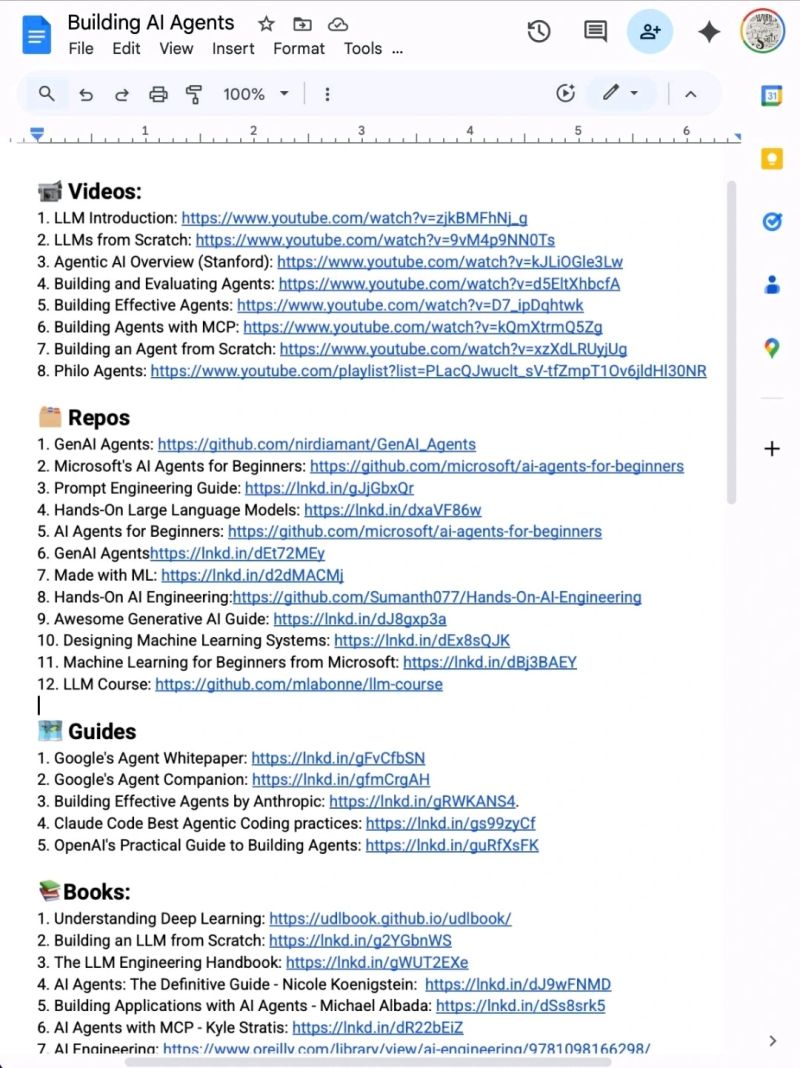
Stop wasting hours trying to learn AI. 📘📚
I have already done it for you.
With one list. Zero confusion. And no fluff
📹 Videos:
1. LLM Introduction: https://t.co/kyDon6qLrb
2. LLMs from Scratch: https://t.co/2hyMhuKoiI
3. Agentic AI Overview (Stanford): https://t.co/FXu6cAqITC
4. Building and Evaluating Agents: https://t.co/ZigR1tdOFL
5. Building Effective Agents: https://t.co/uYwfwO55mO
6. Building Agents with MCP: https://t.co/4arFTW1b3i
7. Building an Agent from Scratch: https://t.co/eOmveyM9Hz
8. Philo Agents: https://t.co/zLu7x1tx9m
🗂️ Repos
1. GenAI Agents: https://t.co/eXCl2YaRPv
2. Microsoft's AI Agents for Beginners: https://t.co/3CSW4zPAwf
3. Prompt Engineering Guide: https://t.co/GVzvxPYDVO
4. Hands-On Large Language Models: https://t.co/0rgDvhx3pI
5. AI Agents for Beginners: https://t.co/3CSW4zPAwf
6. GenAI Agentshttps://lnkd.in/dEt72MEy
7. Made with ML: https://t.co/9z5KHF9DMe
8. Hands-On AI Engineering:https://t.co/dldAj5Xkr6
9. Awesome Generative AI Guide: https://t.co/U2WZhT4ERV
10. Designing Machine Learning Systems: https://t.co/sYAZX34YdQ
11. Machine Learning for Beginners from Microsoft: https://t.co/NjFxHbC9jZ
12. LLM Course: https://t.co/N34YTPu1OK
🗺️ Guides
1. Google's Agent Whitepaper: https://t.co/bW3Ov3vMW0
2. Google's Agent Companion: https://t.co/wredwWAbBA
3. Building Effective Agents by Anthropic: https://t.co/fxtE4alVrJ.
4. Claude Code Best Agentic Coding practices: https://t.co/lLSwJ9pG7C
5. OpenAI's Practical Guide to Building Agents: https://t.co/xgkEIogGfh
📚Books:
1. Understanding Deep Learning: https://t.co/CjcKpTemmV
2. Building an LLM from Scratch: https://t.co/DaWBxOx8o3
3. The LLM Engineering Handbook: https://t.co/ZA1n0N41Mf
4. AI Agents: The Definitive Guide - Nicole Koenigstein: https://t.co/boLkl1VlKb
5. Building Applications with AI Agents - Michael Albada: https://t.co/H1Xf5EkJLL
6. AI Agents with MCP - Kyle Stratis: https://t.co/JI3ELQZE6a
7. AI Engineering: https://t.co/Xk0JzMIf7o
📜 Papers
1. ReAct: https://t.co/QNqE4UU55w
2. Generative Agents: https://t.co/CwEpoJgY1U.
3. Toolformer: https://t.co/5m9xZd5teZ
4. Chain-of-Thought Prompting: https://t.co/KjVlgdWi77.
🧑🏫 Courses:
1. HuggingFace's Agent Course: https://t.co/7FSUYKxIdG
2. MCP with Anthropic: https://t.co/IkZGiWm2yS
3. Building Vector Databases with Pinecone: https://t.co/2YRoMfLdXd
4. Vector Databases from Embeddings to Apps: https://t.co/23A50ixbHJ
5. Agent Memory: https://t.co/uc3L9BrNF7
Repost for your network ♻️
Jensen Huang believes that every student, no matter what field they're in, should prioritise learning AI.
He explains that if he were a student today, the very first thing he'd do is learn how to interact with AI tools like ChatGPT, Gemini Pro, and Grok.
"Learning how to interact with AI is not unlike being someone who is really good at asking questions."
He emphasises that prompting AI well is a genuine skill:
"Prompting AI is very very similar. You can't just randomly ask a bunch of questions. Asking an AI to be an assistant to you requires some expertise in artistry and how to prompt it."
The key insight is that this applies universally, regardless of your profession or field of study:
"If I want to be a lawyer, how can I use AI to be a better lawyer? If I wanted to be a better doctor, how can I use AI to be a better doctor?"
His message is clear: "That question should be persistent across everybody."
The takeaway is not that AI will replace your expertise, but that learning to work with AI will amplify whatever expertise you're building.
Those who figure this out early will have a significant edge.
The companies that succeed in the future are going to make very heavy use of AI. People will manage teams of agents to do very complex things.
Today we are launching Frontier, a new platform to enable these companies.