Asmita Dey -
"My Papa cannot see this, but this Commonwealth Games gold medal is for him.
He died of a brain stroke seven months ago. 😢
My Papa was a cycle mechanic who earned barely ₹300 a day. He raised our family in a mud house in a small village in Tripura.
He always supported me. After my knee injury, he took me to Delhi for treatment"
A historic achievement for India! 🇮🇳🥇
Heartiest congratulations to Dilip Mahadu Gavit on winning Gold in the Men's 100m T47 at the #CommonwealthGames2026 in Glasgow with a new Games Record of 10.71 seconds.
Jai Hind! 🇮🇳
पिता सायकल रिपीयरिंग का काम करते हैं
बेटी ने इतिहास की दिशा बदल दी
असम की अस्मिता ने भारत के नाम बनाया रिकॉर्ड
"कॉमनवेल्थ में पहला गोल्ड मेडल"
भारत की बेटी पर गर्व है 🇮🇳🫡
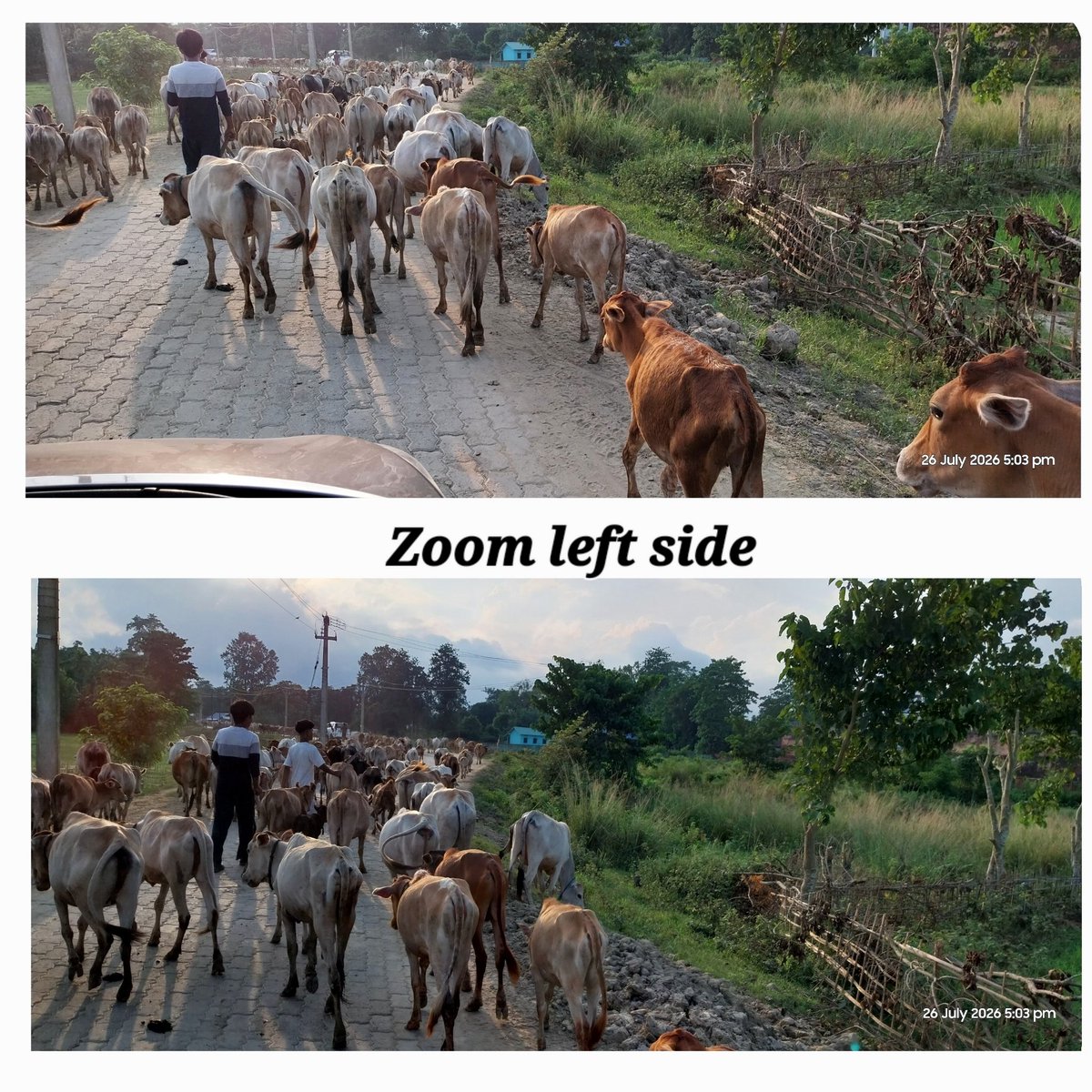
It's Milk Sagar, No need to proof Purity Certificate, fell like Shri Krishna Gokul Dham.
If you fell unhealthy come here and stay for few days. Milk, Crude,Cream,paneer each item is available.
#Milk@Nupurkunia@ZeeBusiness
In 1997, a footballer accidentally proved a physics principle in a soccer game that had been invisible for 300 years.
Roberto Carlos lined up for a free kick about 40 yards from goal during a France versus Brazil friendly match in Paris.
The ball sat exactly where a free kick should sit, the French wall stood between him and the goal, and everyone in the stadium knew what was about to happen. Carlos was about to attempt something that shouldn't exist in physics.
He struck the ball with his left foot at an extreme angle, nearly perpendicular to where the goal actually was. The ball curved so dramatically through the air that French goalkeeper Fabien Barthez literally didn't move. He watched it arc impossibly wide, certain it was going nowhere, his body language screaming "that's out." Then the ball bent back toward goal like it was magnetized. It crossed the goal line before Barthez could process what his eyes had just witnessed. Goal.
The stadium went silent for a second.
Then chaos.
That moment became legendary not because it was a beautiful goal, though it was, but because it revealed something about physics that most people had never actually *seen* in real time before. The ball had broken the straight line. It had obeyed a force that existed entirely in the air, invisible to the naked eye, bending space itself through sheer rotation.
That force is called the Magnus effect, and it's been hiding in plain sight in sports for over a century. Every curveball in baseball, every spinning tennis serve, every banana kick in football, every slice shot in golf. They all ride on the Magnus effect. But Carlos's free kick was different. It was the perfect storm of velocity, spin rate, and distance that made the force so visually obvious that even people who'd never heard the word "Magnus" understood something supernatural had just occurred.
Here's what actually happened in the physics.
When you strike a spinning ball with enough velocity through the air, the rotation creates a pressure differential on either side of the ball. The side spinning with the direction of motion builds up a layer of fast moving air that stays attached to the ball's surface. The opposite side spinning against the direction of motion sheds that air layer and creates lower pressure. You end up with higher pressure on one side and lower pressure on the other. Bernoulli's principle then drags the ball toward the lower pressure region. The ball curves.
That's the Magnus effect in its purest form.
It's fluid dynamics.
But here's where most explanations stop and where most people fail to grasp the real picture. The Magnus effect is *proportional* to the spin. Double the spin rate and you approximately double the curvature. But it's also proportional to the surface area. A larger ball, all else equal, experiences more Magnus effect than a smaller one. And it's wildly proportional to velocity. Lower the speed too much and the curve becomes almost nonexistent. Add speed and the curve amplifies. This is why a baseball pitcher's curveball becomes more dramatic at higher velocities, why a tennis serve curves more than a lob, and why Carlos's free kick had to travel at a certain speed to work.
Carlos struck that ball at precisely the intersection point where spin and velocity aligned to produce maximum curve over that distance. Any slower and it lands straight in the wall. Any faster and it overcorrects and misses wide. The goal was practically a mathematical solution to an equation nobody needed to solve except his foot somehow did it perfectly.
The reason this moment matters beyond football is that it made visible something that had been operating invisibly in physics and engineering for centuries. The Magnus effect powers helicopter rotors. It's why airplanes have wings. It's why you can throw a frisbee and it actually stays airborne instead of just dropping like a stone. Every spinning object moving through air experiences it. Every sport that uses a ball depends on it.
Yet most people go their entire lives without consciously recognizing this force exists.
What Carlos did was compress a century of physics education into three seconds of visible reality. He created an experiment that couldn't be ignored or dismissed or explained away. The ball curved. The goalkeeper saw it. The universe didn't change. Nothing magical happened. Just matter responding to force across empty space in exactly the way the math predicted.
The interesting part isn't that it worked. The interesting part is that we'd organized the entire sport of football for decades without truly understanding why the ball did what it did. Strikers had developed intuition about how to make a ball curve, but that intuition was operating in the dark. They couldn't articulate the relationship between spin and speed and distance. They just knew that if you hit it a certain way, it would curve a certain amount.
Then Carlos made it visible.
What happened after was instructive. Within a few years, every serious free kick taker started studying the Magnus effect. Sports scientists began measuring spin rates with new technology. Training programs started including tutorials on precisely where to strike the ball, how much curve you could generate at different velocities, how wind affected the trajectory. The gap between top tier free kick takers and everyone else widened because now you could *understand* the phenomenon you were trying to exploit.
Science doesn't change physics. It just brings the invisible into focus.
That free kick lived in the gap between intuitive mastery and conscious understanding. Carlos had mastered the Magnus effect through pure repetition and feel. But once everyone else saw it work that clearly, you couldn't claim ignorance anymore. You had to reckon with what was actually happening in the air.
In some sense, that's what every great demonstration does. It takes something that was operating beneath the surface of our attention and makes it unavoidable. The double slit experiment did that for quantum mechanics. The Michelson Morley experiment did it for the aether. A free kick did it for aerodynamics, and most of the world never even realized they were watching physics.
The next time you watch a free kick curve perfectly into goal, understand that you're watching the Magnus effect in action. You're watching air pressure differentials, Bernoulli principles, and rotational velocity align perfectly. You're watching physics become soccer.
And somewhere, a physicist is probably jealous that a football player got to make it look more beautiful than any equation ever could.
एक गलत मेडिकल टेस्ट जो 50 साल तक चलता रहा PCOS...
देश की 8 करोड़ महिलाओं के शरीर को बर्बाद किया इसके आधार पर इलाज करके।
मेडिकल जर्नल 'द लैंसेट' ने अब डॉक्टर्स और रेडियोलॉजिस्ट की मूर्खता को जगजाहिर कर दिया है।
लेकिन करोड़ों महिलाओं के ऑपरेशन करके ओवरी निकालकर बांझ बना दिया।
PCOS कोई बीमारी नहीं थी, असल समस्या पैदा करता था पैंक्रियाज जो ज्यादा इंसुलिन बनाकर ओवरी को गलत मैसेज देता था।
जिसे ओवरी में मौजूद खराब एग्स को सिस्ट समझकर ओवरी निकाल दी जाती थी।
भारतीय महिलाओं में ज्यादा इंसुलिन प्रतिरोध क्षमता होती है। जिसके चलते यह समस्या आती है। अब बीमारी को इसका सही नाम दिया गया है PMOS।
असली समस्या इवोल्यूशन से जुड़े खान-पान की आदतें रही या न्यूट्रिशन की थी, जो कई हार्मोन के डिस्टर्ब होने से होती है। डॉक्टर्स गलत इलाज में जुटे रहे।
#PCOS #MedicalScience
An Indonesian YouTube channel called Albumology has built a fascinating library of retro Hindi classics, reimagined in Reggae/Ska.
Using local Indonesian session musicians and vocalists, they’ve given these songs an entirely new cultural texture.
I came across this rendition of Neele Gagan Ke Tale in a post by @SHEKARSUSHEEL
I couldn’t stop playing it on loop.
It’s now downloaded and will become a permanent part of my road trip playlist.
The original, in the immortal voice of Mahendra Kapoor, is, of course, beyond comparison.
But this arrangement gives the song a universal feel. It’ll make you tap your feet, no matter where you come from.
And listening to the lyrics again, I was struck by how beautifully they celebrate the natural world. Long before sustainability became a global movement, this song was already reminding us of our bond with the planet. Perhaps it deserves to be an anthem for that cause.
#SundayWanderer
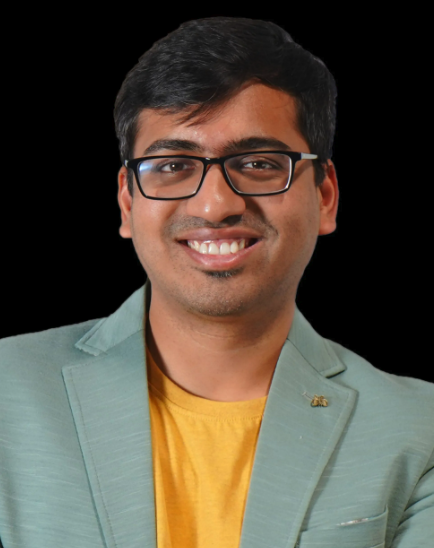
Meet Pawan Kumar Chandana, the man who scored 51 marks in maths as a schoolboy and went on to build India's first private rocket.
Born in 1991 and raised in Visakhapatnam, Chandana grew up in a middle class household. Maths was a weak spot until entrance exam prep turned it into an obsession, and that push got him into IIT Kharagpur in 2007 for a dual degree in Mechanical Engineering.
He joined ISRO in 2012, working on the GSLV Mk3 heavy lift vehicle. But he wanted to build a private rocket industry in a country where that barely existed.
In 2018, along with fellow ISRO engineer Naga Bharath Daka, he founded Skyroot Aerospace in Hyderabad. By 2020 they had tested India's first privately built rocket engine. Skyroot went on to launch Vikram-S, India's first private rocket, and the company is now valued at over 1 billion dollars.
Once defeated by numbers, now he counts stars - leading India toward the cosmos.
#Watch | 🚀 'Zero delay in launch authorisation'
Following Vikram-1's successful orbital mission, Skyroot Aerospace CEO Pawan Kumar Chandana hailed India's efficient regulatory ecosystem, saying the company received launch clearance without any delay—a stark contrast to the lengthy approval processes often seen globally.
"I have seen countries and companies wait a long time for launch authorisation. However, there was zero delay for the authorisation for our launch."
Chandana's remarks came after India's first privately developed orbital rocket successfully reached orbit, underscoring both the country's growing private space capabilities and the speed of its space regulatory framework.
#Vikram1 #SkyrootAerospace #IndiaInSpace #SpaceTech #ISRO