An Open Letter to Elon Musk
Dear Mr Musk,
Before addressing Mukesh Ambani as “Prime Minister”, explain why his own satellite venture is still awaiting the clearance you suggest he has prevented Starlink from receiving. An accusation that India’s government serves a businessman requires evidence. Sarcasm, however widely circulated, does not provide it.
Starlink already holds an Indian telecom licence. On October 8, the Ministry of Communications stated that Starlink, Jio Satellite Communications and Bharti-backed OneWeb remained at broadly the same regulatory stage, undergoing security assessment. You are entitled to question the duration of that process. A shared delay does not establish discrimination against your company.
India should provide a transparent, consistent and timely approval process. Its consumers deserve competition, and its domestic operators deserve no exemption from scrutiny. The same principle applies to you. Your wealth, technological achievements and political connections cannot confer privileges that you would condemn an Indian competitor for enjoying.
When did concern for poorer Indians become an entitlement to speak on their behalf? If affordability is your argument, present the service, the final price, the equipment costs and the conditions. Indian consumers can assess that proposition themselves. Their interests should not become a convenient justification for treating your commercial expansion as an obligation imposed on their government.
Improving those citizens’ lives is a responsibility shared by India’s elected government and Indian society. Foreign businesses can contribute substantially. That contribution earns revenue and, where deserved, respect. It does not give a company authority to decide which national safeguards are acceptable or to portray every unresolved requirement as an injustice against its prospective customers.
India has historical reasons to examine such claims carefully. The East India Company entered as a trading enterprise and accumulated political power. That history does not make every foreign investor a colonial project. It does explain why promises of progress will never be sufficient grounds for this country to stop asking who controls essential infrastructure, whose decisions govern it and where accountability lies.
Your own company’s record makes those questions concrete. A Reuters investigation reported that you ordered Starlink coverage cut in parts of Ukraine during its September 2022 counteroffensive, disrupting military communications. Reuters could not establish your precise motivation or the duration of the outage. Its findings nevertheless illustrate the vulnerability created when a country’s essential connectivity depends on decisions concentrated within one private company.
In Iran, you announced that Starlink’s beams were active despite the service lacking a local licence. Connectivity during a blackout can help civilians contact family, obtain information and document abuses. Those benefits deserve recognition. They also demonstrate the considerable influence exercised by whoever decides where service becomes available and under what conditions.
Power of that magnitude requires enforceable accountability. A government considering dependence on your infrastructure has to examine what happens when its requirements conflict with your judgement, your company’s interests or demands from another government. Personal assurances cannot resolve questions that must remain answerable through a crisis.
Myanmar provides another reason for scrutiny. Published reporting has documented Starlink terminals operating there without an official licence. What authorisation, if any, does SpaceX hold, and what controls determine which terminals can operate where commercial service is not approved? Indian regulators are entitled to establish how those controls would function along a sensitive international border.
The users of those connections include civilians and humanitarian organisations, as well as documented criminal networks. American lawmakers have themselves questioned Starlink’s alleged use by Southeast Asian scam operations. SpaceX subsequently reported disabling more than 2,500 terminals around suspected scam centres in Myanmar. That makes the effectiveness of your safeguards a practical question deserving a detailed answer.
None of this establishes a hidden operation against India. It establishes why security assessment cannot reasonably be dismissed as the work of an oligarch. Explain how unauthorised use is detected, how abuse is investigated, how geographic restrictions are enforced and how lawful Indian requirements will be met. These are ordinary responsibilities for a company seeking an extraordinary role in national communications.
The United States raised its Section 301 tariff on Chinese electric vehicles to 100% in 2024, placing a formidable barrier before manufacturers such as BYD and protecting domestic producers, including Tesla. You publicly opposed those tariffs, which deserves acknowledgement. India’s security clearance process is a different measure, but the underlying expectation should be consistent: access to a foreign market comes with conditions. Your objection to those conditions does not establish that the country imposing them has been captured by a competitor.
You will find local admirers willing to repeat your accusations. Their agreement does not substantiate them, nor does it authorise them to speak for the country. Indians can demand better governance at home while rejecting the assumption that a foreign billionaire’s frustration is an authoritative judgement on their institutions.
The wider inconsistency is also difficult to overlook. Washington reserves substantial discretion to restrict market access and adjust sanctions in response to its domestic priorities. Its October 9 authorisation of Russian-diesel transactions illustrates that flexibility. India’s energy needs, economic interests and security responsibilities deserve equally serious consideration.
Those American decisions are not yours to answer for. Your portrayal of India is. Calling the alleged obstruction of your business a “crime against the people of India” assumes that your preferred commercial outcome represents their interests more faithfully than a process you have yet to demonstrate is discriminatory. That is an extraordinary claim for a company seeking permission to operate.
India is a democracy with a civilisational history that long predates your businesses. Its people are capable of judging foreign technology, questioning their government and deciding which trade-offs they will accept. Criticism is part of that process. Belittling the country does not strengthen your case.
Your achievements have given you unusual influence over communications, commerce and public debate. That influence should deepen your sense of responsibility. Do not allow the power you have accumulated to persuade you that scrutiny is an insult or that disagreement must be evidence of corruption.
Offer India a competitive service. Demonstrate compliance. Publish evidence of obstruction if you have it. Your technology may earn Indian customers and a substantial place in their economy. Neither your ambition nor your impatience gives you authority over their country.
An Open Letter to Elon Musk
Dear Mr Musk,
Before addressing Mukesh Ambani as “Prime Minister”, explain why his own satellite venture is still awaiting the clearance you suggest he has prevented Starlink from receiving. An accusation that India’s government serves a businessman requires evidence. Sarcasm, however widely circulated, does not provide it.
Starlink already holds an Indian telecom licence. On October 8, the Ministry of Communications stated that Starlink, Jio Satellite Communications and Bharti-backed OneWeb remained at broadly the same regulatory stage, undergoing security assessment. You are entitled to question the duration of that process. A shared delay does not establish discrimination against your company.
India should provide a transparent, consistent and timely approval process. Its consumers deserve competition, and its domestic operators deserve no exemption from scrutiny. The same principle applies to you. Your wealth, technological achievements and political connections cannot confer privileges that you would condemn an Indian competitor for enjoying.
When did concern for poorer Indians become an entitlement to speak on their behalf? If affordability is your argument, present the service, the final price, the equipment costs and the conditions. Indian consumers can assess that proposition themselves. Their interests should not become a convenient justification for treating your commercial expansion as an obligation imposed on their government.
Improving those citizens’ lives is a responsibility shared by India’s elected government and Indian society. Foreign businesses can contribute substantially. That contribution earns revenue and, where deserved, respect. It does not give a company authority to decide which national safeguards are acceptable or to portray every unresolved requirement as an injustice against its prospective customers.
India has historical reasons to examine such claims carefully. The East India Company entered as a trading enterprise and accumulated political power. That history does not make every foreign investor a colonial project. It does explain why promises of progress will never be sufficient grounds for this country to stop asking who controls essential infrastructure, whose decisions govern it and where accountability lies.
Your own company’s record makes those questions concrete. A Reuters investigation reported that you ordered Starlink coverage cut in parts of Ukraine during its September 2022 counteroffensive, disrupting military communications. Reuters could not establish your precise motivation or the duration of the outage. Its findings nevertheless illustrate the vulnerability created when a country’s essential connectivity depends on decisions concentrated within one private company.
In Iran, you announced that Starlink’s beams were active despite the service lacking a local licence. Connectivity during a blackout can help civilians contact family, obtain information and document abuses. Those benefits deserve recognition. They also demonstrate the considerable influence exercised by whoever decides where service becomes available and under what conditions.
Power of that magnitude requires enforceable accountability. A government considering dependence on your infrastructure has to examine what happens when its requirements conflict with your judgement, your company’s interests or demands from another government. Personal assurances cannot resolve questions that must remain answerable through a crisis.
Myanmar provides another reason for scrutiny. Published reporting has documented Starlink terminals operating there without an official licence. What authorisation, if any, does SpaceX hold, and what controls determine which terminals can operate where commercial service is not approved? Indian regulators are entitled to establish how those controls would function along a sensitive international border.
The users of those connections include civilians and humanitarian organisations, as well as documented criminal networks. American lawmakers have themselves questioned Starlink’s alleged use by Southeast Asian scam operations. SpaceX subsequently reported disabling more than 2,500 terminals around suspected scam centres in Myanmar. That makes the effectiveness of your safeguards a practical question deserving a detailed answer.
None of this establishes a hidden operation against India. It establishes why security assessment cannot reasonably be dismissed as the work of an oligarch. Explain how unauthorised use is detected, how abuse is investigated, how geographic restrictions are enforced and how lawful Indian requirements will be met. These are ordinary responsibilities for a company seeking an extraordinary role in national communications.
The United States raised its Section 301 tariff on Chinese electric vehicles to 100% in 2024, placing a formidable barrier before manufacturers such as BYD and protecting domestic producers, including Tesla. You publicly opposed those tariffs, which deserves acknowledgement. India’s security clearance process is a different measure, but the underlying expectation should be consistent: access to a foreign market comes with conditions. Your objection to those conditions does not establish that the country imposing them has been captured by a competitor.
You will find local admirers willing to repeat your accusations. Their agreement does not substantiate them, nor does it authorise them to speak for the country. Indians can demand better governance at home while rejecting the assumption that a foreign billionaire’s frustration is an authoritative judgement on their institutions.
The wider inconsistency is also difficult to overlook. Washington reserves substantial discretion to restrict market access and adjust sanctions in response to its domestic priorities. Its October 9 authorisation of Russian-diesel transactions illustrates that flexibility. India’s energy needs, economic interests and security responsibilities deserve equally serious consideration.
Those American decisions are not yours to answer for. Your portrayal of India is. Calling the alleged obstruction of your business a “crime against the people of India” assumes that your preferred commercial outcome represents their interests more faithfully than a process you have yet to demonstrate is discriminatory. That is an extraordinary claim for a company seeking permission to operate.
India is a democracy with a civilisational history that long predates your businesses. Its people are capable of judging foreign technology, questioning their government and deciding which trade-offs they will accept. Criticism is part of that process. Belittling the country does not strengthen your case.
Your achievements have given you unusual influence over communications, commerce and public debate. That influence should deepen your sense of responsibility. Do not allow the power you have accumulated to persuade you that scrutiny is an insult or that disagreement must be evidence of corruption.
Offer India a competitive service. Demonstrate compliance. Publish evidence of obstruction if you have it. Your technology may earn Indian customers and a substantial place in their economy. Neither your ambition nor your impatience gives you authority over their country.
India has good reason to ask what an American trade concession is worth if the next foreign policy disagreement can put it back on the negotiating table. Read alongside FM Sitharaman’s statement that trade talks have reached a “plateau”, Dr. Jaishankar’s description of the US as a “lonelier power” raises a question about the reliability of the partnership itself.
That reliability matters because the demands surrounding these negotiations extend into India’s energy purchases and external relationships. Washington can seek better access to the Indian market, but New Delhi must assess what it is being asked to concede in return. If tariff relief requires wider political compliance, the price of the agreement reaches well beyond trade.
That wider price would eventually be borne by Indian businesses and households. Exporters need access to American buyers, just as the country needs affordable energy. The government has to protect both interests. Accepting lasting commitments in exchange for relief that remains vulnerable to fresh political demands could leave India facing the same pressure again, with fewer concessions left to offer.
This helps explain why expanding other partnerships has become more important. Dr Jaishankar’s emphasis on India - EU cooperation fits into a practical effort to create more room for Indian decisions. Alternative markets will take time to develop, but repeated American pressure strengthens the case for investing in them. Washington should expect that response from a country whose strategic cooperation it actively seeks.
India should therefore continue negotiating while steadily reducing the cost of walking away from unacceptable terms.
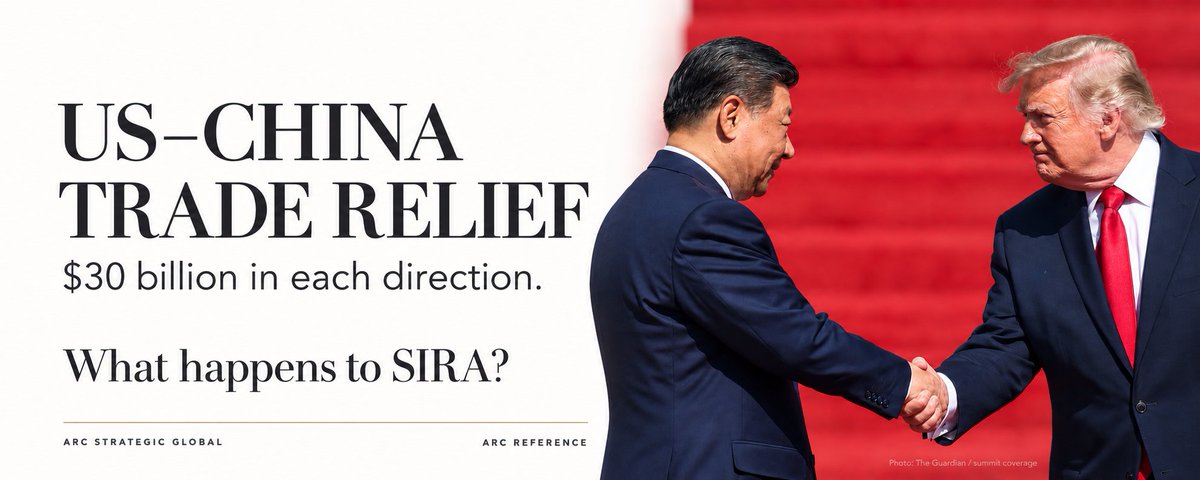
The proposed US–China tariff relief raises an immediate question about the Sanctioning Russia and Iran Act: how will Washington treat Chinese purchases of Russian energy compared with Indian purchases?
The understanding covers $30 billion of non-sensitive goods in each direction. That means $60 billion of trade covered, rather than $60 billion in tariff savings or new purchases. It comes shortly after Trump signed legislation targeting major buyers of Russian energy.
SIRA allows national-interest waivers, giving the administration considerable discretion over how that pressure is applied. The trade announcement does not establish that China has received such a waiver. Selected tariff reductions and sanctions-related duties could still coexist.
If China receives accommodation while India faces penalties for comparable purchases, Washington will need to explain the distinction. A commitment to buy American coal provides a commercial benefit to the United States, but does not itself demonstrate reduced Chinese purchases of Russian energy.
The wider concern is what this would signal to American partners. If the ability to impose costs secures greater flexibility, while cooperation leaves partners exposed to further demands, countries have an incentive to strengthen their alternatives and reduce their dependence on Washington.
The countries selected, duties imposed and waivers granted under SIRA will show how consistently the administration applies its stated policy towards Russia.
A tariff aimed at Moscow may land first on Indian exporters, American importers and households. The Graham Act tests more than Russian revenue. It tests whether partnership with Washington permits India an independent foreign policy. https://t.co/9noeyrg7CB
India is not in an American camp or a Russian camp. It acts in Indian interests. If Washington taxes unrelated Indian exports to influence an Indian energy purchase, the result may not be alignment. It may be faster diversification.
A tariff aimed at Moscow may land first on Indian exporters, American importers and households. The Graham Act tests more than Russian revenue. It tests whether partnership with Washington permits India an independent foreign policy. https://t.co/9noeyrg7CB
A tariff aimed at Moscow may land first on Indian exporters, American importers and households. The Graham Act tests more than Russian revenue. It tests whether partnership with Washington permits India an independent foreign policy. https://t.co/9noeyrg7CB
Israel’s regional relationships began with security, intelligence and practical need. From Egypt and India to the UAE and Saudi Arabia, this is how operational value began to move ahead of diplomacy. https://t.co/Tp9Wo7xLbh
Israel’s regional relationships began with security, intelligence and practical need. From Egypt and India to the UAE and Saudi Arabia, this is how operational value began to move ahead of diplomacy. https://t.co/Tp9Wo7xLbh
Pakistan can provoke a naval encounter. It cannot afford the contest that may follow. India’s advantage lies not only in fleet size, but in its ability to deploy, sustain, repair and replace maritime power.
A collision at sea is not merely a tactical incident. It exposes the widening gap in fleet depth, endurance and financial capacity between India and Pakistan, and why sustained naval escalation would impose costs Pakistan is poorly placed to absorb. https://t.co/KXhNr87F8u
A collision at sea is not merely a tactical incident. It exposes the widening gap in fleet depth, endurance and financial capacity between India and Pakistan, and why sustained naval escalation would impose costs Pakistan is poorly placed to absorb. https://t.co/KXhNr87F8u
A collision at sea is not merely a tactical incident. It exposes the widening gap in fleet depth, endurance and financial capacity between India and Pakistan, and why sustained naval escalation would impose costs Pakistan is poorly placed to absorb. https://t.co/KXhNr87F8u
You don’t need to own US bonds to feel their impact. Higher borrowing costs can reach household budgets far beyond America, while rising oil prices add pressure. Our latest article examines how - and why the burden is uneven. https://t.co/7o8Bri9eHe
You don’t need to own US bonds to feel their impact. Higher borrowing costs can reach household budgets far beyond America, while rising oil prices add pressure. Our latest article examines how - and why the burden is uneven. https://t.co/7o8Bri9eHe
You don’t need to own US bonds to feel their impact. Higher borrowing costs can reach household budgets far beyond America, while rising oil prices add pressure. Our latest article examines how - and why the burden is uneven. https://t.co/7o8Bri9eHe