Computer consulting / repair center. We fix (and build) laptops / desktops / servers. Onsite support for business, and website design/hosting. Linux / Mac / Win
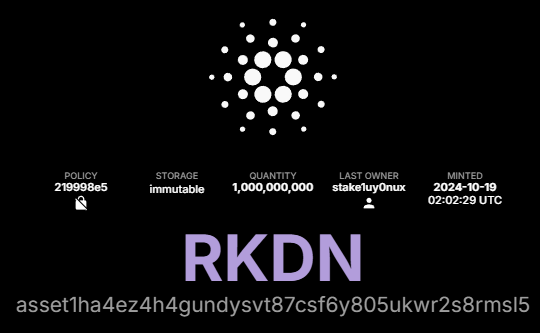
We decided years ago we wouldn't launch a #Cardano Native Token unless we had an actual application for it.
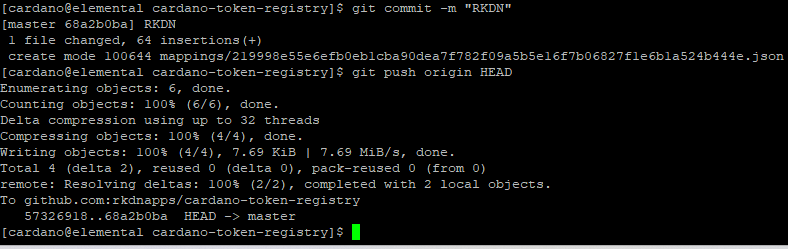
We're getting close to a beta release of that application so we're hoping our PR to a certain Github repo gets accepted!
https://t.co/6GMOcHyTEf
https://t.co/7NYU9BkNNm
So the AIpocalypse accelerates and we're using it to force the long overdue contraction of the blockchain space down to only the most viable, hardened chains.
If you haven't been there yet, we're crowdsourcing the use of AI to improve on a major upgrade (from Google) in the potential efficacy of quantum computers to break $BTC's security.
If you ever wanted to know more about secp256k1 and how Shor's algorithm will eventually allow the extraction of Bitcoin private keys directly from their associated public keys, have a look:
https://t.co/AE4iL93JDL
Today a crazy quantum story just got wilder.
On March 31, the Google Quantum AI team published a landmark result on Shor's algorithm for elliptic curve cryptography. Technically, the paper was a bombshell: a dramatic 10x improvement over the state-of-the-art. As a stunt and wakeup call to the blockchain space, those optimisations were illustrated on secp256k1, the elliptic curve underlying Bitcoin and Ethereum signatures.
But perhaps the most striking part of the paper was sociological, not technical. Instead of following standard academic process, the optimisations were kept secret, hidden behind a zero-knowledge (ZK) proof. Google's accompanying blog post mentions they "engaged with the U.S. government". The ZK proof demonstrates the existence of algorithmic improvements without leaking details. Academic censorship with ZK, a historic first!
As a co-author of the Google paper I witnessed some of the context surrounding this censorship. To be honest, multiple aspects of that context don't sit well with me. As much as I believe the general public ought to know more, I am limited in my ability to whistleblow. Though let me be clear about one thing: the Google team's professionalism has been absolutely exemplary, and they deserve nothing but praise.
Censorship has a way of backfiring. The Streisand effect, where an attempt to bury something only draws more attention to it, is exactly what's unfolding today. First, Google's key optimisation has been rediscovered by the French. And in a thrilling turn of events, a collaborative Shor-at-home challenge just launched. The initiative, available at ecdsa[.]fail, breached a new Shor world record in a matter of hours.
Let's start with the rediscovery. Just two months after Google's paper, French quantum expert André Schrottenloher cracks the main secret optimisation. His paper, titled "Optimized Point Addition Circuits for Elliptic Curve Discrete Logarithms", landed on the arXiv today. Big congrats to André, who beat several other nerdsnipped experts to it. In a blog post also published today, Craig Gidney, the world expert on Shor optimisations, revealed that he'd been sitting on this very optimisation for a whole year under censorship pressure.
Interestingly, André missed a handful of minor optimisations, both from Google's original publication and from improvements found since. It's plausible there's still plenty of juice left to squeeze out of Shor, and this is exactly what the ecdsa[.]fail challenge is about. The verifier program developed for the ZK proof does double duty, automatically filtering for valid submissions. Dozens of compounding small and micro improvements are rolling in. As of the time of writing there's an 8.4% improvement to Google's circuit, as measured by the product of logical qubit count and Toffoli gate count. Nice!
The nerdsnipping ran deeper than anyone expected. Over the last few weeks it became clear it extended well beyond André and other quantum experts. Behind the scenes, a small army of amateurs quietly got to work. Inspired by Karpathy-style autoresearch, they turned AI on Shor. Ironically, the verifier program for the ZK proof makes an ideal reward function for AIs. The barrier to entry for this modern style of research is refreshingly low, with several non-experts, even a teenager, finding nice optimisations. Get in touch if you'd like to join a Telegram group with fellow autoresearchers :)
Part 2: neutral atoms and qday
The story doesn't end with Google. On the same day Google went public, a stealthy startup called Oratomic published its own Shor paper in a coordinated release. It made a splash, ultimately becoming the most upvoted paper on scirate[.]com, a website ranking arXiv papers.
Oratomic's claim was wild. By building on Google's logical optimisations and applying custom physical optimisations for neutral atoms, they claimed just 10K physical qubits were sufficient to run Shor's algorithm on secp256k1. That number is mind-bogglingly low.
Knowing essentially nothing about neutral atoms when Oratomic's paper landed, I was intrigued and decided to learn more about the tech. I fell straight down the rabbit hole and spent a couple hundred hours on the topic. I got a little obsessed and watched every YouTube video I could find and spoke to a bunch of experts.
My conclusion? The tech is real, very real. Even Google recently decided to start a neutral atom lab, a notable pivot from their sole focus on superconducting qubits. If you care about qday, i.e. the day a quantum computer will break the first piece of cryptography in production, neutral atoms demand your attention. I shared some of my learnings on Shor and neutral atoms in a 30min talk at the ZKProof cryptography conference. You can find it on YouTube by searching "zkproof neutral atom".
Here's an interesting observation about this duo of breakthrough papers: neither Google nor Oratomic say a word about what their results mean for qday. No timelines. Zero. Nada. That is especially baffling given that the whole point of whitehat quantum cryptanalysis is to inform qday estimations and help the general public make good decisions.
So let me attempt to partially fill the silence, similarly to what Scott Aaronson did in his April 29 post. Given everything I know, including scary non-public information, I now put the odds of qday by 2032 at 50%. 10% by 2030.
Anecdotally, the US government has its own date: 2035. Originating at the NSA and later adopted by NIST, it's when branches of the US government will be disallowed from using quantum-vulnerable cryptography. In plain language: with hindsight, that date is a joke and should be discounted entirely. I don't see how NIST avoids being forced to pull it forward by years.
Part 3: post-quantum cryptography
There are good reasons to sound the alarm today, but please do not panic. Rushing carelessly towards immature post-quantum cryptography is a recipe for disaster. IMO a good target date for migration is 2029, roughly 3.5 years out. 2029 happens to be the date selected by Google, Cloudflare, and the Ethereum Foundation.
These days most of my time goes to safely migrating Ethereum towards post-quantum cryptography as part of the broader lean Ethereum effort. There's a lot to do. We need to rip out and replace BLS signatures at the consensus layer, KZG commitments at the data layer, and ECDSA signatures at the execution layer.
The plan to get there is compelling, and is based on hash-based cryptography. Within the Ethereum Foundation we've developed a Swiss army knife called leanVM (github[.]com/leanEthereum/leanVM) powered by the magic of hash-based SNARKs. Thanks to truly exceptional work by Emile, Thomas, and others, its performance is derisked. Regarding security, leanVM is a jewel, a minimal zkVM crafted for end-to-end formal verification and maximum security.
Want to help? There are two $1M initiatives. First, the Proximity Prize (proximityprize[.]org). Solve a long-standing mathematical conjecture in coding theory, improve hash-based SNARKs, and go home a millionaire. Second, the Poseidon Initiative (poseidon-initiative[.]info), offers $1M for breaking Poseidon, the SNARK-friendly hash function.
JUST IN: Zcash crashes 48% after Claude AI finds critical vulnerability allowing unlimited minting of $ZEC.
It went unnoticed for 4 years until it was patched on June 1st.
BREAKING NEWS: NVIDIA HAS JUST OPEN SOURCED THEIR RUBIN NVSWITCH TRAY BoM & DIAGRAM & IT INCLUDES AMD EYPC 3151 EMBEDDED CPU. Since there is 9 NVSwitch Trays Per VR200 Rack, that is 9 small AMD embedded CPUs per NVIDIA rack.
NVIDIA has open sourced this in their "NVIDIA/nvbmc-docs" public github repo which has an CC 4.0 open source license!
What happens when agents with all possible strategies compete? That's a question for ruliology. With some surprising answers...
https://t.co/5RdL27qQc3
We helped FFmpeg find and fix 21 security vulnerabilities.
In a 1.5M-line codebase, we spent just $1K in API costs. Some of these bugs had been hiding for decades.
We also developed a PoC demonstrating an RCE primitive when FFmpeg processes RTSP streams.
Full write-up: https://t.co/mIrjirCgcB
We released Gemma 4 12B yesterday. Here is a visual guide that explains the full architecture.
→ How encoders typically connect modalities to LLMs
→ Why Gemma 4 removed the vision and audio encoders
→ How a single 12B model can handle text, images, and audio without separate encoder models
Diagrams and illustrations throughout. Big Reading recommendation. Kudos to @MaartenGr
/ etc/hosts: The Original DNS, Still Lurking on Every Machine
Before DNS existed, host-to-IP mapping was maintained in a single flat file — HOSTS.TXT — distributed by the Stanford Research Institute and downloaded periodically by every machine on the ARPANET. By the early 1980s the network had grown large enough that this arrangement was obviously doomed, and Paul Mockapetris designed DNS in 1983 to replace it. The flat file survived as / etc/hosts, consulted before DNS on most systems, used for local overrides, development environments, and ad-blocking by people who populate it with every known advertising domain. Every operating system — Linux, macOS, Windows — still ships with / etc/hosts and still checks it first. It is consulted billions of times a day. The SRI stopped distributing HOSTS.TXT in 1990. The file it spawned will probably outlive DNS itself.
With the introduction of the TPUv8t, their new training focused TPU, Google unveiled a new scale-out network architecture called Virgo. Virgo is able to interconnect up to 134,400 chips with up to 47 Pbps of non-blocking bi-sectional bandwidth. (1/4)🧵
I just voted YES with 70.4 million ADA on the Parameter Change Proposal: Update Plutus Cost Models
On behalf of my loyal delegates, in preparation for the upcoming Cardano van Rossem hard fork.
Rationale
I am formally registering a YES vote on the Plutus V3 Cost Model Parameter Update proposal.
This update represents a critical step forward for Cardano's smart contract ecosystem, introducing vital new primitives for cryptography, list manipulation, array operations, and value or data manipulation. Standardizing and enabling these primitives across Plutus V1, V2, and V3 ensures technical consistency and significantly enhances inter chain capabilities.
The proposal demonstrates exemplary governance and technical diligence. These changes are fully recommended by Intersect's Parameter Committee and confirmed by the Technical Steering Committee. Furthermore, identical updates have already been successfully enacted across the SanchoNet, Preview, and Preprod testnets. Finally, the benchmarking adheres strictly to the reference architecture and satisfies all constitutional guardrails including PCM-01, PCM-02, and PCM-03. I am fully supportive of this upgrade as we prepare for the van Rossem hard fork.
Transaction
https://t.co/joGJv1QOpc
AMD Ryzen 7 5800X3D reportedly required extensive engineering for revival as the manufacturing technology was no longer available. https://t.co/T7RMehi3ix
Strong signal for local AI on this year's Computex. Big players like NVIDIA and Microsoft are embracing and discussing local AI workloads. Dedicated consumer hardware and models are on the way.
Gemma 4 12B dropped today. Apache 2.0, multimodal: text, image, audio, and video. 256K context, built-in thinking, native tool calling.
Running on Red Hat OpenShift AI with @vllm_project on Day 0:
Gemma 4 dropped a 12B.
I put it on RTX 5090 against its 31B sibling.
when you cut a model from 31B to 12B, what do you actually lose?
~ reasoning barely moves
GSM8K (math) 97.5 > 96.4 (−1.1)
ARC-C (sci reasoning) 97.6 > 94.0 (−3.6)
~ knowledge falls off a cliff
MMLU (world knowledge) 87.8 > 78.9 (−8.9)
HellaSwag (commonsense) 92.0 > 81.6 (−10.4)
~~~
parameters store facts, not thinking. the 19B you delete is mostly where the model kept its trivia and world-priors, cut it and recall collapses, while the reasoning machinery stays nearly whole.
a 12B reasons almost like its big brother. It just knows less.
122 tok/s vs 53 (2.3x faster generation), ~10GB instead of ~24, meaning that you get 20GB+ free on a 32GB card for long context or a second model.
so it depends of your workload:
reasoning / math / agentic loops = the 12B is nearly free
broad-knowledge Q&A with no retrieval = that's the one job worth paying for the 31B.
Rosen Bridge Updates
Rosen Expansion
-Firo:
They've updated ElectrumX-firo and created new PRs to integrate it into Rosen (to replace RPC endpoint).
(Under Review) Support OP_PUSHDATA1 in Firo Rosen Extractor
(Under Review) Replace RPC with ElectrumX server in AssetCheck parameter in health-check repository
(Under Review) Add ElectrumX server endpoint to Firo scanners
(Under Review) Replace RPC with ElectrumX server in guard-service repository
(Under Review) Full Firo integration into ui repository
Handshake:
No progress. As I reported previously, we are focused on Firo for now, to make sure procedure is smooth. Then we finish Handshake integration (as only two PRs remained, where both are reviewed once).
- (Under Review) Handshake integration into guard-service
- (Halted Review) Handshake integration into ui repository (will continue it's review once Firo integration is completed)
Base:
It's been a while since we were researching about integrating Base into Rosen. Some parts were implemented by our team and some PR were requested by MGpai.
We decided to puruse watcher and ui integration on MGpai PRs and guard-service integration by ourselves (since it's 1st L2 integration and some additional changes are required).
(Under Review) Add Base RPC observation extractor
(Under Review) Add Base chain (Active Branch)