Applied immortality, infinite existence of the personal consciousness, ability to communicate, to endlessly store knowledge. If I follow You, You R in the List
@xRadioMANGO@echpochmac8@tagir_valeev Никакой записи "0" нет. Бит с записью это 1, без записи - 0, пустота, ничего. На транзисторах открыт, закрыт. Нет третьей позиции. Возможно, идея "+/-1" это отрицательный/положительный заряд, но это усложняет считывание информации
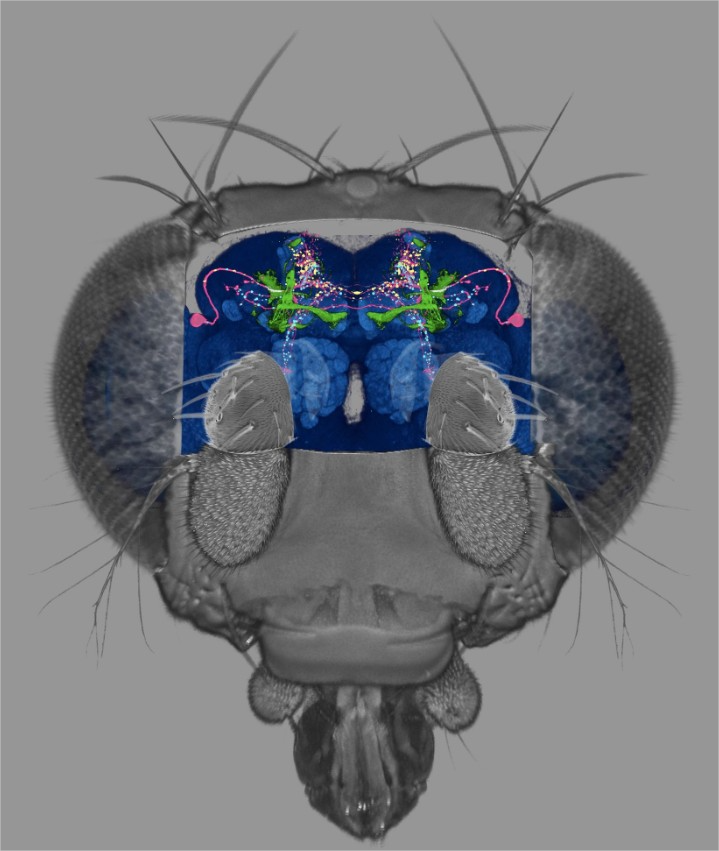
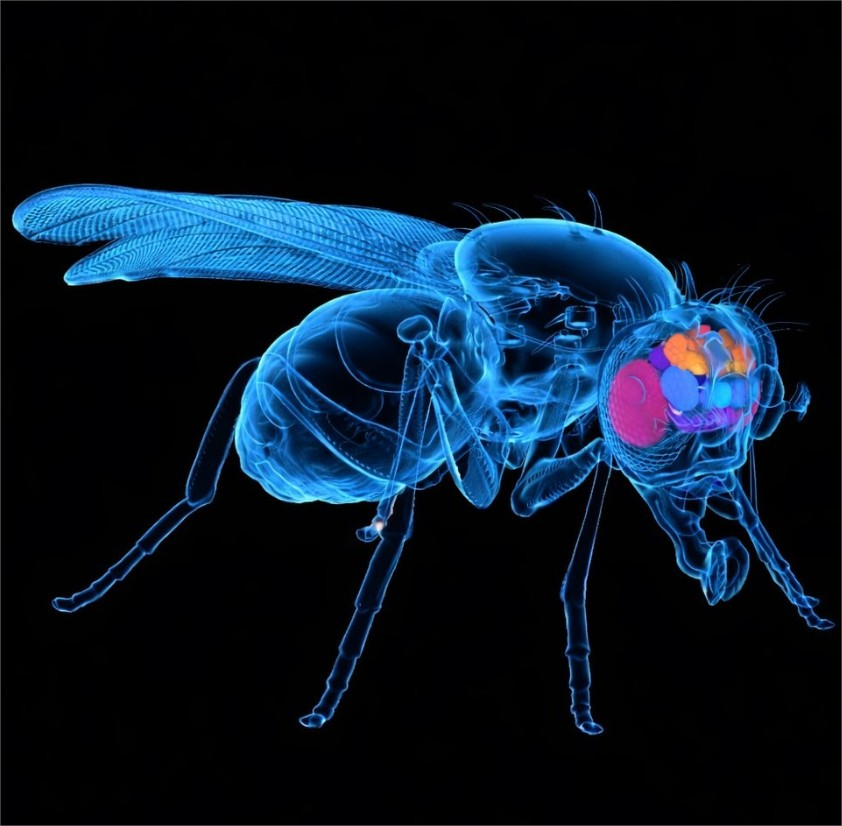
A fruit fly’s brain just woke up inside a computer.
Eon Systems copied 125,000 neurons and 50 million synaptic connections from electron microscopy data, dropped them into a MuJoCo physics sim, and the fly walked, groomed, and fed with 95% behavioral accuracy. No training data. No gradient descent. Pure connectome dynamics.
The natural question: when do we do this with a human brain?
The FlyWire connectome took 10 years and hundreds of scientists across Princeton, Cambridge, Janelia, and Google to produce. 7,000 thin slices of a single female fly brain, imaged with electron microscopy, annotated by AI, then proofread by humans. That was 139,255 neurons.
A mouse brain has 70 million neurons. The Wellcome Trust estimated in 2023 that mapping just the mouse connectome would cost $200-300M for imaging alone, plus $7-21B for human proofreading. Twenty electron microscopes running continuously for five years. Seventeen years of total work. The NIH’s BRAINS CONNECT project aims to scan 1/30th of a mouse brain by 2028.
A human brain has 86 billion neurons linked by 100 trillion synapses.
The cost per neuron for connectome reconstruction has been falling since the first C. elegans map in 1986. But to make a whole human brain connectome economically viable, the cost needs to drop to $0.01 per neuron. For mice, it needs to hit $10. Current rodent proofreading runs about $1,000 per neuron.
So the actual scaling path: fly (done) → mouse (estimated $1B+, decade-plus timeline) → human (currently impossible at any price point).
Eon proved that connectome structure alone can generate behavior. That’s a profound result. The simulation side scales with compute. The imaging side scales with microscope-hours and PhD students. And that gap is only getting wider.