Dücane Cündioğlu:
“Kırk yıldır din kitapları okurum. IŞİD'in yaptığı her şeyin dinde yeri vardır
Eşcinselleri yüksek binadan mı atıyorlar, insan mı yakıyorlar? Hepsinin dindeki yerini gösterebilirim
‘İslam çok iyi, Müslümanlar kötü.’ ifadesi, yeterince tükettiğimiz bir klişe”
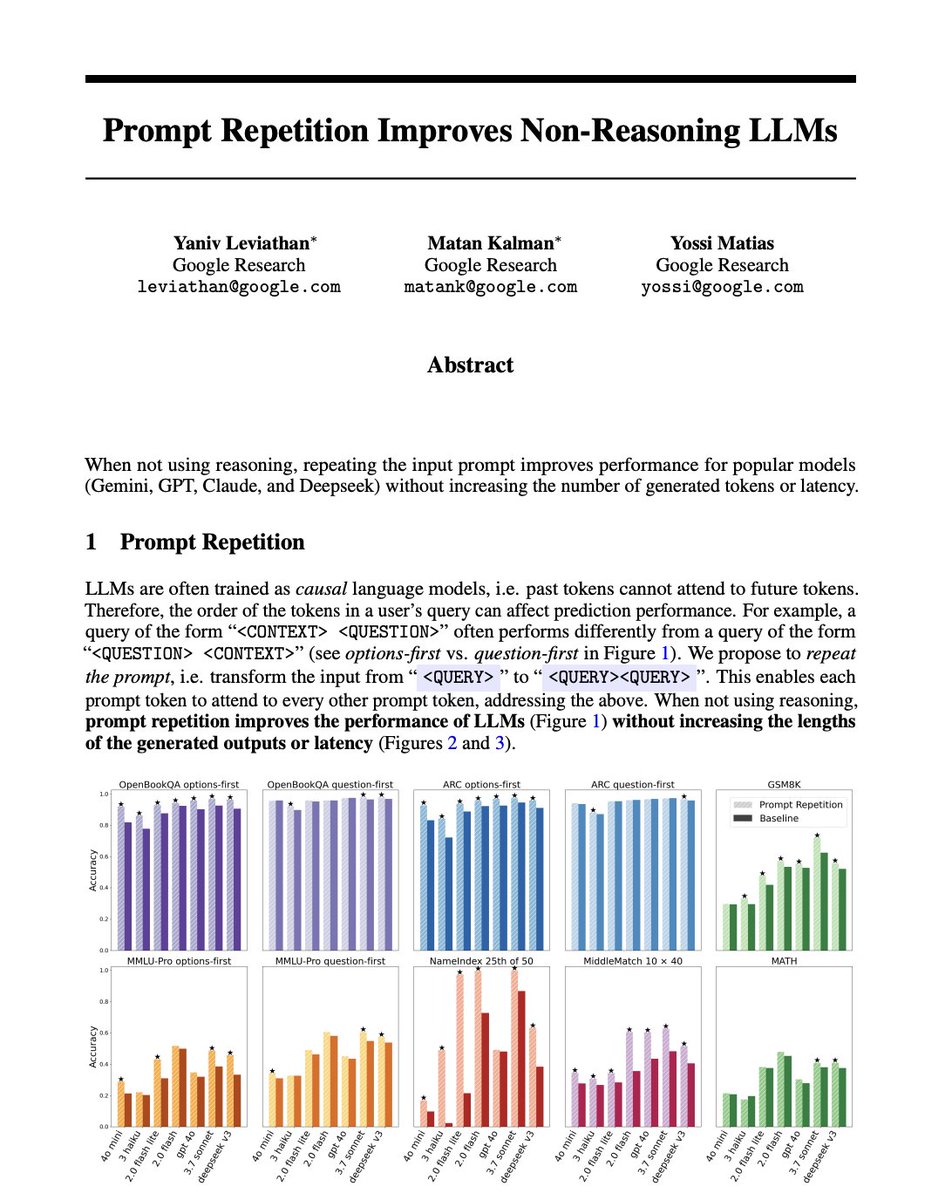
Google discovered a really stupid trick to make AI respond to you much better.
Every major model, ChatGPT, Claude, Gemini, DeepSeek, has a one-way brain.
They process text from left to right.
When you paste a massive document and put your question at the very bottom, the AI reads the entire document blind.
It processes the context without knowing what it's actually looking for.
So, researchers tested a ridiculous solution.
They just copy-pasted the exact same prompt twice in a row.
And the results are completely absurd.
Across seven different benchmarks and seven different models, accuracy skyrocketed.
On one complex extraction task, performance jumped from a dismal 21% to 97%.
Just by repeating the text.
Here is the best part: it costs you exactly $0 and takes 0 extra seconds.
Because hardware processes inputs in parallel, the second pass happens instantly.
Zero extra latency. Zero extra output tokens. Zero complex finetuning.
On the second read, the AI finally "knows" the question. Every single word in the context attaches itself to the actual goal.
If you are building workflows, agents, or automations, you are leaving massive performance on the table for no reason.
We keep trying to invent smarter AI.
But sometimes, the AI doesn't need a better prompt.
Serviste odası günde 2 kez temizlenen aile, yere çay dökmüş.
Personelin gelip temizlemesi talep edilmiş.
Personelde biraz gecikince aile hemen o an cimere yazmış.
#doktor arkadaş da cevabını yazmış. Doktor arkadaş bir merakını şöyle dile getiriyor.
"Depremzede olan bu aile +
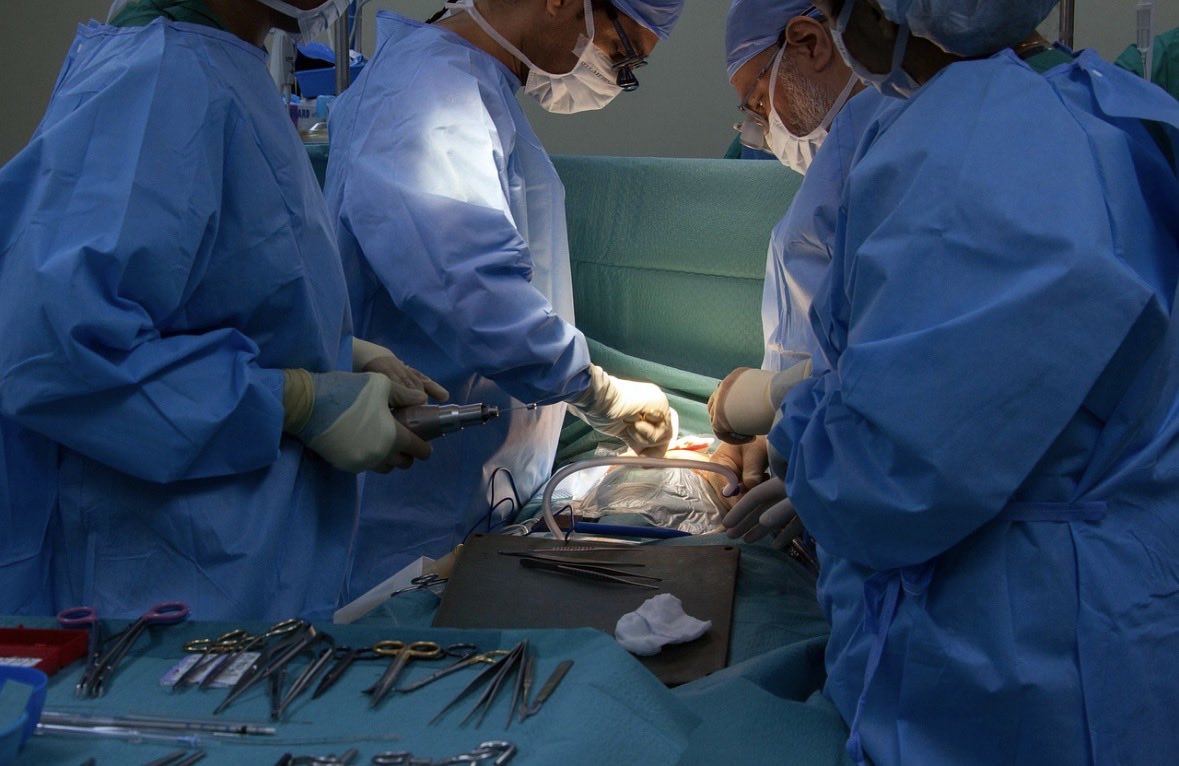
My fellow anesthesiologist Dr. William Perez was so disturbed by the operating room experience of anesthetizing brain-dead donors that he refused to continue participating:
“First, I had to provide anesthesia to the brain-dead organ donor in a virtually identical fashion to that which I provide for other critically ill patients. It turns out that brain-dead patients react to scalpels and electrocautery similarly to my other patients. Without adequate anesthesia, they become tachycardic and hypertensive. Perhaps even more bothersome was the fact that I had to administer paralytics to prevent our organ donors from moving during the case.”
“The first thing I noticed was the normal respect for the patient seemed to be missing from the room.
Part of this may be that harvest teams are almost invariably from outside institutions and organ procurement companies. They travel about harvesting organs routinely and seemed, at least to me, unconcerned with the organ donor as a person.
Perhaps everyone simply considered the patient on the table to be gone, so they acted consistently with that. But the joking, the music, the conversation—it all seemed so out of place.”
“From cutting out and removing the heart, lungs, and liver to the later harvest of corneas and replacing long bones with the equivalent of broomsticks, the entire sequence was somewhere between disturbing and horrific.”
Os artigos científicos deveriam ter, além da seção de agradecimentos (Acknowledgments), uma seção chamada “Blamegments”, para xingar todo mundo que atrapalhou o desenvolvimento daquele trabalho. 😅
@NSICStokeMand Because there is no suitable place to share academic or educational content so you've decided whynot linked right. Hate you. https://t.co/hWAk1MO6X6