Thrilled to be one of the 4 Voice Hack Night finalists with Surgical Triage!
I built a voice-first AI workflow that handles emergency hand surgery transfer requests, patient details, images, and next steps in one conversation. As a hand & microsurgeon, I look forward to having this agent available one day!
Huge thanks to @OpenAIDevs and @cerebral_valley
Vote for Surgical Triage → https://t.co/Tb7Lf7qrA3
What’s one way voice AI could transform your clinical workflow?
@cerebral_valley 🩺 Surgical Triage
A voice-first workflow for triage: transfer requests, patient details, images, and next steps in one place.
https://t.co/OVqQ5kI9rI
Credit to the teams who made these datasets available:
CirCor DigiScope / Oliveira et al.
https://t.co/2lmBOzEKri
Yaseen et al.
https://t.co/336c08TPbh
And credit to @maxxrubin_ for the inspiration.
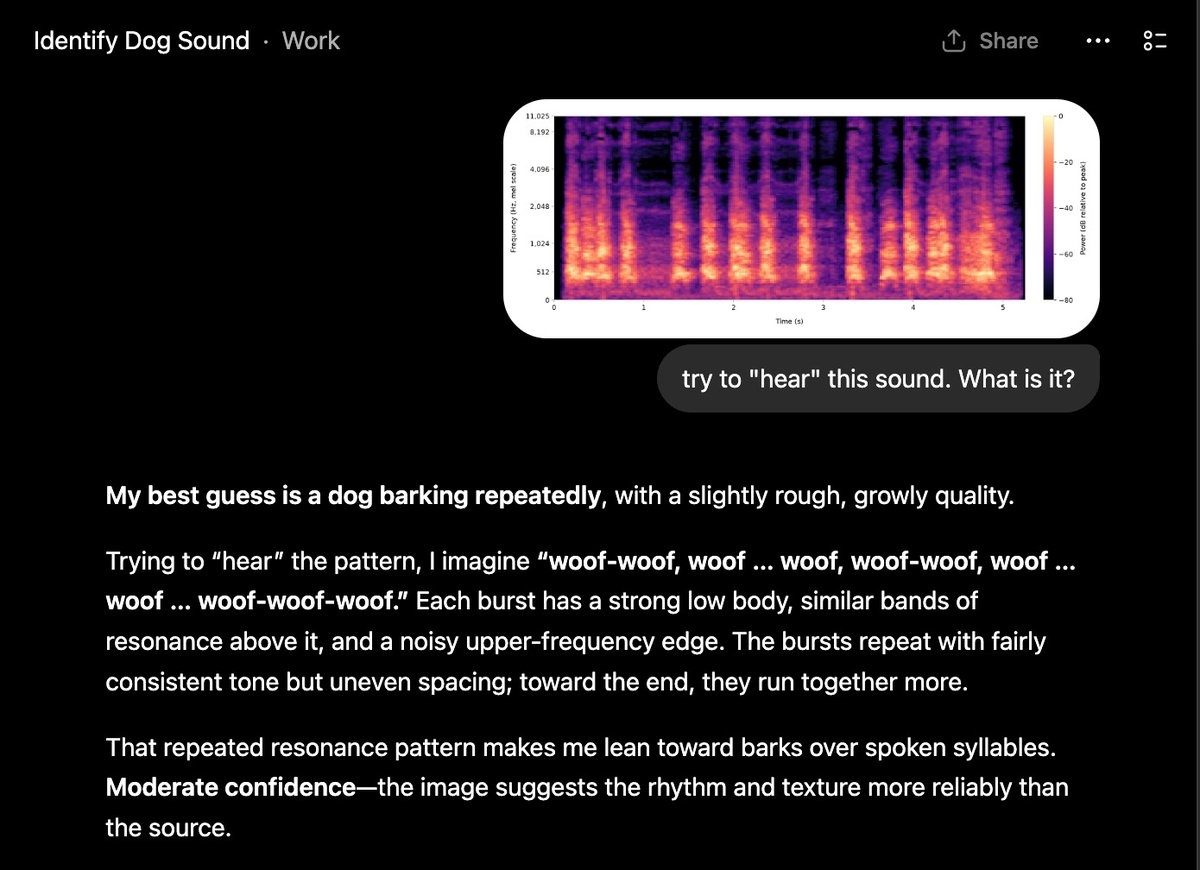
Next exploration with GPT-6 Astra: can it interpret heart sounds from a picture?
I turned 100 heart recordings into mel spectrograms and gave the images to Astra and GPT-5.6 Sol, both on high reasoning.
Here is one of the inputs.
The results are mixed and will be interesting to revisit in the future.
This is a small exploration out of interest.
The scores measure agreement with dataset annotations. They don't establish clinical reliability or performance on new patients. And on these public datasets, there is risk of contamination.
I'm a hand surgeon, so I welcome input from people who work with heart sounds or audio evaluation, such as whether these are useful ways to represent the signal.
Would welcome anyone interested in reproducing this or taking it further.
So Astra is able to identify sounds from mel spectrograms
zero-shot.
I don't think we've scratched the surface of what this model can do (and this is light reasoning btw)
Can @OpenAI Images 2.5 create heart sounds?
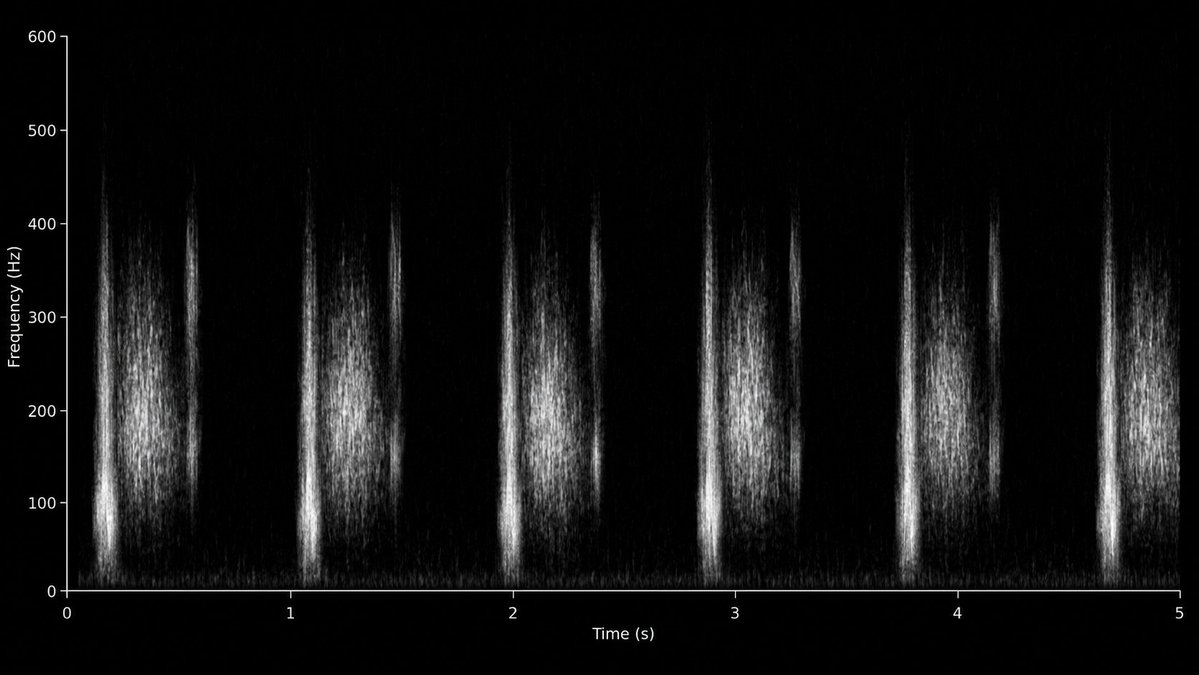
Step 1: GPT-6 Pro + image gen: "create a spectrogram of aortic stenosis"
Step 2: New GPT-6 chat: "here's a PNG. output the audio represented here."
It’s not perfect, but pretty impressive for prompt -> PNG -> audio.
I know there may not be much practical value in this specific example, but:
1. I find the capability itself pretty impressive
2. For me, exploring weird emergent properties inspires more practical use cases (more to come...)
Never gonna give you up
Never gonna let you down
Never gonna run around and desert you
Never gonna make you cry
Never gonna say goodbye
Never gonna tell a lie and hurt you
Thanks for reading. We will do a global reset of the usage for all paid subscriptions so that you can keep enjoying Astra after burning through all of it doing fun 3D modeling in blender. The work week is about to start.
Lands around 6pm PST today.
I just had this happen again! Astra asked a question while inflight with other work.
The question was on a timer. Must have been only 10-15 seconds. By the time I got to it, it was at ~5 seconds, which forced me to rush answering.
Can we please disable the timer? I neither want to be rushed nor miss the opportunity to answer a question.
@Dimillian I had this happen once today with Astra. But then the question disappeared shortly after seeing it.
Do they expire after some period of time and the model just moves on?
Doesn't surprise me at all! I've had in-person interpreters mix up CT vs MRI, give the wrong number for how many weeks for follow up, name the wrong finger, etc... And this is only stuff I've caught with my very broken Spanish.
Many in-person interpreters are great. But we should be measuring AI performance vs median human performance. And consider the negligible cost and immediate easy availability of AI...
There's a threshold -- that maybe we've already crossed? -- where AI interpretation will provide improved access and equity in care.
That's why I was so shocked to hear @kdpsinghlab's comments on the regulatory landscape.