Reflection 70B was the first ever “opensource model” fraud in the space btw
He was was serving Claude API while lying to people
He was also banned from r/LocalLLaMA for this fraudulent campaign
Don’t take Matt seriously, just a PSA for those who don’t know this guy’s past
It looks exactly like a regular flash drive.
but it's not.
When you plug in a normal USB drive, your computer mounts it as storage but when you plug in a Rubber Ducky, your computer registers it as a keyboard.
keyboards are trusted by default so no antivirus scan.
The Ducky immediately starts typing a preloaded script at up to 1,000 words per minute. faster than any human.
In seconds it opens:
— opens a hidden PowerShell window
— downloads a reverse shell
— creates a backdoor account
— exfiltrates saved passwords
— installs persistent malware
DuckyScript 3.0 made it worse. the payload now detects which OS it's on Windows, macOS, Linux and adapts automatically.
in 2026 red teams are documenting multi-vector attacks: one person plants the Ducky while an accomplice calls the IT helpdesk pretending to be a vendor. distraction and compromise simultaneously.
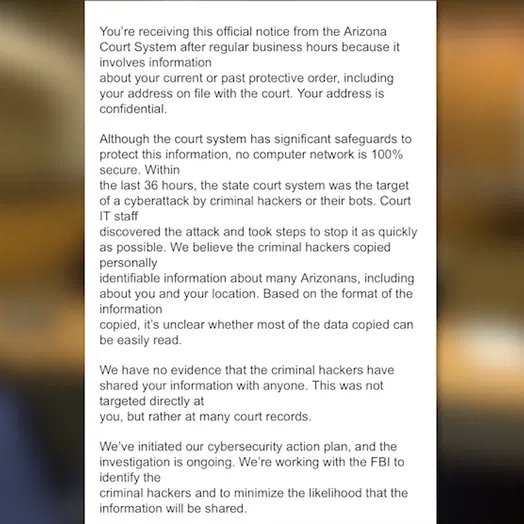
‼️ Hackers breached Arizona's state court system and have copied personal data on many Arizonans, including the confidential addresses of people with current or past protective orders.
The court is now notifying those affected as the FBI investigates, saying it's unclear whether most of the data can be easily read and there's no evidence it has been shared.
Google DeepMind proved that LLMs may have a sense of self.
And they found it by looking for self-doubt.
For years, the consensus was simple: AI is just advanced autocorrect. It predicts the next word.
It doesn't actually "know" what it knows. It doesn't reflect.
The technical term for thinking about your own thoughts is metacognition. In humans, it is a fundamental building block of self-awareness.
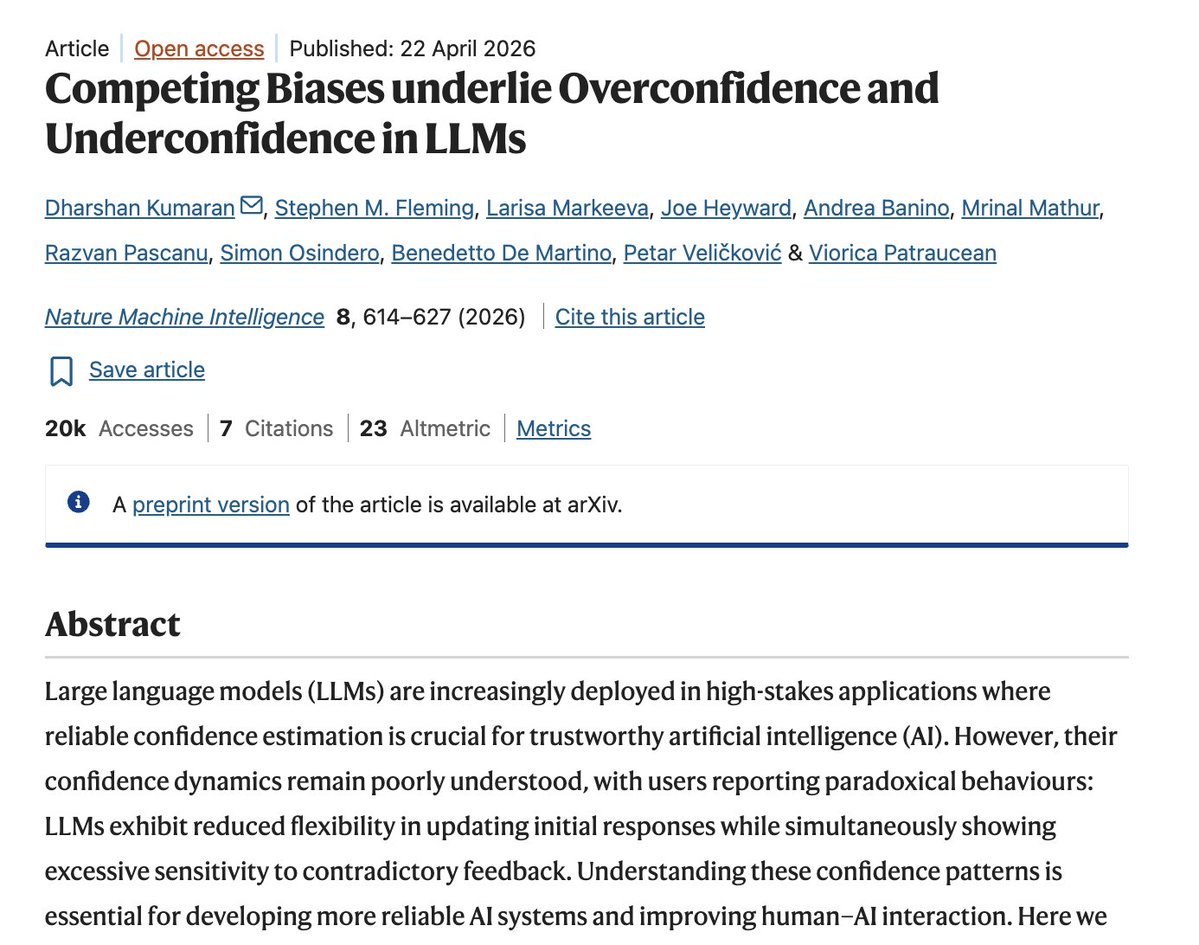
DeepMind researchers published a paper in Nature asking a massive question: Do LLMs have it?
To find out, they looked at how an AI decides to say, "I don't know."
They discovered that models don't just output words. They maintain a multidimensional "confidence signal" deep inside their neural architecture.
An invisible feeling of knowing.
But correlation isn't proof. So DeepMind did something wild.
They performed digital brain surgery.
Using a technique called activation steering, they reached into the model’s active neural pathways while it was thinking and artificially manipulated this hidden confidence signal.
When they suppressed it, the AI started second-guessing itself. It backed down. It refused to answer.
When they artificially boosted it, the AI became bold. It answered questions it previously avoided.
The AI isn’t just mindlessly predicting text.
It is actively monitoring its own internal cognitive state. It judges its own accuracy, applies an internal threshold for doubt, and alters its behavior based on that self-evaluation.
The paper's conclusion is blunt: LLMs possess "structured metacognitive control."
They can literally look inward and judge their own minds.
We thought we were building calculators that talk.
But if a machine can reflect on its own thoughts, monitor its own certainty, and change its behavior based on self-evaluation...