@astronomytodayy A single photon cannot be captured. It just disappear in less than a second, after just hitting any surface.
This is unverified and misleading post, there is no source which confirms this claim.
🪐 MARS HAS WATER ICE
Mars is not completely dry. Scientists have found strong evidence of water ice on and beneath the Martian surface.
NASA spacecraft have detected buried ice deposits at various locations, while the planet's polar regions contain large amounts of water ice mixed with other materials.
But there's an important distinction: Mars does not have oceans of liquid water on its surface today. The planet's current surface conditions generally make stable liquid water difficult to maintain.
What we know:
🔹 Water ice exists on Mars.
🔹 Much of it is concentrated near the poles and underground.
🔹 Radar and other instruments aboard spacecraft have helped detect subsurface deposits.
🔹 This ice is important for understanding Mars' climate history and its potential resources.
✅ This is how NASA found water ice on MARS!
• • •
NASA found water ice on Mars in stages: first from orbit (indirect hydrogen and thermal signatures), then by seeing ice exposed in fresh craters, and finally by digging it up and analyzing it on the surface.
1. First large-scale detection: 2001 Mars Odyssey orbiter (2002)
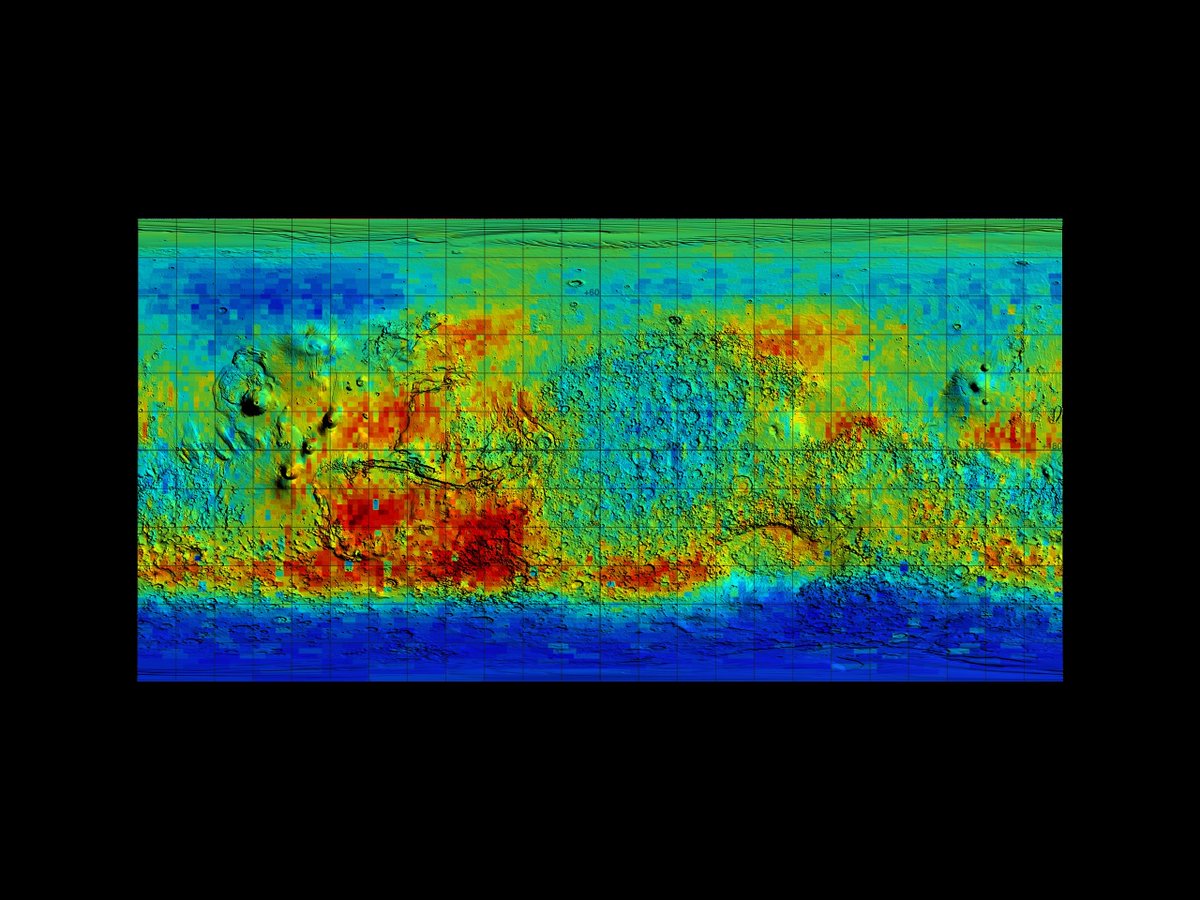
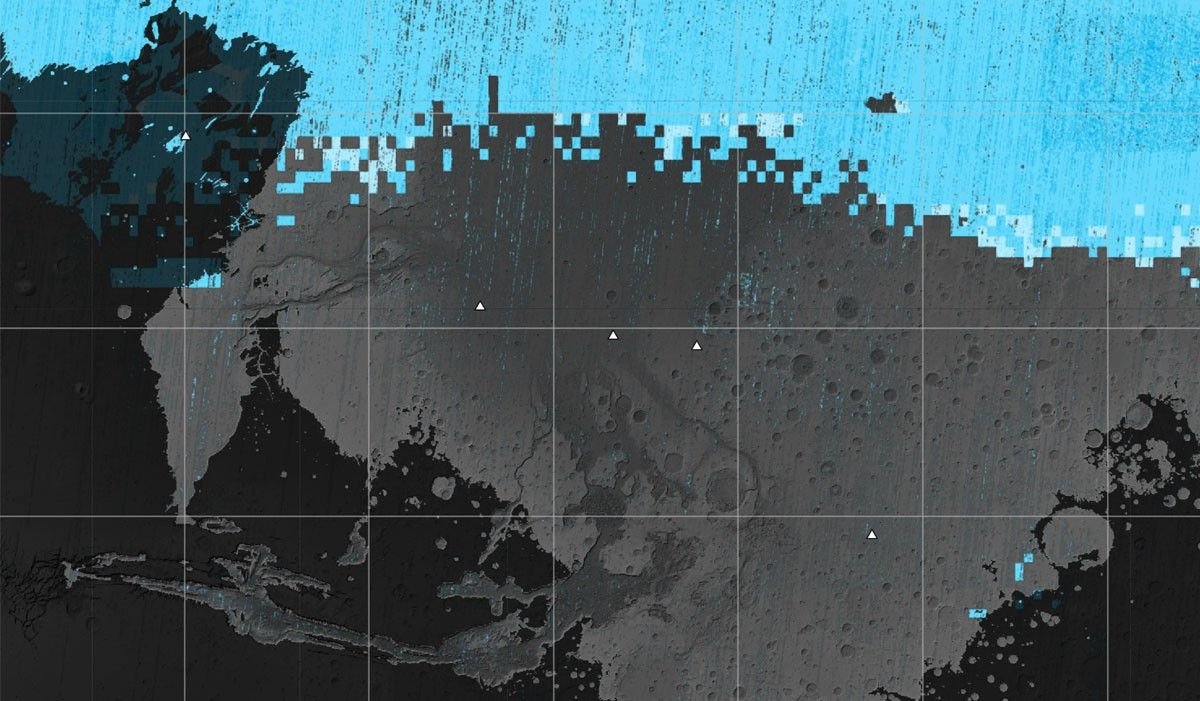
The 2001 Mars Odyssey spacecraft used its Gamma Ray Spectrometer (GRS) suite — a gamma-ray sensor plus neutron detectors — to map hydrogen in the top ~1 meter of soil. Hydrogen is a strong indicator of water ice.
Results showed abundant ice from about 55° latitude to both poles — enough, scientists said, to fill Lake Michigan twice. Near the poles the soil can be more than 50% ice by volume (“dirty ice”). Equatorial regions showed far less.
Odyssey’s THEMIS thermal camera later helped map how shallow that ice is by measuring how the ground heats and cools.
2. Ice seen from space in fresh craters: Mars Reconnaissance Orbiter (MRO)
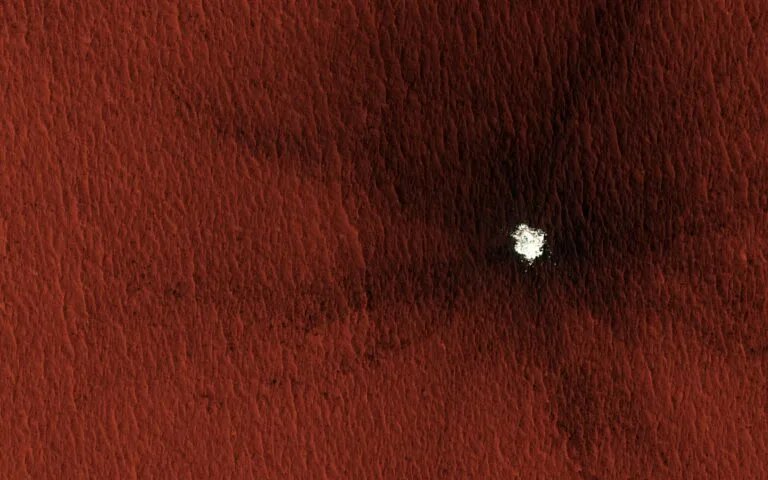
MRO (arrived 2006) used its high-resolution HiRISE camera to photograph new meteorite impact craters. Several of those craters punched through the dusty surface and exposed bright ice only 0.5–2.5 m down — even at mid-latitudes, farther from the poles than expected. Spectrometers on MRO confirmed the bright material was water ice.
MRO’s SHARAD radar also mapped thicker buried ice sheets, including a large deposit in Utopia Planitia.
3. First direct “touch and taste”: Phoenix lander (2008)
• NASA sent the Phoenix lander to 68°N (farther north than any previous lander) specifically to check Odyssey’s predictions.
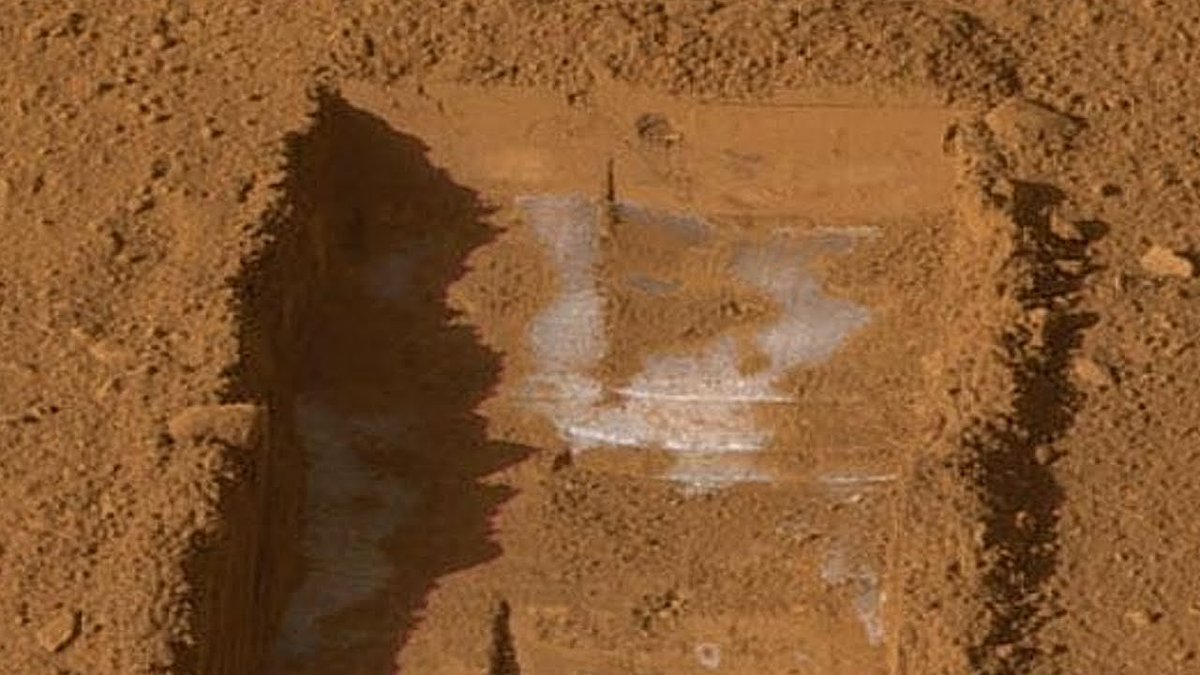
• Landing thrusters blew away a thin layer of soil and exposed bright ice under the spacecraft.
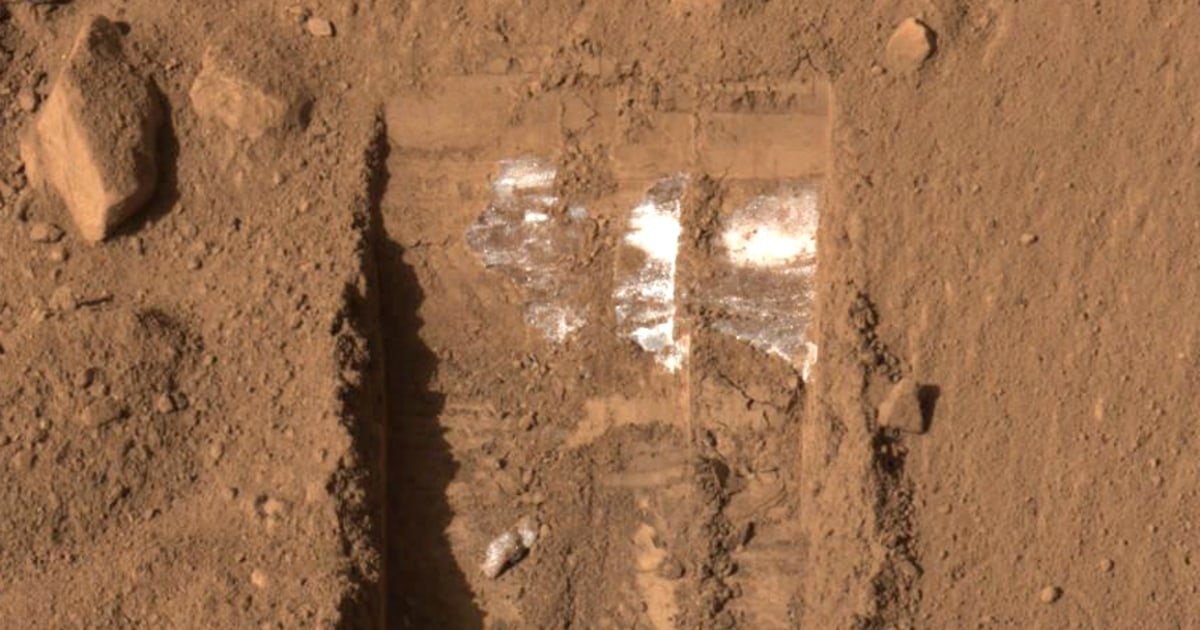
• The robotic arm dug trenches (notably “Dodo-Goldilocks”). White chunks appeared.
• Over four Martian days those chunks vanished — they sublimated (went from ice straight to vapor). Salt or dry ice (CO₂) would not have behaved that way.
A sample was delivered to the Thermal and Evolved-Gas Analyzer (TEGA). When heated, its mass spectrometer detected water vapor at 0 °C. NASA announced the confirmation on 31 July 2008.
📝 Ice was only a few centimeters beneath the surface at that site.
📍Other relevant hardware:
• Polar ice caps themselves had been photographed since the Mariner and Viking eras, but they are mixed with seasonal CO₂ ice.
• Later rovers (Curiosity’s DAN neutron detector, Perseverance’s RIMFAX radar) have measured water bound in minerals or looked for ice in the shallow subsurface, but Phoenix remains the mission that first physically sampled water ice.
🛰️ In short: Odyssey found the ice from orbit by detecting hydrogen; MRO photographed it in new craters; Phoenix dug it up, watched it disappear, and chemically confirmed it was H₂O.
🪐 MARS HAS WATER ICE
Mars is not completely dry. Scientists have found strong evidence of water ice on and beneath the Martian surface.
NASA spacecraft have detected buried ice deposits at various locations, while the planet's polar regions contain large amounts of water ice mixed with other materials.
But there's an important distinction: Mars does not have oceans of liquid water on its surface today. The planet's current surface conditions generally make stable liquid water difficult to maintain.
What we know:
🔹 Water ice exists on Mars.
🔹 Much of it is concentrated near the poles and underground.
🔹 Radar and other instruments aboard spacecraft have helped detect subsurface deposits.
🔹 This ice is important for understanding Mars' climate history and its potential resources.
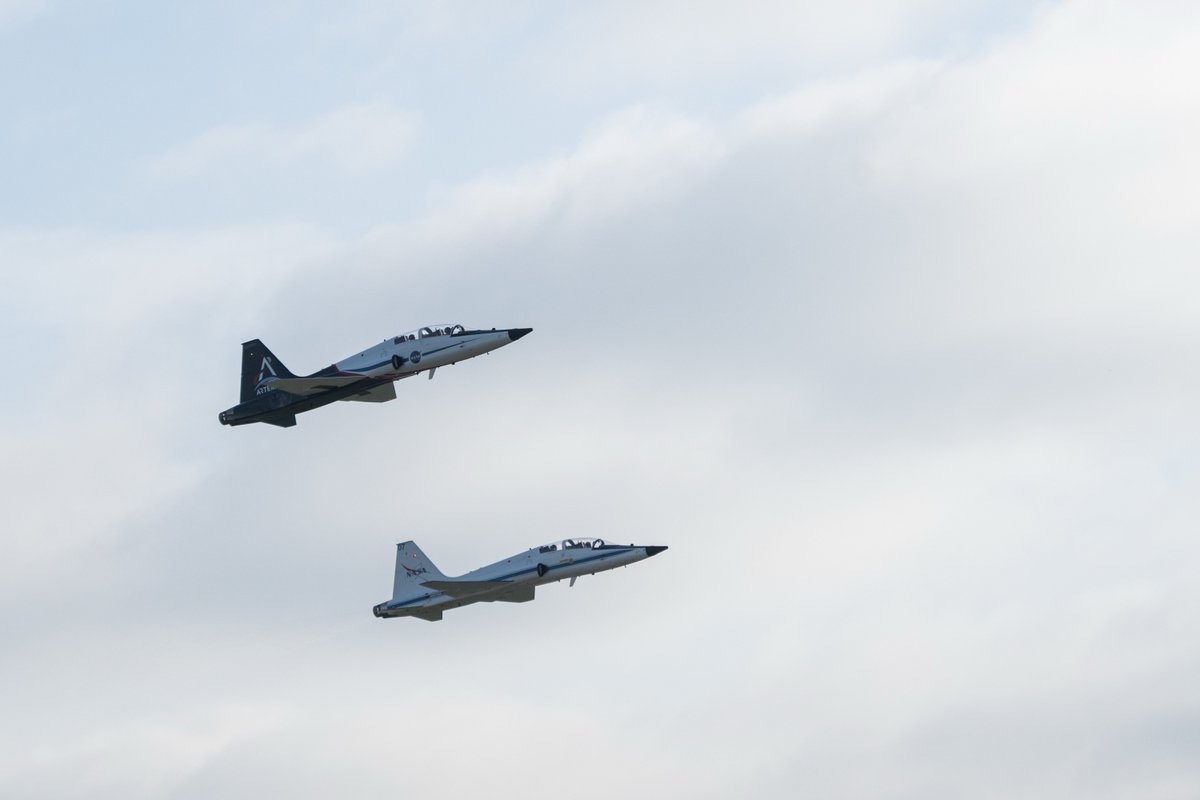
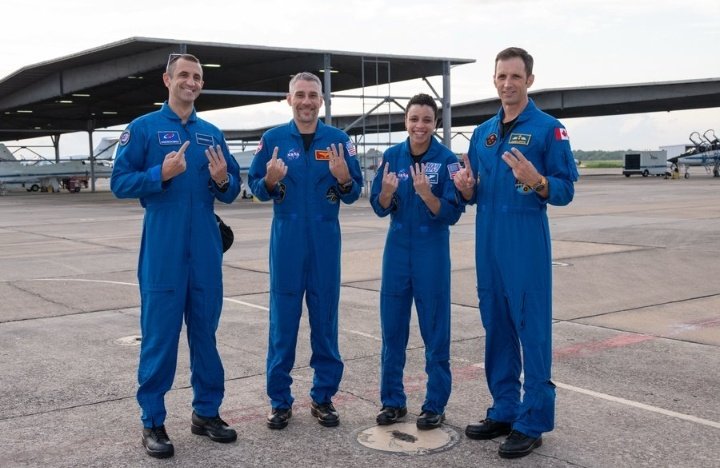
Members of NASA's SpaceX Crew-13 -- NASA astronauts Jessica Watkins and Luke Delaney, Canadian Space Agency astronaut Joshua Kutryk, and Roscosmos cosmonaut Sergey Teteryatnikov -- boarded NASA's T-38 aircraft for their flights to @NASAKennedy Space Center
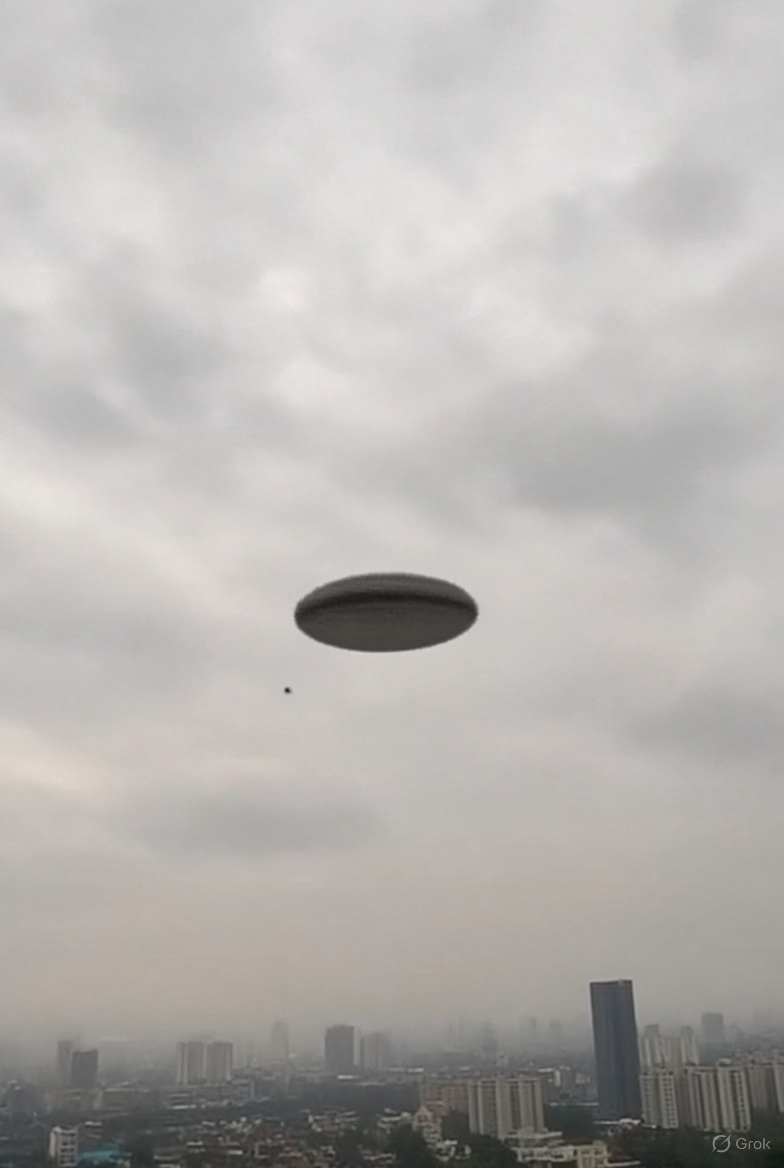
The original clip is extremely shaky and low-resolution, so the object mostly reads as a bright, slightly elongated glow with two or three brighter cores inside a hazy halo. When I mentally stabilize and sharpen the frames, it resolves into a compact triangular formation of lights rather than a single blob or conventional aircraft.
The three points sit in a stable triangle and do not flash or blink like aircraft navigation lights. The surrounding glow is uneven and slightly larger than the lights themselves, which is why it looked so smeared in the phone video. After a few minutes the whole formation simply fades rather than flying away, which matches the witness account and is harder to explain with a drone or plane.
- It's verified.
Grok itself re-imagined the object as a Triangular Object. Hence, it confirms that it was a UFO.
The image, captured accidentally in 2015 by photographer Prasenjeet Yadav via time-lapse camera during a project on "sky islands," has become a viral staple reposted across accounts.
Green meteors are uncommon and typically result from magnesium or other metals in the meteoroid burning up in Earth's atmosphere, producing the vivid color during high-speed entry.
🔭 NASA’s Roman Space Telescope: A New Wide-Field Eye on the Universe
• • •
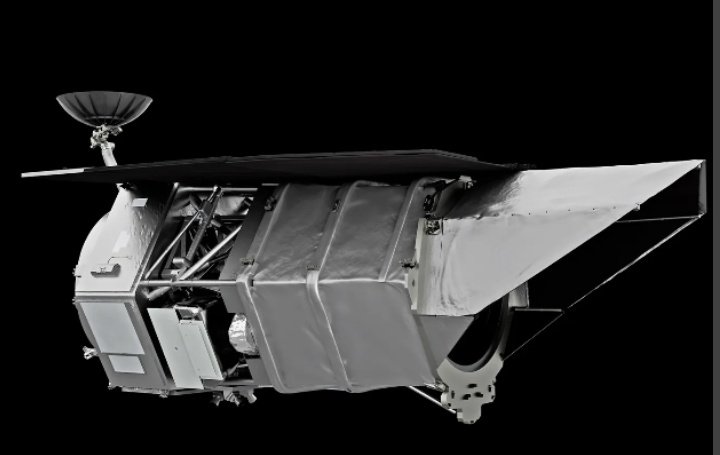
NASA’s Nancy Grace Roman Space Telescope is designed to conduct enormous infrared surveys of the universe. With a 2.4-meter primary mirror, the same diameter as Hubble’s, Roman is optimized for a dramatically wider field of view rather than simply higher resolution.
Its mission will investigate dark energy, dark matter, exoplanets, galaxy formation, and the large-scale structure of the universe. Unlike Hubble, Roman is designed to survey vast regions of the sky efficiently, making it a powerful complement to existing observatories.
Gargantua is a scientifically inspired visualization from Interstellar, not a real photograph of an actual black hole. The distinctive glowing disk, warped light, and nearby spacecraft come from movie CGI developed with physicist Kip Thorne to illustrate general relativity effects such as gravitational lensing and time dilation. Real black-hole images, like those captured by the Event Horizon Telescope of M87* and Sagittarius A*, appear far blurrier and lack this cinematic detail.
That “interesting shape” is the Defiant Finger (also called God’s Birdie), a Bok globule in the Keyhole region of the Carina Nebula. It’s a dense, cold knot of molecular gas and dust being photoevaporated by intense ultraviolet radiation from nearby massive stars such as WR 25 and Tr16-244. The globule contains at least six solar masses of material and is expected to last another 200,000–1 million years before it is fully eroded. Hubble images from the early 2000s captured the classic view; the protruding “finger” actually points toward its ionizing sources. Classic pareidolia, but the physics behind it is even cooler.